MotoGP Season Opener: Bezzecchi and Aprilia Break Ducati's Dominance

Bezzecchi wins Thailand on the Aprilia RS-GP as four Aprilias finish in the top five, challenging Ducati's dominance.
At the 2026 MotoGP season opener in Thailand, Marco Bezzecchi rode the Aprilia RS-GP to victory, ending Ducati's long-standing grip on the series. The win's significance goes beyond a single result: four Aprilias finished in the top five, marking the Italian factory's leap from credible challenger to a fleet-level threat. Behind the result lies a systematic off-season plan — F1-grade aerodynamic upgrades, paired with a star lineup of Martin and Bezzecchi. Marquez retired with a tire blowout, leaving Bezzecchi to win by over three seconds and signaling that Aprilia's rise is no fluke.
A Long-Awaited Rise
As the 2024 season drew to a close, a veteran who had spent eight years developing Aprilia's machine quietly stepped away from the grid. Those eight years of relentless development gradually transformed the RS-GP — nicknamed the "Black Beast" — from a backmarker into a genuine contender. Then for the 2025 season, the team landed two blockbuster signings: reigning world champion Jorge Martin and Ducati defector Marco Bezzecchi.
The star-studded lineup had many outsiders believing Aprilia was ready to make a serious statement. But skeptics were equally vocal: could a bike that even world champion Martin struggled to tame realistically challenge for a race win? Bezzecchi answered that question himself.
Bezzecchi's Path to Redemption
At Silverstone, a rider who had long been overlooked suddenly stepped into the spotlight. Bezzecchi piloted the much-debated RS-GP like a black lightning bolt, cutting through the gloom that had hung over Aprilia and setting his sights on the top step of the podium. Yet against Marc Marquez — draped in his iconic red — every challenge seemed to fall short. To claim a championship, he would need to beat the legend head-on.
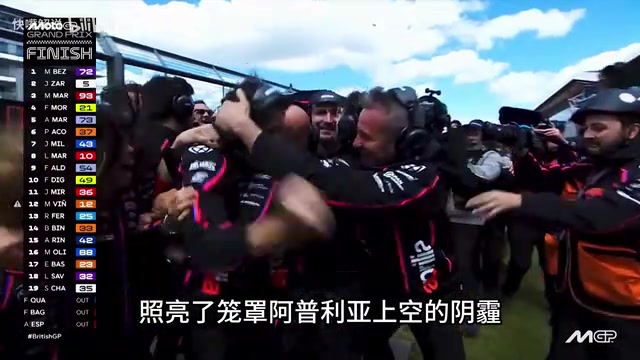
A crash at the Indonesian round thrust Bezzecchi into the eye of the storm. His error took Marquez down with him, sidelining the eight-time champion for the rest of the season. As the one responsible, Bezzecchi carried enormous psychological weight — and even after winning the final two races of the season, the criticism never stopped. People simply said it was only because Marquez wasn't there.
Still, winning back-to-back rounds is no small feat. It was clear proof that Bezzecchi and Aprilia were genuinely on the rise.
Off-Season Scheming
In the shadow of Ducati's dominance, Aprilia quietly plotted their comeback during the off-season. According to analysis from motorsport content creators, the RS-GP was fitted with a new aerodynamic package co-developed with an F1 team, aimed at fundamentally shifting the competitive balance.
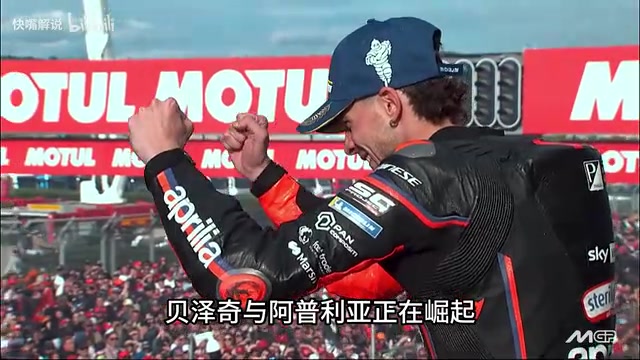
It wasn't until qualifying, when Bezzecchi set the fastest lap and outpaced Marquez aboard the menacing black machine, that the paddock finally took notice — the RS-GP had undergone a complete transformation. The new aero package gave Aprilia the technical foundation to genuinely challenge Ducati's stranglehold.
Aprilia's aerodynamic collaboration with an F1 team is part of a broader trend of cross-discipline technology transfer. MotoGP has increasingly borrowed from F1's downforce philosophy in recent years, incorporating front wings, rear spoilers, and complex airflow management structures on fairings. The core value of these packages lies in improving high-speed cornering stability and braking traction without significantly increasing drag. One of the RS-GP's most criticized weaknesses had been instability through fast corners, which made it difficult for riders to maintain confidence at the limit. F1-grade CFD (Computational Fluid Dynamics) simulation and wind tunnel resources allow for more precise aerodynamic solutions to be iterated in shorter development cycles — a speed advantage that smaller, traditionally resourced teams simply cannot match.
Thailand: Drama and Turnaround
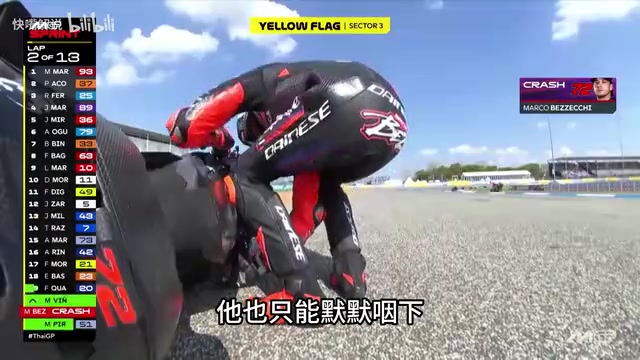
Surprises have a way of arriving uninvited. In the Sprint race at the Thai Grand Prix, Bezzecchi crashed while leading — a bitter pill to swallow.
In the main race, the moment the lights went out, Bezzecchi held his lead. On lap one, the #25 rider overtook Marquez at Turn 7 to move into second, and by lap four, Martin had also pushed through. Marquez, hampered by a nagging right shoulder injury, could only watch as riders filed past him one by one.
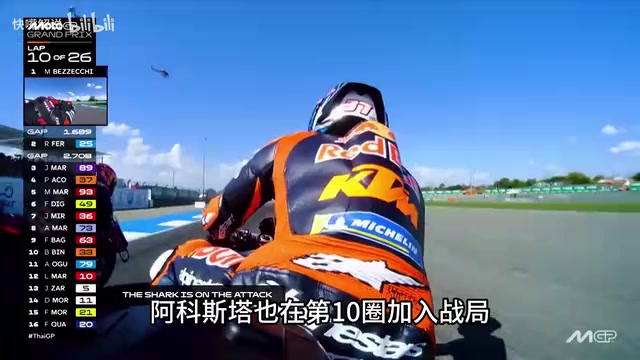
By lap ten, Pedro Acosta had joined the battle. As the two scrapped over third place, Marquez seized a gap and briefly fought back.
Then the cameras panned to a dramatic sight — Marquez's bike wobbling violently off the track. A tire blowout ended his race on the spot. Up front, Bezzecchi had already built a lead of over three seconds.
Aprilia's Army in Action
In the end, Bezzecchi crossed the line aboard the RS-GP to claim victory and give Aprilia the perfect start to the 2026 season. The win itself is impressive enough — but what truly demands attention is this: four of the top five finishers were on Aprilia machinery.
This is no longer a flash of individual brilliance. It is an unmistakable signal of the entire factory team's rising collective strength. Eight years of perseverance, an off-season aerodynamic overhaul, and the recruitment of a world-class rider lineup are all paying dividends on track. Whether Aprilia can sustain this form through the rest of the season will be one of the most compelling storylines in MotoGP this year. Ducati's era of dominance may have finally found its true challenger.
The result of "four Aprilias in the top five" reflects deeper strategic logic within MotoGP's points system and manufacturer competition. MotoGP allows manufacturers to expand their grid presence through satellite teams, and Aprilia has expanded its satellite program in recent years to put more riders on RS-GP machinery. Once the underlying competitiveness improves, the multiplier effect of running a multi-rider group becomes enormous — not only does it create a serious threat in the Constructors' Championship, but it also enables tactical racing that can disrupt rivals' strategies mid-race. Ducati built its long-running dominance on exactly this "army" approach. Now that Aprilia has replicated the same structural advantage, the shift in the competitive landscape goes far beyond a single race result.
Related articles

OpenAI Partners with Shield: How the Astra Agent Revolutionizes IT Troubleshooting
OpenAI and Shield launch the Astra agent, which autonomously logs into computers and legacy systems to fix IT issues in real time, 35-40% faster than traditional models, with humans involved only when judgment is needed.

iPhone Duo Battery Life Tested: One Charge a Day Is Unavoidable, and the Large Screen Is the Culprit
iPhone Duo battery test: heavy use needs at least one charge a day, and about 30% remains after 6.5 hours of screen-on time. How often the large screen is unfolded is key; a MagSafe battery pack helps, and long-term degradation is also worth watching.

Kimi K3.1 Pro Open-Sourced: 2.8 Trillion Parameters Close In on Opus
Moonshot releases the open-source MoE model Kimi K3.1 Pro, with 2.8T total parameters and 104B activated, trailing Opus 5.5 by under 1 point on Terminal Bench 4.0.