Multi-Agent Architecture Hands-On Experience: The New Hard Requirement for AI Engineer Job Seekers

Multi-Agent architecture experience is becoming a critical hiring threshold for AI engineers.
Drawing from 1,700+ students and 625 interview debriefs, this article reveals how multi-Agent collaborative architecture has become a key screening criterion for AI engineering positions. It traces the scale leap from 4,000-parameter NLP models to trillion-parameter LLMs, explains why engineering deployment capabilities now outweigh algorithm knowledge, and provides actionable insights on what interviewers truly evaluate.
Why Multi-Agent Architecture Is Becoming an Invisible Barrier for AI Positions
In the current AI engineer hiring market, a clear trend is emerging: project experience with enterprise-level multi-Agent collaborative frameworks is gradually becoming one of the key criteria for resume screening.
Multi-Agent Architecture (Multi-Agent System) refers to a collaborative system composed of multiple AI agents with independent reasoning capabilities, where each Agent handles a specific task domain and works together through predefined communication protocols and collaboration mechanisms to accomplish complex objectives. In the era of large language models, typical multi-Agent frameworks include Microsoft's AutoGen, CrewAI, LangGraph, and others. The core problem these frameworks solve is that a single LLM is prone to context loss and hallucination accumulation when handling complex, multi-step tasks. By decomposing tasks among multiple Agents with distinct responsibilities, system reliability and controllability can be significantly improved.
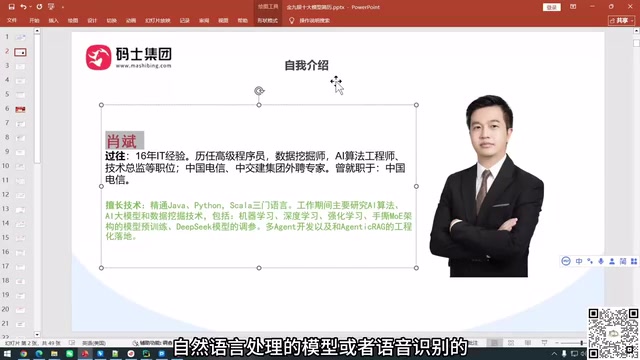
According to observations by senior AI training instructor Xiao Bin (known in the industry as "Lao Xiao"), if a candidate's project experience lacks hands-on multi-Agent architecture content, the probability of receiving interview invitations drops significantly even after submitting resumes. This judgment stems from his long-term tracking of extensive student job-seeking feedback, not mere speculation.
The trend behind this reflects a substantive shift in industry demands. As large model applications evolve from simple Q&A to complex task orchestration, enterprise demand for engineers who can build and coordinate multiple collaborative Agents has surged. Simply knowing how to call APIs is no longer sufficient—mastering collaboration mechanisms between Agents, Skill orchestration, and engineering deployment capabilities is the core competitive advantage today.
Skill Orchestration is a core engineering concept in multi-Agent systems, referring to the mechanism for dynamically combining, scheduling, and managing the workflow of capabilities (Skills) possessed by each Agent. A Skill can be an atomic capability such as calling an external API, executing a database query, running code, or generating documents. Key problems the orchestration layer needs to solve include: task decomposition and allocation strategies, dependency management between Agents, parallel and sequential execution scheduling, error handling and rollback mechanisms, and global state consistency maintenance. This is similar to service orchestration in microservices architecture, but with the added complexity of handling LLM reasoning uncertainty, making the engineering complexity significantly higher.
The Scale Leap from Traditional NLP to Trillion-Parameter Large Models
Understanding the current rise in technical barriers requires reviewing the scale revolution brought by large models. Lao Xiao shared his own technical evolution path: after graduating from Hunan University, he first worked on business development at China Telecom, and only truly encountered AI in 2019 while at Huawei, focusing on natural language processing and speech recognition.
An interesting comparison stands out: before large models appeared, the largest model he had trained had approximately 4,000 parameters. Today's mainstream models routinely reach trillion-level scales.
Models at the 4,000-parameter scale typically correspond to small classifiers or shallow neural networks in traditional NLP, such as a simple sentiment analysis model or named entity recognition model that might contain only a few fully connected layers or simple RNN structures. Trillion-parameter models (such as GPT-4, DeepSeek V3 Pro, etc.) use extreme extensions of the Transformer architecture, combined with Mixture of Experts (MoE) technology to scale parameter counts while controlling inference costs. The core idea of MoE architecture is to partition model parameters into multiple "expert" sub-networks, activating only a subset during each inference. This allows the model to have trillion-level total parameters while the actual computational load is far less than full parameter activation. This technical breakthrough is the key engineering approach enabling current large models to reach trillion-scale.

He cited the current model landscape as evidence:
- DeepSeek V4 Flash has not yet reached trillion-level, while the Pro version has entered the trillion-parameter range
- Tongyi Qianwen 3.8 is also not at trillion-level
- Kimi has reached approximately two trillion parameters
Same Underlying Principles, Different Engineering Complexity
Here's a key insight: although large models are still built on neural networks and traditional model algorithms, sharing the same lineage as early NLP models, the scale difference is astronomical. From 4,000 parameters to trillion parameters spans approximately 8 orders of magnitude.
This scale leap has not only changed model capabilities but also directly transformed engineering practices—models that could previously be tuned by hand and trained on a single machine now require complex distributed systems, multi-Agent collaborative architectures, and engineering frameworks to support deployment. Training trillion-parameter models requires thousands or even tens of thousands of GPUs working in coordination, involving complex distributed systems engineering. Common parallelism strategies include Data Parallelism, Tensor Parallelism, Pipeline Parallelism, and Expert Parallelism. At the framework level, tools like DeepSpeed, Megatron-LM, and ColossalAI provide engineering implementations of these parallelism strategies. Additionally, the training process needs to handle communication bandwidth bottlenecks, memory optimization (such as ZeRO technology), fault recovery, mixed-precision training, and other issues. These engineering challenges mean that large model deployment is no longer a pure algorithm problem but a systems engineering problem.
This is precisely the fundamental reason why multi-Agent engineering frameworks have become so valuable.
Frontline Data: A Real Portrait of the AI Interview Market
Lao Xiao emphasizes that his understanding of the interview market comes from solid first-hand data accumulation. He disclosed a set of statistics:
| Data Dimension | Count |
|---|---|
| Cumulative students in LLM direction | 1,700+ |
| Resumes personally revised | 1,065 |
| Interview debriefs completed | 625 |

The Specific Methodology of Interview Debriefs
The interview debrief follows a relatively systematic process: after an interview, students provide the interview recording and a list of questions asked. Lao Xiao listens to the entire recording first, then analyzes each interviewer's questioning logic and examination focus, and finally provides targeted improvement suggestions.
The value of this approach lies in bypassing second-hand, outdated interview question information found online, directly obtaining large volumes of real, fresh interview data. Through the accumulation of 625 debriefs, he can relatively accurately summarize the technical points and project formats that interviewers truly care about.

Reverse-Engineering from Data: What AI Interviewers Are Really Evaluating
Based on this first-hand data, several conclusions of practical reference value for job seekers can be drawn:
First, the "quality" of project experience matters more than quantity. Interviewers increasingly tend to examine whether candidates have real projects with technical depth, especially hands-on experience involving enterprise-level complex scenarios such as multi-Agent collaboration and Skill orchestration. For example, an enterprise customer service system might include an intent recognition Agent, a knowledge retrieval Agent, a dialogue generation Agent, and a quality review Agent, all implementing an end-to-end service flow through message passing and state sharing. Being able to fully articulate the design decisions, technical challenges, and solutions of such systems is far more convincing than listing multiple shallow Demo projects.
Second, engineering deployment capability is repeatedly examined. In the large model era, whether you can actually deploy an Agent system online and run it stably is favored over merely understanding algorithm principles. This includes system observability design, Agent call chain tracing, cost control (Token consumption optimization), latency optimization, and fault tolerance and degradation strategies in production environments. This also explains why multi-Agent engineering framework experience has become a resume bonus or even a threshold requirement.
Third, high-frequency interview questions follow identifiable patterns. Although each interview differs, large-sample debriefs reveal that interviewers' questions exhibit clear patterns and repetitive themes, making systematic preparation possible.
Strategy: How to Cross the Multi-Agent Architecture Technical Threshold
The leap from 4,000 parameters to trillion parameters symbolizes the overall upgrade of AI engineering practice. For job seekers, merely understanding large model concepts is far from sufficient—mastering multi-Agent collaborative architecture, engineering deployment frameworks, and leaving demonstrable hands-on traces in projects is the key to meeting the new threshold.
The AI talent market from 2024 to 2025 shows clear structural changes. On one hand, application-layer positions for large models have seen explosive growth, covering emerging roles such as RAG (Retrieval-Augmented Generation) engineers, Agent development engineers, prompt engineers, and LLM fine-tuning engineers. On the other hand, enterprise requirements for candidates have rapidly escalated from "understanding large model principles" to "being able to build production-grade AI systems." The driving force behind this transition is that enterprises have already passed the proof-of-concept stage for large models and entered the stage of scaled deployment, needing engineers who can truly get complex AI systems running stably rather than technology enthusiasts who remain at the Demo level.
A reminder is warranted: the core information in this article comes from a single instructor's experience sharing and self-reported data. The statistical standards and market judgments carry a degree of subjectivity, and readers should reference them rationally in conjunction with broader hiring information and their own circumstances. However, the broader direction that "engineering capability" and "multi-Agent hands-on experience" are becoming new hard requirements for AI positions is an industry signal worth taking seriously.
Key Takeaways
Related articles

Grok Bot Hands-On: A Full Walkthrough of AI Agent Auto-Returns, Doctor Appointments, and More
Hands-on review of Grok Bot as an AI agent: auto-processing Amazon returns, booking doctors, and registering vehicles. Exploring AI Agent evolution and security considerations.

Running a Local AI Coding Assistant on 8GB VRAM: A Practical Guide to Model Selection
How to deploy a local AI coding assistant with only 8GB VRAM? This guide covers VRAM bottlenecks, recommends quantized models like Qwen2.5-Coder-7B, and shares optimization tips for context length, inference backends, and Agent tool calling.

Earning Money from Idle Macs: A Deep Dive into Distributed AI Compute Sharing Platforms
Idle Macs can earn passive income through distributed AI compute sharing platforms. This deep dive analyzes how projects like Darkbloom work, revenue expectations, technical challenges, and future prospects.