Muse: Using AI to Navigate the Complex US Healthcare System
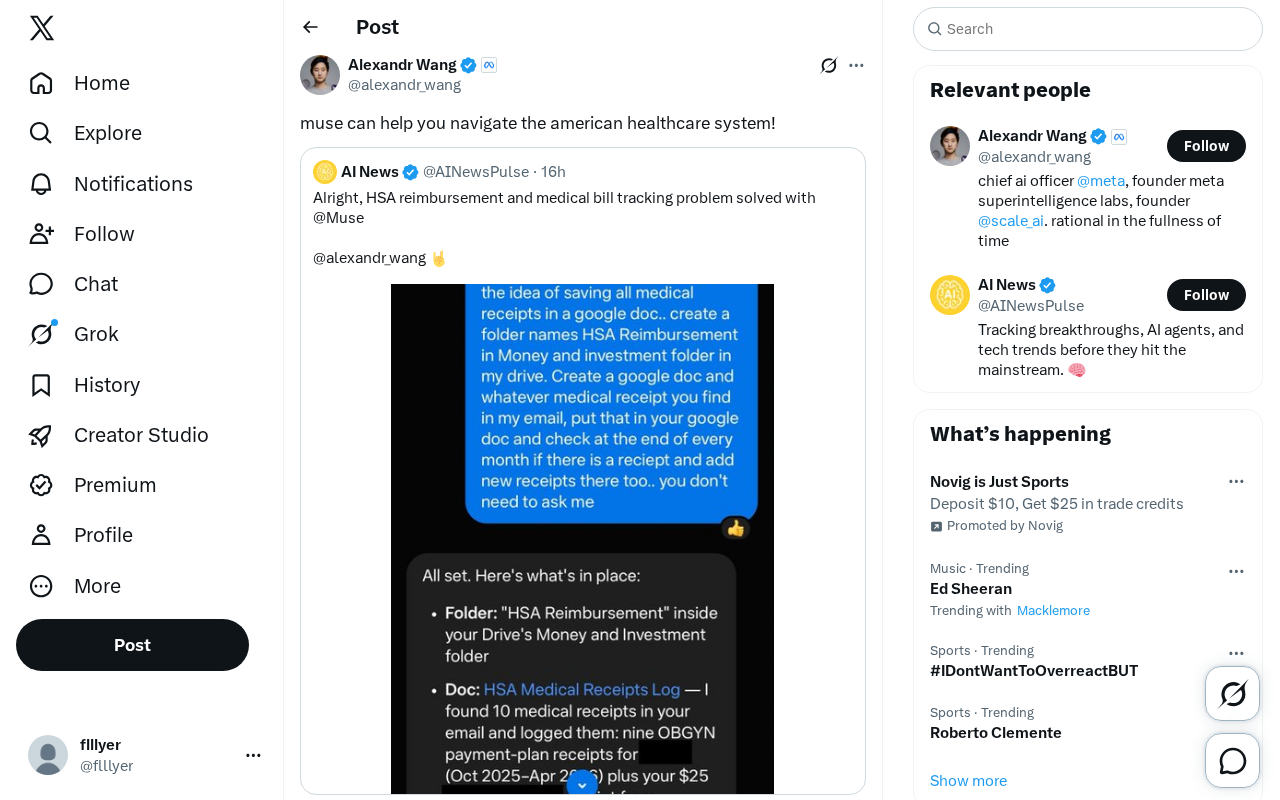
Muse is an AI tool claiming to help users navigate US healthcare, but details remain limited — worth watching with cautious optimism.
Muse is an AI tool positioned to help users navigate the US healthcare system through conversational guidance on insurance terms, medical bills, and reimbursement processes. The American healthcare system is notorious for its high information barriers — deductibles, copays, coinsurance, and out-of-pocket maximums are difficult for most people to untangle, and rampant billing errors compound the problem. If effective, AI tools like Muse could meaningfully reduce these barriers. However, public information about Muse is extremely scarce, and key questions around accuracy, HIPAA compliance, and coverage across different states and insurers remain unverified. The article recommends treating it as a supplementary reference and consulting professionals for major decisions.
What Problem Is Muse Trying to Solve
The complexity of the US healthcare system is well-documented. Insurance terms are notoriously opaque, medical bills can reach staggering amounts, and the reimbursement process is anything but straightforward — even people who have lived in the US for years often feel lost when dealing with healthcare issues. A brief message on Twitter introduced an AI tool called Muse, which claims to help users navigate the American healthcare system.
"Navigating" in this context typically means helping users understand their insurance coverage, interpret billing details, find appropriate care options, or get guidance during reimbursement disputes. These are exactly the situations where ordinary consumers are most likely to be tripped up by information asymmetry — and where AI-assisted tools have genuine potential value.
Why AI Assistance in Healthcare Navigation Matters
Information Asymmetry Is the Core Pain Point
One defining characteristic of the US healthcare system is its extremely high information barrier. A single insurance plan typically involves multiple intertwined concepts — deductible, copay, coinsurance, out-of-pocket maximum — making it difficult for the average person to quickly determine whether a given service is covered or how much they'll actually owe. An AI tool that can explain these terms conversationally would significantly lower the barrier to understanding.
The Complexity of Bills and Processes
Beyond insurance itself, medical billing error rates have long been a persistent problem. Patients frequently receive bills with duplicate charges, coding errors, or unexpectedly high totals. An AI assistant capable of helping users review bills, flag anomalies, and identify paths to appeal could theoretically save them considerable time and money.
Keeping Expectations Grounded
It's worth noting that publicly available information about Muse is extremely limited — the message in question amounts to a single line of promotional copy, with no product demos, feature details, or real-world test data. As a result, several key questions remain unanswered:
- Accuracy: Healthcare and insurance information is highly specialized. Errors in AI-generated content could mislead users' medical or reimbursement decisions.
- Privacy and Security: Handling healthcare-related information involves sensitive personal data. How the product ensures data security and regulatory compliance — particularly with HIPAA — deserves close scrutiny.
- Coverage Breadth: Rules vary enormously across states and insurance providers. Whether the tool can handle real-world scenarios with sufficient coverage is a critical open question.
Before using such a tool in practice, users should treat it as a supplementary reference rather than a definitive source of truth. For significant medical or financial decisions, consulting a professional or contacting your insurer directly remains the right approach.
Closing Thoughts
Muse represents one direction in which AI applications are expanding into specialized, high-stakes everyday scenarios — applying large language models' comprehension and explanation capabilities to a domain with exceptionally high information barriers. The underlying idea has real practical value, but the gap between a promotional tagline and a genuinely reliable product still needs to be bridged by more feature details, real-world feedback, and compliance assurances. For users frustrated by the US healthcare system, Muse is worth keeping an eye on — but a measured, wait-and-see approach is the wise call for now.
Related articles
Xi Jinping Proposes Open Source AI Cooperation Zone Among BRICS Nations
Xi Jinping proposed an open source AI cooperation zone at the BRICS summit. Analyzing the strategic intent, open source rationale, and global AI governance implications.
Swift-Qwen3.8-27B: 58% Fewer Thinking Tokens, Nearly 2x Faster Inference
UkisAI open-sources Swift-Qwen3.8-27B, cutting thinking tokens by 58% and boosting inference speed 1.95x via overthinking token penalties and on-policy distillation — with under 1% accuracy loss.

Netflix Partners with Sega: Crazy Taxi Movie and New Sonic Animated Series on the Way
Netflix announces three Sega game adaptations: a Crazy Taxi movie, a new Sonic animated series with edge, and a live-action film based on RGG Studio's Stranger Than Heaven.