My Friends All Hate AI, But I Joined an AI Startup: The Dilemma Facing Industry Insiders
AI practitioners face a growing identity crisis as social backlash clashes with their belief in technology's potential.
A viral Hacker News post about joining an AI startup despite friends' hostility toward AI reveals a deepening divide in the tech world. From creators' fears of exploitation and mass unemployment concerns to environmental costs and deepfake risks, AI backlash is real. The article explores how practitioners can navigate this tension by choosing meaningful AI applications, facing criticism honestly, and maintaining independent judgment beyond polarized extremes.
A Personal Choice in a Divided Era
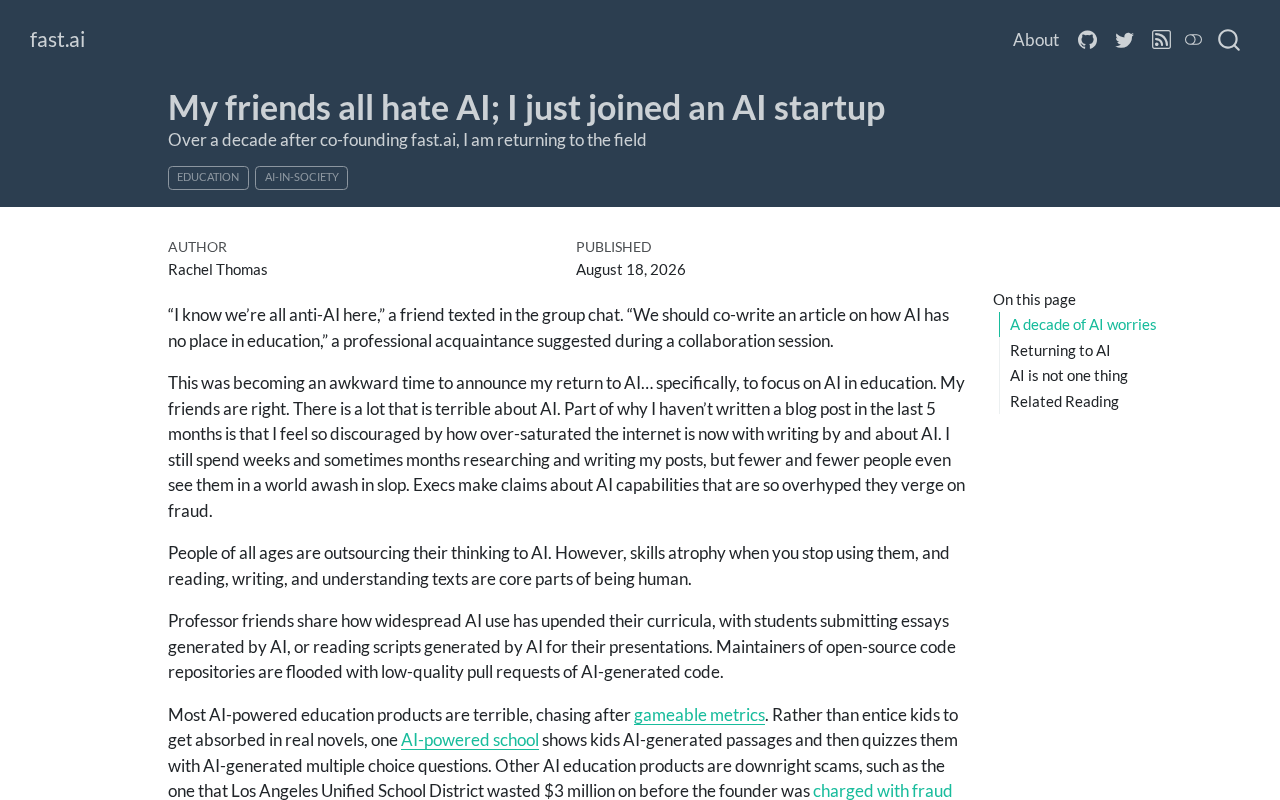
On Hacker News, a post titled "My friends all hate AI; I just joined an AI startup" sparked an intense discussion. Behind the 27 upvotes and 82 comments lies a reflection of the identity crisis many tech professionals face today — when AI becomes a focal point of social controversy, those who choose to dive in find themselves under mounting pressure from friends, communities, and even their own sense of self.
About Hacker News: Hacker News is a tech community operated by Y Combinator, Silicon Valley's renowned startup accelerator, founded in 2007. The platform is known for its high-quality discussions on technology and entrepreneurship, with users primarily consisting of developers, founders, and tech industry professionals. Unlike mainstream platforms such as Reddit, Hacker News features a minimalist design and strict community guidelines, resulting in consistently high-quality comments. Posts that garner significant upvotes and discussion typically represent genuine concerns within the tech community. Its voting mechanism and 'flag' system ensure discussion quality, making it an important window into the sentiments of Silicon Valley and the global tech community.
The reason this topic resonated so widely is precisely because it touches on an increasingly common reality: AI is no longer a purely technical subject — it has become a social issue laden with strong moral and emotional undertones. Joining the AI industry, in certain circles, is no longer a badge of honor for "chasing the cutting edge" — it might actually be seen as "picking a side."
Why More and More People "Hate AI"
To understand this divide, we first need to understand where the opposition comes from. Over the past two years, controversies surrounding generative AI have centered on several key areas.
Generative AI Explained: Generative AI refers to artificial intelligence systems capable of creating new content, including text (like ChatGPT), images (like Midjourney and DALL-E), audio, and video. These technologies are built on large-scale pre-trained models that learn patterns from massive datasets to generate new content. Unlike traditional AI's classification and recognition capabilities, generative AI's core strength is "creation." The launch of ChatGPT in late 2022 marked generative AI's entrance into the mainstream, and over the following eighteen months, the technology rapidly penetrated virtually every industry. The training process typically involves crawling vast amounts of publicly available internet content — which is the central source of copyright disputes, as this training data is often used without explicit authorization from original creators.
Creators' Existential Anxiety
For illustrators, writers, musicians, and other creative professionals, AI directly threatens their livelihoods. Training data scraped from massive collections of original works without consent, combined with models that can "replicate" artistic styles at negligible cost — many creators see this as systematic exploitation. "AI theft" has become a frequently used criticism hashtag on social media.
Concerns About Employment and Social Structures
Another wave of opposition stems from fear of mass unemployment. When AI can replace customer service agents, translators, junior programmers, and even some white-collar positions, ordinary people's uncertainty about the future is amplified. This anxiety often transforms into hostility toward the entire AI industry.
Environmental and Ethical Costs
The enormous computing power and energy consumed by training large models, the carbon emissions from data centers, and negative applications such as deepfakes and information manipulation have all given the letters "AI" a negative connotation for certain groups.
The Resource Consumption of Large Model Training: Training a large language model (LLM) requires staggering computational resources. Take GPT-3 as an example: its training cost is estimated at over $4.6 million, consuming electricity equivalent to what hundreds of American households use in a year. The training process requires thousands of high-performance GPUs running continuously for weeks or even months. These data centers not only consume massive amounts of electricity but also require complex cooling systems, further increasing energy costs. It's estimated that training GPT-3 produced carbon emissions equivalent to approximately 125 round-trip flights across the United States. Larger models like GPT-4 may cost tens of millions or even over a hundred million dollars to train. This resource-intensive nature means only a handful of tech giants can afford it, while also raising widespread questions about the sustainability of AI development.
Deepfake Technology Risks: Deepfakes use deep learning technology to generate highly realistic fake images, audio, or video. Through AI models, people in videos can be made to say things they never said, or someone's face can be placed in scenes they never participated in. Negative applications of this technology include: political manipulation (fabricating leaders' speeches), financial fraud (mimicking executives' voices for scams), non-consensual pornographic content creation, and fake news dissemination. Since 2023, multiple cases of fraud using AI voice cloning have been exposed — requiring only a few seconds of real voice samples to generate convincing fake audio. The lowering of technical barriers means ordinary people can now use these tools, making "seeing is believing" no longer reliable and fundamentally challenging the trust foundation of an information society.
The AI Practitioner's Dilemma
The post author's predicament is highly typical: tech professionals can often see AI's enormous positive value in boosting efficiency, assisting medical diagnostics, and accelerating scientific research — but their friends only see the destruction it brings. This cognitive gap can make even everyday social interactions awkward.
Progress in AI-Assisted Medical Diagnostics: AI has demonstrated tremendous positive value in healthcare. In medical imaging, deep learning models have reached or even surpassed human expert-level accuracy in detecting lung cancer, skin cancer, retinal diseases, and more. Protein structure prediction systems like AlphaFold have solved a problem that puzzled biologists for 50 years, accelerating drug development. AI is also being used to: analyze electronic health records to predict disease risk, assist in developing personalized treatment plans, and optimize hospital resource allocation. In resource-scarce regions, AI diagnostic tools can compensate for the shortage of specialists. However, these applications also face challenges: medical data privacy protection, algorithmic bias (such as reduced diagnostic accuracy for certain ethnic groups due to imbalanced training data), and legal liability attribution remain unresolved.
In the comments section, many peers shared similar experiences. Some mentioned that when they told friends about their AI-related work, they were met not with curiosity but with scrutiny or even accusations. This social pressure is real, and it differs from any previous technology wave — when the internet and mobile apps emerged, practitioners were more likely to be envied than questioned.
You may not have noticed, but rational voices also appeared in the discussion: technology itself is neutral; what matters is how it's used. Choosing to join an AI company doesn't mean endorsing every AI application, just as working at an energy company doesn't preclude being an environmentalist. Distinguishing between "the technology," "specific products," and "business models" is a crucial step in navigating this moral dilemma.
Finding Your Own Stance Amid Controversy
Facing this divide, simply "picking a side" is not the best answer. From this discussion, we can distill several more mature approaches to thinking through the issue.
Choose an AI Direction You Believe In
AI is an incredibly broad field. Some companies are building face-swapping tools and mass-producing marketing content; others are working on protein structure prediction, early disease detection, and accessibility tools. Which type of company you join is itself an expression of your values. Rather than defending "AI" in broad strokes, it's far better to clearly explain what you're specifically working on and what real problems it solves.
Face Criticism Head-On Instead of Avoiding It
Your friends' concerns aren't entirely unfounded. Data copyright, employment displacement, and ethical risks are real problems the industry must confront. A responsible practitioner should be someone who pays attention to these issues and pushes for improvement — not someone who simply defends the industry. Acknowledging that problems exist actually makes it easier to earn respect.
Maintain Independent Judgment
Whether it's "AI can do everything" or "AI is inherently sinful," both are emotionally charged extremes. The truly valuable stance is to see technology's potential while remaining vigilant about its risks, and to make choices in your daily work that align with your own conscience.
Individual Clarity in a Technological Wave
The reason this post resonated so deeply is that it articulated a challenge defining our era: when a technology simultaneously carries enormous hope and enormous controversy, no one involved can remain a bystander.
"My friends all hate AI, but I joined an AI startup" — behind this statement lies not a simple question of right or wrong, but a deeper inquiry into how to maintain independent thinking amid the noise of public opinion, and how to define your stance through concrete actions rather than slogans. Perhaps what the industry truly needs is precisely this kind of practitioner — passionate but not blindly following, embracing technology yet remaining vigilant. Their very existence is a key force in steering AI toward a more responsible future.
The Y Combinator Startup Ecosystem: Y Combinator (YC) is the world's most prestigious startup accelerator, founded in 2005. It operates a unique incubation model: two batches per year, each selecting hundreds of early-stage projects, providing approximately $500,000 in seed funding along with three months of intensive mentorship, culminating in a Demo Day pitch to investors. YC alumni include well-known companies such as Airbnb, Dropbox, Stripe, and Reddit, with a combined valuation exceeding $600 billion. Its influence extends beyond funding to encompass its alumni network, startup methodologies (such as lean startup), and brand endorsement. Hacker News, operated by YC, serves as a window into Silicon Valley's startup culture and technology trends. In recent years, YC has heavily backed AI startups, making it one of the key drivers of the generative AI wave.
Key Takeaways
Related articles

Open-Source WebGPU Library: A Lightweight Shader Solution for Browsers and Node.js
A lightweight, open-source WebGPU library supporting browsers and Node.js, with CPU sandbox rendering, reusable WGSL modules, and CI integration. Production-ready for web graphics and GPU compute.
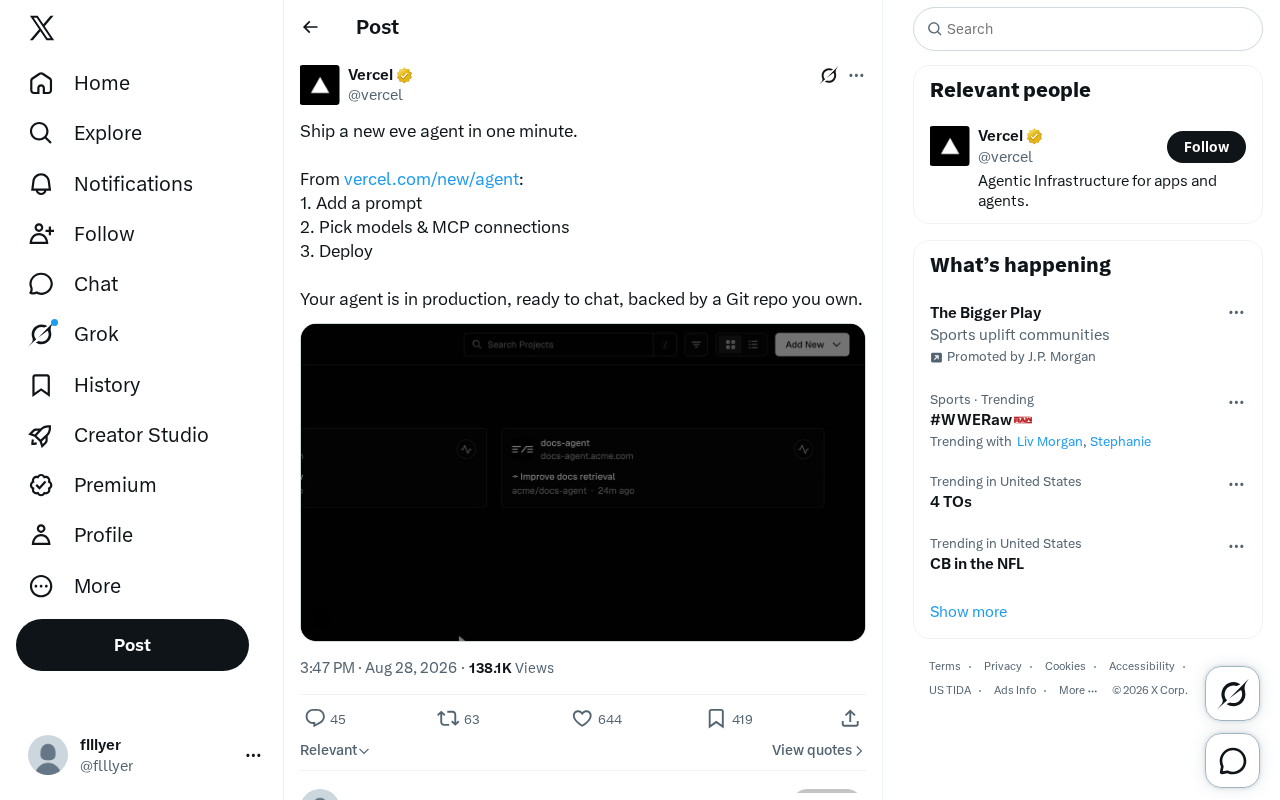
Deploying AI Agents on Eve Platform in Three Steps: A Minimalist Solution from Prompts to Production
Deep dive into how Eve platform achieves one-minute AI Agent deployment through prompt configuration, model selection, and MCP connections. Covers Git repo code ownership, MCP protocol integration advantages, and production challenges behind rapid deployment.

Codex Beginner's Guide: Installation, Registration, and Subscription for Users in China
A complete guide to OpenAI Codex: four installation methods (desktop, IDE plugin, CLI, web), ChatGPT Plus subscription via WeChat Pay, permissions, and model selection.