n8n in Action: Automatically Filter High-Intent Webinar Leads in 60 Seconds

An n8n workflow can automatically grade leads and push them to Slack within 60 seconds after a webinar ends.
The article presents an n8n-based automation solution for webinar lead processing. Instead of manually filtering hundreds of registrations, judging intent, and entering data into the CRM, the workflow triggers right after the webinar, cleans and analyzes attendance data, scores leads, generates CRM tags, queues follow-up tasks, and pushes results to Slack. The demo produced 10 active buyers, 23 personalized tags, and 83 queued tasks.
Why Sales Teams Need Automated Webinar Lead Processing
After a webinar ends, the most painful thing for a sales team is facing a raw CSV with 300 names and having no idea who to contact first. According to an automation solution shared by a YouTube creator, this inefficient lead-qualification process can be completely transformed within 60 seconds.
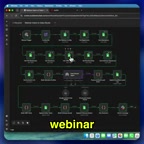
The traditional approach to webinar leads has obvious pain points: salespeople have to manually browse large amounts of registration information, judge by experience which customers truly have purchase intent, then enter each one into the CRM system and schedule follow-ups. This process is not only time-consuming but also prone to missing high-value leads. The creator points out that the core issue is not the number of leads, but the lack of an instant, intelligent qualification mechanism.
Breaking Down the n8n Automation Engine Workflow
The core idea of this automation solution built on n8n is to complete lead grading and task assignment within an extremely short time after the webinar ends. According to the video demo, the automation engine automatically processes the attendee list and outputs three key results: identified active buyers, automatically generated personalized CRM tags, and follow-up tasks already placed in the queue.
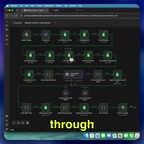
Specifically, the workflow triggers immediately after the webinar ends and cleans and analyzes the attendance data. The actual runtime results shown in the video are: 10 active buyers filtered from the list, 23 personalized CRM tags generated, and 83 follow-up tasks automatically queued. These results are pushed directly to a Slack channel, so the sales team can see a priority-sorted action list without logging into any other system.
The Logic of Turning a Raw List into Actionable Tasks
The key to this solution is converting "who attended" into "who is worth contacting first." The automation engine evaluates attendee behavior data through preset rules and conditional logic to distinguish high-intent customers. Although the video does not disclose the specific scoring algorithm in detail, the output shows that the system can automatically complete three steps—lead scoring, tag generation, and task assignment—which are precisely the most time-consuming parts of the traditional manual process.
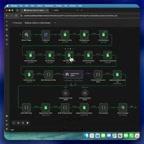
n8n is an open-source workflow automation tool that uses a node-based visual orchestration approach: each node represents an operation unit (such as reading a CSV, calling an API, conditional judgment, or sending a message), and connections between nodes define data flow and trigger order. It supports self-hosted deployment, allowing data to remain entirely on your own servers—which is especially important for enterprises handling customer lists.
Compared with SaaS tools like Zapier, n8n's advantages lie in custom code nodes, support for complex branching and loop logic, and no cost pressure from task-based billing. Its workflows are usually started by a Trigger node (such as a Webhook, timer, or form submission event); subsequent nodes receive the JSON data output by upstream nodes and process it item by item, ultimately pushing results to downstream systems via Slack, email, or HTTP requests.
Lead scoring is a common mechanism in marketing automation: each attendee is assigned a numerical score to quantify the strength of their purchase intent. Scoring is usually based on attributes such as registration source, attendance duration, number of questions or interactions, whether materials were downloaded, job title, and company size. Different dimensions are given different weights and then summed. Leads whose scores exceed a threshold are regarded as high-intent customers and enter the priority follow-up queue.
CRM tags are structured metadata attached to contact records, used for quick filtering and grouping—for example, "attended the full session," "asked questions proactively," or "decision-maker." Combined with scores, tags allow sales to precisely order follow-ups by intent level and area of interest. It should be noted that the weight design of scoring rules depends heavily on business experience and usually requires repeated calibration after real conversion data is fed back, in order to avoid high scores with low conversion or missing silent high-value customers.
Slack Integration: Letting Sales Teams Get Leads Without Switching Tools
One highlight of this automation solution is pushing results directly to Slack. The sales team does not need to open the CRM, download a CSV file, or manually organize spreadsheets; all key information is presented in a structured form in the communication tool the team uses every day.

The value of this design is that it lowers the operational barrier for salespeople. The lead qualification result is not a report that requires further processing, but an action list that can be executed directly—who needs follow-up, how they are categorized by tag, and whether follow-up tasks are queued are all clear at a glance. For sales managers, this means the golden follow-up window after the webinar ends is no longer wasted on administrative work.
Implications for Marketing Automation
This case demonstrates the practical value of open-source automation tools like n8n in marketing scenarios. Compared with enterprise-level marketing automation platforms that often require months of implementation, workflows built on n8n are lighter and more flexible, and can be quickly adjusted according to the team's actual needs.
From a broader perspective, automating webinar lead processing is just one slice of marketing process optimization. The underlying logic—completing analysis, grading, and task assignment within the shortest possible time after data is generated—can be reused in many lead-generation scenarios such as content downloads, event registrations, and product trial requests. At the end of the video, the creator mentions that viewers who want to get this specific workflow can leave the word "webinar" in the comments, indicating that practical automation solutions like this attract considerable attention in the developer community.
For technical teams evaluating marketing automation solutions, this case provides a reference starting point: there is no need to pursue a large, all-encompassing platform. Start with a specific, high-frequency process that clearly consumes a lot of manual time, build a minimum viable workflow with n8n, validate the results, and then gradually expand.
One-line Summary
An n8n workflow can automatically grade leads and push them to Slack within 60 seconds after a webinar ends.
Paragraph Summary
The article introduces an n8n-based automation solution for webinar lead processing. In the traditional process, salespeople must manually filter hundreds of raw registration records, judge intent, and enter them into the CRM—time-consuming and prone to missing high-value leads. This solution triggers a workflow immediately after the webinar ends to clean and analyze attendance data, automatically completing lead scoring, CRM tag generation, and follow-up task queuing, and pushing the results directly to a Slack channel. The video demo's actual output was 10 active buyers, 23 personalized tags, and 83 queued tasks. The author believes this lightweight open-source solution is more flexible than enterprise marketing platforms, and its logic of "completing analysis, grading, and assignment within the shortest time after data is generated" can be reused in multiple lead-generation scenarios such as content downloads and event registration.
Related articles

Why Does the Tesla Roadster Need to Fly? A Deep Dive into Musk's Wild Demo
Tesla's Roadster launch showed wall-climbing, upside-down driving, and flying stunts—but The Vergecast notes the demo car may lack a battery, the Rocket version is invite-only and not street-legal, and the website terms don't guarantee delivery. After nine years of delays, why does this car still need to exist?

AI Is Not a Replacement: Human-AI Collaboration Through the Lens of Factory Root Cause Analysis
Starting from factory root cause analysis, this article explains how AI accelerates evidence chain construction rather than replacing human experts, exploring the pragmatic implementation logic and business value of 'AI supporting people rather than replacing them.'

AI Agent Decision Auditing: Building an Evidence Chain in Regulated Workflows
Starting from a Reddit discussion, this article analyzes three core issues in AI agent decision auditing within regulated workflows: what fields audit records should contain, how to handle feedback latency for erroneous decisions, and how to continuously calibrate LLM judge consistency with human judgment.