Nari Launches Qwen3-TTS and Qwen3-ASR: High-Accuracy, Low-Latency Speech Solutions
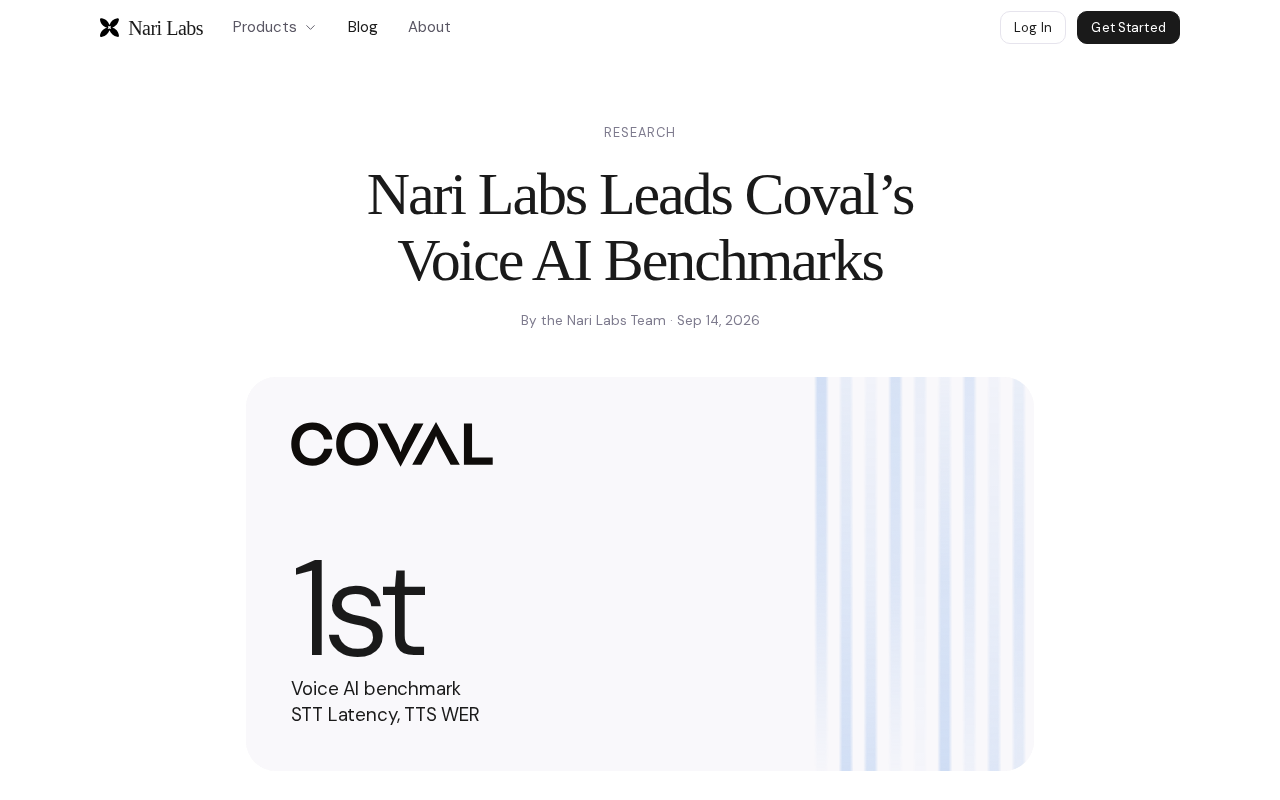
Nari launches paired Qwen3-based TTS and ASR models targeting accuracy, low latency, and low cost.
Nari has unveiled a paired speech technology suite on Hacker News built on Alibaba's open-source Qwen3 large model family, featuring both a text-to-speech (TTS) and automatic speech recognition (ASR) model. The goal is to simultaneously optimize accuracy, latency, and cost — the three core engineering metrics for voice products. By grounding speech capabilities in Qwen3's strong language understanding, the models aim to improve synthesis and recognition quality at the contextual level, differentiating them from audio-only architectures like Whisper. Offered as a complete end-to-end solution, they eliminate the need to stitch together components from multiple vendors. That said, performance claims are currently self-reported, and independent benchmarks against Whisper and major cloud APIs remain to be seen.
Nari Introduces a New Speech Model Duo
On Hacker News's Show HN section, a voice technology product called Nari has been turning heads. The project centers on two core models: a Qwen3-based text-to-speech (TTS) system and an automatic speech recognition (ASR) solution, both claiming strong performance across accuracy, latency, and cost.
For developers, speech applications have long involved an unavoidable three-way trade-off: higher accuracy typically means larger models and higher inference costs, while chasing low latency can come at the expense of recognition quality. By bundling Qwen3-TTS and Qwen3-ASR together, Nari aims to strike a better balance across all three dimensions.
Speech Applications Built on the Qwen3 Foundation
Both models are built on top of the Qwen3 model family. Qwen3, the open-source large model family from Alibaba's Tongyi Qianwen, has built a solid reputation for text understanding and generation capabilities in recent years. Extending those capabilities into the speech domain is a natural next step.
TTS (Text-to-Speech) synthesizes written content into natural, fluent audio output — a technology widely used in voice assistants, audiobooks, accessibility tools, and more. ASR (Automatic Speech Recognition) works in the opposite direction, transcribing audio into text, and serves as the foundational component for voice input, meeting transcription, subtitle generation, and similar applications.
By offering both as a paired solution, Nari allows developers to build a complete voice interaction loop — from user speech (ASR recognition) to system response (TTS synthesis) — without stitching together components from multiple vendors.
The Triple Promise: Accuracy, Latency, and Cost
The project's tagline directly highlights three selling points: high accuracy, low latency, and low cost. These correspond precisely to the three engineering metrics that matter most when shipping voice products.
Low latency is especially critical for real-time interaction scenarios. In voice conversations and live captioning, even a few hundred milliseconds of delay can noticeably degrade the experience. Cost efficiency, meanwhile, directly determines whether a product can scale — for enterprise applications processing large volumes of audio, reducing per-unit cost often makes or breaks the business model.
Worth noting: these metrics currently come from the project's own claims. Concrete benchmark data and head-to-head comparisons with established solutions like Whisper or major cloud provider speech APIs have yet to be independently validated by the community. The Show HN post has received limited traction so far (8 points, 1 comment), suggesting it's still in early exposure territory.
What This Means for Developers
For teams evaluating speech technology options, Nari's Qwen3 voice bundle is worth keeping an eye on — especially for developers who want to build on an open-source foundation and avoid lock-in to a single cloud provider.
If you're assessing speech tech options, it's worth focusing on a few practical questions: whether the models are open-source and self-hostable, multilingual support coverage, concurrent processing capacity, and real-world recognition accuracy under your specific audio quality conditions. These specifics tend to be more telling than general benchmark claims in marketing materials.
As the Qwen3 ecosystem continues to expand, vertically focused applications built around it will only multiply. Speech is a critical entry point for human-computer interaction, and voice solutions grounded in a powerful language model foundation like Qwen3 have promising room to grow.
Related articles

Deep Dive into Agent Eval Harnesses: Build vs. Buy?
A deep dive into the four core components of an agent eval harness — Cases, Runner, Capture, and Graders — with practical guidance on when to build vs. adopt existing frameworks.
Getting Started with Krea 2 Image Generation: A Beginner's Guide to LoRA and Checkpoints
A beginner's guide to Krea 2 image generation: how to start with free open-source workflows, understand LoRA vs Checkpoint on Civitai, and achieve consistent realistic image generation.

Nintendo 'Customer Appreciation' Sale: Switch Games and Accessories Price Cuts Roundup
Nintendo's Customer Appreciation sale discounts Switch games and accessories at Amazon, Best Buy, Walmart, and its digital store — funded by tariff refunds. Ends Sept 26.