National Geographic's 'Expedition: Saving Our Seas' Trailer: What's Left of the Ocean When the Corals Disappear

National Geographic's ocean conservation trailer focuses on the cascading coral reef crisis and community collaboration.
National Geographic has released the official trailer for 'Expedition: Saving Our Seas,' conveying ocean conservation urgency in under a minute. The core message: coral reefs cover less than 1% of the ocean floor yet nurture a quarter of marine species; their loss would cascade to fisheries and billions of people. The trailer stresses 'it's not the time to give up.' The expedition notably collaborates with coastal communities, blending local knowledge with science. The trailer is emotionally powerful but lacks specifics on locations, species, and targets.
National Geographic has released the official trailer for Expedition: Saving Our Seas. This short clip, under a minute long, doesn't pile on grand narratives—instead, it lays the urgency of ocean conservation on the table with just a few lines.
What the Trailer Says
The trailer's core message chain is remarkably clear: the ocean is under immense pressure, and once coral reefs disappear, the fish that depend on them will vanish too. One line in the trailer is almost brutally blunt—"If we lose them, we're gonna care a lot."

The subtext of this line: humanity's current "indifference" to coral reef degradation is essentially a lag in awareness. Coral reefs cover less than one percent of the ocean floor yet nurture roughly a quarter of all marine species. When this foundation collapses, the impact ripples up the food chain all the way to fisheries, coastal economies, and the protein source for billions of people.
The trailer immediately offers the other side: "It's not the time to give up."
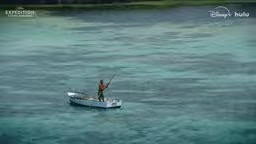
These two lines form the trailer's basic tension—the crisis is real, but action hasn't lost its meaning yet.
Coral bleaching is the key context for understanding this trailer. Corals themselves are transparent, tiny animals; their vivid colors come from symbiotic zooxanthellae—microscopic algae that provide about 90% of the coral's energy through photosynthesis. When sea temperatures keep rising (typically 1–2°C above the summer maximum sustained for weeks), corals expel the zooxanthellae due to stress, lose their pigment, and expose their white calcium carbonate skeletons—this is "bleaching." Bleached corals don't die immediately; if water temperatures drop in time, zooxanthellae can recolonize. But if the heat persists, corals die en masse from starvation and disease. Over the past four decades, three major global bleaching events have occurred, with the 2014–2017 event affecting roughly 75% of the world's coral reefs. This is the scientific basis for the trailer's claim that "if corals disappear, fish will vanish too."
What the Expedition Is Actually Doing
From the information revealed in the trailer, one notable feature of this expedition's approach is collaboration with coastal communities. The trailer explicitly mentions "working with coastal communities—these explorers help us reimagine our world."
This isn't the traditional model of scientists heading out alone to collect samples and publish papers back in the lab. Bringing coastal communities into the core of the expedition means the project aims to combine local knowledge with scientific investigation. Coastal residents often perceive changes in coral reefs earlier and with more nuance than monitoring data—they know which reef areas have seen fish declines and which seasons bring abnormal water temperatures.
In the trailer, expedition members say "everything there is unique, full of surprises," and their excitement when saying "we did it" suggests the project may have achieved milestones on certain specific goals. But the trailer doesn't disclose specific locations, species, or technical methods—that information will have to wait until the full film is released.
Why Coral Reef Conservation Deserves Sustained Attention
The threats facing coral reefs aren't new: warming waters cause bleaching, ocean acidification weakens coral skeletons, overfishing disrupts ecological balance, and coastal development brings sediment pollution. The compounding effects of these pressures have already caused a significant decline in global coral coverage over the past few decades.
But what makes coral reef conservation special is that it's one of the few ocean issues where "local action can produce measurable results." Establishing marine protected areas, restoring coral nurseries, restricting destructive fishing methods—these measures have been proven in local waters to slow or even reverse degradation trends.
The repeated "there, there, there" and "As one ocean" at the trailer's end pull the narrative from specific reef areas back to a global perspective. Coral reefs aren't isolated ecosystems; degradation in one area affects other waters through ocean currents, species migration, and climate feedback.
Marine Protected Areas (MPAs) are the primary policy tool behind the claim that "local action can produce measurable results." An MPA is an area where human activities like fishing and development are restricted or prohibited, with the goal of letting the ecosystem recover on its own with less interference. Research shows that well-managed MPAs often significantly boost fish biomass and species diversity within 5–10 years, and may "spill over" into surrounding fishing grounds through larval dispersal. Another commonly mentioned tool is the coral nursery: researchers attach coral fragments to the seafloor or floating frames to cultivate them, then transplant them back to degraded reef areas once they reach a certain size—essentially "reforestation" for corals. This type of restoration is costly and covers limited areas, so it's typically used alongside MPAs and emission reduction measures rather than relied on alone.
Questions the Trailer Doesn't Answer
The trailer is emotionally compelling but has limited information density. It doesn't specify the expedition's exact waters, which coral species are involved, what restoration or monitoring technologies were used, or any quantitative targets. For viewers concerned about ocean conservation, these are precisely what they most want to know.
Additionally, the trailer mentions "working with coastal communities" but doesn't elaborate on the specific forms of community participation—is it co-designing conservation plans, providing local monitoring data, or participating in ecological restoration work? The depth and sustainability of participation vary greatly across different forms.
These gaps can only be filled once the full film is released. As a trailer, its job is to bring viewers into the scene and build emotional connection—from that angle, it achieves its goal.
Community-based management is the framework for understanding the phrase "working with coastal communities." In ocean conservation, including local residents in decision-making and implementation is based on two points: first, coastal communities have long depended on coral reefs for fishing, tourism, and coastal protection, so their livelihoods are directly tied to ecological health; second, the spatial and temporal information local residents possess (such as seasonal fishing ground changes and historical reef conditions) often covers what scientific monitoring cannot. Indonesia, the Philippines, Fiji, and other places have numerous community-based management cases, with participation ranging from jointly designating no-take zones and rotating fishing closures to villagers serving as patrol officers and collecting ecological data. Research shows that whether community-based management sustains depends on whether rights and responsibilities are balanced, whether benefits flow back to the local community, and whether external funding and technical support remain stable long-term.
One-line Summary
National Geographic releases an ocean conservation trailer focusing on the cascading crisis of coral reef loss and community collaboration efforts.
Paragraph Summary
National Geographic has released the official trailer for Expedition: Saving Our Seas, using a short clip under a minute to convey the urgency of ocean conservation. The core message chain: coral reefs cover less than 1% of the ocean floor yet nurture about a quarter of marine species; once they disappear, the fish that depend on them vanish too, with impacts rippling to fisheries, coastal economies, and the protein source for billions. The trailer's other side emphasizes "it's not the time to give up." A notable feature of the expedition is collaboration with coastal communities, combining local knowledge with scientific investigation. The article notes that coral reef conservation is one of the few ocean issues where local action can produce measurable results, but the trailer doesn't disclose specific waters, species, technologies, or quantitative targets—its information density is limited, and its emotional impact is its main strength.
Related articles

OpenAI Partners with Shield: How the Astra Agent Revolutionizes IT Troubleshooting
OpenAI and Shield launch the Astra agent, which autonomously logs into computers and legacy systems to fix IT issues in real time, 35-40% faster than traditional models, with humans involved only when judgment is needed.

iPhone Duo Battery Life Tested: One Charge a Day Is Unavoidable, and the Large Screen Is the Culprit
iPhone Duo battery test: heavy use needs at least one charge a day, and about 30% remains after 6.5 hours of screen-on time. How often the large screen is unfolded is key; a MagSafe battery pack helps, and long-term degradation is also worth watching.

Kimi K3.1 Pro Open-Sourced: 2.8 Trillion Parameters Close In on Opus
Moonshot releases the open-source MoE model Kimi K3.1 Pro, with 2.8T total parameters and 104B activated, trailing Opus 5.5 by under 1 point on Terminal Bench 4.0.