Netizens Ship Them, the Companies Feud: The Sweet and Sour of DeepSeek and Claude

Netizens ship Claude with DeepSeek, but behind it are real competitions over distillation accusations, open-source routes, and chip policy.
The article starts from the community-popular "large models choosing each other as lovers" test, where netizens pair Claude with DeepSeek and give them personas, creating a cultural carnival. But in reality the two companies are tense: Anthropic has accused DeepSeek of unauthorized distillation of Claude's capabilities, while DeepSeek wins developers with open model weights and the open-source inference framework DeepInfer, forming a strategic difference. Behind the competition is a bigger board—chip export controls and the U.S.-China AI policy game. The author reminds us that reality is not a simple binary of "U.S. closed-source, China open-source," and ordinary users need not pick sides—mixing different models according to task needs is enough.
Title
Netizens Ship Them, the Companies Feud: The Sweet and Sour of DeepSeek and Claude
Meta Description
Netizens pair DeepSeekAd with Claude as a couple, but in reality Anthropic accuses DeepSeek of distillation, and the two battle over open-source and chip policy. This article unpacks the sweet and sour behind it all, and shares model-usage strategies for ordinary users.
Article Content
Recently, an interesting "test" has been circulating in the AI community: asking different large models to choose another model as their lover. In the results that spread around, 5 out of 11 models chose Claude, Claude itself chose DeepSeek, and DeepSeek chose Timmy. This chain of relationships quickly became a meme among netizens, from cuddly fan art to romance shorts, with even character settings arranged—Claude as the smart, polite young lady of a wealthy family, and DeepSeek as the big blue-haired fat fish.
But shipping aside, the two companies in reality are nowhere near this sweet.
Community-Made Sugar: From a Test to a Character Carnival
The test itself isn't rigorous—change the wording and the results may change. But netizens don't care; a single bite of sugar is enough. Claude's "young lady" persona paired with DeepSeek's "big fat fish" image creates maximum contrast. Even better, Claude's parent company is Anthropic, while DeepSeek comes from China—this combination makes the memes even more entertaining.
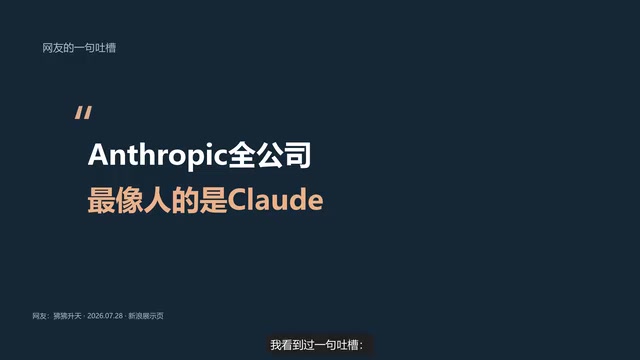
Someone joked: "The most human person at Anthropic is Claude." Those who've used Claude might understand this contrast: in chats it listens patiently and helps you revise things, but when your account has issues, the official wording is something else entirely. This disconnect between daily experience and the official image happens to become material for community creativity.
Real-World Clash: Distillation Accusations and Open-Source Strategy
Back to reality: Anthropic has publicly accused DeepSeek and other companies of extracting Claude's capabilities without authorization to train their own models, calling it "distillation." Distillation itself is a common training technique; the controversy lies in data sources and authorization. These specific accusations have not yet been independently confirmed, but the tense relationship between the two companies is evident.
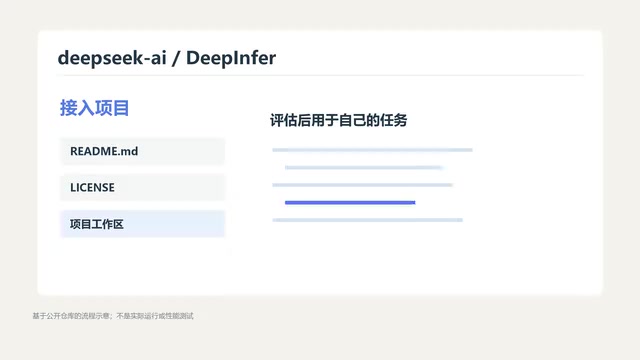
DeepSeek has taken a different path: progressively releasing model weights, engineering tools, and recently open-sourcing the inference framework DeepInfer. For developers, this is very attractive—not only can you call the model, but you can also study its implementation and even integrate it into your own projects. Of course, open source doesn't mean handing over everything. Protecting technology and opening technology aren't a matter of each company choosing one side, but they are indeed using different approaches to win developers and markets.
Knowledge distillation is a model compression and knowledge transfer technique: a smaller "student model" imitates the output distribution (such as soft labels or logits) of a large "teacher model," thereby achieving near-teacher capability at lower cost. The technique itself was systematically proposed by Hinton et al. in 2015 and is widely used in industry. The controversy is usually not about the technique itself, but about the source of training data, terms of use, and authorization boundaries—when the "teacher" is a closed-source commercial model, large-scale calls to its outputs to retrain a competitor may touch on terms of service and intellectual property issues, which is the core of Anthropic's accusation.
Open-sourcing model weights means publishing model parameter files so others can download, deploy, and fine-tune them, but usually not including training data and the complete training process; in contrast, "open source" also requires publishing training code and data. DeepSeek adopts a route of open weights plus partial open-sourcing of engineering tools, so developers can run local inference and do secondary development, but may not be able to fully reproduce the model. This "open but not fully transparent" model is a common form in the current large-model open-source debate.
Chips and Policy: The Bigger Board
Looking further, it's not just companies competing. Anthropic's Dario has publicly advocated strengthening export controls on advanced chips to China. The U.S. AI Action Plan also emphasizes maintaining technological leadership, pushing chips, models, and software overseas together. China's AI policy, meanwhile, is advancing computing infrastructure, industrial applications, and the open-source ecosystem.
Who can get computing power, whose models are adopted by more people, whose technology becomes the default standard—all of this is being contested. But don't casually interpret it as "the U.S. is closed-source, China is open-source," because U.S. policy also explicitly supports open models. Reality is more complex than memes.

Advanced chip export controls are a policy tool the U.S. has gradually tightened since 2022, mainly targeting high-compute GPUs used for AI training (such as NVIDIA A100/H100 and subsequent models) and related manufacturing equipment, restricting China's access to top-tier computing power through export licenses and performance thresholds. The policy logic is: training frontier models relies heavily on large-scale computing clusters, so controlling chips can slow a competitor's capability progress. This is also the background for Dario's advocacy of stronger controls.
The U.S. AI Action Plan is a policy document released in 2025, emphasizing "America First" technology-stack exports: pushing chips, models, software, and standards together to allies and overseas markets, while reducing regulatory barriers and accelerating data center and energy infrastructure construction. It is not purely export restrictions; it also includes statements promoting open models and the open-source ecosystem, so the binary of "U.S. closed-source, China open-source" is inaccurate.
Ordinary Users: No Need to Pick Sides, Just Use What Works
For ordinary users, there's no need to pick sides. Whoever gets the job done well at an acceptable cost is the one to use. For example, daily Q&A and cleanup scripts can use DeepSeek V4.1 Flash, quick task processing can use GPT 6.1 Sol, complex engineering development can be handed to GPT 6 Astra, and in DSH Codex you can switch based on the task. You don't have to throw away the others just because one model updates.
What about Claude? It made the choice for me. Fine—keep shipping, but tools still need to be swapped when necessary.

One-line Summary
Netizens ship Claude with DeepSeek, but behind it are real competitions over distillation accusations, open-source routes, and chip policy.
Paragraph Summary
The article starts from the community-popular "large models choosing each other as lovers" test, where netizens pair Claude with DeepSeek and give them personas, creating a cultural carnival. But in reality the two companies are tense: Anthropic has accused DeepSeek of unauthorized distillation of Claude's capabilities, while DeepSeek wins developers with open model weights and the open-source inference framework DeepInfer, forming a strategic difference. Behind the competition is a bigger board—chip export controls and the U.S.-China AI policy game. The author reminds us that reality is not a simple binary of "U.S. closed-source, China open-source," and ordinary users need not pick sides—mixing different models according to task needs is enough.
Related articles

beacon.sh: Giving AI Coding Assistants a Self-Evolving Memory
beacon.sh is an open-source, self-evolving memory layer for AI coding agents, supporting Claude Code, Cursor, Codex and 20+ harnesses—turning agent sessions into a compounding knowledge layer.

Xmind 2027 Launches: Mind Mapping Evolves into an AI Thinking Partner
Xmind 2027 launches on Product Hunt as an "AI thinking partner." It adds Xmind Agent for research with local documents and mind maps, and connects mind map context to ChatGPT, Claude, and other AI workflows via MCP. This article analyzes its product logic, differentiation, and open questions.

Display 1.0: Build Docs and Apps with Any Agent
Display 1.0 launches on Product Hunt, letting any Agent create docs, prototypes, and apps in one workspace, organized via Spaces and Folders into a team knowledge base with flat pricing.