Neural Networks for Beginners: From Fundamentals to Handwritten Digit Recognition

A beginner-friendly guide to neural network fundamentals and how they work
This article introduces neural network core concepts for deep learning beginners, covering the basic structure of input, hidden, and output layers, key mechanisms like forward propagation, backpropagation, and gradient descent, the historical development from the 1943 M-P model to AlexNet launching the deep learning era in 2012, and practical issues like overfitting.
Neural networks are the cornerstone of deep learning, yet many beginners have only a vague understanding of how they work internally. This article starts from scratch, systematically explaining the core concepts of neural networks—input layers, hidden layers, output layers, forward propagation, backpropagation, gradient descent—and walks you through the classic handwritten digit recognition case to help you truly understand how neural networks operate.
Historical Background of Neural Networks: The concept of neural networks dates back to 1943, when neuroscientist Warren McCulloch and mathematician Walter Pitts proposed the first mathematical neuron model (the M-P model), attempting to simulate the brain's neural mechanisms mathematically. In 1958, Frank Rosenblatt invented the Perceptron—the first model capable of automatically adjusting weights through learning. However, in 1969, Minsky and Papert proved that single-layer perceptrons couldn't solve the XOR problem, plunging neural network research into a "winter" lasting over a decade. It wasn't until 1986, when Rumelhart and colleagues repopularized the backpropagation algorithm, that neural networks regained momentum. In 2012, Hinton's team won the ImageNet competition with AlexNet by an overwhelming margin, officially ushering in the era of deep learning.

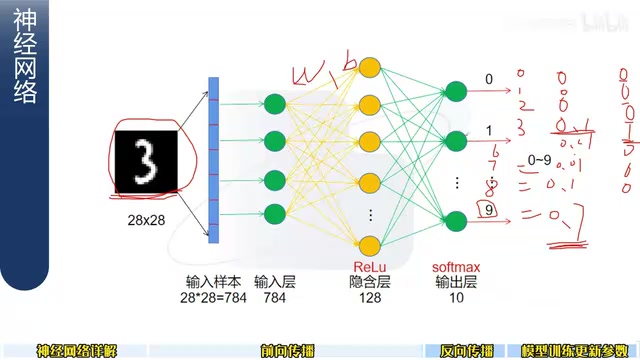

Basic Structure of Neural Networks
A basic neural network consists of three parts: the Input Layer, the Hidden Layer, and the Output Layer.
The number of hidden layers and the number of neurons in each layer are customizable. For example, you might set up a hidden layer with 128 neurons, or add another with 64 neurons. The core function of hidden layers is to extract features from data—more layers and more neurons give the model greater expressive power, but also increase the risk of overfitting.
Overfitting and Regularization: Overfitting refers to the phenomenon where a model performs excellently on training data but suffers significant performance degradation on unseen test data. Intuitively, an overfitting model has "memorized"
Related articles
Deep Dive into AI Agent Skill Design: …
Deep Dive into AI Agent Skill Design: Engineering Practices from Anthropic and Perplexity
A deep dive into Skill design philosophy from Anthropic's Claude Code team and Perplexity's Agent team, covering the Tax Test, Gotchas Flywheel, progressive disclosure, and Eval-First practices for building high-quality AI Agent skill systems.
Deep Dive into OpenAI's Official GPT-5…
Deep Dive into OpenAI's Official GPT-5.6 Prompting Guide: The Shift from Manual to Automatic
A deep dive into OpenAI's official GPT-5.6 Sol prompting guide: conciseness-first, outcome-oriented design, autonomy boundaries, tool routing, and reasoning intensity tuning.
 Deep Dives
Deep Dive into How OpenClaw (Open-Source Crayfish) AI Agent Works
Deep analysis of OpenClaw AI Agent internals: System Prompt, tool calling, SubAgents, Skill system, memory, and Context Engineering explained.