Never Elected, Yet Ruled New York for 30 Years: The Ultimate Case Study in the Mechanics of Power

Caro's biographies reveal Moses built power through legal text and Johnson through agenda deals, constructing astonishing power from powerless positions.
Based on Robert Caro's interviews and books, this article breaks down how Robert Moses and Lyndon Johnson built power in seemingly powerless positions. Moses, never elected, embedded tiny clauses in legislation to turn a temporary bridge authority into a permanent institution protected by constitutional contract law, and held his position through twelve titles and a coalition of banks, unions, and party bosses. Johnson transformed the "useless" post of Senate Majority Leader into a power center by controlling committee seats, monopolizing the agenda, and brokering bill deals—with the Civil Rights Act of 1957 as his masterpiece. Caro's conclusion: how power is accumulated determines how it is ultimately used.
Robert Caro spent seventy years writing two biographies: one about Robert Moses, New York's "master builder," and the other about Lyndon Johnson, the "master" of the U.S. Senate. Both works are widely regarded as the most profound analyses of political power ever written. Based on interviews with Caro and a synthesis of his books, this article breaks down how these two men built and sustained astonishing power without holding formal office or while occupying seemingly powerless positions.
Moses: Forging Power for Himself Through the Letter of the Law
Moses was never elected to any office, yet for over thirty years he wielded more power than any elected mayor or governor of New York. He built the Triborough Bridge, the Verrazzano Bridge, the Cross Bronx Expressway, Jones Beach, Lincoln Center, Shea Stadium, two massive upstate dams, and hundreds of parks and pools. By 1964, of the 899 miles of highways completed in New York State, 672 miles were built by Moses.

His core technique was drafting legislation. Moses was known as Albany's "best bill drafter," and he used this skill to embed powers into bills that even the legislators voting on them did not realize were there. The most typical example is the public authority system: these government-created corporations would issue bonds to finance construction and were supposed to dissolve once the bonds were repaid, transferring their facilities to the city government. But in 1933, in a subsection of Section 9 of the Triborough Bridge Authority Act, Moses inserted a sentence: the Authority could issue new bonds "from time to time" to repay old bonds, and the new bonds could be used for "any other corporate purpose." This meant that as the original bonds neared maturity, the Authority could issue entirely new 40-year bonds for completely different purposes.
More critically, Moses wrote provisions into the bond contracts stating that "the Authority may set toll rates and terms at its own discretion and retain surplus revenues." The U.S. Constitution prohibits states from passing laws impairing the obligation of contracts, so from the moment the bonds were sold, these powers could not be revoked by the legislature, governor, or mayor—unless a constitutional convention were convened. Through a few seemingly minor modifications, Moses transformed a bill to "build two bridges" into an institution that could build anything anywhere in New York, protected by the Constitution.
Public authority is a quasi-governmental corporation established by state or local law in the United States, commonly found in infrastructure and public facility financing, such as the Port Authority of New York and New Jersey and the New York Metropolitan Transportation Authority (MTA). Its typical structure: authorized by state legislature, it issues municipal bonds as an independent entity to raise construction funds and repays principal and interest through project revenues (bridge tolls, water fees, transit fares); it is governed by a board appointed by the governor or mayor, and its day-to-day operations are not subject to the legislature's annual appropriations process. The original purpose was to bypass municipal debt limits and civil service staffing constraints, building revenue-generating public works efficiently in a corporate manner; theoretically it should dissolve after the bonds are repaid and transfer assets to local government. Moses's manipulation lay precisely in exploiting the refinancing clause that "the Authority may from time to time issue new bonds to repay old ones," allowing the institution to exist in perpetuity, and in writing toll-setting power and surplus retention rights into bond contracts, locked in by the Constitution's Contract Clause—thereby turning a temporary financing tool into a permanent vehicle of power unaccountable to democratic oversight.
How to Keep the Position: Multiple Titles and Public Image
Moses lasted thirty years partly because of the law: the statute provided that a commissioner could only be removed mid-term upon "explicit charges after a formal hearing," and Caro writes that Moses "was not a corrupt man—his interest in personal gain was as low as that of any public official," so no formal charges could ever be brought.

More importantly, at the peak of his power, Moses simultaneously held twelve government positions—some appointed by the mayor, some by the governor—and no single person could strip him of all titles at once. And removing him from any one position meant making an enemy of a man who would still be the most powerful person in New York.
Moses's public image also provided protection. In the 1930s and 1940s, New York high school students voted him "most admired New Yorker." In his first four months as Parks Commissioner, he had workers toiling in round-the-clock shifts to complete 1,700 park renovations. He could deliver major public works within a single election cycle—a mayor who gave him power to build could stand on the ribbon-cutting stage before seeking reelection. By 1936, New York had received one-seventh of the federal government's Depression-era employment relief funds, and the projects those funds flowed to were chosen by Moses. If a mayor wanted to build something else, he would have to produce his own plans—and he had no independent technical team. Either build what Moses wanted to build, or build nothing at all.
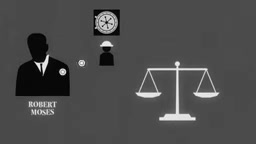
Moses also built a "patronage machine": banks bought his bonds at premium prices, unions gained more jobs, and party bosses took cuts from bridge insurance. These beneficiaries would call anyone who obstructed a project—whether a borough president or the governor himself.
Contract Clause is the provision in Article I, Section 10 of the U.S. Constitution: "No State shall... pass any... Law impairing the Obligation of Contracts." Its original purpose was to prevent state legislatures from legislating debt relief and undermining the stability of commercial contracts. In municipal bond practice, this clause has produced an important derivative effect: when a state or city establishes an authority by legislation and issues bonds, the bond contract's provisions on toll rights, rate-setting authority, surplus disposal, and even the conditions of the institution's existence are treated as constitutionally protected contractual obligations. Thereafter, if the legislature attempts to reclaim these powers through new legislation, change toll arrangements, or force dissolution of the authority, it may be struck down by courts as "impairing the obligation of contracts." Moses exploited precisely this: he converted public policy choices that should have been decided annually by elected officials—how much to charge, what to build, how to spend money—into rights enforceable by bondholders in court, effectively "constitutionalizing" the authority so that unless a constitutional convention amended the state constitution, it could not be challenged.
Johnson: Creating Leverage from a "Powerless" Position
Johnson's story is the opposite of Moses's. Caro argues that Johnson was an opportunist from the start, and only after acquiring real power did he use it for ideals known to few.
The U.S. Senate was deliberately designed by the Founders as an institution that "should not be led." Johnson asked the Library of Congress for a formal list of the Majority Leader's powers and found only one: the right to be recognized first on the floor. Before him, the position was more like a lightning rod—the national media and his home state would blame him for every Senate failure, yet he had no power to change anything. The previous two Majority Leaders both lost their own Senate seats. When Johnson became party leader at age 44, the Senate's average age was about 60, and almost no one wanted this "thankless and useless" job.

Johnson employed three tactics. First, accumulating leverage: he reshaped Senate rules and customs so that he became the only person who could grant colleagues key benefits—getting bills onto the agenda, persuading committee chairs to release them, contacting House Speaker Sam Rayburn, connecting them with campaign fundraisers. He also changed committee seat assignments from seniority-based to negotiation by a steering committee he controlled. In 1957, Senator Kefauver voted against Johnson on an important motion; the same week, the Foreign Relations Committee seat he expected went to the far more junior John F. Kennedy.
Second, controlling the agenda: he made "unanimous consent agreements" the norm, refusing to let any bill reach the floor before an agreement was reached. This way, votes were predetermined through his leverage deals in private, avoiding public debate that might change anyone's mind. As Senator Paul Douglas said, under Johnson "all action was completed before the curtain went up."
Third, monopolizing transactions: he required each committee to assign a staffer to report drafting content to him, his aides tracked every senator's movements, and he personally spent entire days persuading and listening in the cloakroom and corridors. In the near-infinite combinatorial possibilities of hundreds of bills and amendments, Johnson ensured he was the initiator and intermediary of most transactions, guaranteeing that every deal favored him.
The Civil Rights Act of 1957 was the concentrated expression of this creativity. Johnson was eager to pass even a weak civil rights bill to secure the Democratic presidential nomination in 1960. Southern senators insisted on jury trials in cases of election officials suppressing Black voters, while Southern states required jurors to be registered voters—an all-white jury would never convict a white registrar. Johnson spent seven months constructing a deal: Western senators got a vote on a federal dam between Idaho and Oregon; Midwestern Republicans got jury trial rights extended to striking workers; moderates got a provision guaranteeing Black citizens could serve on federal juries, so they could tell voters they had created new civil rights. The jury trial protection for Southern election officials was preserved, making the bill weak enough that Southerners would not filibuster it. An Idaho dam, union protections, federal jury rules—none of it had anything to do with Southern voting rights, unless you possess Johnson's insight and political creativity.
Majority Leader is the parliamentary leader of the majority party (the side with more than half the seats) in the U.S. Senate, elected by that party's senators in a party conference—not a position created by the Constitution. Its formal powers are extremely limited: the President of the Senate is the Vice President, and Senate rules grant every senator broad procedural rights (such as filibustering and offering amendments); the leader relies mainly on informal means such as priority recognition, agenda scheduling, and coordinating the party's positions. The position only became gradually institutionalized in the mid-20th century; before that it was often seen as a "lightning rod" with heavy responsibility and few resources. Johnson's contribution was transforming it from a ceremonial coordinator into a substantive power hub: by controlling committee seat assignments, manipulating unanimous consent agreements, and monopolizing bill transaction information, he made the Majority Leader the indispensable intermediary for nearly all legislative deals in the Senate—a model that profoundly shaped how the U.S. Senate operates thereafter.
Unanimous consent agreement is a commonly used tool in Senate procedure. Unlike the House, where a majority-party-controlled Rules Committee schedules the agenda, in the Senate the advancement of any business generally requires the unanimous consent of all senators; otherwise any single senator can object or delay. The two party leaders therefore negotiate frequently to reach unanimous consent agreements arranging debate time, the number and scope of amendments that may be offered, and the timing of votes—binding on all senators once reached. Johnson's tactical innovation was turning this procedure from a "convenience tool" into a "control gate": refusing to let any bill reach the floor before an agreement was reached, so that voting outcomes were locked in privately through leverage deals, avoiding public debate that might change senators' positions. Senator Paul Douglas's remark that "all action was completed before the curtain went up" refers precisely to this operation of converting public legislative procedure into a private transaction arena.
Two Trajectories of Power
Caro writes in The Power Broker: "At the beginning, and for decades of his career, the power Robert Moses accumulated was the servant of his dreams... But power is not an instrument its possessor can use without impediment. It is a drug that creates in the user a need for ever larger doses. And Moses was a user." Moses began as a naive idealist and ended up pursuing power for its own sake; Johnson began as an opportunist and only after acquiring real power used it for ideals. Both trajectories point to the same conclusion: how power is accumulated determines how it is ultimately used.
One-line Summary
Caro's biographies reveal how Moses built power through legal text and Johnson through agenda deals, constructing astonishing power from powerless positions.
Paragraph Summary
Based on Robert Caro's interviews and books, this article breaks down how Robert Moses and Lyndon Johnson built power in seemingly powerless positions. Moses, never elected, embedded tiny clauses in legislation to turn a temporary bridge authority into a permanent construction institution protected by constitutional contract law, and held his position through twelve part-time titles and a coalition of banks, unions, and party bosses. Johnson transformed the "useless" post of Senate Majority Leader into a power center, creating leverage by controlling committee seat assignments, monopolizing the agenda through unanimous consent agreements, and serving as the intermediary for bill transactions—with the Civil Rights Act of 1957 as the concentrated expression of his political creativity. Caro's conclusion: how power is accumulated determines how it is ultimately used—Moses descended from idealist to slave of power, while Johnson rose from opportunist to user of ideals.
Related articles

Hermes Agent Beginner's Guide: A Self-Evolving AI Assistant
Hermes Agent beginner's tutorial: how to install and use the 41.7K-star self-evolving AI Agent. We break down its learning loop, three-tier memory, and Skill self-improvement, compare it with Claude Code and OpenClaw, and include WSL installation steps.

RAG Interview Essentials: Breaking Down the Full Offline Indexing and Online Retrieval Pipeline
A complete breakdown of the RAG retrieval-augmented generation workflow: offline document loading, chunking, vectorization, and indexing; online query rewriting, vector retrieval, reranking, and generation, plus core interview points and system optimization directions.

AI Large Models for Absolute Beginners: Principles and API Calling in Practice
From AI's evolution to large model training principles and core concepts like Token, Temperature, and Top-P, this article explains system prompts, Function Call, RAG, and memory with hands-on examples and four API call scenarios—ideal for beginners.