No-Install Enterprise Agent: A New Approach to AI Workflow Automation and Core Capability Breakdown

A no-install enterprise AI Agent that auto-orchestrates multi-skill workflows — and what to evaluate before adopting it.
A new category of enterprise AI Agent is emerging: no installation required, with hundreds of pre-built business skills organized by department, and the ability to automatically chain multiple skills into complete workflows. This article breaks down the three core differentiators, explains the technical underpinnings of automatic orchestration, and offers a rational framework for evaluating these tools — including data security, error accumulation, and human intervention mechanisms.
From Conversational AI to Task-Oriented Agents
For most of us, using AI has meant staying in "web chat" mode — you ask, it answers, with humans driving every step and AI playing a supporting role. While this improves efficiency at individual touchpoints, it's still a far cry from true automation. No matter how well-crafted your prompts are, the task breakdown, step sequencing, and result integration still fall on you.
It's worth clarifying a fundamental distinction here: conversational AI and task-oriented Agents represent two fundamentally different architectural paradigms. Conversational AI (like early ChatGPT web interfaces) is essentially a single-turn or multi-turn Q&A system — every interaction is initiated and driven by a human, with the model responsible only for generating text responses. An Agent, by contrast, is an AI system capable of autonomous planning and execution. Its core lies in the ReAct framework (Reasoning + Acting) — the model doesn't just reason, it proactively calls external tools, perceives execution results, and adjusts subsequent actions accordingly. This paradigm shift marks AI's leap from "language model" to "action model," and is one of the most important evolutionary directions in the AI industry over the past two years.
Recently, a product described in China's AI community as "better than Manus" has emerged, aiming to address this core pain point: upgrading AI from "answering questions" to "completing tasks." Users simply post a task, and all intermediate steps are automatically orchestrated and executed by AI, with the final result delivered directly — this is the kind of AI workflow automation many have been waiting for.

Three Core Advantages: Where Is the Differentiation?
According to available information, this product makes differentiated improvements over popular general-purpose Agents (like Manus) in three key areas.
1. No Installation Required — Web-Based, Ready to Use
The first improvement is in deployment friction. No download, no installation — just open the browser and start. This is particularly critical for enterprise scenarios. When rolling out a tool internally, distributing installation packages, managing system compatibility, and handling permissions are often the first barriers to adoption. A web-based approach means team members can access the tool instantly from any device, dramatically lowering the cost of collaboration and trial.
It's worth noting that the convenience of a web-based Agent also hides a core enterprise data security challenge. Sensitive corporate data — customer information, financial data, business strategy — flows through the model inference layer and tool-calling layer during task execution, touching multiple compliance nodes including data residency, log retention, and third-party API calls. Mature enterprise AI products typically need to offer private deployment options, data sovereignty guarantees, and security certifications such as SOC 2 or ISO 27001 — context that's directly relevant to the "data security" dimension discussed later in this article.
2. Hundreds of Built-In Enterprise Scenario Skills
The second distinguishing feature is a library of hundreds of pre-built "skills," with naming conventions that map directly to specific corporate functions and departments.

For example, new media traffic teams, private domain operations teams, and sales conversion teams each have dedicated skill modules. This "organize capabilities by department" design philosophy stands in sharp contrast to general-purpose AI assistants. General tools aim for universality; this product aims for "out-of-the-box business alignment" — allowing employees across different roles to invoke capabilities that match their own workflows without writing prompts from scratch.
From a technical standpoint, these "skills" are essentially pre-configured Prompt Templates combined with tool-calling sequences, encoding best practices for specific business scenarios into reusable modules. This lowers the barrier for everyday users, but it also means the coverage and update cadence of the skill library will directly determine the product's practical value ceiling.
3. Automatic Multi-Skill Composition for End-to-End Workflows
The third point — and the most emphasized feature, claimed to be potentially unique — is the ability to automatically combine multiple skills based on the task at hand.

This is the core distinction from ordinary Agents. Take video production as an example: it requires finding a topic, writing a script, and sourcing materials, among other steps. Product design requires research, design work, and proposal generation. Previously, a human had to string these steps together. This system can automatically chain multiple skills together to collaboratively complete an entire complex workflow.
Why "Automatic Orchestration" Is the Real Productivity Breakthrough
If no-install access and a skill library address "ease of use," then automatic orchestration addresses "productivity."

Traditional conversational AI essentially transforms you from an "executor" into a "prompt engineer" — you still have to think through every step and figure out what to ask next. A true Agent should possess three capabilities: task planning (Planning), tool use (Tool Use), and step orchestration (Orchestration) — autonomously decomposing goals, selecting appropriate skills, executing them in logical order, and integrating results.
Each of these capabilities has its own technical underpinning: planning typically relies on the large language model's Chain-of-Thought reasoning to progressively break high-level goals into executable subtasks; tool use leverages Function Calling or plugin mechanisms to enable real-time interaction with external APIs and databases, pushing beyond pure language generation; and the orchestration layer acts like a workflow engine, managing dependencies between subtasks, parallel execution, and result aggregation. Open-source frameworks like LangChain, LangGraph, and AutoGen are foundational infrastructure built around these three capability layers.
From a technical architecture perspective, these products typically also rely on Multi-Agent collaboration — when a single Agent struggles with a complex task, the system decomposes it and distributes subtasks to specialized sub-Agents for parallel processing, with a coordinating Agent aggregating the results. An Auto-Routing mechanism then automatically matches each task to the most suitable skill node based on task semantics, without human intervention. Users submit a high-level goal, and the system internally handles the full mapping from goal to subtasks to specific skills, ultimately delivering a consolidated output. This "post task — auto-execute — direct delivery" model is what truly frees people from the tedious intermediate steps.
Rational Assessment: Opportunities and Dimensions That Need Validation
One important note: "automatic skill composition" is currently a product claim. The actual orchestration stability, output quality, and reliability in real enterprise environments still await more independent testing to verify.
From a technical reality standpoint, multi-step automatic orchestration carries an error accumulation effect: each intermediate step carries some probability of failure, and the more steps involved, the harder it becomes to guarantee the reliability of the final result. This is a challenge shared by all current Agent products — they perform impressively in controlled demo scenarios, but in real-world edge cases, human intervention for correction is often necessary.
For enterprises evaluating AI automation tools of this type, the following dimensions deserve close attention:
- Automatic orchestration accuracy: The more complex the task, the higher the cumulative error probability — thorough testing in real business scenarios is essential;
- Skill library extensibility: Whether pre-built skills can cover or adapt to your unique business processes, and whether custom skill development is supported;
- Data security and compliance: While the web-based approach is convenient, data flow, privacy compliance, and private deployment support cannot be overlooked;
- Human intervention mechanisms: When automatic orchestration fails, does the system provide clear intervention points for humans, rather than executing end-to-end as a black box?
Conclusion: The Direction from Tool to "Digital Worker"
Regardless of how any specific product performs, the Agent form factor of "enterprise scenarios + no installation + automatic orchestration" represents an important direction for AI adoption: moving from tool to employee, from assistance to automation. When AI can independently complete an entire workflow, its restructuring of productivity truly begins.
The ultimate form of this direction is what the industry typically calls a "Digital Worker" — not replacing a specific operation, but taking on the full responsibilities of a role. Based on the current technology trajectory, this goal is moving from concept toward a deployable product form, but reliable enterprise-grade deployment still requires further maturation in stability, auditability, and security compliance. For teams actively exploring AI adoption, products like this are worth tracking — and worth piloting carefully at small scale before broader rollout.
Related articles
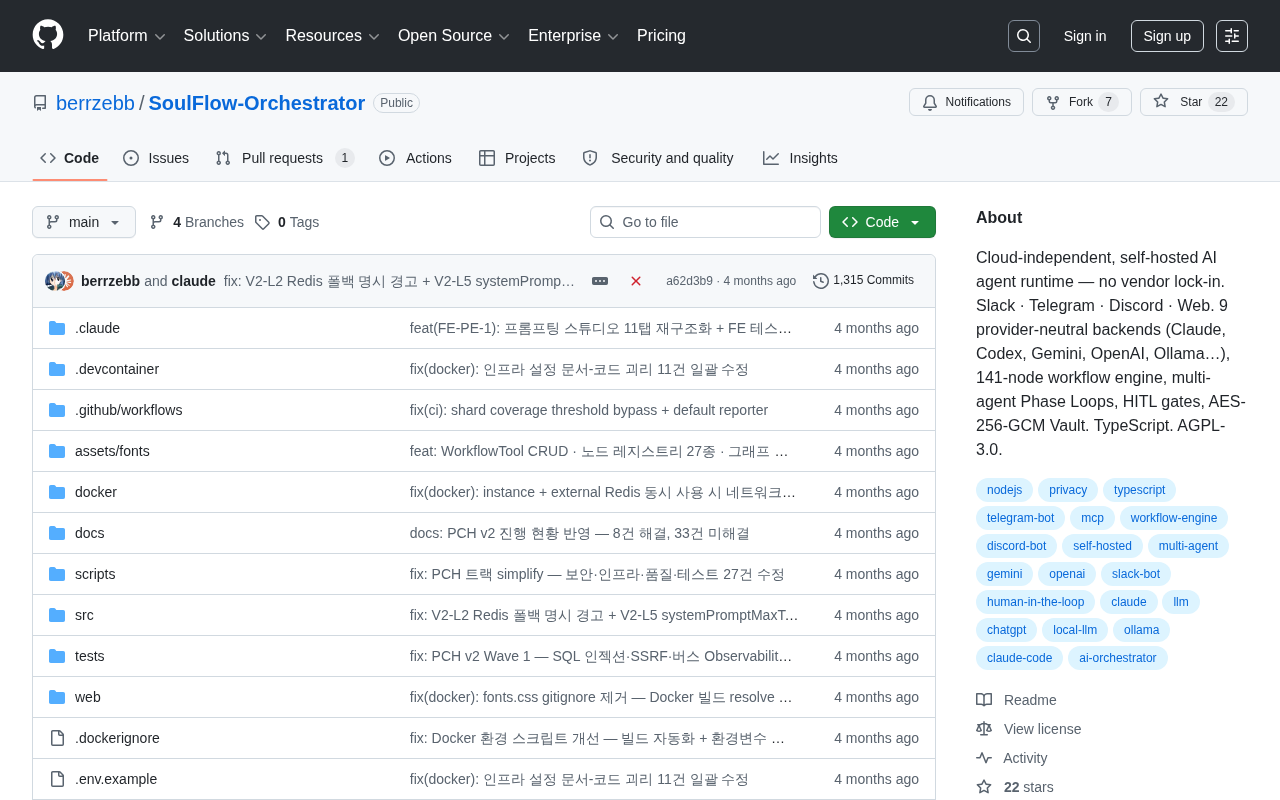
SoulFlow-Orchestrator: A Self-Hosted, Vendor-Lock-In-Free AI Agent Runtime
SoulFlow-Orchestrator is an open-source, self-hosted AI agent runtime with no vendor lock-in. Supports 9 neutral backends (Claude, OpenAI, Ollama), 141-node workflow engine, multi-agent loops, and HITL gates.
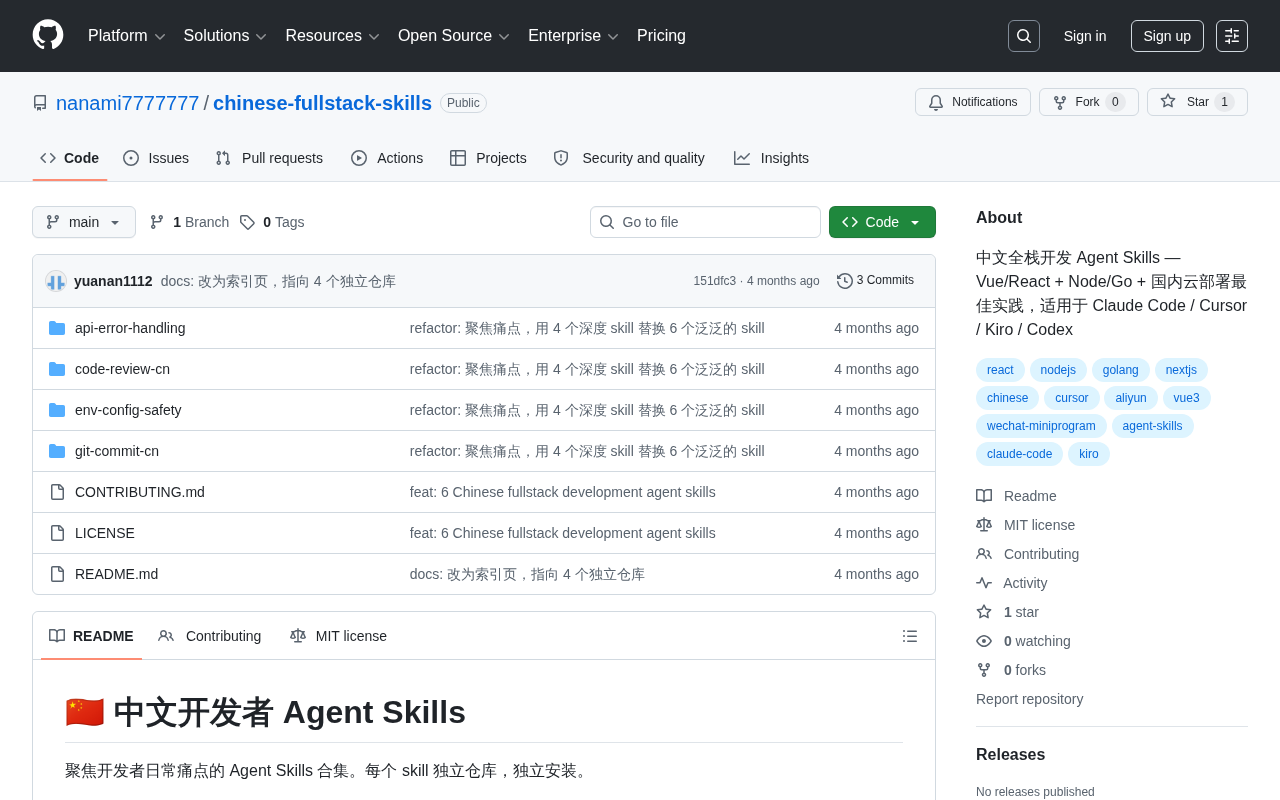
Chinese Full-Stack Agent Skills: A Skill Library Tailored for Domestic AI-Assisted Development
chinese-fullstack-skills is an Agent Skills library for Chinese full-stack development, covering Vue/React, Node/Go, and domestic cloud deployment best practices. Compatible with Claude Code, Cursor, Kiro, and Codex.
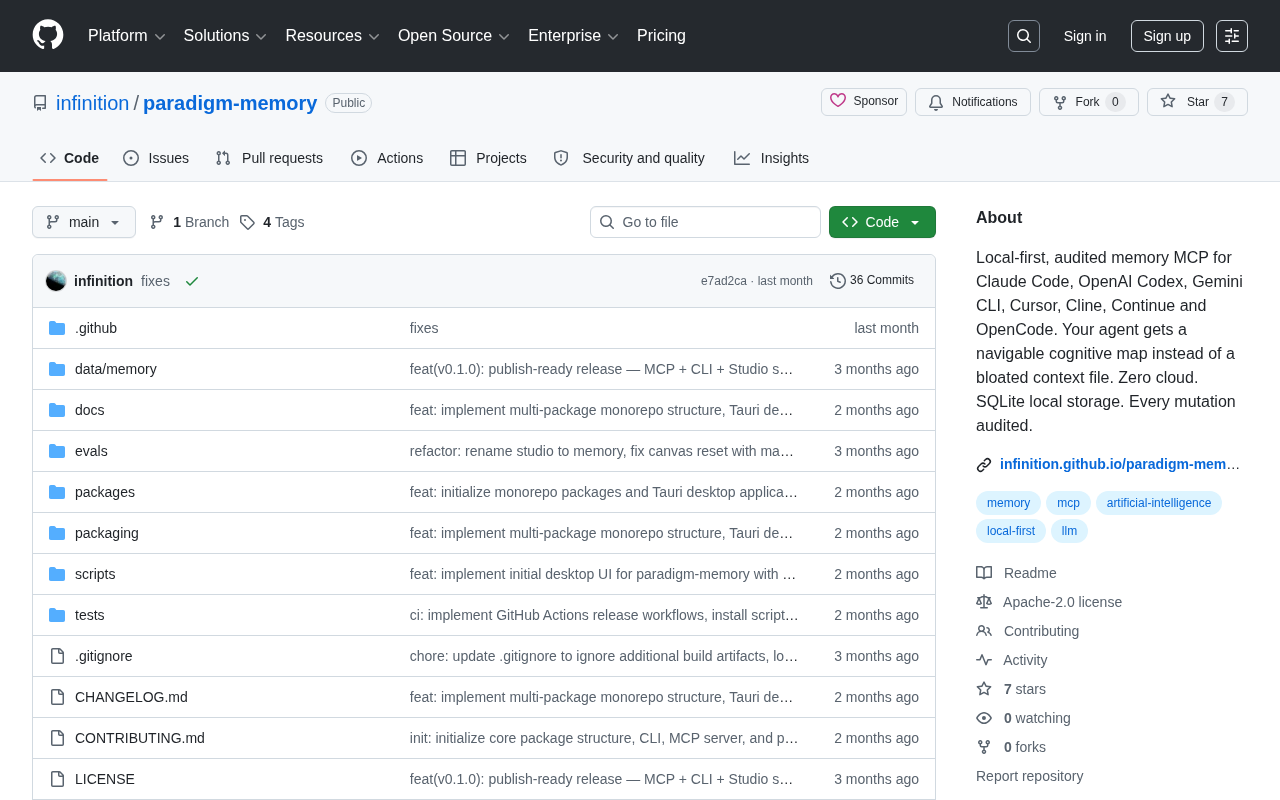
Paradigm Memory: A Local-First Memory System for AI Coding Assistants
paradigm-memory is a local MCP memory tool for Claude Code, Cursor, and Cline. It uses SQLite local storage, zero cloud, full audit trails, and a navigable cognitive map instead of bloated context files.