No More Excuses? Unpacking the Value and Lessons of Going Fully Transparent in Content Creation
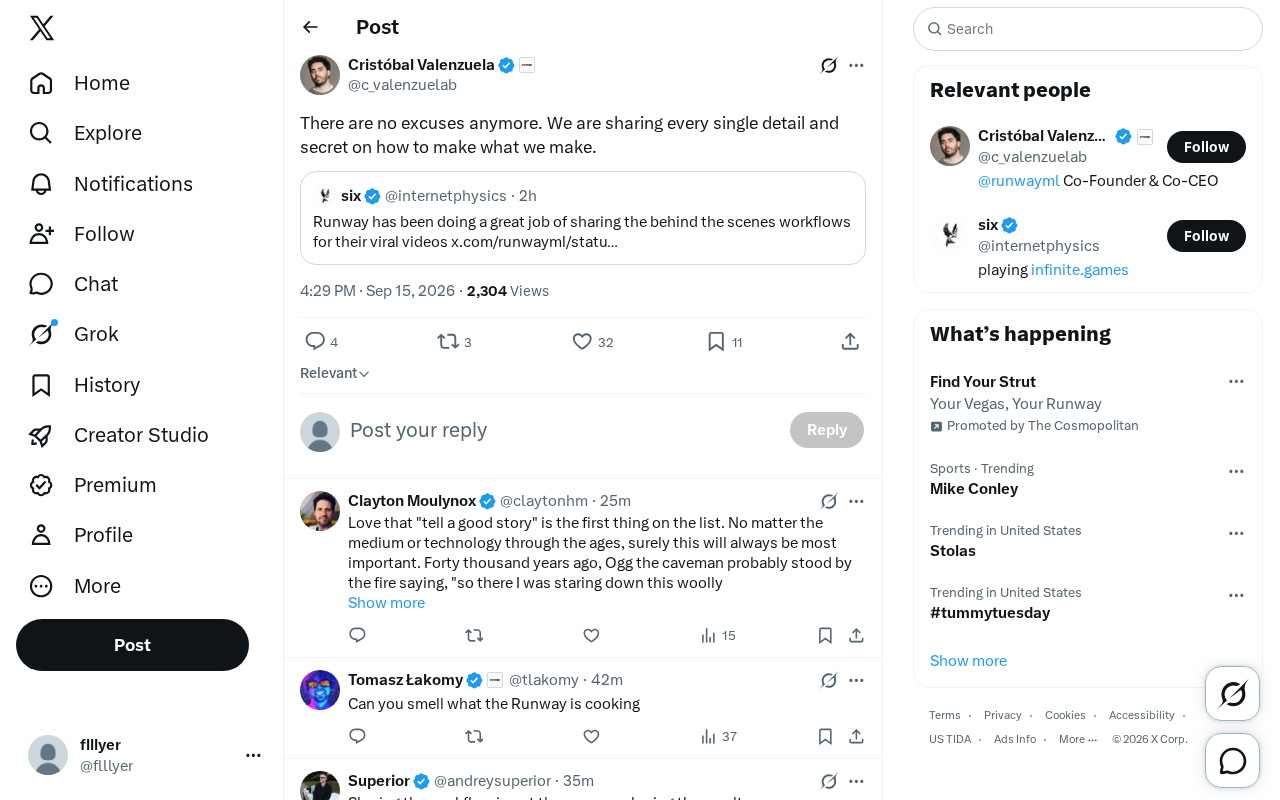
Going fully transparent in content creation signals that execution — not knowledge — is now the real competitive edge.
This article unpacks a bold declaration — "no more excuses, we'll share every detail and secret" — as a reflection of a deeper shift in content creation: from gatekeeping toward radical transparency. When all methods are made public, accountability shifts from "not knowing how" to "not being willing to act," making execution and consistent output the true barriers to entry. The piece also analyzes the commercial logic behind full transparency — building authority, attracting loyal audiences, and converting trust into revenue — while reminding creators that in an age of information equality, real differentiation comes from the soft skills that can't simply be replicated.
The Signal Behind a Single Declaration
"No more excuses. We'll be sharing every detail and secret behind how we make everything." This short statement, which sparked considerable attention on social media, may seem simple — but it reflects a genuine shift taking place in the content creation landscape: a move from guarding trade secrets to radical transparency.
In the past, creators in video production, design, and technical fields routinely kept their core methodologies private as a competitive moat. When someone openly declares they'll share "every detail and secret," they're sending a clear signal: knowledge and methods are no longer the scarce resource — execution and consistent output are the real barriers to entry.
What "No Excuses" Actually Means
The real tension in that statement lies in the phrase "no excuses." Once the entire production process is made public, anyone theoretically has the knowledge foundation to replicate the results. This effectively shifts accountability away from "I don't know how to do it" toward "am I actually willing to do it?"
This kind of framing is becoming increasingly common in the creator economy. Once information barriers are broken down, what separates the successful from the spectators is no longer exclusive know-how — it's the ability to execute, persist, and iterate. Sharing your secrets openly is, in a sense, an act of confidence. The person sharing knows full well that even with the full playbook in hand, most people won't produce the same results.
The Business Logic Behind Full Transparency
Proactively disclosing production details isn't purely altruistic — there's usually a clear commercial rationale behind it. Transparency rapidly builds trust and authority, positioning the sharer as a benchmark in their field. When more and more people start following your publicly shared methods, you naturally become the originator and embodiment of that methodology.
This "open-source" content strategy has been validated time and again in recent years: the more freely you share, the more loyal an audience you attract — an audience that can then be converted into revenue through courses, communities, consulting, or brand partnerships. Sharing your "secrets" becomes, paradoxically, the most effective tool for audience growth and influence building.
This approach is sometimes referred to academically as the "paradox of transparency" — the more openly you share your core methods, the more irreplaceable you become as a creator. The reason: as audiences learn a methodology, they simultaneously internalize the creator's taste, frameworks, and narrative style, developing a cognitive dependency on the original "source." The open-source software world offers the clearest precedent: projects like Linux and WordPress made their source code entirely public, yet the companies and individuals who grew up around these projects built business moats that are extraordinarily difficult to replicate, thanks to first-mover advantage and ecosystem positioning. In content creation, the full-transparency strategy is fundamentally an exchange — knowledge for attention, attention for trust, and trust ultimately monetized into higher-value services or products.
What This Means for Creators in Practice
For everyday creators, this declaration raises a sharp question: when methods are no longer secrets, what is your core competitive advantage?
The answer likely points in several directions — a distinctive perspective and aesthetic sensibility, consistently high-quality output, a deep understanding of your audience's needs, and the patience to execute well-known methods to their fullest potential. In an era of information equality, the barrier to imitation has fallen — but genuine differentiation depends more than ever on the soft skills that can't simply be copied.
This is also a reminder for creators to stop using "lack of resources" or "not knowing the methods" as excuses for inaction. Today, with tutorials, breakdowns, and open sharing in overwhelming abundance, the cost of learning has been driven remarkably low. What remains is simply a choice: act, or don't.
The "Creator Economy" is the essential backdrop for understanding this phenomenon. The term generally refers to the ecosystem of individuals and small teams who create content independently via digital platforms and generate income directly from audiences or brands. By some industry estimates, the global creator economy has surpassed hundreds of billions of dollars in scale, with participants ranging from YouTube vloggers and newsletter writers to podcast hosts. In this ecosystem, attention is highly fragmented and content supply is severely oversaturated — "teaching you how to do it" is itself a high-demand content category. This is precisely why "sharing secrets" is not just a gesture, but a competitive strategy for claiming a favorable position in the attention marketplace: it trades knowledge at an extremely low cost in exchange for the first-time attention of a large potential audience.
Closing Thoughts
This brief declaration is worth examining precisely because it captures a deeper shift in the content creation ecosystem: secrets are depreciating in value, while execution is appreciating. When every detail is laid out in the open, the real test has only just begun — and it doesn't measure your ability to access knowledge, but your ability to turn that knowledge into consistent, high-quality results.
It's worth noting that since the original source material is a single statement, this article is largely an extended interpretation built around that idea. The specific content production domain it refers to, and exactly what details have been made public, remain to be clarified with further information.
Related articles

LynnReal-Omni: 32B Unified Video Diffusion Model Goes Open Source with Multi-Task Coverage in Four Steps
LynnReal-Omni is a 32B unified video diffusion model on MiniMax H3, covering text-to-video, pose guidance, style transfer, restoration in 4 steps. Flash version generates 540p video in 377ms on one H100.

Anthropic Co-Founder: AI 'Kill Switch' May Need to Be Mandatory by Law
Anthropic's co-founder tells the BBC that AI 'kill switches' may need to be legally mandated. We analyze the industry logic, technical challenges, and the tension between regulation and innovation.

The AI Data Center Boom Is Colliding With Cities Scarred by Heavy Industry
The AI data center boom is clashing with post-industrial communities. Philadelphia's case reveals structural conflicts between AI growth, energy use, water, and environmental justice.