Nobel Chemistry Laureate Kenso Soai's Official Chinese Name Confirmed as 硖合宪三

Nobel Chemistry laureate Kenso Soai's official Chinese name 硖合宪三 is confirmed, filling a gap in Chinese-language coverage.
After the Nobel Prize in Chemistry was announced, Japanese chemist Kenso Soai had no standardized Chinese name, leaving many outlets unable to name him in breaking news. This exposed two deeper issues: the dominance of English in scientific publishing, which renders many non-English-speaking scholars invisible in Chinese contexts, and the structural tension between news speed and accuracy. His Chinese name has now been officially confirmed as 硖合宪三, and he has given an interview at Tokyo University of Science.
Why Did a Nobel Laureate Go So Long Without an Official Chinese Name?
When this year's Nobel Prize in Chemistry was announced, many Chinese-language media outlets found themselves in an awkward position: of the two laureates, the French-born scholar's name was quickly translated and published, while the name of Japanese chemist Kenso Soai remained without a standardized Chinese rendering for quite some time.
The result was a mildly absurd situation — many outlets rushing to break the news could only write something vague like "two (or several) scholars received this year's Nobel Prize in Chemistry," without being able to name the Japanese laureate in Chinese at all.
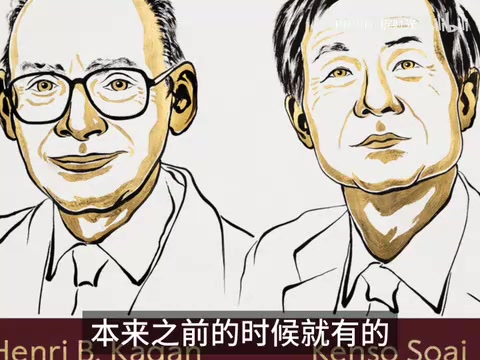
This wasn't a matter of editorial laziness or bad faith. In the race to publish first, editors scoured every available source in the Simplified Chinese information ecosystem and still couldn't find a standardized Chinese translation for the name Kenso Soai.
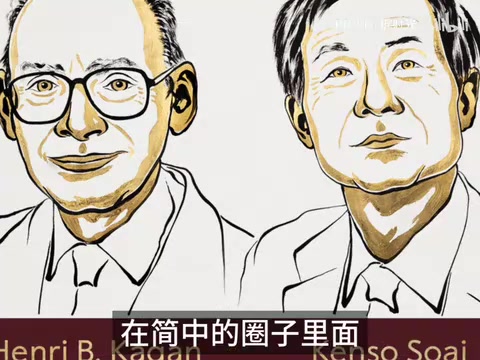
The Official Name: 硖合宪三
That long-standing gap has now been filled. According to the latest reports, the Japanese chemist's name has been officially rendered in Chinese as 硖合宪三 — a standardized transliteration derived from his original Japanese name.
While this may seem like a minor detail, it carries real significance for Chinese readers and academic communication. A unified, standardized Chinese name prevents different outlets from inventing their own ad hoc translations, and makes future academic citation and information retrieval far easier. It was precisely the absence of such a standard that caused this laureate to effectively "disappear" from early Chinese-language coverage.
Kenso Soai (硖合宪三; Japanese kanji: 硖合憲三) is a prominent Japanese organic chemist who has long been affiliated with Tokyo University of Science. He is best known for discovering and elucidating the "Soai reaction" — an asymmetric autocatalytic reaction catalyzed by small organic molecules. In this reaction, a chiral product present at extremely low concentrations acts as a template to replicate and amplify its own chiral information, ultimately yielding a product with near-100% enantiomeric excess. This discovery is considered a landmark in asymmetric synthesis, and has also provided an important chemical model for exploring the origins of biological homochirality on Earth — that is, why amino acids in living organisms are almost exclusively L-type. As a result, his work has attracted broad attention at the intersection of chemistry, life sciences, and astrochemistry.
The Deeper Story: Why the Name Gap Existed
From a media perspective, this episode reflects a broader phenomenon worth examining. In the race to claim trending topics and be first to report major events, newsrooms often operate in a state of frantic competition.
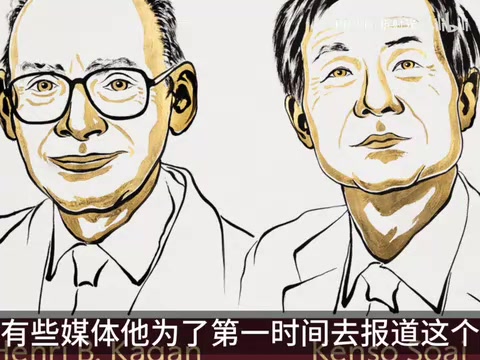
But speed and accuracy are often in tension. When a scholar has never previously entered the Chinese-language public sphere and has no pre-existing Chinese name, outlets rushing to publish simply have to sidestep the issue. The result: a Nobel laureate who "won the prize but didn't have a proper Chinese name yet."
The deeper cause lies in the linguistic ecology of academic publishing. The vast majority of significant scientific literature worldwide is still published in English (or other non-Chinese languages), with relatively few landmark papers appearing in Simplified Chinese.
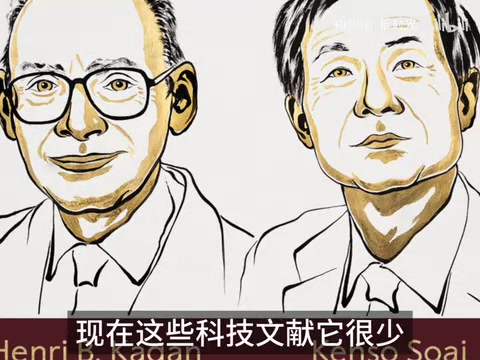
This means that a scholar who has made major contributions to a specialized field may remain essentially nameless in the Chinese-language context for years — until a major event like a Nobel Prize suddenly brings them into public view, and people realize that no standard Chinese name has ever been established.
When transliterating Japanese personal names into Chinese, there are generally a few approaches: directly adopting the Japanese kanji characters (if the corresponding forms exist in Chinese); phonetically transliterating based on Japanese pronunciation; or following an official Chinese rendering recognized by the scholar or their institution. The name 硖合宪三 follows the first approach — retaining the Japanese kanji 硖合憲三 while simplifying 憲 to the Simplified Chinese form 宪. This method is fairly common for Chinese renderings of Japanese scholars' names, as it preserves the visual connection to the original while conforming to Chinese publishing standards. However, when a scholar has had virtually no presence in Chinese-language literature or media, even a well-established convention may leave a name in limbo indefinitely if no one takes the initiative to formally confirm it.
First Interview After the Prize
According to the same report, Kenso Soai has given an interview at his home institution, Tokyo University of Science, and footage from that interview has been released. For readers following this field, it offers a rare opportunity to hear directly from the laureate about his work and thinking.
Both laureates have made important contributions in their respective research areas — contributions that are ultimately the reason they received this year's Nobel Prize in Chemistry. The establishment of a standardized Chinese name fills a critical gap, allowing the Chinese-speaking world to fully and accurately document and communicate this scientific achievement.
Summary
From "no name to translate" to 硖合宪三 — this small episode reflects the very real language barriers in international academic communication, and serves as a reminder that in the pursuit of breaking news, the accuracy and standardization of basic information matters just as much as speed. With the Chinese name now confirmed and interview footage available, this Nobel Chemistry laureate can finally be introduced to Chinese readers in full.
Related articles

A Single Prompt Triggers a Global PHP Security Storm: Is AI a Savior or a Hidden Risk?
A single AI prompt triggered a global PHP security crisis affecting Wikipedia and the Internet Archive. This article reviews the incident, analyzes the OpenAI-Amazon controversy, and explores the security paradox of lowered vulnerability discovery barriers in the AI era and developer response strategies.

When AI Is Taken Away: How Reliance on Shortcuts Undermines Your Problem-Solving Resilience
A study of 1,222 people found that after using AI to answer questions, once AI was removed, people gave up on more problems than a control group that never used AI. The article analyzes the impact of AI reliance on learning resilience and metacognition, and explores design implications for AI learning tools.

Carta and NewView Partner to Let Startup Employees Cash Out Equity Early
Carta and NewView Capital partner to simplify startup tender offers, helping employees sell equity early. Analysis of the mechanism, liquidity pain points, and impact.