Nscale and Anthropic in Talks Over Another $45 Billion Compute Deal

Nscale and Anthropic reportedly discuss another $45B compute deal, total could approach $90B.
According to multiple reports, after announcing a $45 billion compute agreement in August, Nscale and Anthropic are negotiating another same-scale deal, potentially bringing the total to nearly $90 billion. Nscale is an emerging compute supplier specializing in rapid GPU cluster deployment, filling Anthropic's need to diversify suppliers. The deals show leading model companies locking in capacity via long-term contracts rather than spot markets. However, the news is unconfirmed, execution faces real constraints, and Anthropic works with multiple suppliers, so simple addition may overstate actual scale.
Nscale's compute partnership with Anthropic is escalating at a staggering pace. According to multiple foreign media reports, following the $45 billion compute agreement the two companies announced in August, they are reportedly discussing another deal of the same magnitude. If confirmed, this would mean Anthropic's commitment to compute infrastructure could double, and Nscale's position as an emerging compute supplier would rise even further.
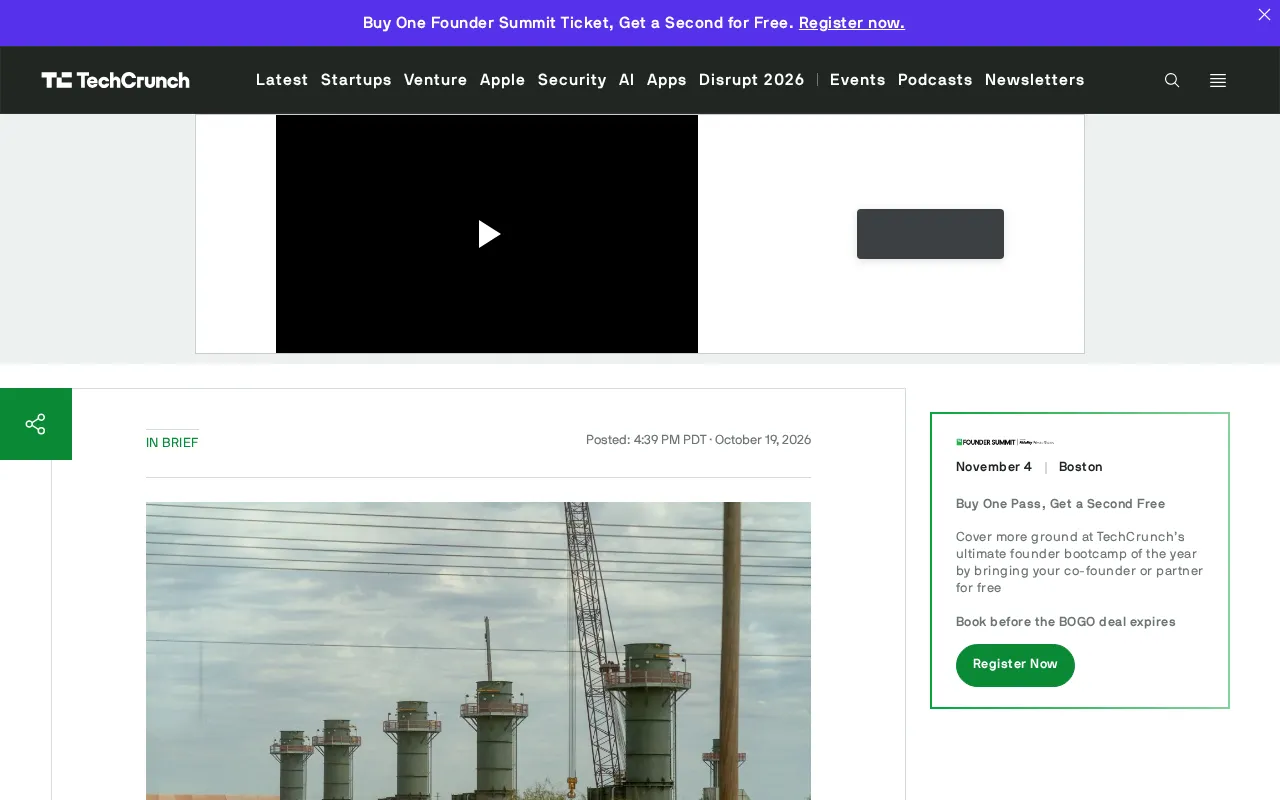
After One $45 Billion Deal, Another in Discussion
In August of this year, Nscale and Anthropic first announced a $45 billion compute partnership. That deal alone was eye-catching enough—a relatively young compute provider securing a massive long-term order from a leading AI model company. Now, according to the same source, a second agreement of equal scale is on the negotiating table.
The report did not disclose specific terms of the new agreement, including compute type, delivery timeline, or data center locations. But the phrase "same scale" speaks for itself: Anthropic's hunger for compute is far from saturated, and Nscale is becoming a key link in its supply chain.
Why Nscale
Nscale is not a traditional cloud giant. It specializes in rapid deployment of large-scale GPU compute clusters, entering the European and North American markets with a "compute-as-a-service" model. Compared to hyperscalers like AWS, Azure, and GCP, Nscale is much smaller, but its advantage lies in customized delivery for large model training scenarios, offering greater flexibility.
For Anthropic, diversifying compute suppliers is a rational choice to reduce single-source dependency. Training and inference for the Claude series models require continuous consumption of massive GPU resources, and relying on just one or two suppliers is insufficient to meet expansion pace. Nscale's positioning fills exactly this gap.
Hyperscaler is the industry term for the handful of vendors like AWS, Microsoft Azure, and Google Cloud that operate at million-server scale with global data center networks and full cloud service stacks. Their defining features are enormous capital expenditure, self-built and self-operated infrastructure, and the ability to serve massive customers with standardized products. By contrast, emerging compute suppliers like Nscale do not pursue full-stack cloud services but focus on rapid delivery of GPU clusters—specialized players in the "Compute-as-a-Service" track. This distinction matters: hyperscalers excel in scale and stability but offer less customization and longer queue times; specialized compute providers are more flexible in delivery speed and tuning for large model training. Anthropic's simultaneous partnerships with both types of suppliers essentially reflect a portfolio allocation between scale effects and delivery flexibility.
Another Signal in the Compute Arms Race
If both $45 billion-scale agreements are fully executed, the total will approach $90 billion. That figure is heavyweight even in the context of overall AI industry infrastructure investment. The signal is clear: leading model companies are locking in compute through long-term contracts rather than relying on spot markets.
This "prepaid lock-in" makes sense for both parties. For Anthropic, securing capacity in advance avoids price volatility and queueing when compute becomes scarce in the future; for Nscale, large long-term contracts serve as credit endorsement for financing and data center expansion. The business model of compute suppliers is shifting from "selling hours" to "selling commitments."
Risks and Uncertainties
A note: the current information remains at the "reportedly" stage, and neither party has officially confirmed the second deal. $45 billion is an extremely large figure, and actual execution will proceed in phases, constrained by data center construction progress, GPU supply, and power infrastructure. Between signing an agreement and compute actually coming online, there is often a gap of several years.
Additionally, Anthropic maintains partnerships with multiple compute suppliers, and Nscale is just one link. Simply adding up contract amounts from a single supplier to estimate total compute commitments may overstate actual scale.
The difference between "prepaid lock-in" and spot markets deserves elaboration. GPU compute was historically traded on a spot basis billed by the hour, with prices fluctuating sharply with supply and demand; after the explosion in large model training demand, compute gradually shifted to a contract model similar to long-term power purchase agreements (PPAs)—buyers commit to minimum purchase volumes over several years, and sellers gain predictable cash flow on which to base debt financing and data center expansion. This model turns compute from a "commodity" into an "infrastructure asset" and makes contract values routinely run into tens of billions of dollars. For buyers, the cost of locking in capacity is losing bargaining room when prices fall; for sellers, risk concentrates on delivery capability—if data center construction or GPU delivery is delayed, long-term contracts can become a financial burden. Understanding this is essential to judging the real constraints of such massive agreements.
The realistic cycle from signing to going live for data centers is an easily overlooked variable when evaluating such agreements. A hyperscale data center for large model training involves land approval, power connection, cooling system construction, and GPU cluster deployment; from groundbreaking to full-load operation typically takes 2 to 4 years. Power infrastructure is often the biggest bottleneck, with grid connection queues in some regions exceeding construction time itself. Therefore, a $45 billion contract amount usually corresponds to multi-year phased delivery rather than one-time compute availability. Moreover, GPU supply is constrained by TSMC's advanced process capacity and HBM memory supply, and delivery pace is not entirely controlled by the compute supplier. This means there is a significant time mismatch between contract value and actual available compute, and simply measuring compute reserves by signed amounts will overstate short-term supply capability.
Spillover Effects on the Industry
The ripple effects of such large deals cannot be ignored. On one hand, they raise market expectations for long-term AI compute demand, benefiting the GPU supply chain and data center builders; on the other hand, they intensify the difficulty for small and medium AI companies to obtain compute—when leading players lock in capacity with long-term contracts, the remaining allocable resources become tighter.
If Nscale can secure two consecutive $45 billion-scale agreements, its industry status will rapidly migrate from "emerging supplier" to "core infrastructure player." For a company not born as a hyperscaler, this is a remarkably rare pace of ascent.
As for Anthropic, the continued escalation of compute commitments also reflects its bet on model scale expansion. At a stage when competition in model capabilities has become white-hot, compute reserves themselves are a competitive moat.
The story is still developing, and whether there will be official confirmation and what the agreement details are deserve continued attention.
One-line Summary
Nscale and Anthropic reportedly discuss another $45 billion compute deal, with total potentially approaching $90 billion.
Paragraph Summary
According to multiple foreign media reports, after announcing a $45 billion compute agreement in August, Nscale and Anthropic are negotiating another deal of the same scale, which if finalized would bring the total to nearly $90 billion. Nscale is not a traditional cloud giant but an emerging compute supplier specializing in rapid deployment of large-scale GPU clusters; its flexibility precisely fills Anthropic's need to diversify suppliers and reduce single-source dependency. The two mega-deals reflect that leading model companies are using long-term contracts to lock in compute capacity rather than relying on spot markets, and the business model of compute suppliers is shifting from "selling hours" to "selling commitments." However, the news has not been officially confirmed, agreement execution is constrained by data center construction, GPU supply, and power infrastructure, and Anthropic works with multiple suppliers simultaneously, so simple addition may overstate actual scale.
Related articles

Will GitHub Die? Open Source Maintainer Burnout and the Collaboration Crisis in the AI Era
Lex Fridman podcast discussion on open source maintainer burnout and GitHub's predicament: massive pull requests overwhelm core maintainers, and AI worsens code bloat. Using math journal peer review and Poincaré conjecture verification as analogies, the article analyzes why verification in knowledge production must be deliberately slow, and how open source communities can avoid the failure mode of maintainers exiting.

Stop Building Cookie-Cutter AI Websites: 3 Tools That Transform Your Coding Agent
Three tools that boost AI coding agents: FFmpeg skill for local video editing in Claude Code and Cursor, Hallmark's 50 design themes to fix cookie-cutter AI sites, and Jailbreaks' 25+ model prompts.

How America's Gerontocracy Squeezes the Younger Generation
Americans over 55 hold nearly three-quarters of national wealth, alongside an 80-year-old president and elderly congressional leaders. The Atlantic's Idrees Kahloon explains how gerontocracy drives up housing costs, squeezes opportunities for the young, and explores zoning reform and child poverty reduction as practical fixes.