Nvidia: From Chip Supplier to the Capital Hub Behind the AI Boom
Nvidia: From Chip Supplier to the Capi…
Nvidia has evolved from a chip supplier into the capital hub financing and profiting from the AI boom.
Nvidia's role in the AI era extends far beyond selling GPUs. Through investments in AI startups that turn around and buy its chips, Nvidia has created a capital recycling loop that inflates revenue and market cap. This "banking" model mirrors historical infrastructure bubbles and raises serious questions about revenue quality, systemic risk, and whether AI applications can generate returns that justify the massive capital flows.
From Chip Supplier to Capital Hub
In the current wave of technology driven by generative AI, Nvidia's role has long surpassed that of a simple GPU chip supplier. A increasingly compelling narrative has emerged: Nvidia is becoming the "bank" behind the entire AI boom. This isn't hyperbole — it's a precise description of how the company now operates and deploys capital.
Traditionally, a semiconductor company focuses on designing and selling chips, profiting from hardware margins. But what Nvidia does today is far more complex. It doesn't just sell chips; through investments, strategic partnerships, and indirect financing arrangements, it has become deeply embedded in the growth and survival of downstream AI companies. When the entire industry's compute demand converges on Nvidia's products, the company gains pricing power and resource allocation authority resembling that of a financial institution.
Nvidia's core competitive moat doesn't come purely from hardware performance — it stems from a software ecosystem over a decade in the making: the CUDA (Compute Unified Device Architecture) platform. Released in 2006, CUDA is Nvidia's programming model and software environment designed for parallel computing. Because major deep learning frameworks like PyTorch and TensorFlow are deeply optimized for CUDA, the codebase and engineering workflows that AI developers and enterprises have accumulated are tightly locked into the platform. This "software moat" means that even competitors offering comparable hardware performance struggle to dislodge Nvidia's market position. This integrated hardware-software ecosystem monopoly grants Nvidia near-monopolistic pricing power and gives it far more leverage than an ordinary supplier in the AI boom.
The Hidden Risk of the "Capital Recycling" Loop
The central controversy around this role shift is: how much of Nvidia's revenue growth depends on companies in which Nvidia itself has invested or supported? When Nvidia funds an AI startup and that startup turns around and uses the capital to buy Nvidia GPUs, a classic "capital recycling" loop is formed.
This structure is analogous to what finance calls "Circular Credit" or "Related Party Transactions." The typical pathway works as follows: Nvidia invests in AI startups via cash or equity; those startups, after receiving capital, have virtually no choice but to spend it on GPU procurement given their business models depend on large-scale model training. This directly boosts Nvidia's hardware revenue, while the startups' valuations rise with the AI tide, further inflating the paper value of Nvidia's investment portfolio. From an accounting perspective, this arrangement raises questions about revenue quality — some of Nvidia's income is essentially capital recycled from its left hand to its right, rather than genuine end-market demand from independent third parties. This bears a structural resemblance to the pre-2008 financial crisis logic, when certain institutions used complex structured products to internalize risk while amplifying reported profits.
In the short term, this model dramatically amplifies Nvidia's revenue figures and market cap. But viewed more cautiously, it also plants the seeds of systemic risk. If AI commercialization falls short of expectations and capital-dependent startups fail to sustain themselves, this loop could break at any moment — leaving Nvidia facing simultaneous losses on both hardware revenue and investment returns.
Who Is Actually Creating Value?
A key question worth pondering: of the enormous capital flows in today's AI industry, how much is actually converting into sustainable commercial value? Massive funds are pouring into GPU procurement and data center construction, with the vast majority ultimately flowing to Nvidia. Whether downstream applications can generate sufficient cash flows to justify these investments remains an unresolved question.
Assessing this requires an honest look at AI commercialization progress. Currently, AI applications show a clear "top-heavy, long-tail blur" pattern: B2B SaaS applications — such as coding assistants, enterprise knowledge bases, and content generation tools — have begun to validate willingness to pay, but the ratio of customer acquisition cost (CAC) to lifetime value (LTV) remains unfavorable. Consumer AI applications attract enormous traffic but broadly struggle with monetization. A deeper challenge is that while LLM inference costs continue to fall, the exponential growth in training costs has made the sustainability of the Scaling Law — whether stacking more compute reliably yields performance gains — a central debate in both academia and industry. If scaling laws hit a ceiling, the current compute-centric business model faces a fundamental reassessment.
Parallels to Traditional Financial Cycles
Comparing Nvidia to a "bank" also carries an implicit warning about the cyclical nature of the current AI investment frenzy. Historically, every industrial boom dominated by a core supplier has been accompanied by excessive capital concentration and valuation bubbles. When a single company simultaneously plays the roles of supplier, investor, and market benchmark, it effectively functions as a financial intermediary — aggregating capital, allocating resources, and absorbing risk.
The current AI infrastructure investment boom has historical precedents. The most direct parallel is the dot-com bubble of the late 1990s: capital flooded into network equipment suppliers like Cisco, whose market cap briefly surpassed every traditional industry giant. Cisco, as the core supplier of internet infrastructure, briefly played a role nearly identical to Nvidia's today — every company betting on the internet had to buy its equipment. Yet after the bubble burst in 2000, Cisco's stock fell more than 80% within two years and never returned to its peak for over two decades. An even earlier example is the 19th-century railroad boom, in which massive capital flowed into rail infrastructure, ultimately resulting in severe overcapacity and financial crisis. The historical lesson is clear: there is a time lag between the construction value of infrastructure and its investment returns — a lag that market sentiment during boom periods consistently and severely underestimates.
The fragility of this structure lies in the extreme concentration of information and risk. Nvidia's health, in some sense, represents the health of the entire AI hardware ecosystem, while its investment portfolio is deeply tied to its own sales performance. Should market sentiment shift, the positive feedback loop could rapidly reverse into a negative spiral.
Rationally Assessing the Investment Value of AI Infrastructure
For investors and industry observers, understanding Nvidia's "bank" characteristics helps enable a more sober assessment of the current AI boom's sustainability. The real question isn't whether Nvidia's technology is leading-edge — it clearly is — but whether the capital structure underpinning its remarkable growth is sufficiently sound.
Compute is the infrastructure of the AI era, just as electricity was to the industrial age. But the long-term value of infrastructure ultimately depends on whether the applications built on top of it can generate real commercial returns. When an entire industry's prosperity increasingly depends on capital circulating among a handful of companies, rational observers may be well-served by more caution and less momentum-chasing.
Conclusion
Nvidia's evolution from a chip company to the capital hub of the AI boom is one of the most fascinating business phenomena of this technological revolution. It reflects both the genuine explosion in AI compute demand and the latent risks that come with extreme capital concentration. For anyone focused on technology investing, understanding the dual nature of this "banking" trend is far more valuable than simply chasing market cap. Whether AI ultimately delivers on its grand promises will largely determine whether this intricate capital loop keeps running — or eventually unravels.
Related articles
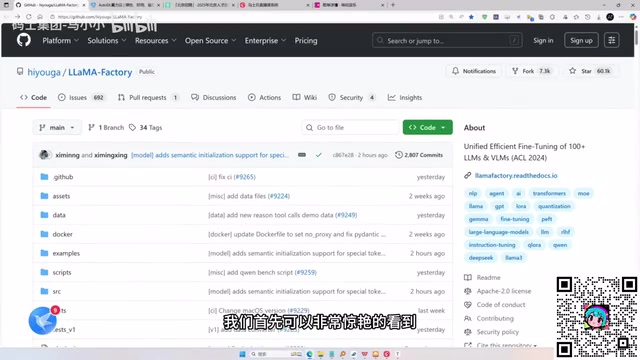
LLaMA-Factory in Practice: A Complete No-Code Guide to Fine-Tuning Large Models
An introduction to LLaMA-Factory, the open-source fine-tuning tool: its 60.1K-star background, supported models and algorithms, local vs. cloud deployment, and CUDA setup steps.

Zeng Ming's Deep Retrospective: Why OpenAI May Not Be the Ultimate Winner — and Why the Corporate System Will Disappear
Zeng Ming's deep retrospective on the AI endgame: model companies are just infrastructure, OpenAI and Anthropic won't be the final winners; the next battle is the Agent entry point standard; the corporate system will disappear as AI restructures collaboration, and only mission-driven companies can survive the cycle.

OpenHands v1.28.0: OpenCode and PI Added as Built-in Agents, API Keys Requestable In-Conversation
OpenHands ships 5 releases in 21 days: v1.27.0 adds OpenCode and PI as built-in agents, v1.28.0 enables in-chat key requests. ACP integration, credential reuse, model list changes, and upgrade advice.