NVIDIA's Dual-Tower Diffusion Language Model Explained: How Freezing Half the Network Achieves 2.4× Speedup

NVIDIA's dual-tower diffusion LM freezes half the network to achieve 2.4× faster text generation.
NVIDIA built a diffusion language model on Nemotron using a dual-tower architecture: a permanently frozen context tower handles prompt encoding, while a fully retrained denoiser tower handles parallel text generation. Connected via layer-wise cross-attention, the model achieves 2.4× speedup while retaining 98.7% of the original model's quality — though it's highly sensitive to block size configuration and sees notable drops in code and math tasks.
Why Diffusion Models Are Targeting Text Generation
Traditional language generation has long relied on auto-regressive models (ARMs), a natural consequence of language's sequential nature. The core mechanism of auto-regressive models is "next-token prediction": when generating each new token, the model must take all previously generated tokens as context input, storing historical information in memory via a KV Cache (key-value cache) mechanism. This creates a dual bottleneck: computationally, attention mechanism complexity grows quadratically with sequence length; memory-wise, KV Cache usage grows linearly with sequence length, becoming extremely costly in long-text scenarios. The more fundamental limitation is that the serial nature of auto-regression means modern GPU parallel computing capabilities cannot be fully utilized — GPUs are designed for parallel matrix operations, yet are forced to "wait" one token at a time.
Diffusion models take an entirely different approach — replacing sequential generation with parallel generation. To be clear, text diffusion is not as simple as "adding noise" the way image diffusion works. Image diffusion models (such as DDPM and Stable Diffusion) progressively add Gaussian noise to images, then train neural networks to learn the reverse denoising process. Text, however, is a sequence of discrete symbols and cannot have continuous noise applied directly. The mainstream alternative for text diffusion is Masked Diffusion: replacing real tokens with a special [MASK] token to simulate a "corrupted" state, then training the model to recover the original text from the masked state — ultimately producing parallel output in "blocks." This bears a formal resemblance to BERT's masked language modeling, but the key difference lies in the generative objective: BERT's MLM is discriminative, used for understanding; masked diffusion is generative, progressively producing complete sequences through iterative unmasking.
The research community has seen numerous attempts to train text diffusion models from scratch — Inception, Google Gemini, and even a diffusion version of Gemma have entered this race. NVIDIA is not the first player, but its modeling approach is fundamentally different from its predecessors — and that's what makes it genuinely worth attention.
The Dual-Tower Architecture: One Speaks, One Translates
The core tension in diffusion models is that a single network must do two things simultaneously — represent existing clean text while denoising chaotic content being generated. As the paper states, these two tasks "pull the same set of weights in different directions," causing both to degrade. It's like asking one person to deliver a keynote speech while simultaneously providing their own simultaneous interpretation.
NVIDIA's solution is to divide the work between two specialists — the "dual towers":
- Context Tower: Like the speaker on stage, responsible for reading the prompt, generating strictly from left to right in an auto-regressive fashion, and permanently frozen — never trained.
- Denoiser Tower: Like the interpreter in the booth, starting from the same checkpoint but completely retrained for a different generation paradigm.
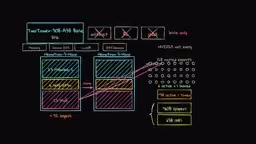
In practice, they took a Nemotron-3 Nano model and cloned it into two structurally identical towers. Each tower runs 52 layers, using a hybrid architecture of Mamba 2, self-attention, and MoE.
Mamba is one of the most closely watched non-Transformer sequence modeling architectures in recent years, based on State Space Model (SSM) theory, with inference complexity that is linear relative to sequence length and a natural left-to-right directional bias. Mamba 2 establishes a clearer unified relationship with attention mechanisms in its theoretical framework, with further improvements in computational efficiency. The MoE (Mixture of Experts) mechanism gives the model a large number of "expert" sub-networks, but activates only a few for each input token: this architecture has 128 experts per tower, with each token activating 6 plus 1 shared expert. This means each tower actually activates approximately 3 billion parameters, while total parameters are far greater. The two towers together total approximately 60 billion parameters — running at full precision requires several H100s.
The "Sky Bridges" Between Layers
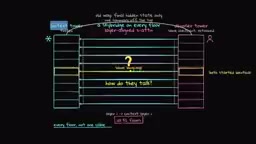
How the two towers communicate is the most elegant detail in this paper. Earlier designs mostly passed just one thing — the final hidden state or summary from the top of the context network. The dual-tower architecture instead uses layer-wise cross-attention connections: layer 1 of the denoiser tower cross-attends to layer 1 of the context tower, layer 2 to layer 2, and so on.
Cross-Attention is the standard mechanism in Transformers for enabling information exchange between two different sequences: each layer of the denoiser tower uses its own hidden state as Query, and the corresponding layer of the context tower's hidden state as Key and Value, achieving precise layer-aligned information fusion. This is fundamentally different from "passing only the top-level summary" — top-level summaries lose the rich syntactic and semantic representations from intermediate layers, while layer-wise connections preserve the complete feature hierarchy from shallow to deep layers. Think of it as two identical skyscrapers with a bridge connecting every single floor, rather than just a cable strung between the rooftops. This works precisely because both towers start from the same checkpoint, ensuring the representation spaces of corresponding layers are highly aligned — each layer "speaks the same language."
Additionally, the denoiser tower receives an adaLN timestep mechanism borrowed from the image diffusion DiT architecture. In image generation, adaLN encodes the timestep (a progress indicator from pure noise to a clear image), then dynamically adjusts each layer's normalization behavior through scale and shift parameters. In text diffusion, the timestep corresponds to how many tokens in the current block remain undetermined (the masking ratio), informing the denoiser tower of the current block's level of "corruption" so it can adjust prediction strategy based on the uncertainty level. This mechanism adds only approximately 1.5 million parameters — nearly negligible compared to the total of 60 billion.
Generating Text in Parallel Like Solving a Sudoku
The text diffusion generation process differs significantly from image generation. The denoiser tower doesn't predict just one token at a time — it receives a block containing 16 slots, each a masked token. It then loops through:
- Predict all 16 positions in parallel at once;
- Commit all positions where confidence exceeds the threshold;
- Re-mask uncertain positions in the next round and run again.
Already-committed tokens become "anchor points." This is very much like playing Sudoku — you don't fill in cells from the top-left corner one by one, but instead fill in the most certain cells first, and every locked-in number narrows the possibilities for surrounding cells.
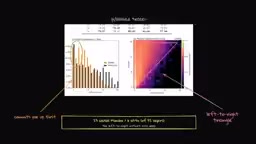
Interestingly, the model can commit in any order, but the actual commit order almost perfectly forms a "left-to-right triangle." Given that 23 of the architecture's 52 layers are Mamba with only 6 being attention layers, this left-to-right "instinct" makes perfect sense — Mamba's recursive properties based on state space models make it naturally sensitive to the causal order of sequences, with left-to-right directional bias deeply encoded into the model's inductive bias.
Performance Numbers: 98.7% Quality Retained, 2.4× Speedup
A critical question: does freezing half the network significantly sacrifice performance? Overall, the dual-tower diffusion model retains 98.7% of the original auto-regressive model's quality while achieving approximately 2.4× speedup.
But averages don't tell the whole story. Breaking down the results reveals significant variation: general knowledge barely drops, multilingual tasks even gained 3 points (quite surprising), but code dropped approximately 2 points and math dropped approximately 3 points. This is entirely expected — when a single token error occurs during parallel generation, it directly degrades overall performance, especially for tasks with strong logical dependencies. In auto-regressive models, erroneous tokens are "seen" by subsequent steps and have a chance to be implicitly corrected; in parallel generation, positions are relatively independent, making local errors harder to repair through global constraints.
You may not have noticed that the denoiser tower was trained on only 2.1 trillion tokens, while the original Nemotron Nano used 25 trillion tokens. So this is fundamentally a conversion of the decoding method, not a smarter model — no new capabilities have emerged.
Ablation studies also fully validate the value of the freezing strategy: if the backbone is instead trained normally, general knowledge drops 10% and math drops 17.8%; if both towers share weights doing both tasks simultaneously, results are even worse — general tasks drop 26% and all other metrics collapse. This confirms the paper's central claim: representing clean context and denoising chaotic content are two fundamentally conflicting optimization objectives that must be physically separated.
Fragility: Change the Block Size and It Breaks
Freezing brings speed gains, but at a cost: both 30-billion-weight towers must reside in memory throughout, and only the frozen tower carries cache across sequences — memory still grows with sequence length, just like a regular auto-regressive model.
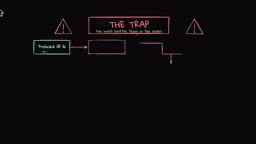
More concerning is configuration sensitivity. The released checkpoint was trained with block size 16. Simply changing the sampling block size to 64 causes complete generation collapse: HumanEval drops from 76% to approximately 20%, and GSM8K plummets from a high score to 2.2% — not 22, but 2.2.
Curiously, multiple-choice tasks like MMLU are barely affected, holding steady around 78%. This reveals that the knowledge is still there — what collapses is the generation process — the model is extremely sensitive to configuration parameters. Block size is not just an engineering parameter; it's an inductive bias hardcoded during model training. Changing the block size is equivalent to changing the "rules of the game" that the model has never seen. Knowledge retrieval tasks (like multiple-choice questions) are insensitive to generation order and thus escape unscathed; tasks requiring strict sequential reasoning, like code and math, collapse entirely. Lowering the block size below 16 can preserve performance, but with a noticeable slowdown.
Conclusion: NVIDIA's Continued Bet on Architectural Innovation
Currently, only the base model has been released on Hugging Face; Instruct, RL, and conversation fine-tuned versions have not yet been made available, and real-world capability evaluation still awaits. But the architecture itself is already sufficiently novel.
NVIDIA has maintained bold exploration at the model architecture level — Nemotron itself is a hybrid of Mamba and Transformer. Looking across the industry, few teams dare to attempt such "unconventional" architectures. When diffusion models truly mature for text generation, the landscape of language model inference efficiency may well be rewritten.
Related articles

The Truth Behind Codex 'Build a Website in 5 Minutes': AI Isn't Creating Sites—It's Helping You Copy Them
Exposing the truth behind viral Codex 5-minute website videos: creators aren't building original sites with AI—they're copying shared prompts or scraping others' work. Learn AI coding tools' real limits.

Getting Started with AI Agent Development: A Complete Guide from Concept to Practice
A comprehensive guide to AI Agent architecture and development, covering automated marketing, intelligent customer service, and investment analysis scenarios with single and multi-agent collaboration.

The Truth Behind Codex 'Build a Website in 5 Minutes': AI Isn't Creating Sites — It's Helping You Copy Them
Exposing the truth behind viral Codex 5-minute website videos: creators aren't building original sites with AI — they're copying shared prompts or scraping others' work.