oh-my-claudecode: A Multi-Agent Orchestration Tool for Teams Built on Claude Code
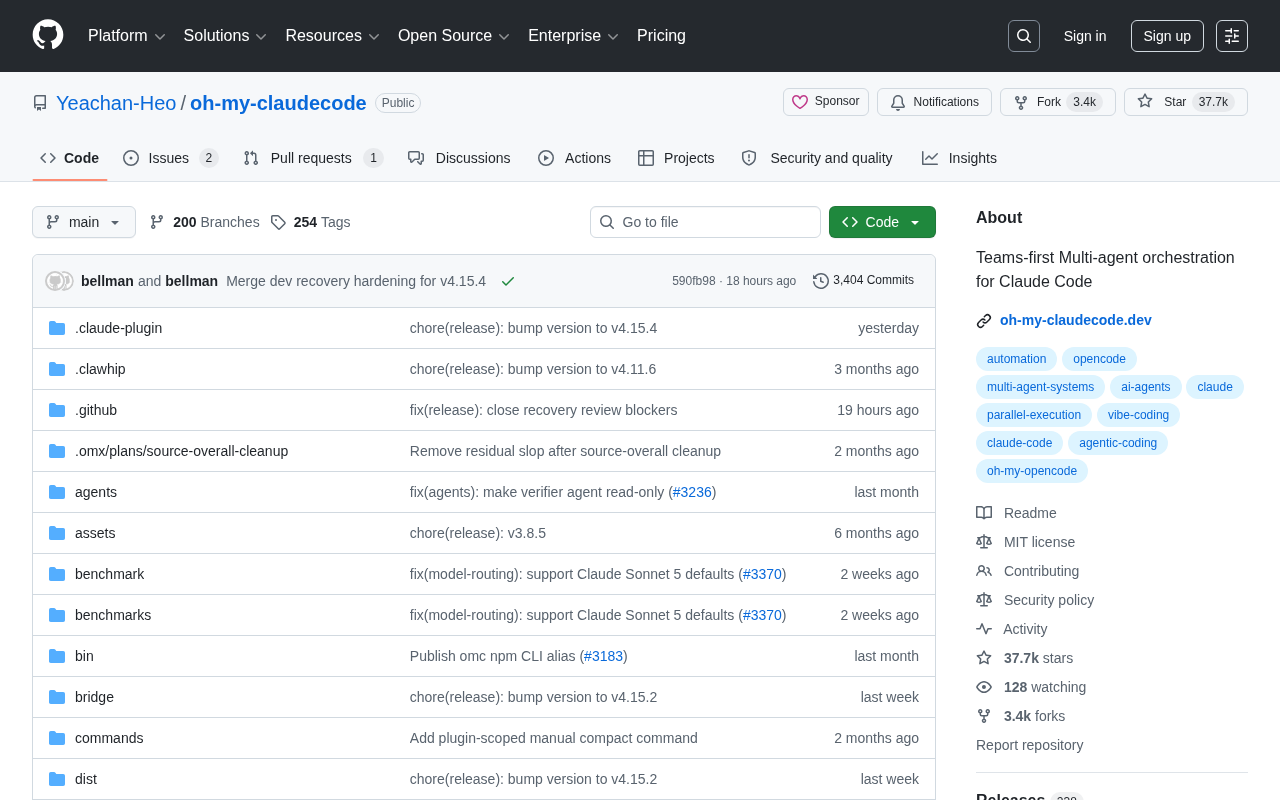
oh-my-claudecode is an open-source multi-agent orchestration framework built on Claude Code for team-style AI collaboration.
oh-my-claudecode is a GitHub open-source project designed for the Claude Code ecosystem, maintained by Yeachan-Heo and built with TypeScript, with over 32,000 Stars. Its core idea is to break complex development tasks across multiple specialized AI agents working in parallel — mimicking real software team dynamics rather than relying on a single assistant. Named in the style of oh-my-zsh, it serves as an orchestration enhancement layer for Claude Code. While it offers potential for reducing context-switching overhead and increasing task parallelism, challenges around context consistency, cost control, and result integration remain, and real-world effectiveness should be validated through documentation and hands-on testing.
Project Overview
As AI coding assistants become increasingly mainstream, enabling multiple AI agents to collaborate on complex development tasks has become a focal point in the developer community. The open-source project oh-my-claudecode (maintained by Yeachan-Heo) on GitHub is precisely aimed at this challenge. It emphasizes a "Teams-first" multi-agent orchestration capability, designed specifically for the Claude Code ecosystem.
Built with TypeScript, the project has garnered approximately 32,901 Stars and 3,049 Forks on GitHub — a strong signal of community demand for multi-agent collaboration tools.
What Is Multi-Agent Orchestration
Multi-agent orchestration refers to a technical paradigm where a complex task is broken down and distributed among multiple specialized AI agents that work in parallel, with their outputs integrated into a unified result. Unlike the traditional single-assistant "question-and-answer" model, this architecture more closely mirrors how real software teams operate — with distinct roles for requirements analysis, code implementation, and testing/review.
oh-my-claudecode's "Teams-first" positioning embodies this philosophy. It extends Claude Code's capabilities from point-in-time code generation to an orchestrated, collaborative agent team — aiming to make AI more structured and effective when handling large-scale projects or cross-module tasks.
Technology Choices and Positioning
The project is built with TypeScript, a representative choice for AI tooling projects. TypeScript's type system helps maintain code quality as orchestration logic grows in complexity, while also enabling smooth integration with the Node.js ecosystem and existing frontend toolchains.
The naming convention is a clear nod to the well-known open-source project oh-my-zsh — the "oh-my-" prefix signals an "out-of-the-box, enhanced experience" positioning. It targets developers already using Claude Code, serving as an orchestration enhancement layer rather than a standalone framework built from scratch.
Why It's Worth Watching
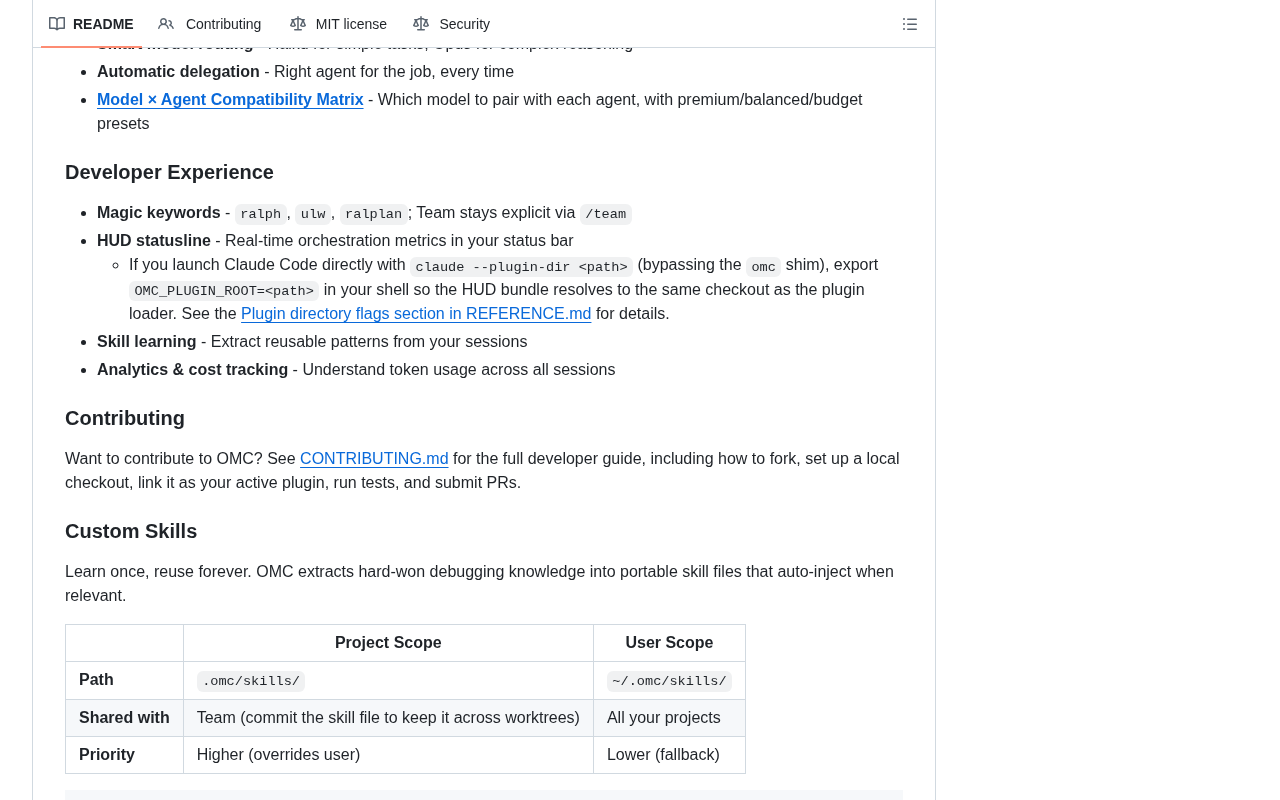
Over 30,000 Stars places this project at a relatively high tier among similar tools, suggesting that multi-agent collaboration has moved beyond theoretical discussion into practical tooling. In team development scenarios, a single AI assistant often struggles to handle the full lifecycle of a complex engineering project — an orchestration framework provides a way to modularize tasks and assign specialized roles.
For developers, the value proposition of tools like this includes:
- Lower collaboration overhead: No need to manually switch context across multiple conversations
- Higher task parallelism: Multiple agents can simultaneously advance different sub-tasks
- Closer alignment with real workflows: Organizing AI as a "team" matches engineering intuition naturally
That said, it's worth noting that multi-agent orchestration still faces real challenges in production: maintaining context consistency, controlling costs, and integrating results coherently. Actual effectiveness should be evaluated against the project's documentation and hands-on testing.
Summary
oh-my-claudecode represents a direction in AI coding tools evolving from "solo operator" to "team collaboration." It builds on the Claude Code ecosystem, implements multi-agent orchestration in TypeScript, and demonstrates genuine community demand through strong adoption numbers. For developers looking to integrate AI collaboration into team development workflows, this is an open-source project worth adding to your watchlist. Before adopting it, reviewing the official documentation to understand agent configuration options and applicable use cases is recommended.
Related articles
Recurrent Looped Transformers: A New Architecture That Teaches Models to "Think Again"
Recurrent Looped Transformers repeatedly apply the same Transformer block to decouple compute from parameters, enabling variable reasoning depth without scaling model size.
"Everyone Else Should Slow Down AI — Except Me": The Double Standard Trap in Big Tech
A viral Hacker News quip — "Everyone should slow down AI, except me" — exposes the double-standard at the heart of the AI race. We unpack why it's a Prisoner's Dilemma, not mere hypocrisy, and why institutions matter more than moral self-discipline.
OWL: An Open-Source Multi-Agent Framework for Real-World Task Automation
OWL (Optimized Workforce Learning) is an open-source multi-agent framework by camel-ai for real-world task automation, with 19K+ GitHub Stars. Learn how it works.