Old Bitly Links Hijacked: A Renewed Security Wake-Up Call
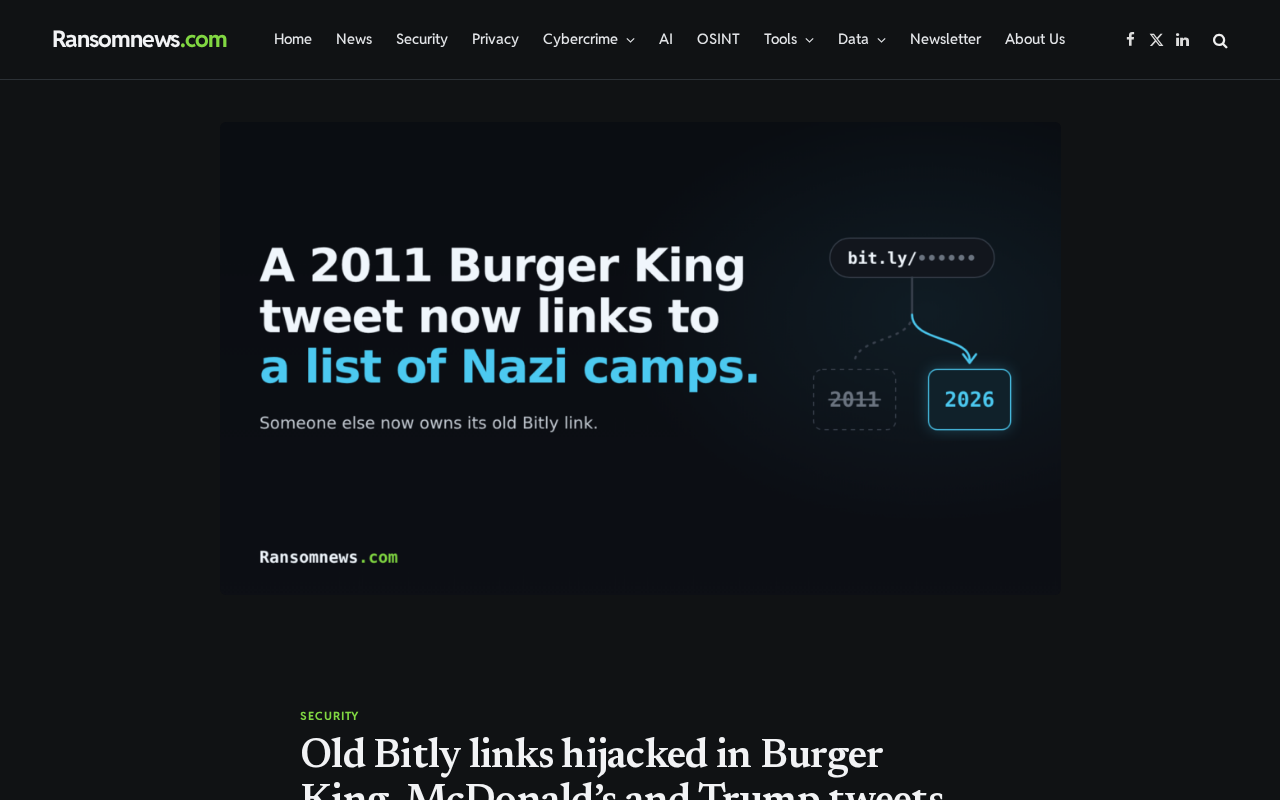
Old Bitly short links hijacked, exposing security blind spots in alias recycling and account management.
A recent Hacker News discussion revealed that old Bitly short links are being hijacked, potentially redirected to phishing or malicious sites. Causes may include aliases being released and then squatted on, or original accounts being reclaimed causing control transfer. Since social media and email clients highly trust short links, users find it hard to discern real destinations, amplifying the risk. The incident involves links in a brand's historical tweet, but specific details remain unclear. The article advises users to be wary of old short links and use preview tools; enterprises should regularly audit short links and adopt custom domains; providers need to strengthen recycling and verification mechanisms for historical links.
Short Link Hijacking Incident Comes to Light
Recently, a discussion on Hacker News drew attention: old Bitly short links are being hijacked (original link). According to the post, the topic garnered 194 points and 101 comments, with the discussion centering on the security risks of short link services.

Short link services map long URLs to short aliases for easy sharing and tracking. But this mechanism carries inherent risks: once a short link's mapping is maliciously altered or the original account becomes invalid, users who click may be redirected to phishing sites, malware download pages, or scam pages. In this incident, attackers appear to have targeted legacy short links—which may have become weak links in the security chain due to long-term neglect.
How Does Hijacking Happen? Analysis of Potential Paths
Based on the discussion, hijacking may stem from multiple avenues. A common scenario is that short link providers allow users to customize aliases, and some old links' aliases may be released and then re-registered. Attackers who grab these aliases can redirect links that originally pointed to legitimate content to malicious sites. Another possibility is that the original account was reclaimed due to long-term inactivity or policy violations, causing control of the link to transfer.
Moreover, third-party platforms place high trust in short links—many social media and email clients automatically expand them, making it hard for users to discern the final destination. This trust inertia amplifies the harm of hijacking—a short link in a tweet from years ago could silently become an attack entry point.
Short Link Alias Recycling and Squatting Mechanisms
Short link providers typically allow users to customize aliases (e.g., bit.ly/MyBrand), but rarely disclose their alias lifecycle management policies. Generally, if an account is inactive for a long time or a link is deleted, the alias may enter a "release pool" and be re-registered by other users after some time. The problem is that many original creators of old links have long forgotten their existence, and providers do not enforce notification or ownership verification. Attackers use automated tools to scan released aliases in bulk, squat on them, and redirect them to malicious sites. Since the short link text in original tweets and emails remains unchanged, clickers still trust the link and fall victim. This "alias hijacking" is essentially a supply chain attack that exploits the time gap between provider recycling policies and user awareness.
Cross-Verification of Multi-Source Information
Currently, independent sources on this incident are limited, with main information coming from the ransomnews.com report and Hacker News discussion. The post title mentions "Burger King tweet," suggesting the hijacking may involve a short link in a brand's historical tweet being tampered with. In Hacker News comments, some users shared similar observations, arguing that short link providers' cleanup policies for historical links have security blind spots.
It should be noted that specific details of the incident (such as the number of affected links and attacker identity) are not yet clear in the source material; this article interprets only based on existing public information.
Background of the Burger King Tweet and the Short Link Trust Chain
The "Burger King tweet" mentioned in the post title likely refers to a tweet historically posted by Burger King's official account containing a Bitly short link. Brand tweets are often embedded in web pages, news reports, or marketing materials, forming long-standing reference chains. When the short link is hijacked, all pages referencing it unwittingly become entry points for malicious traffic. This scenario highlights the contradiction between short links' "create once, effective long-term" nature and the lack of security maintenance. Enterprises often focus only on creating new links while neglecting continuous monitoring of historical links, leaving old tweets as security blind spots.
Implications for Users and Enterprises
For ordinary users, vigilance is advised before clicking short links, especially those of unknown origin or from long ago. Link preview tools can be used to view the real destination address. For enterprises, regular audits of their own short links should be conducted to ensure account security, and consideration should be given to enabling custom domains and long-term maintenance for important links.
Short link providers also need to reflect: should stricter recycling and verification mechanisms be established for long-inactive links? Should link ownership verification and expiration reminders be provided? These measures help reduce hijacking risks at the source.
Link Preview Tools and Security Practices
Link preview tools (such as browser extensions or online services) can display the real destination address of a short link before clicking, helping users identify anomalies. Additionally, users can manually add suffixes like "+" or "info" after short links (supported by some providers) to view statistics, though this is not universal. A more reliable approach is to use URL scanning services provided by security vendors, or simply avoid clicking short links of unknown origin. For enterprises, it is recommended to use custom domain short link services (such as bit.ly's enterprise version or a self-built short link system) to fully control the link lifecycle, and to set up regular audits and expiration reminders to ensure all externally published short links are under monitoring.
Conclusion
The convenience of short links should not come at the expense of security. Although details of this old Bitly link hijacking incident are limited, it is enough to remind us: "forgotten corners" of the digital world can become entry points for attackers. Maintaining attention to link security is a required course for every internet participant.
One-line Summary
Old Bitly short links hijacked, exposing security blind spots in short link services' alias recycling and account management.
Paragraph Summary
A recent Hacker News discussion revealed that old Bitly short links are being hijacked, potentially redirected to phishing or malicious sites. Causes may include aliases being released and then squatted on, or original accounts being reclaimed causing control transfer. Since social media and email clients highly trust short links, users find it hard to discern real destinations, amplifying the risk. The incident involves links in a brand's historical tweet, but specific details remain unclear. The article advises users to be wary of old short links and use preview tools; enterprises should regularly audit short links and adopt custom domains; providers need to strengthen recycling and verification mechanisms for historical links.
Related articles

Former Huawei Genius Youth Open-Sources AI Agent Guide: 90+ Hands-On Case Studies
Former Huawei Genius Youth Li Bojie open-sources AI Agent Book, the most systematic Chinese Agent learning repo on GitHub, with 90+ runnable examples covering context compression, memory frameworks, MCP tool calling, prompt injection attack and defense, and other enterprise-level hands-on content.

The Most Detailed FDE Tutorial on Bilibili: Case-Based Teaching from Business Practice to Interviews
B站UP主推出FDE从入门到面试实战教程,讲师深入业务一线,用马氏学习平台真实案例讲解FDE岗位要求。本文分析案例教学法、笔记策略与私密信息处理,为AI岗位求职者提供参考。

518 Dance Motion Chains + H3 Relay: Long-Video Choreography Breaks the Duration Limit
The open-source dance motion library adds 518 motion chains for choreography without reference videos. The H3 workflow combines AddGuide relay, CF Lift acceleration, and VDN to enable 30–60s long-video generation, breaking single-segment duration limits with independently controlled segmented prompts.