OMO Plugin in Action: Sisyphus Multi-Agent Collaboration for Building an AI Programming Team
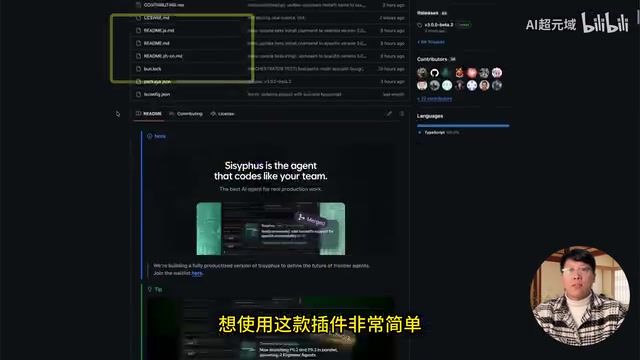
OMO plugin upgrades OpenCode into an automated AI dev team via intelligent multi-model collaboration
Oh My OpenCode (OMO) is an open-source OpenCode plugin that coordinates multiple specialized sub-agents (architecture design, frontend UI, documentation, etc.) through its Sisyphus primary agent, enabling intelligent multi-AI model scheduling and collaboration. Its UltraWork workflow supports one-click fully automated development, combined with MCP protocols for real-time external knowledge retrieval, boosting development efficiency while optimizing costs through tiered scheduling—letting different AI models each play to their strengths.
The Bottleneck of Single AI Models: Why Multi-Model Collaboration Is Needed
AI programming assistants have become everyday tools for many developers, but the more you use them, the more you notice a practical problem: no single model scores perfectly on every task. Using Claude Opus 4.5 for frontend UI might not match Gemini 3 Pro's results; deploying GPT 5.2 for simple documentation generation feels like overkill—wasting money for no good reason.
There are deep technical reasons behind this phenomenon. Current mainstream large language models (LLMs) differ in training data, architectural design, and optimization objectives, leading to significant performance variations across tasks. For instance, the Claude series excels at long-text understanding and code generation, Gemini leverages Google's multimodal training data for advantages in vision-related tasks, while the GPT series tends to be more robust in complex reasoning chains. This differentiation fundamentally stems from the "No Free Lunch Theorem" in computational theory—no single algorithm can outperform all others across every problem. The multi-model collaboration approach borrows from the microservices architecture concept in software engineering: decomposing a monolithic application into multiple services each focused on specific responsibilities, unified through an orchestration layer, thereby achieving overall performance that surpasses any single component.
This is precisely the core pain point that Oh My OpenCode (OMO for short), an open-source plugin, aims to solve. It upgrades OpenCode from a single AI programming assistant into a multi-AI collaborative development team—different models handling their specialties with intelligent scheduling, truly achieving "one person equals an entire dev team."
OpenCode is a terminal-based open-source AI programming assistant, positioned as a command-line alternative to Cursor or GitHub Copilot. Its core advantages lie in being lightweight, extensible, and natively supporting multiple LLM providers. Terminal AI programming tools have evolved rapidly in recent years, with representative projects including Aider, Claude Code, and others. Their shared design philosophy is embedding AI capabilities directly into the command-line workflows developers are most familiar with, avoiding frequent context-switching between IDEs and AI tools. OMO, as an OpenCode plugin, reflects the trend toward ecosystem development in these tools—core tools provide foundational capabilities while the community continuously expands functional boundaries through plugin mechanisms, creating an ecosystem effect similar to the VS Code extension marketplace.
Sisyphus Agent Coordination System: OMO's Core Architecture
Sisyphus: The Tireless Task Commander
At OMO's core is a primary agent called Sisyphus. Named after the figure in Greek mythology who eternally pushes a boulder uphill—symbolizing that this agent will tirelessly drive task execution and never give up halfway.
From a technical perspective, Sisyphus's design follows the core paradigm of current AI agent architectures. The fundamental idea behind AI agents is to endow LLMs with capabilities for autonomous planning, tool invocation, and environment interaction, upgrading them from passive Q&A systems to proactive task executors. A typical agent architecture contains four key modules: perception (receiving input and environmental information), planning (decomposing goals into sub-task sequences), execution (invoking tools or generating outputs), and reflection (evaluating results and adjusting strategies). Multi-Agent Systems (MAS) further introduce inter-agent communication protocols and collaboration mechanisms. Common collaboration patterns include hierarchical (one primary agent directing multiple sub-agents), peer-to-peer (agents negotiating as equals), and hybrid approaches. OMO adopts a typical hierarchical architecture, with Sisyphus serving as the orchestration layer for unified scheduling.
Sisyphus plays the role of an AI coordinator, with core responsibilities including:
- Task Analysis and Decomposition: Receiving development requirements and breaking complex tasks into executable sub-tasks
- Intelligent Delegation: Assigning sub-tasks to the most suitable sub-agents based on task characteristics
- Verification and Quality Assurance: Validating each sub-agent's execution results one by one to ensure delivery quality
- Parallel Execution: Processing independent tasks simultaneously, significantly reducing development cycles

Multi-Agent Division of Labor Explained
Beyond the Sisyphus primary agent, OMO includes multiple specialized sub-agents, each with clearly defined roles:
| Agent | Responsibility | Recommended Model |
|---|---|---|
| Oracle | Architecture design, complex bug fixing | GPT 5.2 |
| Explorer | Codebase exploration, pattern discovery | Grok |
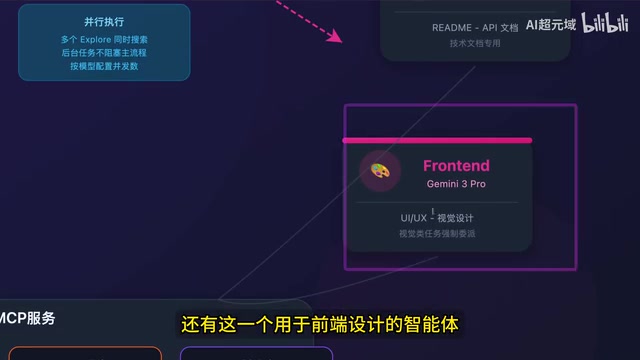
| Frontend Design Agent | UI/UX design, with LSP tool support | Gemini 3 Pro |
| Documentation Agent | Generating READMEs, API docs | Claude Opus 4.5 |
| Multimodal Agent | Image and PDF analysis | Multimodal models |
| Research Agent | External documentation research, OSS analysis | Claude Opus 4.5 |
Notably, the frontend design agent supports LSP (Language Server Protocol) tools. LSP was originally developed by Microsoft for VS Code and has since become the industry standard for communication between code editors and language analysis tools, providing code completion, go-to-definition, find references, type checking, and more. When the frontend design agent invokes LSP tools, it doesn't rely solely on the LLM's language understanding to generate code—it also accesses the project's actual type information, symbol tables, and dependency relationships, producing code that's highly compatible with the existing codebase. This "LLM + static analysis" combination significantly reduces type errors and missing references in AI-generated code.
The benefits of this division of labor are intuitive: let models that excel at architecture design focus on architecture, and let models that excel at UI focus on frontend. This avoids capability degradation when a single model works outside its strengths, while also eliminating the resource waste of using high-end models for simple tasks.
Deep Dive into OMO's Key Technical Features
UltraWork Workflow: One Keyword Triggers Fully Automated Development
OMO has an extremely low barrier to entry, thanks to its UltraWork workflow mechanism. Simply type ultrawork or the shorthand URW in your prompt, and Sisyphus automatically takes over the entire development process:
- Detects the keyword and activates UltraWork mode
- Sisyphus analyzes user intent and decomposes the task
- Creates a task queue and delegates to corresponding sub-agents
- Each agent executes tasks in parallel or sequentially
- Sisyphus validates results and consolidates output
The entire process is fully automated with no manual intervention required.
Intelligent Context Management and External Knowledge Retrieval
OMO integrates two key MCP (Model Context Protocol) services specifically designed to solve the common "outdated knowledge" problem in AI programming:
- Context7 MCP: Queries official documentation in real-time, ensuring generated code conforms to the latest framework and library specifications
- Exa MCP: Provides web search capabilities for accessing the latest technical information and solutions
MCP (Model Context Protocol) is an open standard protocol proposed by Anthropic in late 2024, designed to provide LLMs with a unified way to connect to external data sources and tools. Before MCP, every AI application needed custom integration code for different data sources, resulting in massive duplication of effort and a fragmented ecosystem. MCP's design draws from the USB interface concept—providing a universal "port" that allows any compatible data source or tool to plug in seamlessly to an LLM. MCP uses a client-server architecture: the MCP Host (such as OMO) acts as the client initiating requests, while MCP Servers (such as Context7, Exa) serve as providers of data or functionality. This architecture enables AI applications to dynamically retrieve the latest information, effectively mitigating the knowledge staleness caused by LLM training data cutoff dates.
Additionally, OMO monitors system runtime status through a Hooks mechanism, enabling quality assurance, context management, and failure recovery. The Hooks mechanism is a common event interception pattern in software engineering that allows developers to insert custom logic before and after specific operations. In OMO's context, Hooks are used to implement three key functions: quality assurance (automatically running validation logic after agent output, such as code lint checks or unit tests), context management (automatically compressing or summarizing conversation history when sessions become too long, preventing context window overflow), and failure recovery (automatically retrying or switching to alternative models when a sub-agent fails). This mechanism borrows from CI/CD pipeline thinking in DevOps, embedding automated quality gates into every stage of the AI development workflow.
Practical Demo: Full Workflow from Installation to Project Development
Quick OMO Plugin Installation
Installing OMO is straightforward, provided you already have OpenCode installed. The official documentation provides two methods:
# Method 1: Using Bun
bun install oh-my-opencode

# Method 2: Using NPX
npx oh-my-opencode
During installation, you'll be asked whether you have subscriptions to Claude, ChatGPT, and Gemini—select based on your actual situation. After installation, use the /connect command to log into each platform account one by one, completing authentication through browser verification.
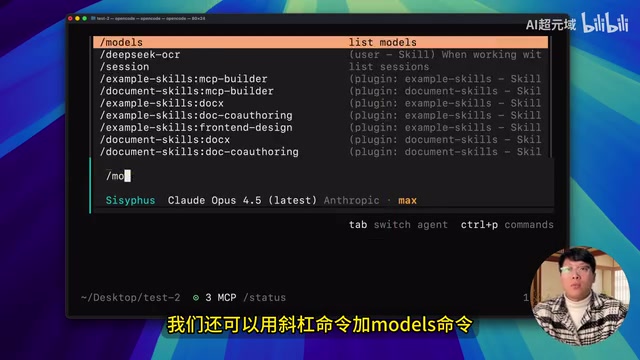
Once configured, use the /models command to view and switch between configured models, and use the Tab key to toggle between plan mode and execution mode.
Demo 1: Building a Data Analytics Dashboard from Scratch
The first test task was creating a modern analytics dashboard with data visualization, real-time updates, and dark mode support. After appending URW to the prompt to trigger UltraWork mode, Sisyphus automatically took over:
- Automatically decomposed requirements into multiple development sub-tasks
- Agents worked in parallel on frontend UI, data logic, style design, and more
- Completed all development within minutes
The final result was impressive: a dark mode interface, visualization charts, hover animations—all fully matching the requirements description.
Demo 2: Adding Features to an Existing Svelte Project
A test closer to everyday development involved adding features to an existing Svelte native focus application. Svelte is a frontend JavaScript framework created by Rich Harris. Its biggest difference from React and Vue is that it's a compile-time framework—Svelte compiles components into efficient native JavaScript code during the build phase rather than performing virtual DOM diffing at runtime. This design results in smaller bundle sizes and higher runtime performance for Svelte applications. Choosing a Svelte project as the test scenario also validates OMO's understanding of non-mainstream framework-specific syntax (.svelte files, reactive declarations, store mechanisms).
The steps were as follows:
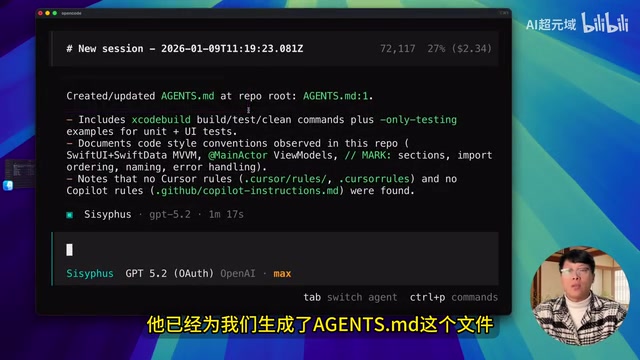
- Project Understanding: Used the
/anetcommand to generate anagents.mdfile, allowing OMO to understand the project's architecture, tech stack, and code style - New Session: Used the
/newcommand to clear context and start a new task - Input Requirements: Typed
ultrawork+ specific requirements (add custom focus duration feature with dropdown selection from 1-60 minutes) - Fully Automated Development: Waited a few minutes while OMO automatically completed feature development
Final verification in the simulator confirmed the dropdown component worked correctly—duration selection from 1 to 60 minutes, timer functionality, and completion notifications all ran properly. The entire process required zero human intervention.
OMO Use Cases and Cost Advantage Analysis
The OMO plugin is particularly well-suited for the following development scenarios:
- Large-scale project code refactoring: Multi-agent collaboration for analyzing and refactoring different modules
- Legacy code maintenance: Explorer agent deeply explores the codebase while Oracle agent designs refactoring strategies
- Full-stack development: Frontend, backend, and documentation handled by different specialized agents
- Complex bug localization and fixing: Deploying strong reasoning models like GPT 5.2 to tackle difficult problems
From a cost perspective, OMO's intelligent scheduling mechanism avoids the waste of "using a sledgehammer to crack a nut"—simple tasks go to lightweight models while complex tasks invoke high-end models, achieving an optimal balance between performance and cost. Based on current mainstream API pricing, flagship models like GPT 5.2 can cost dozens of times more than lightweight models per call. If all tasks indiscriminately use top-tier models, monthly API costs will escalate rapidly. OMO's tiered scheduling strategy maintains output quality while keeping overall costs within reasonable bounds.
Conclusion: Letting the Best AI Models Each Play to Their Strengths
The Oh My OpenCode plugin elevates OpenCode from solo operation to team-level collaboration. Through the Sisyphus coordinator and multiple specialized sub-agents working in concert, developers need only a single prompt to drive a complete AI development team.
The zero-learning-curve design of the UltraWork workflow, the external knowledge retrieval capabilities of Context7 and Exa MCP, combined with parallel execution and quality assurance mechanisms, make OMO one of the most noteworthy enhancement plugins in the current OpenCode ecosystem.
For developers seeking higher efficiency in AI-assisted programming, OMO offers a compelling solution: it's not about choosing the single best model, but about letting the best models each play to their strengths.
Related articles
 Tutorials
ChatGPT Plus Subscription Guide: Are GPT-5.5, image-2, and Codex Worth the Upgrade?
A detailed look at ChatGPT Plus features — GPT-5.5, image-2, and Codex — with a Plus vs Pro comparison and a complete step-by-step subscription guide for users outside the US.
 Tutorials
Harness AI Engineering in Practice: Using Claude Code to Master Enterprise-Level E-Commerce Development
Deep dive into Harness AI Engineering: master enterprise e-commerce development with Claude Code using the Rules, Skills, Wiki, and Changes framework.
 Tutorials
Cursor + Codex Dual-IDE Collaboration: A Practical Methodology for Open-Source Project Customization
A complete methodology for open-source project customization based on real-world experience, detailing the Cursor+Codex dual-IDE workflow, seven-stage process, MVP validation, and AI source code reading techniques.