One Function to Rule All LLM Calls: A Minimalist LLM Wrapper Sparks Developer Debate

A minimalist single-function LLM wrapper supporting text and vision models sparks discussion on Hacker News.
An open-source project aimed at wrapping LLM calls into a single unified function gained attention on Hacker News, addressing pain points like API inconsistencies, complex parameter handling, and multimodal input differences across vendors. By bringing text and vision models under the same abstraction layer, it lets developers call OpenAI, Anthropic, or local models without worrying about the underlying details. The trade-off is potential loss of fine-grained control over advanced features like streaming and tool calling. Compared to heavier frameworks like LangChain and LiteLLM, it targets developers who want the lowest-cost path to validating an AI idea.
One Function to Handle All LLM Calls
A project titled "Single Function Wrapper for LLMs (Including Vision Models)" gained traction on Hacker News, attracting 100 upvotes and 28 comments. It aims to address a common pain point for developers today: calling large language models (LLMs) often involves wrangling complex SDKs, configuration parameters, and vendor-specific differences. This project wants to simplify everything down to a single function.
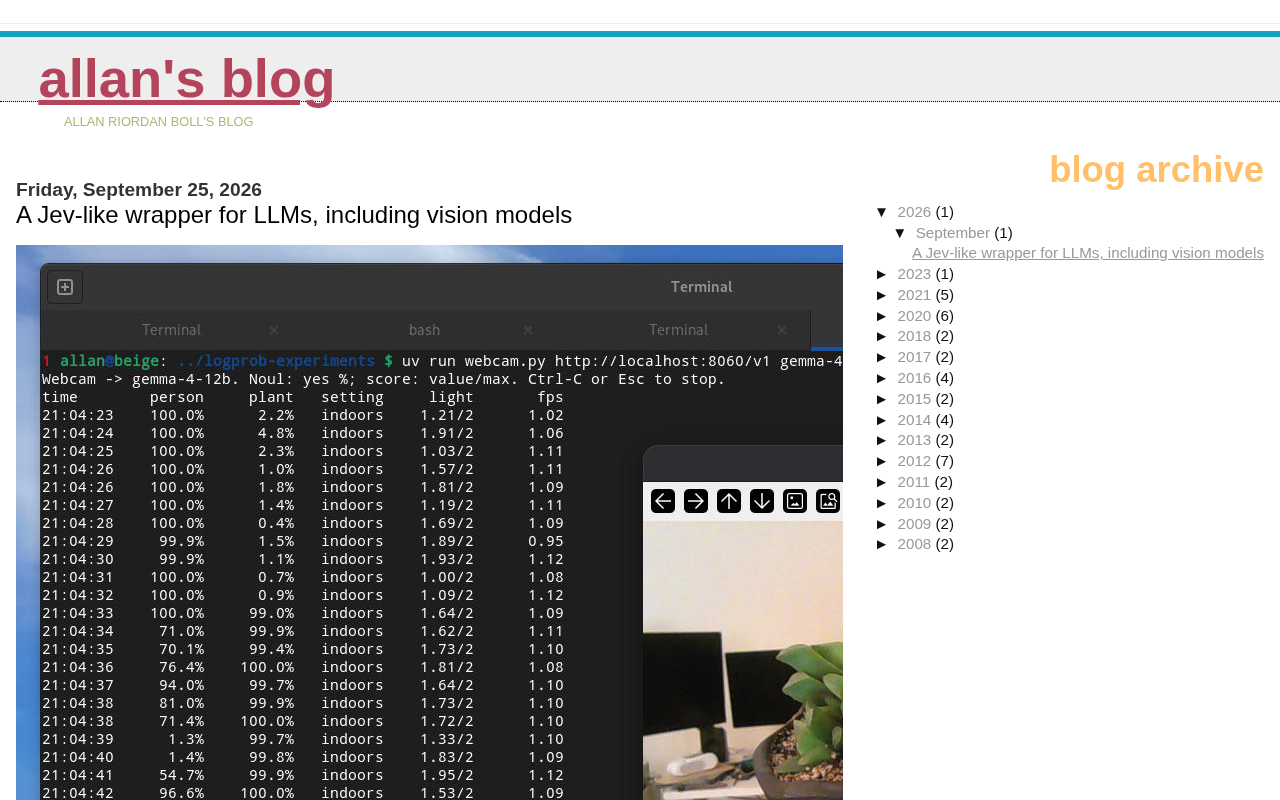
The so-called "Jev-like wrapper" refers to a lightweight, declarative-style abstraction — developers don't need to care whether the backend is OpenAI, Anthropic, or a local model, nor do they need to handle text and image inputs separately. A single unified entry point gets the job done. This design philosophy has grown increasingly popular in developer tooling, with the core goal of reducing cognitive load and eliminating boilerplate code.
Why Developers Need This Kind of Wrapper
The current mainstream approaches to LLM integration have a few obvious problems. Different vendors use different API parameter names, response structures, and error-handling conventions. Vision models add another layer of complexity, with their own image encoding requirements and parameter formats that differ from plain text models. Switching between model providers often means rewriting large chunks of code.
For rapid prototyping or scenarios where you need to compare multiple models, these inconsistencies can significantly slow down iteration. A unified single-function interface means developers can call different models with nearly identical code, keeping their focus on business logic and prompt design rather than adapter details.
Bringing vision capabilities under the same function is one of the project's highlights. As multimodal applications become more common, mixed "text + image" inputs have become a standard use case. Handling both input types within a single abstraction layer is particularly convenient for building image understanding, OCR, and visual QA applications.
The API-level complexity of vision models is worth addressing on its own. Take OpenAI's GPT-4o as an example: image inputs require converting images to Base64 encoding or providing a public URL, passed in a specific content array structure — quite different from the plain string format used for text. Anthropic Claude's multimodal interface follows a similar structure but differs in the details, while Google Gemini uses an entirely different parts structure. This means developers who want to test multiple vision models simultaneously need to maintain separate image preprocessing and parameter-passing logic for each vendor. A single-function wrapper hides all of these differences internally — developers simply pass an image path or URL, and the library handles encoding and format conversion automatically. This significantly lowers the barrier to entry for multimodal applications.
The Value and Trade-offs of Minimalist Wrapping
The biggest advantage of a single-function wrapper is that it's fast to get started and easy to reason about. Beginners don't need to wade through heavy SDK documentation; experienced developers can skip a lot of repetitive code. The success of tools like this typically hinges on whether they genuinely strike a balance between simplicity and flexibility.
But minimalism comes with trade-offs. Over-abstraction can sacrifice fine-grained control over lower-level parameters — advanced features like streaming output, tool calling (function calling), and granular control over temperature and sampling strategies may be compromised. How to preserve "one function" without losing these capabilities is the core design challenge for this kind of wrapper library, and typically the focus of community discussion.
From an ecosystem perspective, these lightweight wrappers occupy a distinct niche compared to mature frameworks like LangChain and LiteLLM — the latter are fully featured but heavier, while the former wins on radical simplicity, making it a good fit for developers who don't want to take on large framework dependencies.
LiteLLM is currently one of the most representative unified LLM interface layers, designed around compatibility with the OpenAI SDK format. It supports over 100 model providers and offers enterprise-grade features like a proxy server, load balancing, and cost tracking. LangChain goes even further, building a full ecosystem of abstractions including chaining, memory management, agent frameworks, and vector retrieval — ideal for complex AI workflows, but with correspondingly heavier dependencies and a steeper learning curve. The fundamental difference between single-function wrapper projects and these alternatives lies in the priority of design goals: the former puts "zero learning curve to run your first call" first, while the latter two prioritize coverage and extensibility. For scenarios where you just need to send a few messages and build a prototype, pulling in LangChain is often a textbook case of over-engineering.
What This Means for Developers
The fact that this project gained attention on Hacker News reflects the community's ongoing demand for simpler ways to integrate LLMs. For teams building AI applications, there are a few dimensions worth considering when choosing a wrapper tool: which model providers are supported, whether multimodal inputs are covered, whether necessary advanced parameters are preserved, and how lightweight the dependency footprint is.
For individual developers and small teams, single-function wrappers like this are especially worth trying — they let you get a first demo running in the shortest possible time, so you can validate your idea before deciding whether to bring in a more comprehensive framework.
A note on sourcing: since the original material only provided the project title and discussion metrics, the analysis of specific implementation details in this article is based on common design patterns for this category of tooling. Readers are encouraged to consult the project's original repository for an accurate list of features and usage instructions.
Related articles

Why Does the Tesla Roadster Need to Fly? A Deep Dive into Musk's Wild Demo
Tesla's Roadster launch showed wall-climbing, upside-down driving, and flying stunts—but The Vergecast notes the demo car may lack a battery, the Rocket version is invite-only and not street-legal, and the website terms don't guarantee delivery. After nine years of delays, why does this car still need to exist?

AI Is Not a Replacement: Human-AI Collaboration Through the Lens of Factory Root Cause Analysis
Starting from factory root cause analysis, this article explains how AI accelerates evidence chain construction rather than replacing human experts, exploring the pragmatic implementation logic and business value of 'AI supporting people rather than replacing them.'

AI Agent Decision Auditing: Building an Evidence Chain in Regulated Workflows
Starting from a Reddit discussion, this article analyzes three core issues in AI agent decision auditing within regulated workflows: what fields audit records should contain, how to handle feedback latency for erroneous decisions, and how to continuously calibrate LLM judge consistency with human judgment.