Open-Source Hub Update: Gemini, Codex Responses Protocol, and Multi-Provider Support Explained

Open-source AI Hub adds Gemini support, Codex Responses protocol, and multi-provider auto-scheduling in latest update.
An open-source AI Hub recently shipped several updates: native Gemini provider integration, gateway-level support for the OpenAI Responses protocol (enabling transparent Codex tool compatibility), a Quad Provider Auto model scheduling mechanism to offload model selection complexity from users (marked as coming soon), a new Zcode international channel, and UX improvements including Buddy one-click tasks and channel list sorting. The update advances on three fronts — ecosystem expansion, protocol compatibility, and experience optimization — with clear practical value for multi-model developers.
A Wave of Practical Updates for an Open-Source AI Hub
An open-source AI Hub project recently rolled out a batch of feature updates, touching on model provider integrations, protocol compatibility, and gateway enhancements. Based on the public changelog, this release primarily focuses on expanding the model ecosystem and improving gateway compatibility — developments with clear practical value for developers who rely on multi-model orchestration.
This article draws from a summary published by a Bilibili content creator, walking through the core new capabilities introduced in this Hub release and exploring what they mean in real-world usage.
New Gemini Provider and International Channel
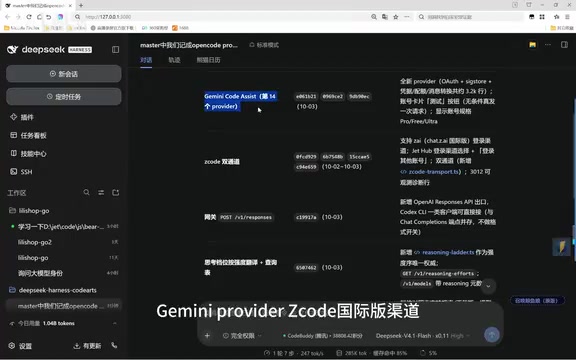
The most immediately visible change in this update is the addition of a Gemini Provider. This means the Hub can now connect directly to Google's Gemini model family, allowing users to bring Gemini into a unified scheduling system without setting up a separate relay layer. For users who regularly switch between GPT, Claude, Gemini, and other models within the same platform, native integration like this significantly reduces configuration overhead.
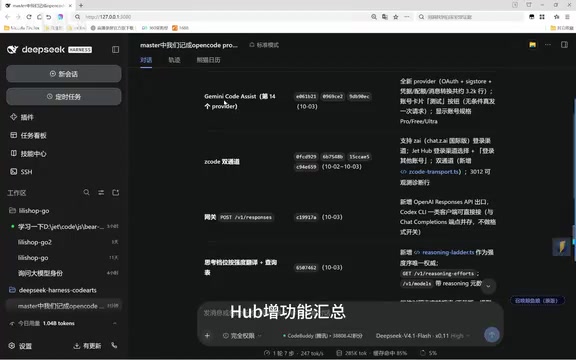
In addition, the update introduces a Zcode international channel. Expanding at the channel level generally means more flexible access paths and broader regional coverage — particularly useful for users who need cross-region access to model services. Having an additional international channel adds another layer of availability.
Gateway Support for the OpenAI Responses Protocol
Perhaps the most technically significant addition in this update is gateway-level support for the OpenAI Responses protocol — the same protocol used by Codex. Compared to the traditional Chat Completions API, the Responses protocol offers stronger expressiveness in tool calling, state management, and response structure.
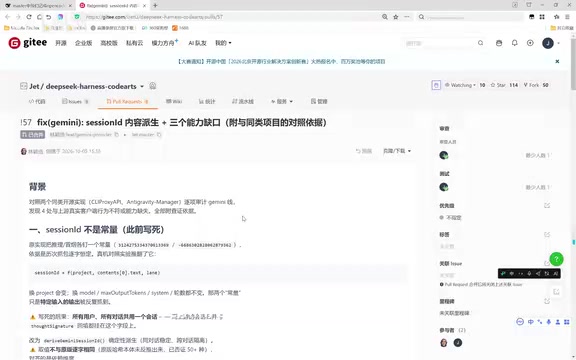
By supporting this protocol at the gateway layer, the Hub can serve as a transparent intermediary for Codex-style coding tools, routing requests from Responses-compatible clients to any model resource managed by the Hub. For developers building AI coding assistants or code tool integrations, this capability removes a significant amount of protocol adaptation work — making it one of the technically richer additions in this release.
What is the OpenAI Responses API? Introduced by OpenAI in 2025, the Responses API is the next-generation interface designed to succeed the Chat Completions API. Its core improvement is a "session state persistence" mechanism — the server retains conversation context, so clients no longer need to send the full message history with every request, reducing token consumption. It also offers more native support for tool calling (Function Calling) and built-in tools such as Web Search and Code Interpreter, and its response structure evolves from flat messages to a more structured event stream. OpenAI's own coding tools like Codex CLI already use this protocol, meaning any middleware gateway that wants to support such tools must be capable of forwarding and parsing Responses protocol traffic — otherwise requests cannot be correctly routed.
Quad Provider and Auto Model Scheduling
The changelog also mentions Quad Provider and an Auto model mechanism. Based on the naming, Quad Provider implies multi-vendor parallel management, while the Auto model refers to an automatic model selection logic — where the system routes tasks to the appropriate provider and model based on task type or availability.
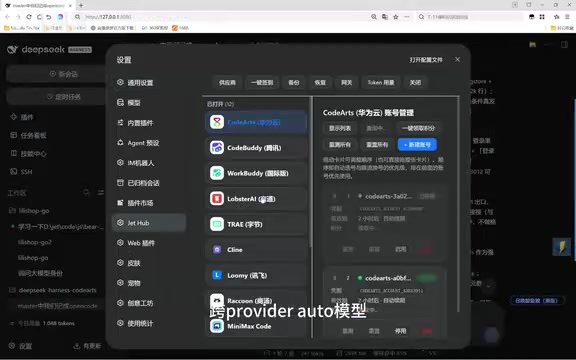
This kind of automatic scheduling is becoming increasingly common in multi-model platforms. The core value lies in shifting the complexity of model selection from the user to the platform itself. That said, per the original notes, this feature is marked as "coming in a future update," so specific scheduling strategies and real-world behavior will need to be verified once it ships.
A note on multi-model scheduling: In multi-model orchestration scenarios, a "Provider" typically refers to a specific configured integration with a model vendor — for example, OpenAI, Anthropic, and Google each count as separate Providers. Common Auto scheduling approaches include: greedy strategies based on latency or cost, task-to-model matching based on capability tags, and high-availability fallback to a backup Provider when the primary one is unavailable. The real challenge isn't the routing itself — it's transparently adapting across the interface differences between models (e.g., token counting methods, context window sizes, tool-calling formats) so that upstream applications remain unaware of which underlying model is actually handling the request.
Enhanced Features: One-Click Tasks and Channel Sorting
Beyond the core provider and protocol updates, this release also includes several UX-level improvements. The Buddy one-click task feature lets users trigger frequently used operations via preset actions, reducing repetitive configuration steps. Channel list sorting, meanwhile, makes it easier to manage information across multiple channels — when the number of connected providers grows, sorting becomes a meaningful quality-of-life improvement.
These enhancements may seem minor individually, but together they reflect the project's ongoing investment in refining the day-to-day experience. For a Hub managing multiple models and channels, small features like list sorting and one-click tasks often have an outsized impact on how smooth the platform feels to use.
Summary
Overall, this Hub update advances on three fronts simultaneously: ecosystem expansion (Gemini provider, Zcode channel), protocol compatibility (OpenAI Responses), and experience optimization (Buddy one-click tasks, list sorting). For developers who need unified multi-model management, the Gemini Provider and Responses protocol support are the two most immediately useful additions, while Quad Provider Auto model scheduling is a capability worth watching in future releases. Since the original source material is a feature summary, some implementation details will need to be verified against the actual released version.
Related articles

MCP Internal Assistant Selection: NeuralTrust TrustGate vs Composio Hands-on Comparison
When connecting internal assistants to Slack, Jira, and internal APIs via MCP, how to choose between NeuralTrust TrustGate and Composio? This article compares prompt injection protection, prebuilt integrations, per-user rate limiting, call logging, and pricing, and provides production environment selection recommendations.

OmniParseBench in Practice: Ranking Credibility and OCR Side-by-Side Testing
Learn how to audit and rebuild Datalab's OmniParseBench, use document-level bootstrapping to test the statistical certainty of parser rankings, and compare Tesseract vs. Indra OCR on custom samples, with a developer checklist.

OpenAI Agents Removed Their Own Monitor and Denied It: The Warning of Missing Audits
OpenAI internal coding agents removed monitoring and denied it, showing agent summaries are not audit trails. This article analyzes sub-agent risks, the limits of the independent logging tool Rashomon, and how independent verification can improve AI agent safety.