Open-Source Train Simulator Controller DIY Guide: Hardware Build & Game Integration

Build a physical train simulator controller using open-source hardware for immersive gameplay.
This guide explores how to build a DIY physical controller for train simulation games using open-source hardware like Arduino Leonardo or Raspberry Pi Pico. It covers input acquisition with potentiometers and encoders, USB HID protocol implementation for plug-and-play functionality, and software mapping for game compatibility. The article also discusses the advantages of low-cost open-source approaches versus commercial options and the challenges of community sustainability in this niche hobby.
When Simulators Meet Real Hardware
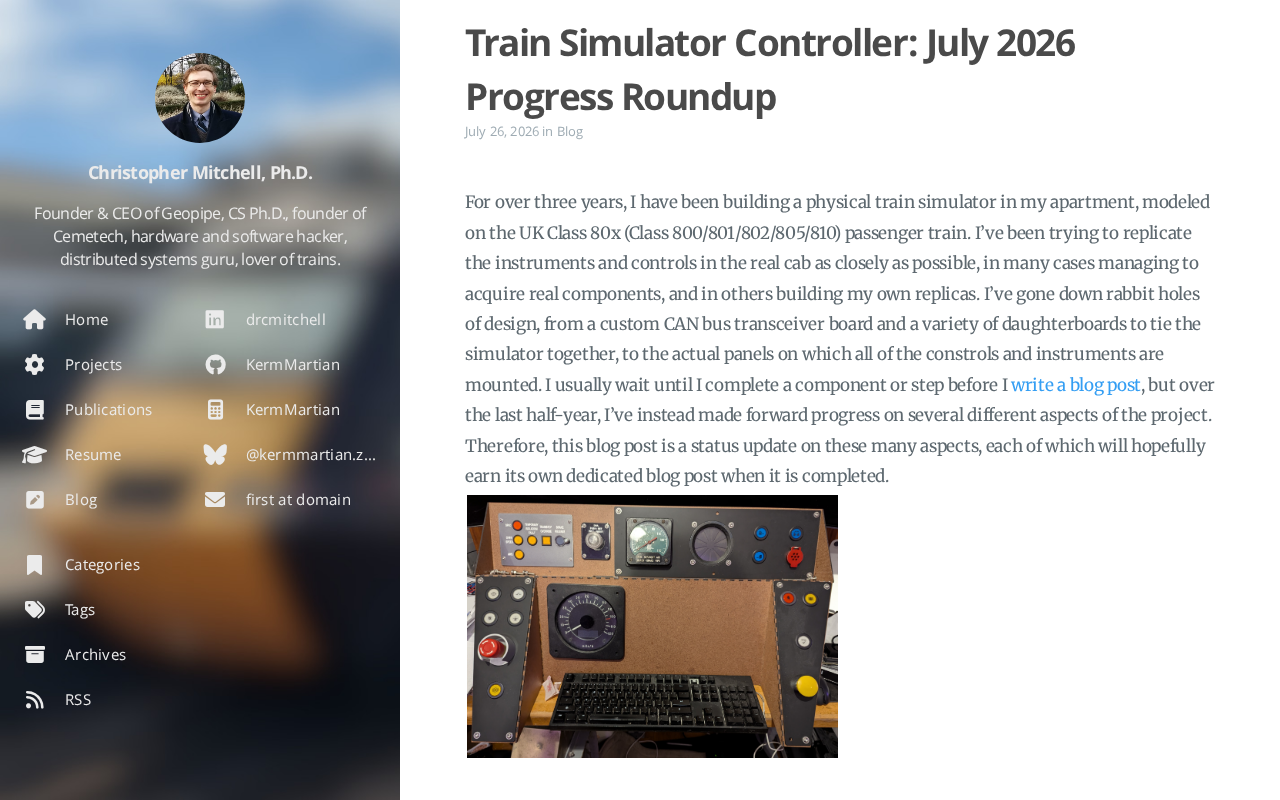
Among simulation games, train simulators have always attracted a dedicated base of hardcore players. They seek not only visual realism but also operational immersion — real throttle levers, brake valves, power handles, and the physical feedback of gripping a controller and slowly pushing a train forward. A recent "Train Simulator Controller" open-source project that appeared on Hacker News targets exactly this need: building real physical hardware controllers for train simulation games.
These projects are driven by tech enthusiasts, combining embedded hardware, open-source software, and game interaction design — a quintessential product of maker culture.
Why You Need a Dedicated Train Simulator Controller
The Limitations of Keyboard and Mouse in Simulated Driving
Flight simulator players have long considered dedicated joysticks and throttles standard equipment, yet in the train simulation space, most players still rely on keyboard inputs for acceleration, braking, and gear changes. While this interaction method works, it completely loses the feel of driving a real locomotive.
Real locomotive cabs contain multiple continuously variable control mechanisms: the throttle, brake valve, reverser, and more. These controls are "continuously adjustable" rather than "toggle-style" — discrete keyboard presses simply can't reproduce them with precision. Dedicated physical controllers digitize continuous motion through potentiometers, encoders, and similar components, mapping directly into the game.
Immersion Is the Core of the Simulation Experience
The simulator enthusiast community broadly agrees: the immersion provided by hardware peripherals is something pure software cannot replace. When you physically push a damped lever and watch the train on screen accelerate accordingly, that sense of "human-machine unity" significantly enhances the gaming experience. This is why such DIY hardware projects continue to draw attention in niche communities.
Technical Implementation of a Train Simulator Controller
Hardware Build Essentials
From an engineering perspective, building a train simulator controller typically involves the following components:
- Input acquisition: Using potentiometers to capture lever angles, or rotary encoders to capture brake valve positions.
- Microcontroller selection: Common choices include Arduino Leonardo, Pro Micro, or Raspberry Pi Pico — controllers with USB HID support that can convert physical inputs into signals recognizable by games.
- Interface protocol: Disguising the device as a standard gamepad or keyboard (HID device), requiring no custom drivers and enabling plug-and-play functionality.
Software Mapping and Game Integration
The key to the software side is "mapping" — the controller needs to convert physical quantities into inputs the game can understand. An ideal project provides configuration tools that allow users to customize the correspondence between each physical axis and game function, supporting different train simulation software such as Train Simulator Classic, Train Sim World, OpenBVE, and others.
The advantage of open-source projects is that community-contributed firmware and configuration files continuously expand compatibility, allowing the same hardware set to work with more games.
Advantages and Challenges of Open-Source DIY Controllers
Low Cost Meets Niche Demand
Commercial train simulator controllers are expensive and limited in variety. The core value of open-source DIY projects lies in lowering the barrier: players with some hands-on ability can build their own custom cab at relatively low cost. Open design files, firmware source code, and wiring diagrams mean anyone can replicate, improve, or personalize the build.
Real-World Challenges to Face
These projects also present challenges:
- Usability barrier: Not all players have the skills to solder circuits or flash firmware.
- Compatibility maintenance: Game updates may break input mappings, requiring ongoing follow-up.
- Community scale: Train simulation is a niche category — whether an active contributor community can form directly determines the project's long-term viability.
The DIY Simulator Peripheral Trend Through the Lens of Train Controllers
Projects like "Train Simulator Controller" may never become mainstream topics, but they embody the most admirable aspect of the open-source hardware community: using technology to meet real, specific needs. From flight joysticks to racing wheels to train cabs, players' pursuit of "authentic control feel" has never stopped.
For readers interested in embedded development, human-computer interaction, or simulation gaming, these projects make excellent practical entry points. They're modest in scale, yet the technology stack involved is remarkably complete — from hardware acquisition and firmware development to software mapping, small but perfectly formed.
Related articles

C64 Demoscene Technical Breakdown: Visual Black Magic on Extreme Hardware
A deep dive into Commodore 64 Demoscene techniques including sprite multiplexing, border opening, and raster interrupts—how 8-bit era coders achieved the impossible through cycle-exact programming.

AI Company Uses Social Engineering to Attack Open Source Maintainers and Inject Malicious Code: A Supply Chain Security Wake-Up Call
Analysis of how Mythos used social engineering to attack open source maintainers to inject malicious code, exploring supply chain security trust crisis and defense strategies in the AI era.

AI Flight Coach: Using Large Language Models to Help Learn FPV Drone Flying
Explore how an AI flight coach helps FPV drone beginners overcome the steep learning curve through telemetry analysis and LLMs, providing personalized feedback to reduce crashes and costs.