Open-Source WebGPU Library: A Lightweight Shader Solution for Browsers and Node.js
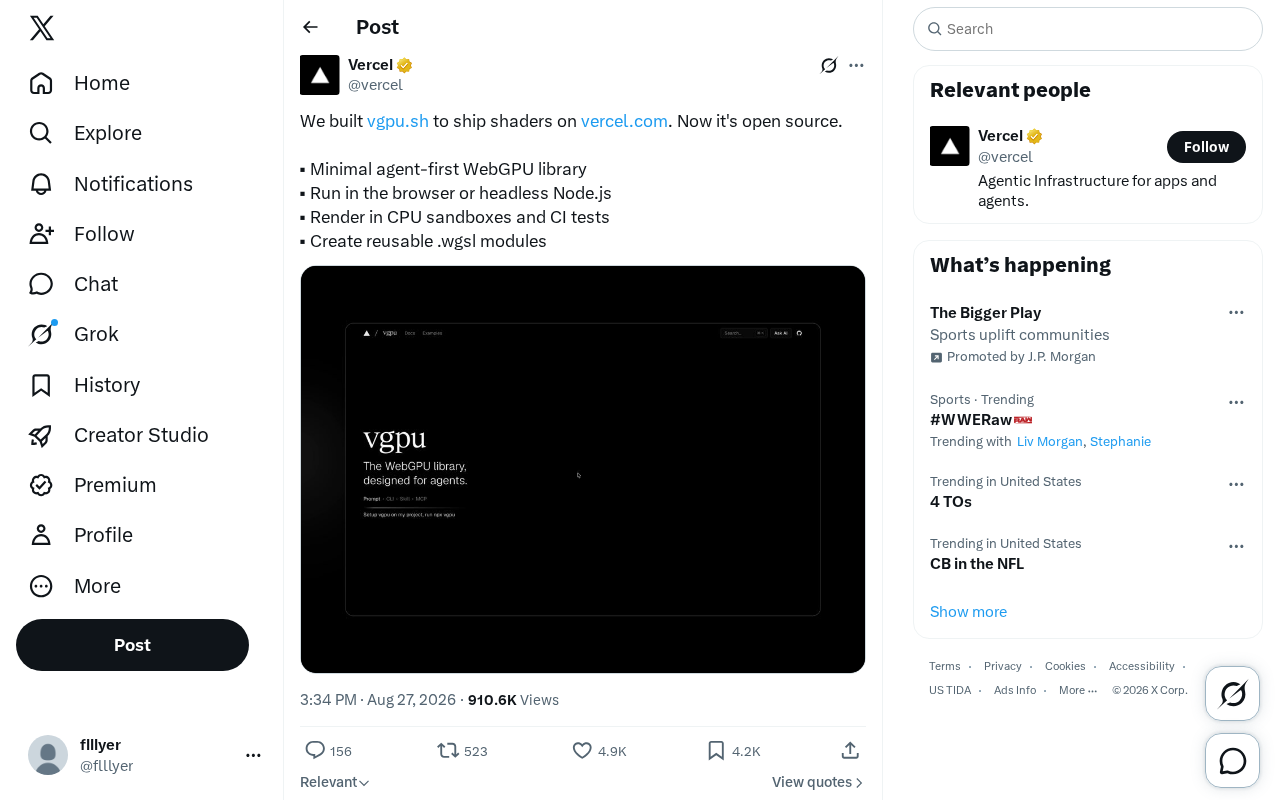
Open-source WebGPU library enabling cross-environment shader deployment with modular WGSL and CI support
This production-validated WebGPU library brings agent-first design to shader development, running seamlessly in browsers and Node.js. It features CPU sandbox rendering for CI integration, reusable WGSL modules for better code organization, and a minimal API that lowers WebGPU's entry barrier without sacrificing flexibility.
Open-Source WebGPU Library: A Lightweight Shader Solution for Browsers and Node.js
A lightweight WebGPU library designed for developers has been officially open-sourced. Originally developed for deploying shaders in production environments, the project now makes its complete source code available to the community. The library's core design philosophy is "agent-first," aiming to provide a clean and powerful toolchain for modern web graphics development.
Agent-first is a design philosophy oriented toward automation and programmatic interaction. In this context, it means the library's API design prioritizes scenarios where it's called by scripts, automation tools, and AI agents, rather than solely focusing on interactive use by human developers. This design enables shader compilation, deployment, and testing to be completed entirely through programmatic means, making it ideal for integration with LLM-driven code generation tools, automated CI/CD pipelines, and AI programming assistants.
WebGPU Technical Background
WebGPU is the next-generation web graphics and compute API standard developed by the W3C GPU for the Web Working Group, officially launched in Chrome in 2023. Unlike its predecessor WebGL, which is based on OpenGL ES, WebGPU draws on the design principles of modern low-level graphics APIs like Vulkan, Metal, and Direct3D 12, providing closer-to-hardware control, explicit resource management, and more efficient multi-threading support. WebGPU is not only for 3D graphics rendering but also natively supports general-purpose GPU computing (GPGPU), giving it enormous potential in scenarios like machine learning inference, scientific computing, and data-parallel processing.
Core Features and Technical Architecture of the WebGPU Library
Cross-Environment Execution in Browsers and Node.js
The most prominent advantage of this WebGPU library is its cross-environment compatibility. Developers can run WebGPU code directly in browsers or execute it in headless Node.js environments. A single codebase covers the complete spectrum from frontend rendering to server-side GPU processing.
Headless mode support is particularly critical for automated testing and CI/CD workflows. Traditional GPU graphics libraries often depend on browsers or specific graphical interfaces, but this library breaks that limitation, allowing developers to complete GPU computation and rendering tests on servers without display devices. In Node.js environments, WebGPU implementations typically rely on Google's Dawn project—an open-source, cross-platform WebGPU implementation that serves as the underlying engine for Chrome's WebGPU functionality while also providing standalone C/C++ interfaces, enabling Node.js to directly access GPU capabilities through native bindings.
CPU Sandbox Rendering and CI Integration
The library implements rendering capabilities in CPU sandbox environments, allowing code to run and be tested normally even without GPU hardware. This feature is significant for continuous integration (CI) scenarios—development teams can run complete graphics test suites on standard CI servers without configuring expensive GPU testing environments.
CPU sandbox rendering is typically implemented through software rasterizers, such as Google's SwiftShader or Mesa's llvmpipe. These tools simulate the GPU graphics pipeline on the CPU, converting GPU operations like vertex processing, rasterization, and fragment shading into CPU instructions. While performance is 1-2 orders of magnitude lower than real GPUs, output results maintain high consistency at the pixel level. In WebGPU's Node.js implementation, this software backend makes it possible to run complete WebGPU workloads in Docker containers or cloud CI environments without physical GPUs.
While CPU rendering performance doesn't match real GPUs, it's more than sufficient for unit testing, regression testing, and functional validation. This fallback mechanism ensures that the development workflow isn't interrupted by environmental constraints.
Reusable WGSL Modular Design
Encapsulating and Reusing WGSL Shader Code
Another major highlight of the library is its support for creating reusable .wgsl modules. WGSL (WebGPU Shading Language) is WebGPU's official shading language, and this library allows developers to encapsulate commonly used shader logic into independent modules that can be shared and reused across different projects.
WSGL differs significantly from GLSL used by WebGL. WGSL adopts a Rust-like syntax style with a stricter type system and memory safety features, supporting three shader stages: vertex shaders, fragment shaders, and compute shaders. However, the WGSL standard itself doesn't define a module system or import mechanism, meaning code reuse relies on external toolchains. In traditional shader development, developers often need to reuse code through string concatenation, preprocessor macros, or simple file inclusion—approaches that create serious maintenance burdens as projects scale. The library described in this article fills precisely this toolchain gap, providing WGSL with a development experience similar to JavaScript's module system.
This modular approach directly addresses the pain point of difficult code reuse in traditional shader development. Developers can build their shader libraries like managing npm packages, conveniently referencing and maintaining WGSL code.
Minimal Design Philosophy
"Minimal" is the library's core design principle. Unlike comprehensive graphics frameworks (such as Three.js or Babylon.js), it focuses on providing WebGPU's core capabilities while avoiding unnecessary abstraction layers and feature bloat. This design makes the learning curve gentler and gives developers clearer understanding and control over underlying logic.
Minimal design also brings smaller package sizes and faster load times, which are crucial for web application runtime performance. In WebGPU development, complete graphics frameworks may include scene graph management, physics engine integration, resource loaders, and many other features developers may not need, while this library narrows its focus to shader writing, compilation, and deployment, allowing developers to freely combine other tools based on their needs.
Typical Application Scenarios for the WebGPU Shader Library
Production-Validated Stability
This library is not an experimental project but has been thoroughly validated in real production environments. The development team uses it to deploy shaders to actual web applications, and its stability and practicality have been proven.
The transition from internal tool to open-source project means a broader developer community can directly benefit from these production-grade practices without having to build similar infrastructure from scratch.
Lowering the WebGPU Development Barrier
For developers exploring WebGPU technology, this library provides an ideal starting point. It effectively lowers the entry barrier to WebGPU while maintaining sufficient flexibility to handle complex scenarios.
Particularly in AI and machine learning fields, WebGPU's ability to provide GPU acceleration in browsers is highly attractive. This library can serve as a foundational component for building browser-based AI inference tools. Currently, multiple important projects leverage WebGPU to enable browser-based AI capabilities—for example, the WebLLM project can run large language models in browsers, ONNX Runtime Web accelerates model inference through its WebGPU backend, and Stable Diffusion has been ported to run in browsers. The common requirement across these application scenarios is efficiently writing and managing GPU compute shaders, which is precisely the core capability this library provides.
Open-Source Value and WebGPU Ecosystem Outlook
Open-sourcing production-validated tools embodies the collaborative and mutually beneficial spirit of the tech community. Developers can extend and customize functionality according to their needs and contribute improvements back to the community.
As the next-generation web graphics standard, WebGPU is gradually replacing WebGL. WebGL released version 1.0 in 2011, based on OpenGL ES 2.0, bringing hardware-accelerated 3D graphics capabilities to the web. However, WebGL's design has historical limitations including a global state machine model, implicit synchronization, and lack of compute shader support. WebGPU eliminates implicit driver-level optimization guesswork by introducing modern concepts like command buffers, bind groups, and pipeline state objects, returning performance control to developers. WebGPU is currently available in Chrome, Edge, and Firefox Nightly, and Safari is actively advancing support.
The emergence of this open-source library supplements the WebGPU ecosystem with important infrastructure, promising to accelerate WebGPU technology's implementation and adoption in real-world projects.
Key Takeaways
- Cross-environment compatibility: Runs seamlessly in both browsers and headless Node.js environments
- CI-friendly: CPU sandbox rendering enables GPU testing without hardware dependencies
- Modular WGSL: Reusable shader modules improve code organization and maintenance
- Minimal design: Focused scope reduces complexity while maintaining flexibility
- Production-proven: Battle-tested in real-world deployments, not experimental
- Agent-first: API designed for programmatic access and automation tooling
- WebGPU foundation: Provides essential infrastructure for the growing WebGPU ecosystem
Related articles

How Short-Form Video Creators Are Using AI Video Generation Tools
Exploring the real-world application of AI video generation tools in short-form video creation. From Seedance to Runway, how do creators integrate AI assets? Revealing the gap between demos and production use.

Home Data Center Setup Guide: A Complete Self-Hosted Private Cloud Implementation
Deep dive into building a home data center: hardware selection, software architecture, cost analysis, and operational challenges. From data sovereignty to technical implementation, build your private cloud infrastructure and control your digital assets.
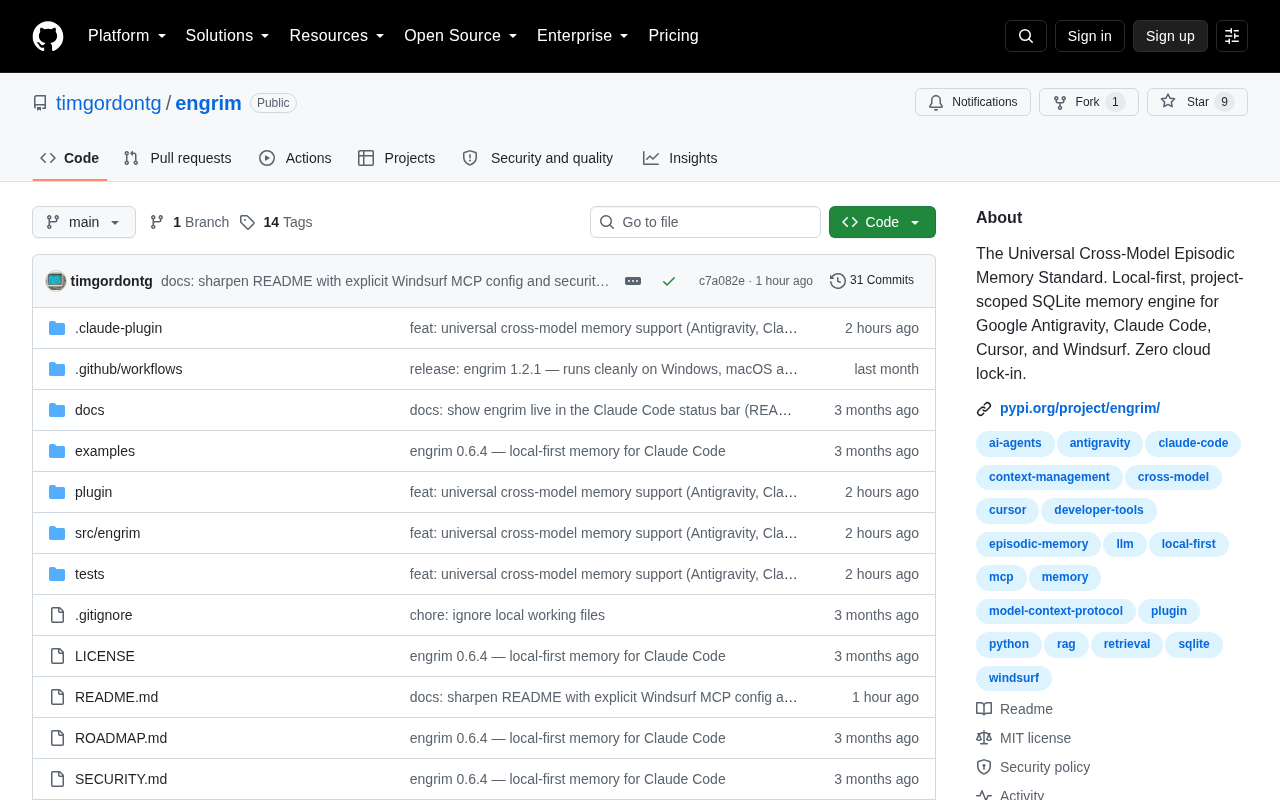
Engrim: A Local Memory Engine Solution for AI CLI Tools
Engrim is an open-source, local-first SQLite memory engine built for AI CLI tools like Claude Code and Aider, solving context loss while keeping data private.