OpenAI Academy Hands-On Training: How Small Business Owners Can Use ChatGPT to Boost Operational Efficiency

OpenAI Academy's hands-on local training helps small business owners practically adopt ChatGPT for daily operations.
OpenAI Academy hosted in-person ChatGPT training events for small business owners in California, focusing on hands-on practice and real-time support. The article examines why systematic AI education matters for non-technical entrepreneurs, how the training's learner-centered design drives effectiveness, and OpenAI's strategic intent to build AI-native habits among small businesses.
Opportunities for Small Businesses in the AI Wave
Artificial intelligence is reshaping business operations at an unprecedented pace. As the host of an OpenAI Academy in-person event put it: "AI is really changing the way we do business in a big way, and it's happening so fast." For small businesses and solo entrepreneurs with limited resources, this transformation is both a challenge and an opportunity too important to miss.
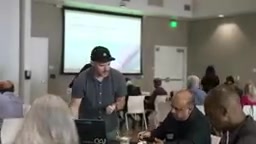
Recently, OpenAI Academy hosted a series of in-person training events for small business owners in California, with a clear objective: helping local entrepreneurs experience ChatGPT and other AI tools firsthand and apply them practically to their daily operations. OpenAI Academy is an educational initiative officially launched by OpenAI in early 2025, designed to help users of varying technical backgrounds master practical AI tool applications through a combination of online courses and in-person workshops. The program evolved from OpenAI's previously scattered developer documentation and community events into a more systematic training framework. The localized in-person training for small business owners is one of its most distinctive modules—directly addressing the common pain point among non-technical users who "know AI is important but don't know how to get started." The core philosophy of the event isn't about lofty AI visions, but ensuring every participant "leaves with ideas they can implement immediately."
Why Small Businesses Urgently Need AI Education
The Digital Divide Still Exists
Although ChatGPT has become a household name, the number of small business owners who truly understand how to integrate it into specific business workflows remains small. Features update at breakneck speed—as one participant noted: "Every minute there's a new feature and capability coming out." This rapid iteration leaves many entrepreneurs feeling overwhelmed, unsure of where to even begin.
Since its release in November 2022, ChatGPT has undergone multiple model upgrades from GPT-3.5 to GPT-4, GPT-4o, and GPT-4o mini, while continuously expanding its capabilities: from pure text conversation to image recognition, file uploads, Code Interpreter, DALL·E image generation, web browsing, custom GPTs, memory features, and more. This pace of near-monthly major updates is extremely rare in software product history. Even for professional developers, keeping up with these changes is no easy feat; for small business owners busy running their operations day-to-day, the information overload creates even more pronounced anxiety and confusion.
This is precisely why systematic, practically-oriented AI education has become so critical. Effective training must not only teach how to use ChatGPT but also help business owners develop an accurate understanding of AI's capability boundaries—knowing what it can do well and what it currently cannot. The core capabilities of large language models (LLMs) lie in natural language understanding and generation, information synthesis and rewriting, and pattern recognition and suggestions. However, significant limitations remain: including potential "hallucinations" (generating content that sounds plausible but is factually incorrect), lack of real-time data access (unless web browsing is enabled), inability to perform physical-world actions, and the need for human review in highly specialized fields (such as legal compliance and medical diagnosis). Building this cognitive framework of "trust but verify" helps small business owners avoid the two extremes of over-reliance and excessive fear.

The Multiplier Effect of Educators
One educator serving as an instructor at the event shared: "Seeing the impact AI has had on me personally and my students has been transformational." It was precisely this firsthand experience that motivated him to bring the same educational resources and methodologies to small business owners in his community.
This reveals a noteworthy diffusion pathway: AI capability adoption often spreads gradually from educators and early adopters to the broader community. This propagation pattern closely aligns with classic technology adoption theory. Sociologist Everett Rogers noted in his Diffusion of Innovations theory that technology adoption typically follows an S-curve from "innovators" to "early adopters" to the "early majority." Educators often play the role of "opinion leaders"—they possess both the ability and motivation to learn new technologies, as well as natural channels and trust foundations for disseminating knowledge to broader groups. Once an instructor has personally validated ChatGPT's practical value, they're more motivated to encourage adoption among those around them. In the context of AI adoption, this means investing in training educators may have greater leverage than marketing directly to end users.

Why the Training Works: Down-to-Earth Course Design
Starting from Participants' Actual Skill Level
The key to the success of this type of ChatGPT training lies in its "meet them where they are" design philosophy. One participant shared: "For most of us, this class met us right where we were at, without going over our heads."
This point is especially important for small business owners. Many AI courses on the market are either overly technical and filled with jargon, or too superficial and lacking actionable guidance. Truly effective training needs to strike a balance between the two—explaining the principles clearly while keeping pace manageable for beginners with zero prior experience.
Hands-On Practice + Real-Time Support
"The demos were very real, we were able to practice right there, and if we got stuck, someone was right there to help, which was amazing." This feedback captures the irreplaceable value of in-person hands-on training.
The effectiveness of in-person hands-on training is supported by solid educational theory. Constructivism holds that knowledge isn't passively received but actively constructed by learners through interaction with their environment. When small business owners type prompts during training, observe ChatGPT's output, and adjust their strategies based on feedback, they're experiencing "Learning by Doing." Additionally, Vygotsky's concept of the "Zone of Proximal Development" explains why real-time guidance from on-site experts is so crucial—learners need timely support while tackling challenges slightly above their current ability level to achieve the most effective skill development.
Compared to watching video tutorials or reading documentation, in-person ChatGPT training offers three core advantages:
- Immediate feedback: Problems are solved on the spot, preventing learners from giving up due to getting stuck
- Peer support: Fellow participants and experts are available to assist at any time, reducing the isolation of learning
- Real-world scenarios: Demonstrations are closely aligned with actual business needs rather than abstract cases

OpenAI Academy's Strategic Intent
From a broader perspective, OpenAI's launch of Academy and its deep engagement with local communities through small business training reflects an important strategic move in the competitive AI landscape: lowering barriers to entry and expanding the user base.
For OpenAI, getting more small business owners proficient with ChatGPT not only boosts product daily active users and paid conversion rates but also cultivates an "AI-native" business mindset. The concept of "AI-native" is similar to earlier terms like "Mobile-native" and "Cloud-native"—referring to a model where AI capabilities are built in as core infrastructure from the very beginning of workflow design. Once entrepreneurs habitually use ChatGPT to draft emails, generate marketing copy, and analyze customer data, AI transforms from a "nice-to-have" into a "daily essential."
From SaaS (Software as a Service) industry experience, the core driver of user retention isn't how flashy a product's features are, but how deeply users embed the product into their daily workflows—known as "Switching Cost." When small business owners become accustomed to using ChatGPT for daily email writing, social media content creation, and customer FAQ knowledge base building, the cost of migrating to competitors increases significantly. This bottom-up penetration strategy creates much stronger user stickiness than relying solely on advertising. It cultivates usage capability and dependency habits rather than momentary curiosity—this is the underlying business logic behind OpenAI's strategy of expanding its user base through free educational training.
Three Practical Takeaways for Small Business Owners
For small business owners still on the fence about AI tools, this OpenAI Academy event sends several clear signals:
First, you don't need to wait until you're "fully ready" to start. ChatGPT's learning curve is far gentler than you might imagine—starting from whatever level you're currently at is perfectly fine.
Second, prioritize structured learning resources. Whether it's official OpenAI Academy courses or locally organized community training, systematic learning far outperforms scattered exploration.
Third, put hands-on practice first. AI capabilities can only translate into real efficiency gains through repeated application in actual business scenarios. Small business owners can start with the most common high-frequency tasks: marketing copy generation (social media posts, ad copy, product descriptions), customer email and communication template drafting, first drafts of business plans and proposals, competitor analysis and market research assistance, meeting notes and task list organization, multilingual translation to serve diverse customer bases, and building customer-facing FAQ assistants using custom GPTs. These applications share a common characteristic: each individual task doesn't take long but occurs frequently—precisely the domain where AI excels at delivering cumulative efficiency gains through automation.
Conclusion
This ChatGPT training for California small businesses is essentially a microcosm of the broader AI democratization process. Technology itself matters, but what truly determines its social value is making that technology genuinely accessible in the daily work of ordinary entrepreneurs. When a small shop owner who once felt intimidated by AI can proficiently use ChatGPT to optimize their operations—that's when this technological transformation has truly landed.
Key Takeaways
Related articles

llama.cpp GUI Launcher for Linux: Hands-On Review of Two Installation Methods
Hands-on review of the llama.cpp GUI Launcher for Linux, comparing manual compilation vs. Snap installation, covering startup commands, known bugs, and differences from Ollama and LM Studio.

Training-Free Object Localization with DINOv2: One-Shot Open-World Detection and Segmentation
Explore a training-free object localization approach using DINOv2 patch embeddings — no fine-tuning needed. Achieve open-world one-shot detection and segmentation with touching instance separation.

How to Spend $100/Month on AI Subscriptions: Single Pro Plan vs. Combo Approach — A Deep Comparison
Should you spend $100/month on ChatGPT Pro alone or combine ChatGPT Plus, Cursor Pro, and SuperGrok? A deep comparison of single vs. combo AI subscription strategies for developers and knowledge workers.