OpenAI-Backed Thrive Holdings Acquires ADT for $15.3B, Opening a New Era of AI Security

OpenAI-backed Thrive Holdings acquires ADT for $15.3B, driving deep AI-home security integration.
OpenAI-backed Thrive Holdings announced a $15.3B acquisition of home security giant ADT, planning to inject large models and computer vision into home security, moving the industry from passive monitoring to proactive intelligence. The deal connects AI capabilities with ADT's channels and installed base to cut false alarms and enable tiered alerts and personalized services. It may raise technical barriers and accelerate industry transformation, but faces integration, privacy, and validation challenges.
According to an RSS source, OpenAI-backed Thrive Holdings has announced the acquisition of home security giant ADT for $15.3 billion, with plans to deeply integrate artificial intelligence technology into the home security business. If completed, the deal will mark a landmark event in the convergence of AI technology and the traditional security industry.
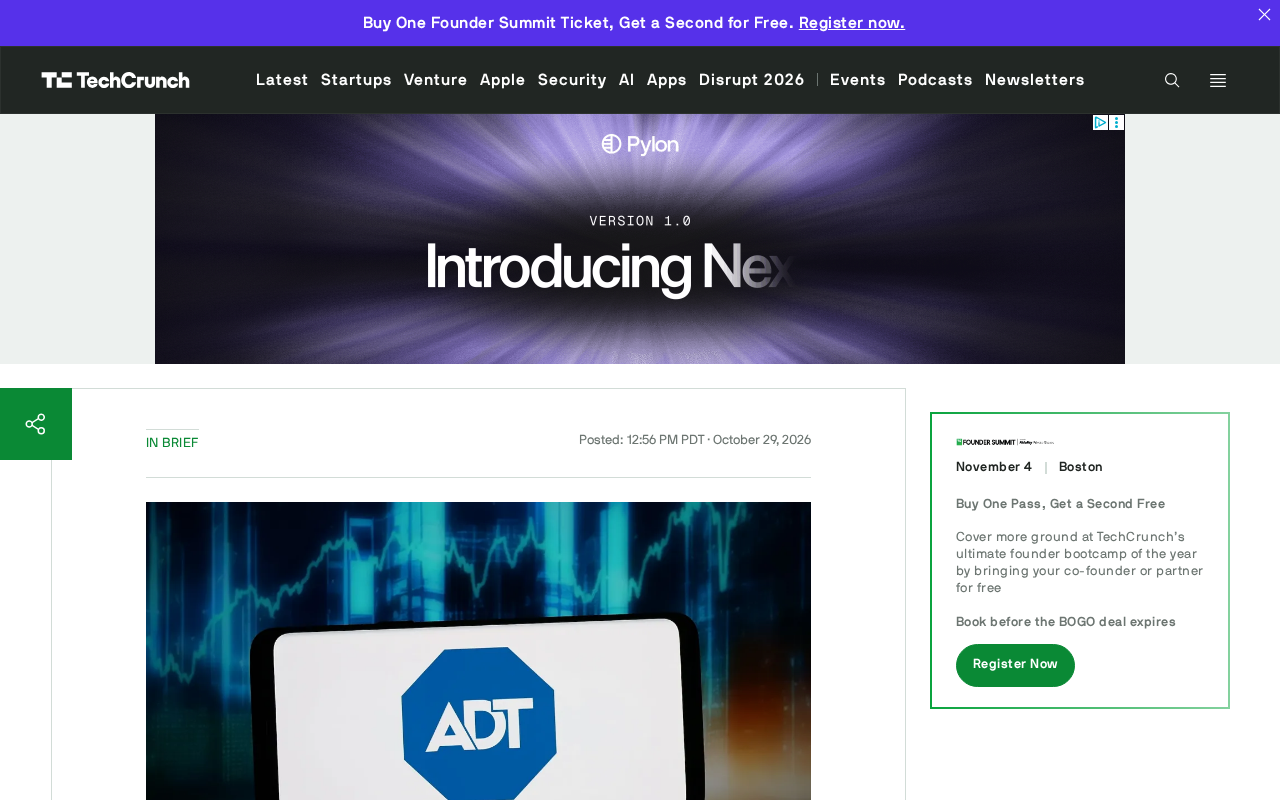
Deal Core: A Cross-Industry Marriage of AI and Security
Thrive Holdings is a holding company backed by OpenAI. Its acquisition of ADT for $15.3 billion has a clear goal — injecting AI capabilities into home security scenarios. As a well-known brand in the North American home security space, ADT has a massive user base and a mature hardware deployment network; meanwhile, OpenAI behind Thrive Holdings represents the most cutting-edge large models and intelligent analytics technology available today. The combination of the two means home security will evolve from the traditional "passive monitoring + manual response" model toward "proactive perception + intelligent decision-making."
The scale of the deal itself also sends a signal: capital is making heavy bets on the intersection of AI and traditional industries. Home security is a high-frequency, essential, and data-intensive scenario. Devices such as cameras and sensors continuously generate massive amounts of information, making it a natural testing ground for large models and computer vision technology to deliver value.
Thrive Holdings is a holding company backed by OpenAI, operating as a vehicle for OpenAI's strategic investments in vertical industries. By providing technology licensing, model interfaces, and capital support, OpenAI helps such holding entities acquire traditional companies and inject AI capabilities, thereby deploying large model technology into specific scenarios without directly operating businesses in each industry, while also obtaining real-world data feedback.
Why Home Security?
The home security industry has long faced a pain point: devices can record, but it is difficult for them to truly "understand" what is happening. False alarms, missed detections, and response delays are common issues in the user experience. AI intervention is expected to change the status quo on several levels:
- More precise event recognition: Using vision models to distinguish real threats from everyday activities (such as pet movement or rustling leaves), reducing false alarm rates.
- Proactive alerts and automated responses: Systems can not only raise alarms but also trigger corresponding workflows based on event type, such as sending tiered notifications to household members.
- Personalized security services: Learning based on user behavior habits to provide customized security policies.
OpenAI's technology stack has clear advantages in these directions, while ADT's channels and installed base provide the deployment pathway. This acquisition is essentially about connecting "technological capability" with "scenario entry points."
Computer vision is the technology that enables machines to "understand" image and video content, with core tasks including object detection, behavior recognition, and anomaly analysis. In home security scenarios, computer vision models can analyze camera footage in real time, distinguish between people, pets, vehicles, and other objects, and determine whether their behavior constitutes a threat. Compared with traditional motion-sensor-based triggers, vision models can significantly reduce false alarms caused by leaf movement or lighting changes, making them a key technological foundation for proactive intelligent security.
Potential Impact on the Industry Landscape
The home security market currently has many participants, from traditional security companies to smart home platforms and consumer-grade camera brands, with a fragmented competitive landscape. After Thrive Holdings acquires ADT, it may drive industry consolidation toward "AI-native security."
On one hand, the introduction of large model capabilities will raise the industry's technical threshold, and small and medium-sized manufacturers that cannot develop or access advanced AI capabilities may come under pressure; on the other hand, this may also accelerate the pace of transformation for traditional security companies, prompting more manufacturers to seek partnerships or M&A with AI companies.
From a broader perspective, this deal is another case of AI capital penetrating vertical industries. By supporting holding entities like Thrive Holdings, OpenAI indirectly enters the high-value home security scenario, both expanding its technology monetization pathways and accumulating real-world deployment data.
AI-native security refers to security solutions driven by artificial intelligence as the core from the very beginning of system design, rather than adding AI features onto traditional hardware. Such systems typically possess continuous learning, multimodal perception, and automated decision-making capabilities, and can self-optimize based on environmental changes. Their hallmark is a data loop: data collected by devices is used to improve models, and the improved models in turn enhance device performance. This is fundamentally different from the traditional security vendors' "hardware sales + manual monitoring" model, and it also means the competitive barrier shifts from channel scale to algorithm and data accumulation.
Challenges and Uncertainties
The deal itself still faces some practical issues. The $15.3 billion acquisition price tests Thrive Holdings' integration capabilities; privacy and data security issues of AI features in home scenarios will also attract intense scrutiny from regulators and users. Home security involves large amounts of sensitive video data, and how to protect user privacy while enhancing intelligence is key to whether this deal can deliver value.
In addition, the actual effectiveness of AI security products still needs market validation. Promises such as reduced false alarm rates and faster response times need to prove their reliability in large-scale deployments.
Home security devices involve continuous collection of video and audio data, which falls within the category of sensitive personal information. Under regulatory frameworks such as the EU's General Data Protection Regulation (GDPR) and China's Personal Information Protection Law, companies must follow principles including data minimization, purpose limitation, and user consent. If AI security systems upload video data to the cloud for model training, they must also address issues such as data anonymization, storage security, and cross-border transfer compliance. Regulators are highly sensitive to privacy in home scenarios, and compliance costs may become a significant constraint on the deployment of AI features.
Conclusion
Thrive Holdings' $15.3 billion acquisition of ADT is an attempt to bring cutting-edge AI capabilities into a mature security scenario. If the deal proceeds smoothly, the competitive logic of the home security industry may shift from "hardware and channels" to "AI capabilities and data loops." For practitioners focused on AI deployment and the smart home sector, this is a signal worth tracking closely.
One-line Summary
OpenAI-backed Thrive Holdings acquires ADT for $15.3B, driving deep integration of AI and home security.
Paragraph Summary
OpenAI-backed Thrive Holdings has announced the acquisition of home security giant ADT for $15.3 billion, planning to inject large models and computer vision technology into home security scenarios and drive the industry from "passive monitoring" toward "proactive intelligence." The deal aims to connect AI technological capabilities with ADT's channels and installed base, reducing false alarm rates and enabling tiered alerts and personalized services. This move may raise the industry's technical threshold, accelerate the transformation of traditional security companies, and reflect the trend of AI capital penetrating vertical industries. However, the deal faces challenges including integration costs, privacy regulation, and product effectiveness validation.
Related articles
AWS AgentCore Gateway: Connecting AI A…
AWS AgentCore Gateway: Connecting AI Agents to Enterprise Backends with MCP
How AWS AgentCore Gateway acts as a primary MCP server to aggregate REST APIs, Lambda, and existing MCP services? Analyzing its AST real-time mapping, zero cold start, semantic search for tool overload, session isolation, and key injection security design, plus the architectural approach to decoupling enterprise AI agents from backends.

One Link Gives Figma AI a New Skill: Hands-On with MCP Connectors
Paste one MCP server link and the AI Agent in Figma gains new tool capabilities. We break down the setup flow, 20+ one-click apps, read/write permissions and execution policies, and the public HTTPS requirement.

Cognition SWE-2 in Practice: One Prompt to Handle the Whole Product Launch Process
Analyzing a YouTube creator's prompt for using Cognition SWE-2 to launch a product: a landing page, seven-email sequence, and non-buyer follow-up tool, plus how the 'test and report' constraint changes AI delivery quality.