OpenAI Declares the AGI Era Has Arrived: Conceptual Controversies and Technical Realities

OpenAI's AGI claim with GPT-6 Astra sparks debate over definitions, technical reality, and marketing hype.
OpenAI's announcement of GPT-6 Astra and the AGI era has ignited industry debate. The article examines AGI's definitional ambiguity across academia and industry, analyzes current LLM capabilities and limitations, explores competitive dynamics in AI chips and standard-setting, and discusses practical implications for users while cautioning against over-promising in technology narratives.
As OpenAI launched its next-generation large model GPT-6 Astra, it declared that the "AGI era" has arrived. This statement immediately sparked widespread discussion in the tech world—what exactly does AGI (Artificial General Intelligence) mean? Have we truly entered the AGI era?
The Ambiguity of AGI Definition
AGI as a concept has long lacked a unified standard definition. Traditionally, AGI has been understood as an artificial intelligence system capable of understanding, learning, and applying knowledge to any intellectual task like humans do. The origins of this concept can be traced back to the 1956 Dartmouth Conference—the foundational event of the AI discipline. At that conference, AI pioneers like John McCarthy and Marvin Minsky envisioned precisely this kind of machine intelligence capable of performing all human intellectual tasks. Over the subsequent decades, academia has formed multiple definitional frameworks around AGI: the Turing Test emphasizes behavioral indistinguishability from humans; the cognitive science school focuses on whether systems possess human-like mental models and conscious experiences; while functionalists concentrate on the ability to autonomously solve novel problems never encountered before in open domains.
However, as large language model capabilities have rapidly advanced, major AI companies have begun interpreting this concept in different ways. Notably, DeepMind proposed a six-level AGI classification system in a 2023 paper (from "Emerging AGI" to "Superhuman AGI"), attempting to quantify and stratify this vague concept. OpenAI itself has defined AGI in its charter as "highly autonomous systems that outperform humans at most economically valuable work," but this definition inherently contains considerable room for subjective judgment—what counts as "most" economically valuable work? What are the standards for "outperform"?
OpenAI's declaration of the AGI era actually reflects an industry phenomenon: AGI standards are being redefined by various companies based on their own technological progress. When a company claims to have achieved AGI, it's often based on internally set standards rather than academic or industry consensus. This flexibility in definition makes "AGI" a marketing concept that can be adjusted as needed.
The Technical Capability Boundaries of GPT-6 Astra
GPT-6 Astra, as OpenAI's latest model, represents another iteration of large language model technology. Although specific technical details have not been fully disclosed, judging from the naming and release timing, OpenAI is attempting to position this model as a landmark product crossing the AGI threshold.
To understand the weight of this claim, we first need to understand the technical principles of current large language models. LLMs are based on the Transformer architecture, with self-attention as the core mechanism, capturing deep semantic relationships by computing the correlation weights between each token in the input sequence and other tokens. These models learn statistical patterns and implicit knowledge representations of language through unsupervised pre-training on massive text data (typically reaching trillions of tokens), then match human preferences and intentions through alignment techniques like instruction tuning and reinforcement learning from human feedback (RLHF). In recent years, techniques such as chain-of-thought prompting, tool use, and multimodal fusion have further expanded the capability boundaries of models.
However, the technical community remains cautious about AGI claims. While current large language models perform excellently on many tasks, they still have obvious limitations in reasoning ability, common sense understanding, and grasping causal relationships. LLMs are essentially performing "next token prediction," and their reasoning ability is considered by many researchers to be closer to "simulated reasoning" rather than "genuine reasoning"—meaning the model has seen similar reasoning patterns in training data and can reproduce them, but when facing completely novel out-of-distribution reasoning chains, performance drops significantly. Additionally, LLMs commonly suffer from hallucination problems, confidently generating factually incorrect content, which stands in stark contrast to the reliability and self-awareness required for true general intelligence. They are more like powerful pattern recognition and text generation tools rather than systems that genuinely possess general intelligence. Calling these models AGI may be prematurely declaring an era that hasn't truly arrived.
Regarding how to objectively assess whether AI systems have reached AGI level, academia has proposed multiple benchmark testing approaches. The traditional Turing Test has been widely criticized for relying too heavily on linguistic deception. More challenging testing frameworks have emerged in recent years: ARC (Abstraction and Reasoning Corpus), designed by Keras creator François Chollet, specifically tests systems' generalization ability on abstract reasoning tasks never seen before; GPQA (Graduate-Level Google-Proof Q&A) contains doctoral-level professional questions that even search engines cannot directly answer; and organizations like METR are dedicated to evaluating AI systems' ability to act autonomously in the real world. However, all these standards face a common challenge: how to distinguish between "achieving high scores on specific benchmarks through targeted training" and "genuinely possessing general intelligence"—this is precisely the core difficulty in AGI assessment.
Industry Competition and the Battle for Standards
During the same period as OpenAI's announcement, Nvidia's acquisition moves in the AI chip sector also attracted attention. Nvidia's dominant position stems from the first-mover advantage of its GPU architecture and CUDA software ecosystem. Since AlexNet proved in 2012 that GPUs could dramatically accelerate deep learning training, Nvidia's data center GPUs (from V100 to A100 to the H100/B200 series) have become the de facto standard for AI training. Currently, training a frontier large model requires tens of thousands of high-end GPUs, takes months, and costs hundreds of millions of dollars—computing power has become a critical bottleneck resource in the AI race. This has also spawned intense competition in the AI chip sector: AMD has launched the MI300 series to compete head-on with Nvidia, Google has self-developed TPU chips for internal training and cloud services, and numerous startups like Cerebras, Groq, and d-Matrix are seeking differentiated breakthroughs in specialized inference chips. Meanwhile, U.S. chip export controls to China have made AI chips a focal point of geopolitical competition, further elevating the strategic importance of this sector.
These events collectively reflect the intense competitive dynamics in the AI field. Major tech companies are competing not only technologically but also for the power to define key concepts. Whoever can first claim to have achieved AGI gains an advantageous position in market narratives—this concerns not only brand image but directly affects funding valuations, talent attraction, and customer confidence. This competition drives technological progress but also brings the risk of concept dilution. When AGI can be arbitrarily defined, its significance as a technological milestone becomes weakened. Academia and industry need to establish more objective, verifiable evaluation standards to distinguish genuine general intelligence breakthroughs from incremental technical improvements.
Practical Impact on Users and Developers
For ordinary users and developers, what matters is not whether OpenAI claims to have achieved AGI, but what actual value these new models can deliver. If GPT-6 Astra indeed has significant capability improvements—for example, substantial advances in complex code generation, multi-step reasoning, long document understanding, cross-modal task processing, etc.—then regardless of whether it's called AGI, it will be a valuable tool.
At the same time, this event reminds us to maintain critical thinking. The AI field has a deep historical tradition of "over-promising." In the 1960s, Herbert Simon predicted that "within twenty years machines will be capable of doing any work a man can do"; the expert systems boom of the 1980s spawned the first "AI winter"—massive investments withdrew as technology failed to meet expectations; the deep learning breakthroughs of the 2010s triggered a new round of optimistic predictions. This cyclical "hype-disappointment" pattern is called the "Hype Cycle" by Gartner, revealing the inevitable expectation fluctuations between new technology concepts and mature applications. In the current generative AI boom, tech companies face enormous market pressure—OpenAI's valuation has exceeded the hundred-billion-dollar level, requiring continuous technological narratives to support valuations and attract investment. This pressure may lead companies to prefer using grand concepts like AGI to package incremental improvements.
In the context of rapid AI technology development, there's often a gap between marketing claims and technical reality. Understanding the true capability boundaries of models and setting reasonable expectations are essential for better utilizing these tools and avoiding potential risks. History tells us that maintaining prudent assessment of technological claims not only helps individuals and enterprises make rational decisions but also helps the entire industry avoid trust crises caused by unmet expectations.
Future Outlook for Artificial General Intelligence
The ambiguity of the AGI concept is both an opportunity and a challenge. On one hand, it gives researchers freedom to explore different technical paths—from large-scale language models to neuro-symbolic systems, from embodied intelligence to world models, multiple technical routes are advancing toward general intelligence; on the other hand, the lack of clear standards may lead the industry into conceptual confusion, causing genuine breakthroughs to be drowned out in marketing noise.
In the future, we may need a more granular intelligence level classification system rather than simply using the single label of AGI to describe complex technological progress. This classification system should include multiple dimensions—reasoning depth, knowledge transfer capability, autonomous learning efficiency, environmental adaptability, creative problem-solving, etc.—and establish quantifiable evaluation metrics for each dimension. Only in this way can we move beyond the overly simplified binary question of "whether AGI has been achieved" toward a refined understanding of AI capabilities.
Regardless of whether OpenAI's claim is accurate, one thing is certain: AI technology continues to progress. True artificial general intelligence may still be distant, but every step toward it is changing how we interact with technology. Staying attentive to technological progress while maintaining rational judgment will be our best strategy in this rapidly changing era.
Related articles

Vercel AI SDK Svelte 4.0.277 Release Update Breakdown
In-depth breakdown of Vercel AI SDK Svelte 4.0.277 patch release core changes, including dependency sync, framework adaptation mechanisms, and upgrade advice.
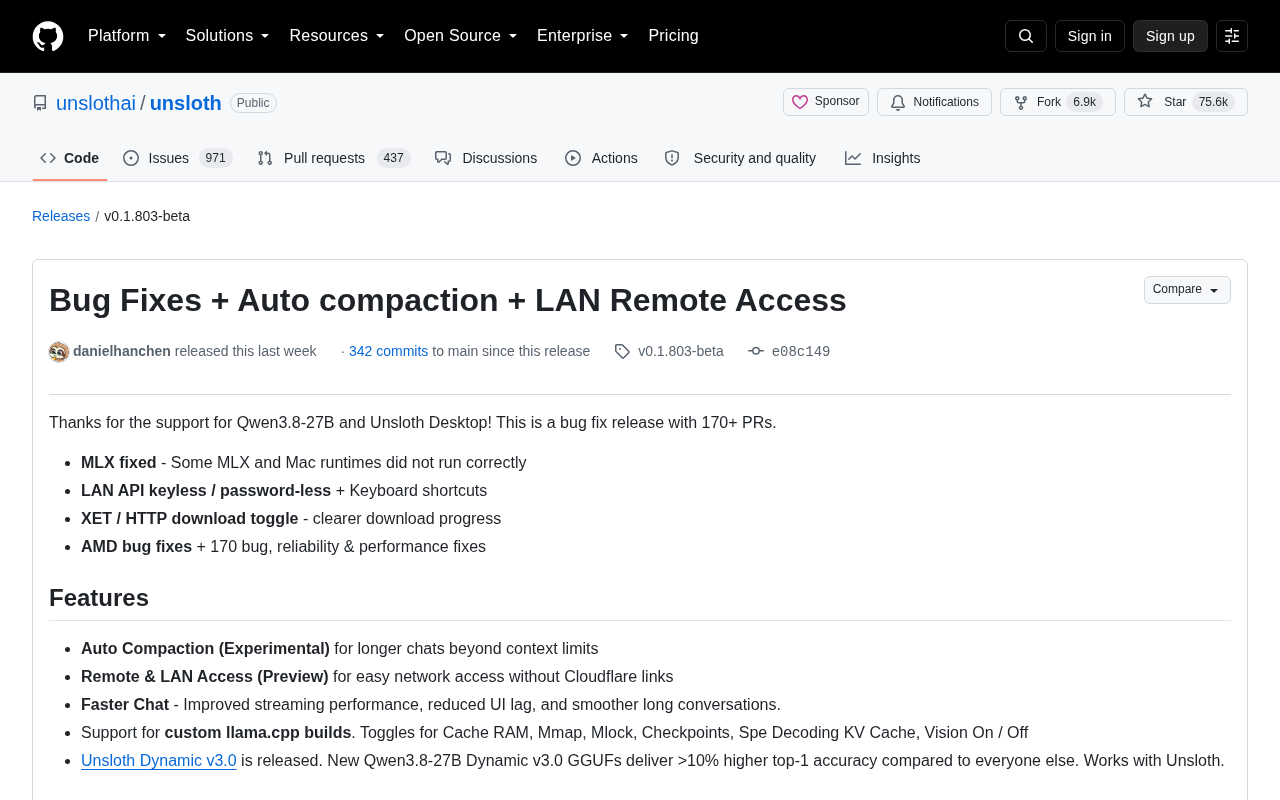
Unsloth v0.1.803 Update: Auto Context Compaction and LAN Remote Access Explained
Unsloth v0.1.803-beta merges 170+ PRs, introducing auto context compaction, native LAN remote access, and Dynamic v3.0 quantization to enhance local LLM deployment.
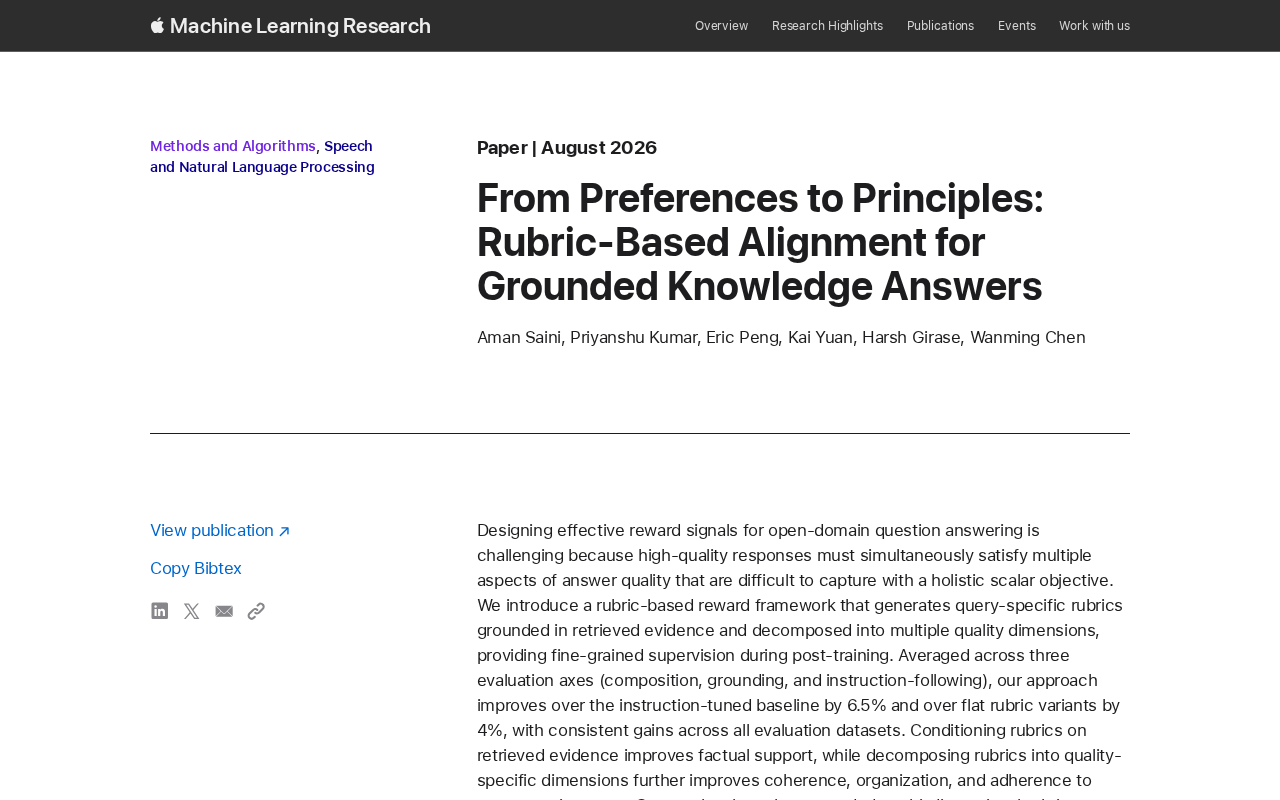
Rubric-Based Alignment for Knowledge QA: A Paradigm Shift from Preferences to Principles
Explore rubric-based alignment for LLMs: a new approach using fine-grained rewards across composition, grounding, and instruction-following to transform implicit preferences into explicit principles.