OpenAI Enters Advertising: How Sponsored Agents Are Reshaping AI Marketing
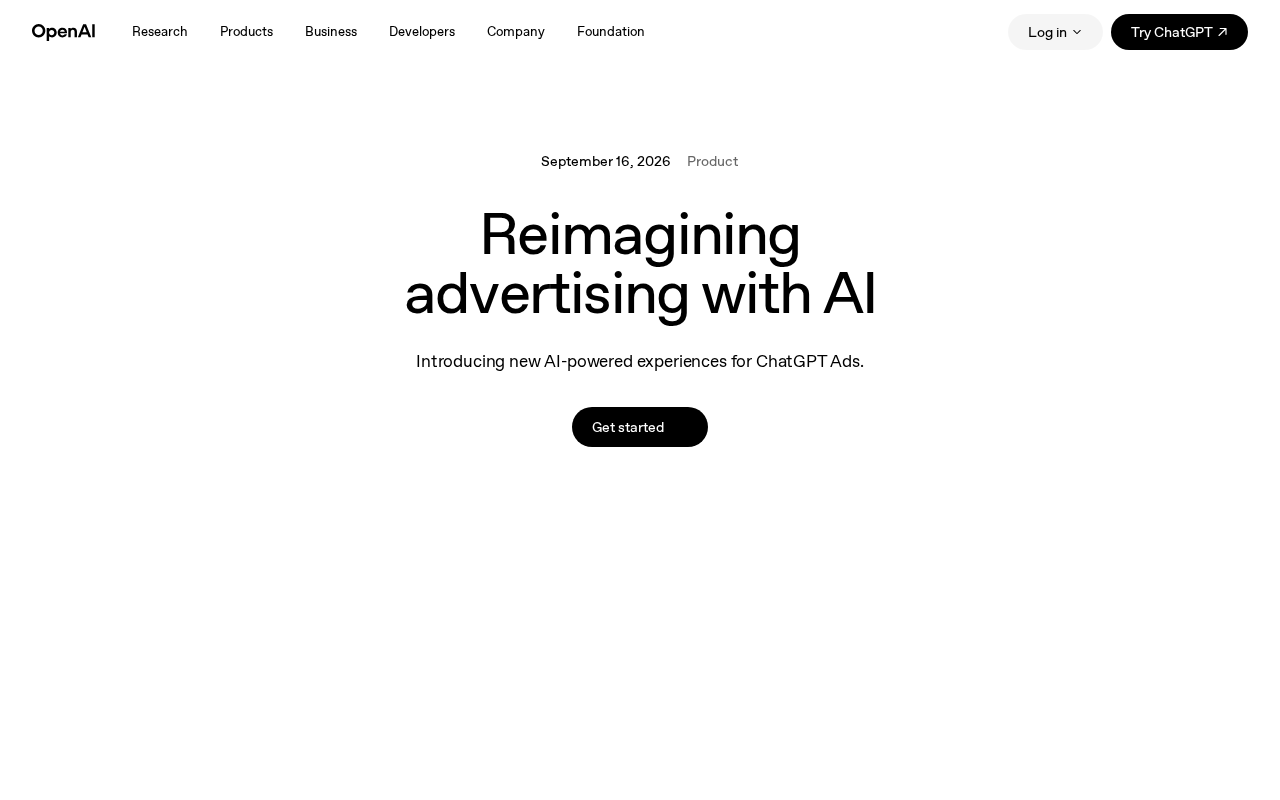
OpenAI's Sponsored Agents reframe ads from interruptions into AI-powered task participants embedded in user conversations.
OpenAI is officially entering advertising with Sponsored Agents, where brands sponsor task-capable agents that participate in user conversations as solutions rather than traditional keyword ads. The initiative includes marketer tools for campaign tracking and deep integrations with HubSpot and Shopify to connect customer data, product catalogs, and conversational AI into a full conversion loop. While it opens a major new revenue stream beyond subscriptions, it raises critical questions around neutrality and user trust that will determine the model's long-term viability.
OpenAI's New Advertising Play
OpenAI is turning advertising into a fundamentally new, AI-native experience. According to information the company has released, OpenAI plans to launch a suite of AI-centered ad products. The most attention-grabbing concept is Sponsored Agents, alongside a toolkit aimed at marketers and deep integrations with major commercial platforms like HubSpot and Shopify.
This move marks a pivotal step in OpenAI's commercialization journey. The market had long speculated that as ChatGPT's user base continued to grow, OpenAI would eventually seek revenue streams beyond subscriptions — and advertising is one of the most mature and large-scale business models in the digital era.
What Are Sponsored Agents?
Sponsored Agents are the most imaginative piece of this puzzle. Traditional search advertising revolves around keyword bidding to display links or images. In a conversational AI context, however, the format of advertising must be fundamentally redesigned.
Taking the concept at face value, Sponsored Agents means brands can "sponsor" agents with specific capabilities, allowing them to appear in a more natural and service-oriented way during user interactions with AI. For example, when a user asks about travel planning, product selection, or comparing options, a sponsored agent can step in to directly complete the task — rather than simply displaying an ad.
The core shift in this model is that advertising moves from interrupting the experience to integrating into the task. Once a user's need is understood, commercial information is delivered in the form of a solution — which theoretically should significantly improve relevance and conversion efficiency.
From a technical architecture perspective, agents differ fundamentally from ordinary AI Q&A. A standard ChatGPT conversation involves single- or multi-turn information retrieval and generation. Agents, by contrast, have a complete perceive–plan–execute loop: they can call external tools, access APIs, browse the web, fill out forms, and even complete a series of sequential actions on a user's behalf. Sponsored Agents introduce commercial sponsorship logic on top of this foundation. Brands are essentially purchasing the "right to participate in tasks" — when a user's intent closely matches a brand's service offering, the sponsored agent is prioritized as a candidate executor. This is conceptually similar to Google's keyword bidding for search ads, but the unit of competition upgrades from "placement" to "task execution opportunity," dramatically increasing both the depth and precision of commercial reach.
Tools for Marketers
Beyond the consumer-facing ad experience, OpenAI is also preparing a toolkit for marketers. For advertisers, the ability to access controllable and measurable placement capabilities in a new distribution channel directly determines their willingness to invest.
These tools may deliver value in several ways: helping brands understand user intent within AI conversation contexts, providing entry points for campaign management and performance tracking, and lowering the technical barriers to running ads in a generative AI environment. For marketing teams already accustomed to search and social ad dashboards, a familiar and transparent toolchain is a prerequisite for migrating to a new platform.
The Strategic Significance of HubSpot and Shopify Integrations
The integrations with HubSpot and Shopify are particularly worth noting. These two platforms represent two critical pillars: marketing automation (CRM) and e-commerce infrastructure.
Integrating with HubSpot means enterprise customer data and marketing workflows can connect with OpenAI's advertising capabilities, enabling agents to draw on real customer context during conversations. The Shopify integration directly reaches millions of small and medium-sized e-commerce merchants and their product catalogs — so when a user expresses purchase intent in a conversation, the path to transaction becomes shorter and smoother.
This positioning reveals OpenAI's strategy: rather than selling isolated ad placements, the goal is to embed into merchants' existing commercial systems and create a closed loop from demand discovery to final conversion. This is fundamentally different from the traditional ad platform model of simply selling impressions.
HubSpot is a globally widely-used CRM and marketing automation platform, whose core value lies in helping businesses unify customer data, sales funnels, and email/content marketing workflows. Shopify is the world's largest independent e-commerce infrastructure provider, hosting the product catalogs, order systems, and payment flows for millions of small and medium-sized merchants. OpenAI's choice to integrate with these two platforms first reflects clear strategic thinking: HubSpot provides "who your customers are," while Shopify provides "what you can sell." Together, they enable AI to simultaneously access customer context awareness and real-time product retrieval within a conversation. This also means ad targeting will expand beyond traditional demographic attributes and interest labels to include real-time cross-matching of a user's current conversational intent with their historical purchase behavior — a targeting precision that theoretically far surpasses existing ad systems.
Opportunity and Controversy
The potential of AI-native advertising is enormous, but it comes with unavoidable controversy. Once agents begin accepting commercial sponsorships, how users distinguish between "objective advice" and "paid promotion" will become a central issue. Trust is the most valuable asset of conversational AI — if advertising erodes the neutrality of responses, the long-term cost could far outweigh short-term gains.
Transparency, labeling mechanisms, and user control over advertising will be the key factors determining whether this model can gain acceptance. As OpenAI advances commercialization, it must find the right balance between experience and trust.
The tension between advertising and content neutrality has existed since the search engine era, but it is significantly amplified in a conversational AI context. Search results visually separate ads from organic results, and users have developed habits for recognizing the distinction. AI conversation, however, delivers answers in first-person, fluent natural language — once commercial content is embedded, the boundary is inherently blurry. On the regulatory front, the U.S. FTC (Federal Trade Commission) and the EU's DSA (Digital Services Act) both have explicit requirements regarding "implied advertising" and "undisclosed commercial interests in algorithmic recommendations." For OpenAI to operate compliantly in major markets, it will need to establish clear labeling standards — not just a "Sponsored" badge in the UI, but also whether users have the right to be informed and to opt out when an agent adjusts its recommendations due to a commercial relationship. The quality of these mechanism designs will directly influence how regulators and the public receive this model.
Conclusion
From Sponsored Agents to platform integrations, OpenAI is sketching a blueprint for AI's reshaping of advertising. This isn't simply about moving old ads into a new interface — it's an attempt to redefine what advertising means in the age of intelligent conversation. How far this transformation goes depends on technical maturity, the cooperation of the commercial ecosystem, and most importantly, whether user trust can be properly safeguarded.
Related articles
AI Agent Learning Roadmap: A Four-Stage Guide for Complete Beginners
A four-stage AI Agent learning roadmap for beginners: from core concepts and model deployment to RAG, LangChain, LoRA, and interview-ready projects.
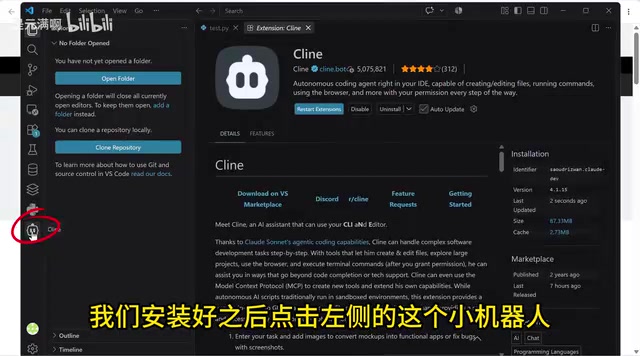
Free Access to Mystery Model & DeepSeek V4 via Cline: Complete Setup Tutorial
Learn how to use DeepSeek V4 and the mystery "Niumai" model for free on Cline — covering IDE extension and CLI installation, account setup, and model selection.
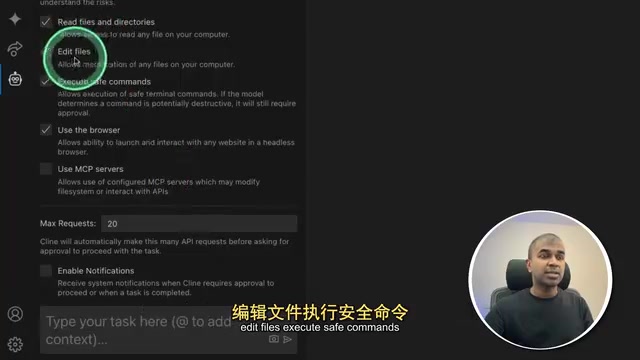
Cline + VS Code in Practice: Generate a To-Do App from a Single Prompt
Cline is an autonomous coding agent inside VS Code. This hands-on guide shows how to generate a to-do app from one prompt and compares Claude, Ollama, and Groq integrations.