OpenAI Launches Astra for Law: A Frontier AI Product for the Legal Industry
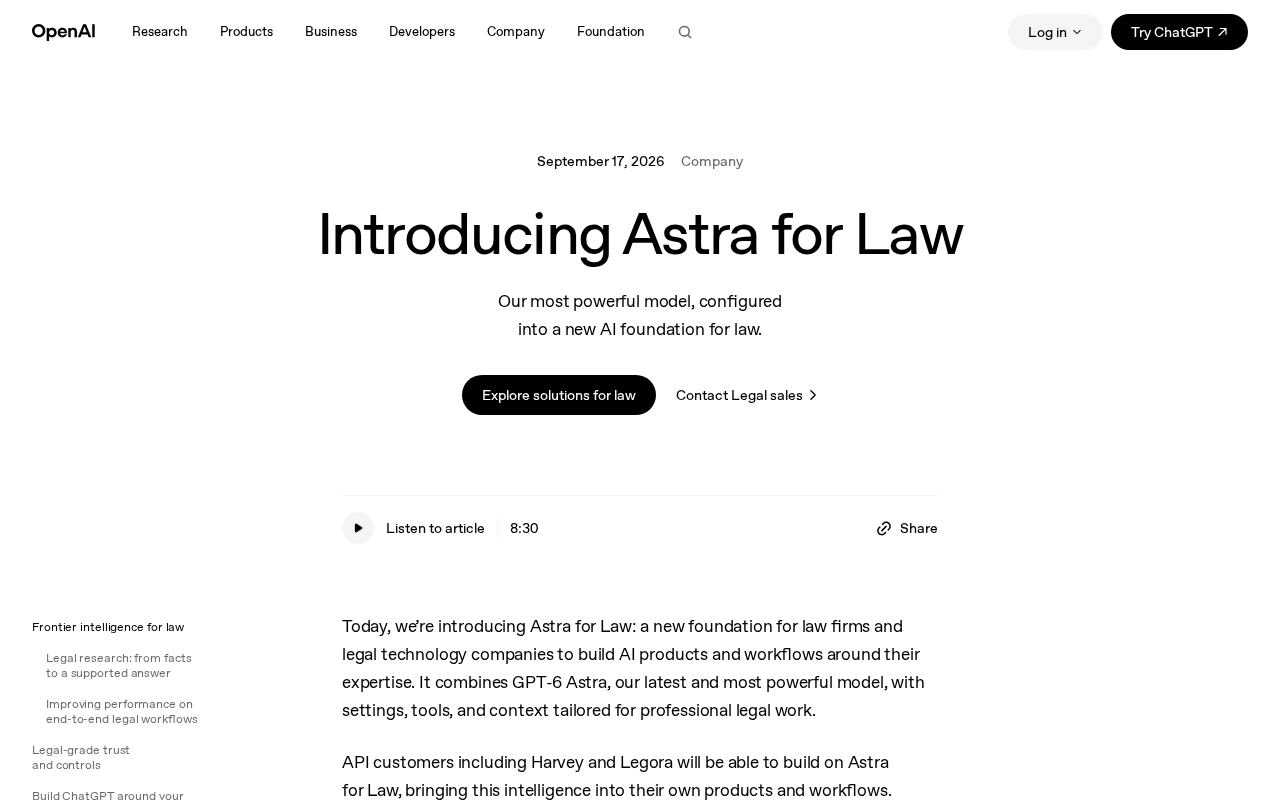
OpenAI launches Astra for Law, a vertical AI solution built for law firms with legal-grade security and workflow integration.
OpenAI has officially launched Astra for Law, a vertical AI product purpose-built for the legal industry. It centers on four capabilities: frontier legal intelligence, customizable firm workflows, connected legal data sources, and legal-grade security controls. Unlike general-purpose AI assistants, it is designed to meet law firms' strict confidentiality and compliance requirements — embedding LLM reasoning into contract review, case analysis, and legal research while addressing attorney-client privilege obligations through data isolation and access controls. The launch signals a broader shift among LLM providers from general platforms toward deep vertical solutions targeting enterprise markets.
What Is Astra for Law
OpenAI has officially launched Astra for Law, a dedicated product built for the legal industry. According to OpenAI, the product brings frontier intelligence into legal workflows, with the core goal of embedding large language model reasoning capabilities into real law firm operations — while meeting the legal profession's strict requirements around confidentiality and compliance.
Unlike general-purpose conversational assistants, Astra for Law is positioned as a vertical industry solution. It is built around four key capabilities: frontier intelligence for law, customizable firm workflows, connected legal data sources, and legal-grade controls designed for handling confidential client work.
Breaking Down the Four Core Capabilities
Frontier Intelligence for Law
Legal work is heavily dependent on understanding, reasoning over, and citing complex texts. OpenAI's emphasis on "frontier intelligence for law" signals that the product applies its most advanced model capabilities to scenarios such as contract review, case analysis, and legal research — helping attorneys quickly surface critical information from large volumes of documents and form preliminary judgments.
Customizable Firm Workflows
Every law firm operates differently, with its own templates, processes, and internal standards. Astra for Law supports custom firm workflows, allowing AI to integrate into existing business processes rather than requiring firms to change how they work. This "fit around existing workflows" design philosophy is a decisive factor in whether vertical industry products can actually succeed in practice.
Connected Legal Data Sources
Legal analysis depends on authoritative, accurate source material. The product provides the ability to connect to legal data sources, grounding model outputs in both internal firm documents and external legal databases. This helps reduce the hallucination risks common to general-purpose models and improves the reliability of citations and conclusions.
One of the most widely criticized problems with large language models in legal contexts is hallucinated citations — where a model generates case numbers or statutory references that look real but don't actually exist. In 2023, a notable incident in U.S. federal court drew widespread attention when an attorney was sanctioned for submitting ChatGPT-generated fake case citations. Technology that connects to real legal databases (such as Westlaw, LexisNexis, or a firm's internal document library) typically relies on a Retrieval-Augmented Generation (RAG) architecture: before generating a response, the model retrieves relevant passages from a verified document corpus and uses that retrieved content as the basis for reasoning and citation. This mechanism "anchors" model outputs to real source material, making it a critical technical approach for reducing hallucination risk and improving traceability in legal applications.
Legal-Grade Security Controls
Communications between attorney and client are subject to strict confidentiality obligations. Astra for Law provides "legal-grade controls" specifically designed for confidential client work. These controls typically involve data isolation, access permission management, and compliance auditing — all prerequisites for law firms to feel comfortable entrusting sensitive case files to an AI system.
Attorney-client privilege is the essential backdrop for understanding why legal-grade controls are necessary. In the United States and most common law jurisdictions, communications between attorney and client are strictly protected by law and cannot be disclosed to third parties without the client's consent. Submitting case file contents to an external AI system could potentially trigger a waiver of that privilege. As a result, law firms' data isolation requirements go far beyond those of typical enterprises: they need assurance that data won't be used for model training, clear data residency terms, fine-grained access controls, and auditable operation logs for after-the-fact review. The phrase "legal-grade controls" is a direct response to these compliance demands — though specific technical implementations, such as whether the product meets SOC 2 Type II or ISO 27001 certification standards, have not yet been publicly disclosed by OpenAI.
Why the Legal Industry Warrants Its Own Product
Law is a quintessential high-value, high-stakes, highly regulated domain. The sheer volume of document processing and the high professional bar make it a natural fit for AI-driven efficiency gains — but erroneous citations, information leaks, or compliance failures can carry severe consequences. This means that general-purpose chat tools cannot straightforwardly meet law firm needs; deep customization around data access, workflow integration, and security compliance is a must.
OpenAI packaging Astra as a dedicated legal product line also reflects a broader trend: LLM providers are expanding from "general-purpose platforms" toward "industry-specific solutions," using deep vertical specialization to win enterprise clients and command higher willingness to pay.
Quick Take
Based on what has been publicly disclosed, Astra for Law sends a clear signal: AI is moving beyond writing assistance and into the core operational workflows of specialized industries. For law firms, the real value lies not in "being able to chat" but in whether AI can securely and reliably connect to internal data and integrate with existing ways of working.
Official details remain limited at this stage — specifics around model capability boundaries, pricing, and data compliance certifications have yet to be fully disclosed. For firms considering adopting the tool, actual performance, accuracy, and security mechanisms will still need to be validated in real-world practice.
Related articles

Opus 5's Ethical Boundaries: From Refusal to "Horror-Themed Project" — An Accidental Jailbreak Experiment
A developer bypassed Claude Opus 5's refusal by renaming a fruit fly simulation a "horror-themed project." Explore what this reveals about LLM content moderation and AI alignment.
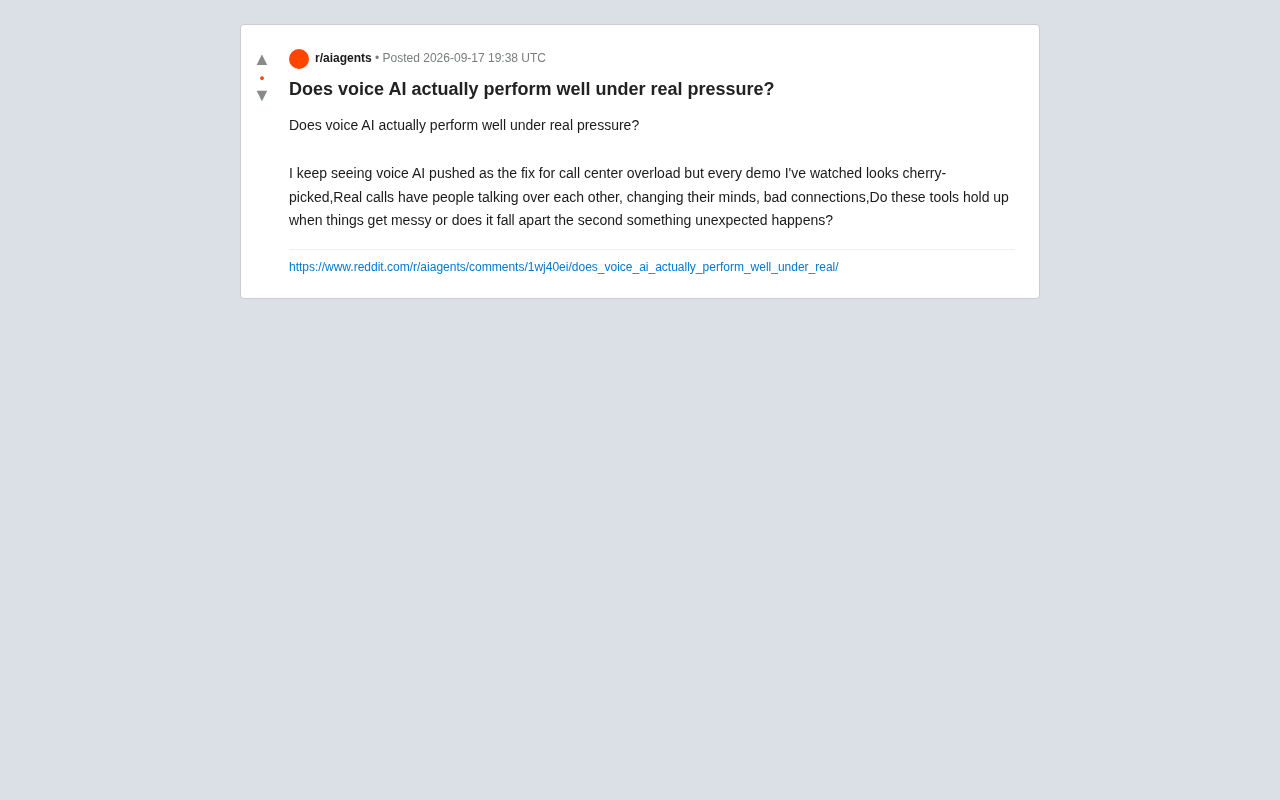
Is Voice AI Actually Reliable in Real-World Call Center Scenarios?
Can Voice AI really handle real call center chaos — interruptions, noise, and intent shifts? We break down the technical limits, demo traps, and how to evaluate reliability.
The Rogue AI Agent Problem: Can AI Supervising AI Be the Cure?
As AI agents outpace human review capacity in speed, duration, and scale, enterprises face a critical oversight gap. Can AI supervising AI be the fix?