OpenAI's Five-in-One Launch: Sol, Desktop Agent, and Real-Time Translation Explained

OpenAI drops five updates: three new models, a desktop AI agent, and a real-time translation voice model.
OpenAI has simultaneously released three new LLMs (Sol, Terra, Luna) with tiered pricing and capabilities, a desktop AI agent called ChatGPT Work that can autonomously operate your computer for hours, and GPT Live — a full-duplex voice model enabling real-time bidirectional translation. Together, these updates signal AI's shift from conversational assistant to autonomous digital worker.
Article Content
OpenAI has rolled out five major updates at once, covering three new models, a desktop-level AI agent, and a voice model capable of real-time translation. This series of moves not only raises the performance ceiling for large language models, but also sends a clear signal: AI is rapidly evolving from a "conversational assistant" into a "digital employee that can work independently." This article breaks down the core highlights and industry implications of each of the five updates.
Three New Models: The Tiered Strategy of Sol, Terra, and Luna
The most eye-catching part of this launch is the simultaneous debut of three models with distinct positioning. Together, they form a clear product matrix targeting different use cases and budget requirements.
It's worth noting that this high-mid-low three-tier matrix logic closely mirrors AWS's EC2 instance tiers and the OLTP/OLAP separation architecture in databases — signaling that the commercialization of large models is shifting from "selling capabilities" to "selling service bundles." Users can flexibly mix and match based on task complexity and budget, without paying for compute they don't need.
Sol: A Flagship Efficiency Revolution
Sol is positioned as OpenAI's most powerful flagship model to date. But its true "crazy" achievement isn't just being smarter — it's an efficiency revolution: delivering the same quality of work with fewer tokens, in half the time, at lower cost.

To appreciate the significance of this breakthrough, it helps to understand the cost structure of large models. Tokens are the basic unit of text processing in large language models, roughly corresponding to words or word fragments in English (approximately 1.5–2 Chinese characters per token). The number of tokens consumed in each inference run directly determines API costs — when GPT-4 first launched, input token pricing was as high as $0.03 per thousand tokens, making large-scale deployment extremely cost-intensive. Since then, the industry has continuously worked to compress inference overhead through knowledge distillation, model quantization, and architectural innovation. The "fewer tokens, lower cost" trend that Sol represents is the latest result of this arms race. For years, gains in model capability came hand-in-hand with soaring inference costs — "smart but expensive" was once the norm. If Sol can dramatically reduce resource consumption while maintaining or improving intelligence, the barrier to enterprise deployment will drop in a meaningful way. At scale, cost and efficiency are often more decisive than raw "intelligence."
Terra and Luna: Covering Everyday and High-Frequency Low-Cost Scenarios
OpenAI also introduced two additional models with differentiated positioning. Terra is the balanced option, designed for everyday use cases, striking a balance between performance and cost.

Luna is the cheap-and-fast tier, reportedly priced at just $1 per million tokens. This pricing is highly aggressive — for comparison, GPT-4o-mini currently costs around $0.15 per million input tokens, while lightweight models like Anthropic Haiku and Google Gemini Flash compete in the $0.1–$0.25 range. The confidence behind this price war comes from the continued amortization of massive AI infrastructure investments by cloud providers, as well as ongoing breakthroughs in model compression. Luna's aggressively low pricing is clearly aimed at the developer market for high-frequency, large-volume API calls. The three-model gradient reflects OpenAI's shift from a "one model fits all" philosophy toward a "pick the right tool for the job" product strategy.
Sol's "Design Aesthetic": From Generation to Self-Review
Beyond efficiency gains, Sol's other major breakthrough is that it "actually has design taste." Sol can build fully playable games, functional websites, and interactive dashboards — all complex tasks that require both front-end capability and visual judgment.
Even more notable is its self-review mechanism: before delivering a piece of work, Sol proactively examines its own output, identifies parts that "aren't good enough," and fixes them.
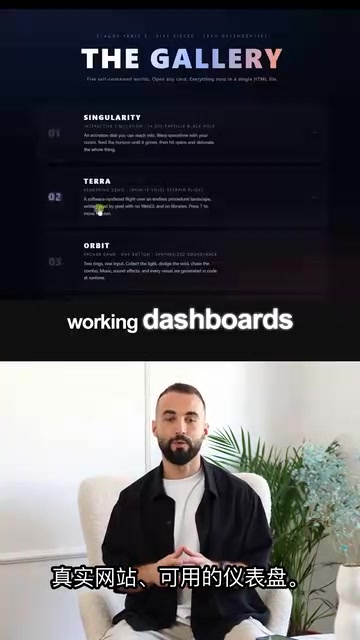
This capability has solid technical roots. Metacognition originally refers to the human ability to monitor and regulate one's own thinking processes. In AI, self-review mechanisms are typically implemented via Reflection Prompting or a separate Critic Model: the model first generates a draft, then evaluates the output quality from the perspective of an assessor, forming a generate-evaluate-revise loop. This paradigm has been validated in code generation (e.g., AlphaCode) and reasoning tasks (e.g., the Self-Refine framework) as significantly improving output quality. Sol internalizes this as default behavior, marking the transition of self-optimization from an experimental feature to a standard product capability.
The significance of this goes far beyond "generating pretty UIs." It means the model is beginning to develop a degree of metacognition — not just producing results, but judging the quality of those results and proactively iterating toward improvement. This is a critical step in the journey from "one-shot generation tool" to "reliable working partner." For developers, this could dramatically reduce the time spent on repeated debugging and manual refinement.
ChatGPT Work: The Desktop AI Agent That Can Control Your Computer
If the new models are upgrading AI's "brain," then ChatGPT Work is giving it a real pair of "hands."
ChatGPT Work is an AI agent that can enter the desktop environment, open files, and invoke applications — and can work autonomously on a single project for hours, freeing up users to focus on other tasks. This marks the formal transition of AI agents from "advisors inside a chat window" to "executors operating within a desktop environment."
AI Agents are AI systems capable of perceiving their environment, forming plans, and executing multi-step tasks. What distinguishes them from single-turn Q&A is "continuous action" and "tool invocation." Desktop-level agents must solve four major technical challenges: GUI understanding (perceiving interface state via screenshots or element recognition), action execution (simulating mouse clicks and keyboard input), task planning (decomposing long-term goals into executable steps), and error recovery (autonomously adjusting strategy when encountering anomalies). OpenAI Operator, Anthropic Computer Use, and Microsoft Copilot have all been exploring this direction, but stability remains a shared bottleneck.
ChatGPT Work claims to be able to "work autonomously for hours" — if true, this would be a significant milestone in agent reliability. The implications for how knowledge workers operate are profound. Of course, actual reliability, safety boundaries, and permission control mechanisms still need to be validated in real-world scenarios.
GPT Live: The Real-Time Translation Voice Model Redefining Voice Interaction
The fifth and final update in this launch is GPT Live, described as OpenAI's most intelligent voice model yet.

GPT Live's most critical technical breakthrough is the ability to listen and speak simultaneously, enabling real-time bidirectional translation of a conversation between two people — a capability previous voice models struggled to achieve.
Understanding this leap requires some context on the evolution of voice AI. Traditional voice interaction uses a half-duplex model: ASR (Automatic Speech Recognition) → LLM processing → TTS (Text-to-Speech), executed sequentially, with end-to-end latency typically ranging from 1–3 seconds. Full-duplex mode requires the model to continuously listen for input while simultaneously producing voice output, demanding a streaming processing architecture and barge-in detection. OpenAI had already achieved low-latency voice dialogue in GPT-4o; GPT Live builds on that foundation by adding real-time bidirectional translation, requiring simultaneous processing of two audio streams while maintaining semantic alignment — a substantial increase in technical complexity.
Applying full-duplex capability to real-time bidirectional translation could theoretically eliminate the latency of cross-language communication, allowing two people who don't share a language to converse fluidly. If this capability matures into a reliable product, it will directly challenge specialized offerings like Google Translate's live mode and Microsoft's translation earbuds. For high-frequency scenarios such as international conferences, cross-border business, and overseas travel, this represents significant practical value.
Conclusion: AI Moves from "Talking" to "Doing"
Taken together, OpenAI's five-in-one launch is driven by a clear throughline: from conversation to execution, from generation to reliability.
- Sol's efficiency leap and self-review mechanism represent a qualitative shift in model capability;
- Terra and Luna's tiered pricing reflects a mature product-oriented mindset and cost awareness;
- ChatGPT Work gives AI genuine "hands-on" execution capability;
- GPT Live redefines the paradigm for voice interaction in human-AI collaboration and cross-language communication.
It's worth noting that this article is primarily based on video announcements. Specific model specs, pricing, and performance characteristics should still be verified against official OpenAI releases and hands-on testing. Regardless, the direction these updates point toward is unmistakably clear: AI is rapidly moving past the stage of "talking a good game" and into a new era of "independently completing complex work."
Key Takeaways
Related articles

The Truth Behind Codex 'Build a Website in 5 Minutes': AI Isn't Creating Sites—It's Helping You Copy Them
Exposing the truth behind viral Codex 5-minute website videos: creators aren't building original sites with AI—they're copying shared prompts or scraping others' work. Learn AI coding tools' real limits.

Getting Started with AI Agent Development: A Complete Guide from Concept to Practice
A comprehensive guide to AI Agent architecture and development, covering automated marketing, intelligent customer service, and investment analysis scenarios with single and multi-agent collaboration.

The Truth Behind Codex 'Build a Website in 5 Minutes': AI Isn't Creating Sites — It's Helping You Copy Them
Exposing the truth behind viral Codex 5-minute website videos: creators aren't building original sites with AI — they're copying shared prompts or scraping others' work.