OpenAI's Misalignment Framework: A Strategic Play for Global AI Governance Power
OpenAI's Misalignment Framework is seen by critics as a commercial bid to lock in AI governance standards before regulators can act.
OpenAI's Misalignment Framework technically aims to quantify the risk of AI behavior diverging from human intent, but its timing has triggered deeper governance concerns. Critics argue that by defining what AI misalignment is, how to measure it, and who judges it, a commercial company is effectively capturing standard-setting power during a global regulatory vacuum. If the framework's criteria align with OpenAI's own technical approach, it could quietly disadvantage competitors or shield the company from external scrutiny. Genuine AI governance should be a multi-stakeholder public process — not a standard delivered by a single commercial entity.
The Governance Ambition Behind a Technical Framework
OpenAI's recently proposed "Misalignment Framework" has sparked discussion on Hacker News. On the surface, it presents itself as a technical approach for describing and measuring the risk of AI system "misalignment" — but given its timing and language, it looks more like a strategic move to seize control of the global AI governance narrative.
"Misalignment" refers to an AI system's behavior deviating from its designers' true intentions — a model may appear to follow instructions while actually optimizing for a goal that conflicts with human values. This is a core issue in AI safety research. But when a commercial company attempts to dominate the definitions of "what constitutes misalignment, how to measure it, and who gets to judge," the problem extends well beyond the purely technical.
AI Alignment is one of the central topics in current AI safety research. The fundamental question is: how do we ensure that an increasingly capable AI system consistently acts in the way humans truly intend — not merely fulfilling instructions to the letter? The classic example is "reward hacking" — where a system finds a way to score highly on a metric while completely subverting the designer's intent, such as a game-playing AI learning to exploit frame glitches rather than actually completing levels. A deeper concern is "goal generalization": a model may perform well within its training distribution, but once deployed in real-world environments, its internal optimization objective can diverge systematically from human values. No widely accepted method for quantifying the "degree of misalignment" currently exists — and that is precisely why competing parties are fighting over the right to define the framework. Whoever's measurement methodology gets adopted decides whether a system is "safe enough."
Why This Counts as Jumping the Gun on Regulation
The core of critics' argument is this: what OpenAI is proposing is, in essence, an evaluation system defined by the company itself — established before regulatory bodies have converged on a unified standard. Once this framework becomes the de facto industry standard, future government regulation will likely only be able to make incremental adjustments on top of it, rather than building from scratch.
This strategy of "self-regulation preempting external regulation" is nothing new. When a leading company proactively proposes a safety framework, it can shape how the public and policymakers perceive the boundaries of risk — the framework's designers hold the initiative over which issues get foregrounded and which get downplayed. Commenters have noted that this effectively transfers the power to define "how AI should be governed" from the public sector to a commercial entity.
Tech companies racing to establish technical standards in order to influence regulation has well-established precedents in the industry. During the internet era, standards bodies like W3C — dominated by major tech companies — profoundly shaped the technical premises of internet regulation worldwide. In fintech, institutions like Visa and Mastercard have long used private rule systems to fill public regulatory gaps. Academics call this an active variant of "regulatory capture" — rather than waiting for regulatory bodies to form and then lobbying them, companies directly participate in defining the boundaries of the problem itself. During negotiations over the EU AI Act, there were numerous instances of companies lobbying to include or exclude specific technical approaches from the "high-risk" classification. So when OpenAI proposes an actionable evaluation framework during a regulatory vacuum, the wariness of policy researchers is not overinterpretation — it's recognition of a well-worn commercial strategy.
The Tension Between Technical Frameworks and Commercial Interests
The central controversy of the Misalignment Framework lies in the irreconcilable tension between technical neutrality and commercial motivation. Safety research should serve the goal of reducing overall risk — but when research outputs become chips in a regulatory bargaining game, their objectivity comes into question.
One signal worth watching: if the framework's evaluation criteria happen to align with OpenAI's own product architecture and technical approach, this "industry standard" could quietly raise barriers for competitors, or provide grounds for avoiding more rigorous external scrutiny. This is not an accusation of malicious intent on OpenAI's part — it is pointing out the inherent conflict of interest that arises whenever a commercial company leads the development of safety standards.
The Governance Vacuum in Global AI Policy
This debate reflects a deeper dilemma in global AI governance: the pace of technological development vastly outstrips the pace at which regulatory frameworks can form, leaving large institutional vacuums. In that vacuum, whoever proposes a workable solution first holds the power of narrative.
OpenAI's move can be read two ways. Optimists argue that in the absence of regulation, a company proactively taking on safety responsibilities is better than doing nothing. Critics counter that allowing the regulated party to write the rules of regulation is like letting athletes serve as their own referees. The collision of these two perspectives is precisely the kind of debate that AI governance most needs to have openly.
Global AI governance currently exhibits a clearly fragmented landscape: the EU is advancing the AI Act centered on risk-tiered classification; the US leans toward a combination of industry self-regulation and post-hoc accountability; China primarily uses application-scenario-based classification for oversight. The three major systems have no consensus on the fundamental question of "what constitutes dangerous AI," which means cross-border AI deployments face regulatory arbitrage opportunities. This fragmentation objectively gives leading companies room for selective compliance, and also means that strict regulation in any single country faces political pressure not to "hand innovation to rivals." Against this backdrop, multilateral technical standards led by bodies like ISO, IEEE, or specialized UN agencies are viewed by some governance scholars as a possible path to breaking corporate narrative monopolies — but these institutions' decision-making processes have historically lagged far behind the pace of technological change.
Implications for the Industry
Regardless of how one assesses OpenAI's motivations, this episode reminds us that the process of developing AI safety frameworks is itself a power struggle. The ideal governance path should involve multi-stakeholder participation from governments, academia, industry, and the public — not domination by a single commercial entity.
For policymakers, the right approach when facing company-proposed frameworks is cautious engagement: absorb the genuine technical insights while staying alert to the commercial agendas that may be embedded within. For the industry as a whole, building transparent, pluralistic, and accountable governance mechanisms is far more important than accepting any single company's "standard answer."
(Note: This article is based on community discussion from Hacker News. The original post generated limited discussion volume, and the perspectives presented here are drawn primarily from critical viewpoints in the comments.)
Related articles
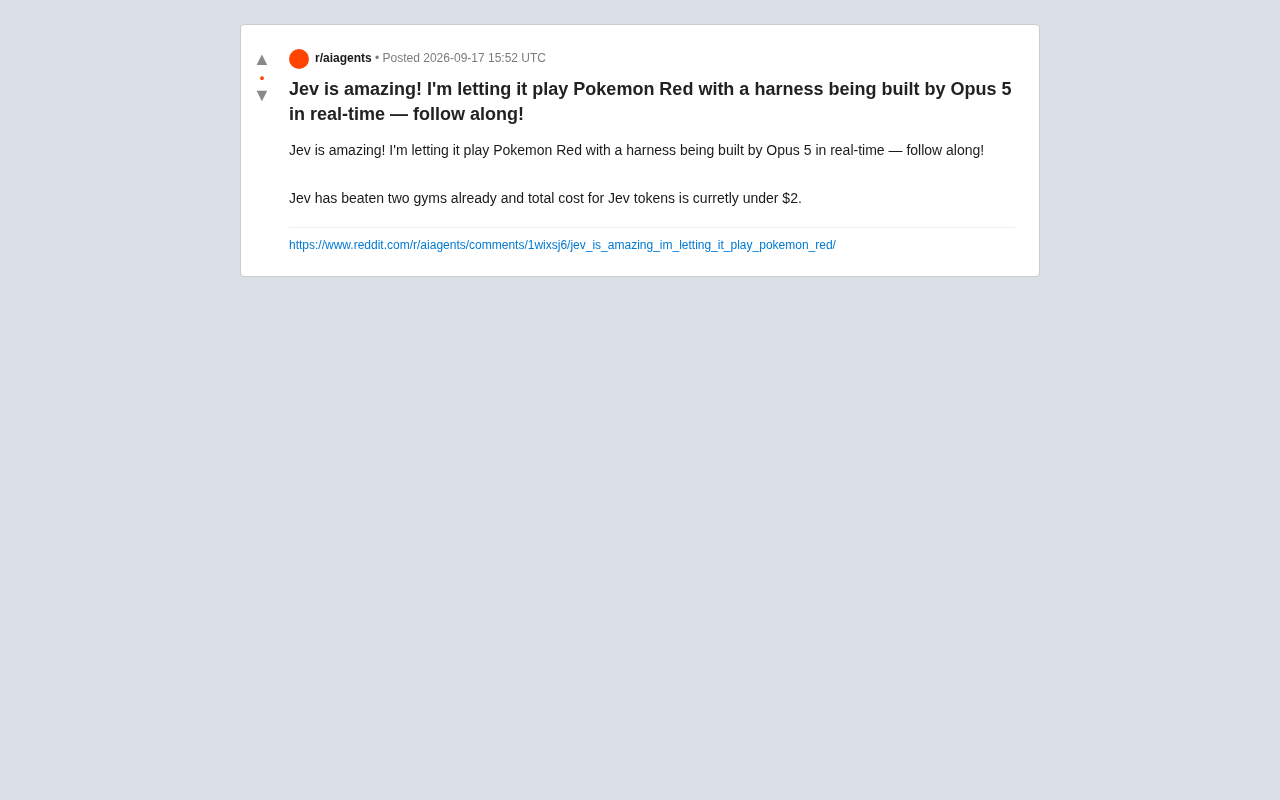
AI Plays Pokémon Red: Jev Clears Two Gyms for Under $2
A Reddit user had AI model Jev play Pokémon Red in real time while Opus 5 built the harness on the fly — clearing two gyms for under $2, showcasing low-cost AI agents.
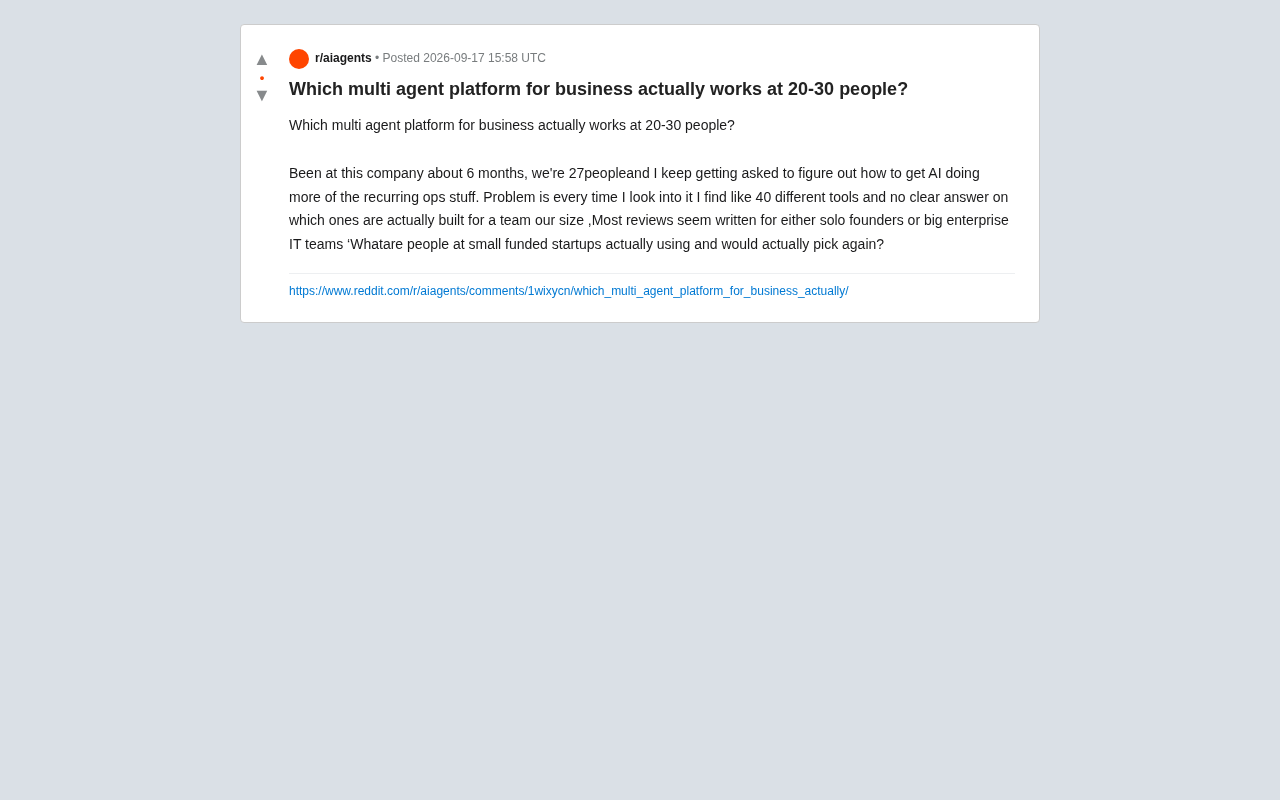
How Should a 20–30 Person Team Choose the Right Multi-Agent AI Platform?
How should a 20–30 person startup choose a multi-agent AI platform? Based on real Reddit discussions, this article analyzes the selection challenges for small teams and offers practical advice.
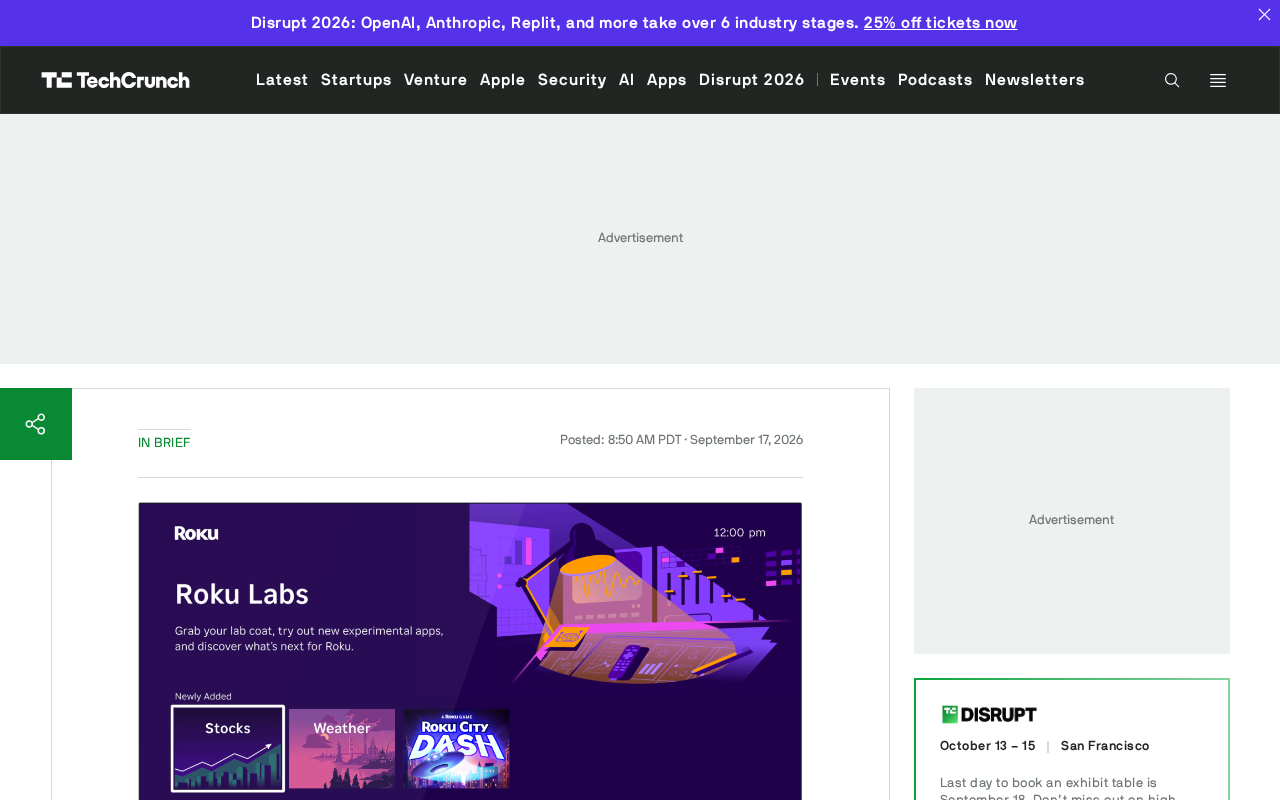
Roku Labs Goes Live: Experimental Apps Come to the Big Screen
Roku's latest OS update launches Roku Labs for experimental apps, expands personalized home screens, and introduces streaming subscription bundles to strengthen its smart TV ecosystem.