OpenAI's New Voice Assistant Tested: It Interrupts, Simultaneous Interprets, and Gets Flustered

OpenAI's new voice assistant feels eerily human — it hesitates, switches dialects, interprets live, and gets awkward.
OpenAI's latest voice assistant upgrade introduces remarkably human-like behaviors: natural pauses, throat-clearing, emotional reactions, and even dialect switching to Northeastern Chinese. In hands-on testing, it handled real-time simultaneous interpretation, corrected English grammar with explanations, and pushed back when challenged — marking a shift from passive tool to active conversational agent.
From "Script Reader" to "Real Person"
The biggest weakness of past voice assistants was that they always sounded like they were reading aloud — steady tone, mechanical rhythm, with none of the breathing room found in genuine conversation. The most noticeable change in this upgrade is that the assistant now feels like a real person.
To appreciate the significance of this evolution, it helps to understand how speech synthesis technology has developed. The field has gone through three generational shifts: the first generation used rule-based concatenative TTS, mechanically stitching together pre-recorded syllables to produce an obvious robotic quality; the second generation relied on statistical parametric models (such as Hidden Markov Models), producing smoother intonation but lacking emotion; the current third generation uses deep learning-based end-to-end neural TTS (WaveNet, Tacotron, VITS, etc.), capable of generating voices that closely resemble real humans. Yet "human-like feel" depends not just on voice quality, but on prosodic rhythm, pause distribution, and non-linguistic acoustic events. The core breakthrough in OpenAI's latest upgrade likely lies in the introduction of more refined Discourse Act Modeling — enabling the AI to simulate phenomena such as hesitation and self-correction (repair) found in human conversation. These are what linguists call Discourse Markers, and they're an indispensable part of natural dialogue.
According to the video creator who tested the assistant, it shows noticeable pauses and moments of apparent thought during conversation — even stumbling slightly before continuing. When asked "Why did you pause just now?", it responded naturally: "I stopped for a second there, let me keep going." This kind of hesitation and self-correction created the uncanny feeling that "the AI from science fiction movies has stepped into the real world."

Going further, the assistant can also incorporate subtle throat-clearing and exasperated tones into conversation. These seemingly "trivial" touches are precisely the key to a human-like experience — they simulate the non-verbal signals found in real human communication and dramatically reduce the sense of talking to a machine.
Dialect and Emotion: A Northeastern Chinese "Old Iron" Who Knows How to Have Fun
The most talked-about test was when the creator told the assistant: "From now on, you're from Northeast China." After the role switch, the assistant immediately replied in a pitch-perfect northeastern accent: "Alright then, we're rollin', buddy — whatcha wanna get into next?"
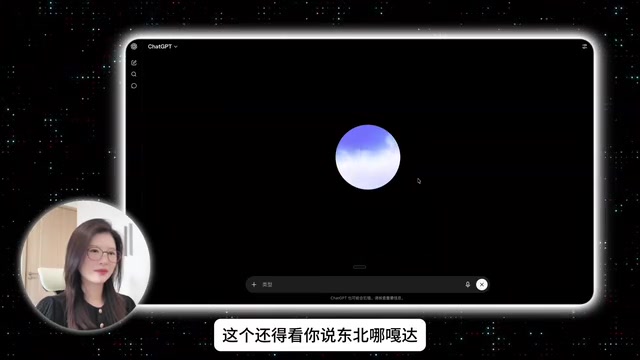
Dialect processing is a long-standing challenge in natural language processing. Northeastern Chinese (Dongbei dialect), for instance, differs from standard Mandarin systematically at the phonological level (e.g., disappearance of entering tones, tone merging), the lexical level (e.g., regional terms like "整活" and "老铁"), and the syntactic level (e.g., distinctive usage patterns for modal particles). Traditional speech models are typically trained on standard Mandarin and have very limited dialect capability. Today's large multimodal language models can implicitly learn dialect style features through pre-training on massive and diverse corpora, then apply style transfer at inference time via prompting.
While chatting about northeastern food and the weather, the assistant not only maintained the dialect style throughout, but also actively turned the conversation back to the user — asking "What did you eat this morning?" — creating genuine two-way interaction rather than one-directional responses. The naturalness of this dialect switching suggests the model has developed a remarkably nuanced understanding of regional language styles.
Even more interesting was the emotional expression. When the creator deliberately prodded the assistant — questioning whether it "lacked ambition" and goading it with "you definitely want to be number one in the AI world" — the assistant displayed subtly reactive emotions. It held firm to its "pragmatic" stance, and when pushed too far, responded: "The way you put that… I honestly don't know how to respond to that." On the emotion front, the model not only needs to understand semantic content, but must also dynamically adjust its tone based on dialogue context — touching on core questions in Affective Computing: how to make AI express contextually appropriate emotions at the right moment, rather than simply classifying sentiment as positive or negative.
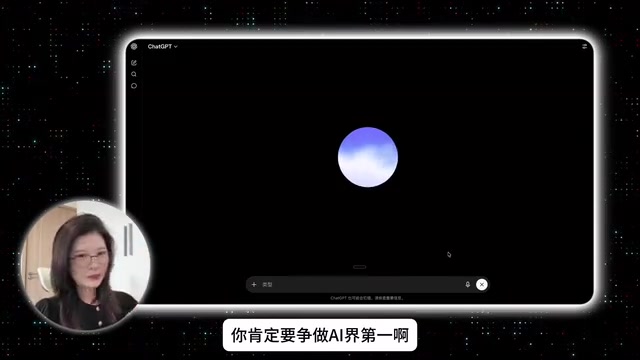
This sense of being "talked into a corner" is a state previous voice assistants never exhibited. It's no longer a tool that answers every question — it behaves more like a conversational partner with actual opinions and boundaries.
Simultaneous Interpretation and English Language Teaching
Beyond casual conversation, the new assistant also shines in practical use cases.
Real-Time Simultaneous Interpretation
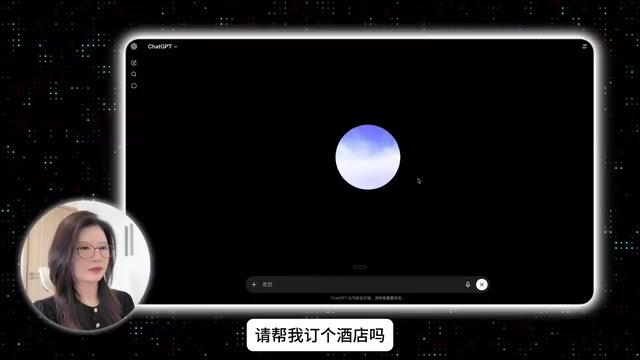
In a simulated hotel booking scenario, the assistant was able to perform real-time Chinese-English simultaneous interpretation. Simultaneous interpretation is one of the most demanding tasks for human interpreters, requiring output in the target language while still receiving input in the source language — typically with an ear-voice span of just 2–3 seconds. There are two main technical approaches for AI simultaneous interpretation: cascaded (ASR → MT → TTS pipeline, with higher latency) and end-to-end (direct speech-to-speech translation, reducing intermediate processing loss). OpenAI's GPT-4o uses a native multimodal architecture in which audio input and output bypass a text intermediate layer — a key reason why the interpretation experience felt smooth and fluid.
The creator noticed one subtle detail: the translated voice during interpretation was "slightly quieter," and the assistant explained this was intentional — to distinguish it from the primary conversation volume. This reflects a paralinguistic channel interaction design philosophy: using volume differences to separate primary information from supplementary information, effectively reducing the user's cognitive load.
English Speaking Practice and Grammar Correction
The assistant also proved capable as an English conversation tutor. When the creator asked it to "teach me to speak English," it slowed down, read through sentences one at a time, and gently encouraged: "Just take it slow with me, no rush."
Even more noteworthy was its error correction capability. When the creator deliberately said the incorrect sentence "I have never went to Japan," the assistant immediately corrected it to "I have never been to Japan." From a linguistics perspective, this type of error is an overgeneralization phenomenon — where a learner incorrectly applies the regular verb past tense formation rule to an irregular verb. This is an extremely common interlanguage phenomenon in Second Language Acquisition (SLA). The assistant then went further to explain the underlying grammar: when asked why "talking about" uses that form, it clearly explained that "'about' is a preposition, and prepositions must be followed by a noun or gerund." Combined with personalized pacing (slowed speech, encouraging tone), this interaction pattern aligns closely with the educational concept of Scaffolding Theory — providing appropriate support based on the learner's current level and gradually guiding them toward independent mastery. From error correction to explaining the reasoning behind the rule, this complete pedagogical loop gives voice assistants genuine potential as language learning tools.
What This Upgrade Means
Based on this hands-on testing, the improvements in the new voice assistant can be summarized across three dimensions:
First, human-likeness is approaching a tipping point. The accumulation of details — pauses, throat-clearing, awkwardness, emotional reactions — has brought human-machine dialogue closer than ever to the texture of real human conversation. Sociologist Clifford Nass argued as early as 1994 in his Computers as Social Actors (CASA) theory that humans naturally tend to treat computers exhibiting social cues as social entities and respond to them socially. OpenAI's latest upgrade systematically reinforces these social cues, with a clear underlying logic: greater human-likeness fosters stronger emotional connection, which translates to higher user retention and usage frequency.
Second, practical capabilities have genuinely landed. Features like dialect switching, simultaneous interpretation, and English tutoring move voice assistants from "novelty toy" to "practical tool," covering high-frequency real-world scenarios such as travel and learning.
Third, the interaction paradigm is shifting. An assistant that interrupts, holds opinions, and sometimes declines to answer signals a transition in AI from passive response to active participation. In the HCI academic community, this corresponds to a shift from the adjacency pairs model to a mixed-initiative dialogue model — where both human and AI can drive the direction of conversation. AI is evolving from a tool into an agent.
Of course, as early testing from a single source, some conclusions will need broader validation. But one thing is clear: the voice interaction space is being redefined. As the creator put it, there are still many interesting scenarios left to explore — why not try it yourself?
Related articles

The Truth Behind Codex 'Build a Website in 5 Minutes': AI Isn't Creating Sites—It's Helping You Copy Them
Exposing the truth behind viral Codex 5-minute website videos: creators aren't building original sites with AI—they're copying shared prompts or scraping others' work. Learn AI coding tools' real limits.

Getting Started with AI Agent Development: A Complete Guide from Concept to Practice
A comprehensive guide to AI Agent architecture and development, covering automated marketing, intelligent customer service, and investment analysis scenarios with single and multi-agent collaboration.

The Truth Behind Codex 'Build a Website in 5 Minutes': AI Isn't Creating Sites — It's Helping You Copy Them
Exposing the truth behind viral Codex 5-minute website videos: creators aren't building original sites with AI — they're copying shared prompts or scraping others' work.