OpenAI Swarm: A Deep Dive into the Lightweight Multi-Agent Orchestration Framework
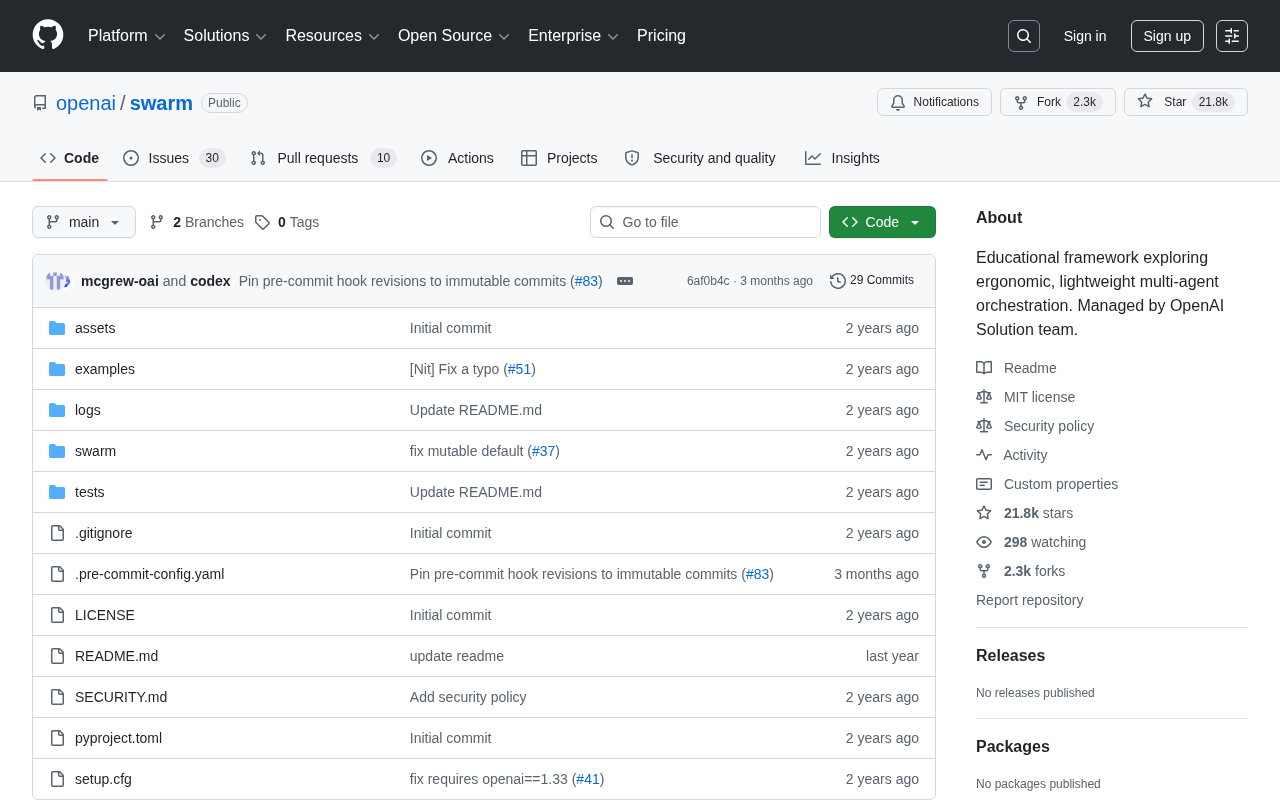
OpenAI Swarm is a minimal educational framework for multi-agent orchestration built on just two primitives: Agent and Handoff.
OpenAI Swarm is an official open-source exploratory framework that demonstrates the core mechanics of multi-agent collaboration through a deliberately minimal design. It has just two abstractions: Agent (wrapping instructions and callable functions) and Handoff (transferring control between agents). Unlike heavyweight frameworks like LangChain or AutoGen, Swarm stays transparent and stateless, keeping every step of the logic visible to the developer. It's designed for learning and prototyping — not production — making it an ideal reference for developers who want to understand multi-agent systems from the ground up.
What Is Swarm
OpenAI's official Swarm is an exploratory educational framework focused on lightweight, ergonomic multi-agent orchestration. Maintained by OpenAI's Solutions team, it has accumulated over 21,000 stars and 2,276 forks on GitHub and is written in Python.
It's worth noting that Swarm is not positioned as a production-ready framework — it's an educational project for learning and experimentation. OpenAI explicitly presents it as a reference implementation demonstrating how to build and coordinate multiple collaborating agents, helping developers understand the core mechanics of task handoffs and state transfer between agents.
Core Design Philosophy
Swarm's design revolves around two minimal primitives: Agent and Handoff.
Agent
In Swarm, an Agent is essentially a wrapper around a set of instructions and callable functions. Each Agent can carry its own system prompt, available tools, and logic for determining when to hand off the conversation to another Agent. This abstraction allows developers to decompose complex tasks into multiple single-responsibility agents, each handling its own domain.
Handoff
Handoff is Swarm's most distinctive mechanism. When an Agent determines that the current task falls outside its area of responsibility, it can transfer control to another Agent via a function return value. The entire process requires no complex state machines or external orchestration layers — after a handoff, the new Agent takes over the conversation context and continues processing. This design makes collaboration between multiple agents feel intuitive and lightweight.
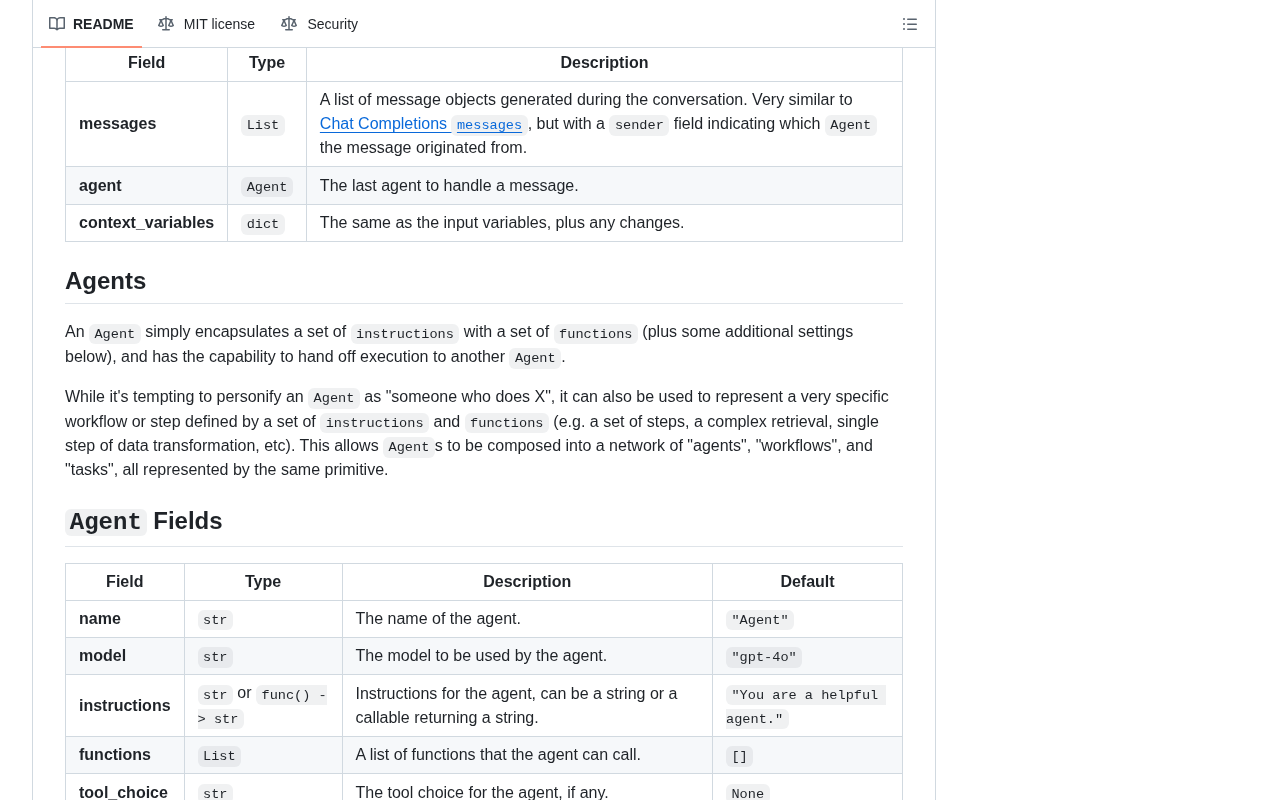
From a technical implementation perspective, the Handoff mechanism is built on top of OpenAI's Function Calling capability. When an Agent's function returns another Agent object, Swarm's runtime detects this special return type and automatically switches the active Agent to the target Agent, passing along the current message history. This means the newly activated Agent has access to the full context without the caller needing to explicitly manage state transitions. The key difference from traditional state machines is that handoff logic is driven by the LLM's reasoning output rather than hard-coded transition conditions — giving the system a degree of adaptability when facing ambiguous or complex tasks.
Why Emphasize "Lightweight" and "Ergonomic"
Unlike heavyweight frameworks such as LangChain or AutoGen, Swarm deliberately avoids introducing heavy abstraction layers. It runs primarily on the client side, with almost all logic explicitly controlled by the developer — the framework itself maintains no state across calls.
"Ergonomic" here means the API is straightforward enough that developers can define agents and handoff rules with minimal boilerplate code. The trade-off delivers a gentle learning curve, highly predictable behavior, and low debugging overhead. The cost is that Swarm provides none of the infrastructure required for production environments — no persistence, monitoring, or error recovery.
For developers who want to understand the underlying mechanics of multi-agent systems, this "no magic" transparency is actually its greatest strength.
LangChain and AutoGen represent the two most prominent heavyweight agent frameworks today. LangChain wraps LLM calls through layers of abstraction — Chains, Tools, Memory, and more — offering comprehensive functionality but a steep learning curve, where implicit data flows often complicate debugging. AutoGen, developed by Microsoft Research, focuses on multi-agent conversation and code execution with human-in-the-loop support, making it well-suited for complex automation tasks, though its configuration and dependencies are relatively heavy. Swarm consciously sidesteps the complexity of both frameworks, pushing all orchestration logic down to the developer's code layer — trading transparency for flexibility, at the cost of requiring developers to handle fault tolerance and monitoring in production environments themselves.
Use Cases and Positioning
Swarm is well-suited for the following types of users:
- Teaching and research: Learners who want to understand the basic patterns of agent orchestration
- Prototype validation: Teams that need to quickly build multi-agent collaboration demos
- Architectural reference: Engineers planning to build their own agent framework and looking for minimalist design inspiration
It's important to emphasize that OpenAI does not recommend using Swarm directly in production. For production-grade capabilities, the OpenAI Agents SDK — released subsequently — is the more complete choice. Swarm is more like a "proof of concept" that uses clear code to illustrate the core ideas behind multi-agent orchestration.
The OpenAI Agents SDK (the evolutionary direction integrating OpenAI Functions and the Assistants API) is the production-grade extension of Swarm's concepts, offering persistent Threads, built-in tools (such as a code interpreter and file retrieval), run state management, and more robust error handling. The two are highly aligned in core concepts — the design philosophy behind Agent definitions and Handoff logic was directly inherited by the Agents SDK. This makes learning multi-agent orchestration intuitively through Swarm first, then migrating to the Agents SDK for production deployment, the learning path OpenAI implicitly recommends.
Significance for the Developer Ecosystem
Over 20,000 stars signal that multi-agent orchestration is one of the hottest topics in AI application development today. Swarm's popularity stems precisely from its ability to answer a critical question with minimal complexity: how can multiple LLM agents divide work and collaborate gracefully.
Among the many bloated agent frameworks out there, Swarm offers a minimalist reference worth reading and re-reading. It reminds developers that building complex systems doesn't necessarily require complex frameworks — sometimes, two carefully designed primitives are enough to express rich patterns of collaboration. For teams exploring the AI Agent space, understanding Swarm's source code is often more illuminating than plugging into a large framework.
Related articles
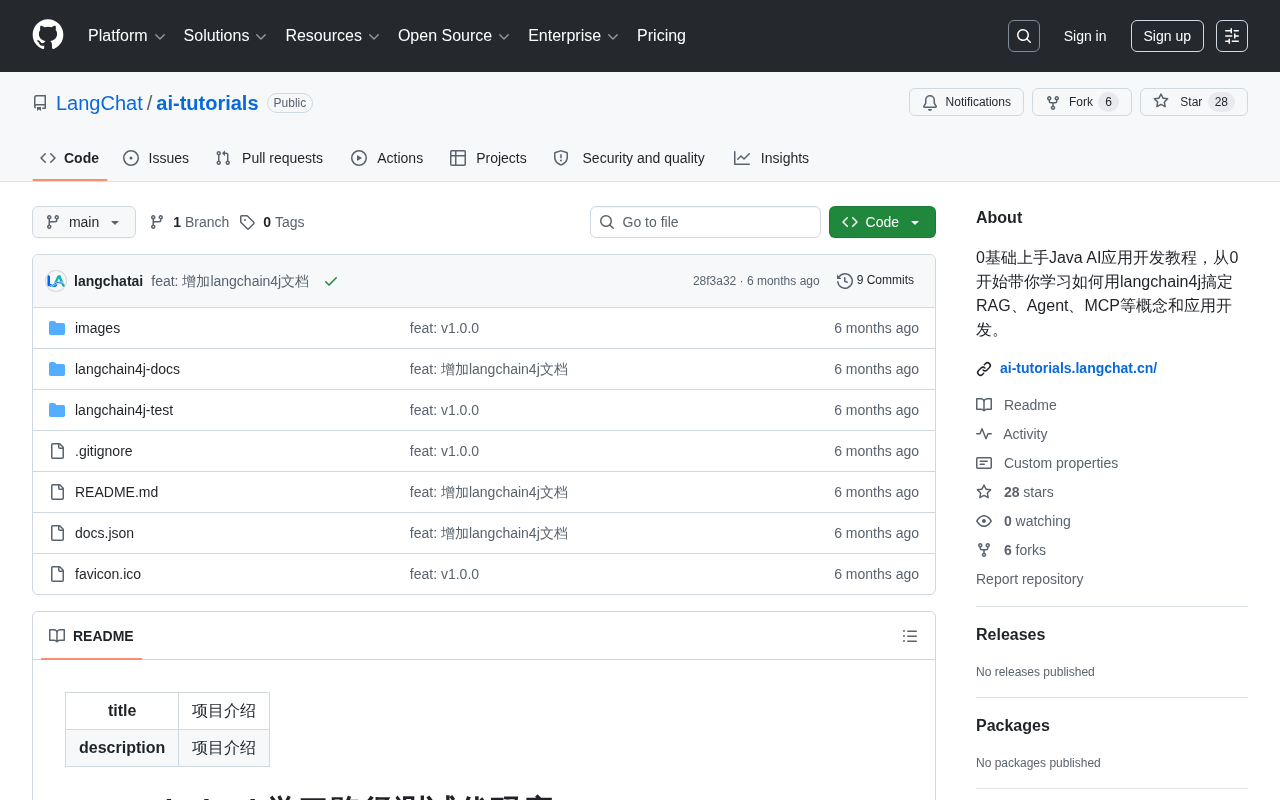
LangChat ai-tutorials: A Beginner's Guide to AI App Development for Java Developers
LangChat ai-tutorials is a beginner-friendly Java AI tutorial series built on langchain4j, covering RAG, Agent, and MCP for Java developers entering AI development.
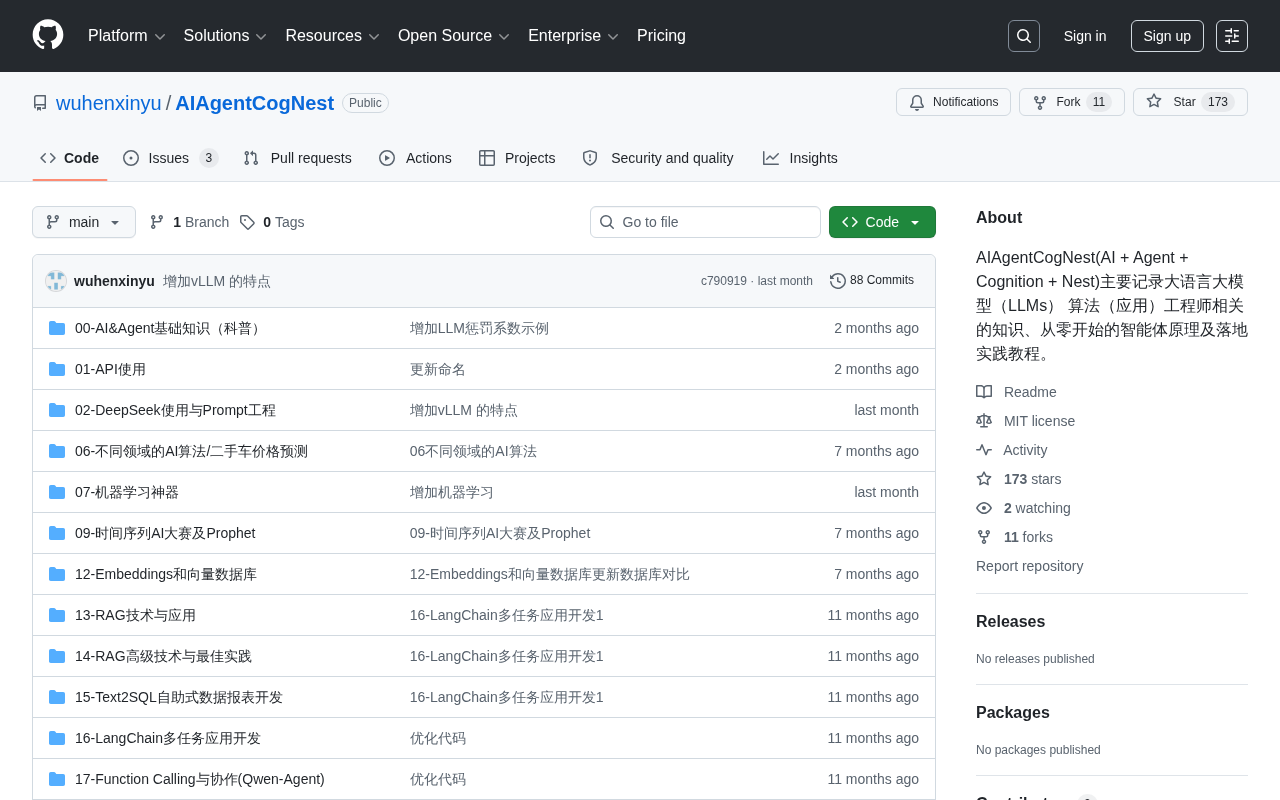
AIAgentCogNest: An Open-Source AI Agent Knowledge Incubation & Development Tutorial Project
AIAgentCogNest is an open-source AI Agent knowledge incubation project offering structured LLM application development tutorials for developers, engineers, and teams transitioning to AI.
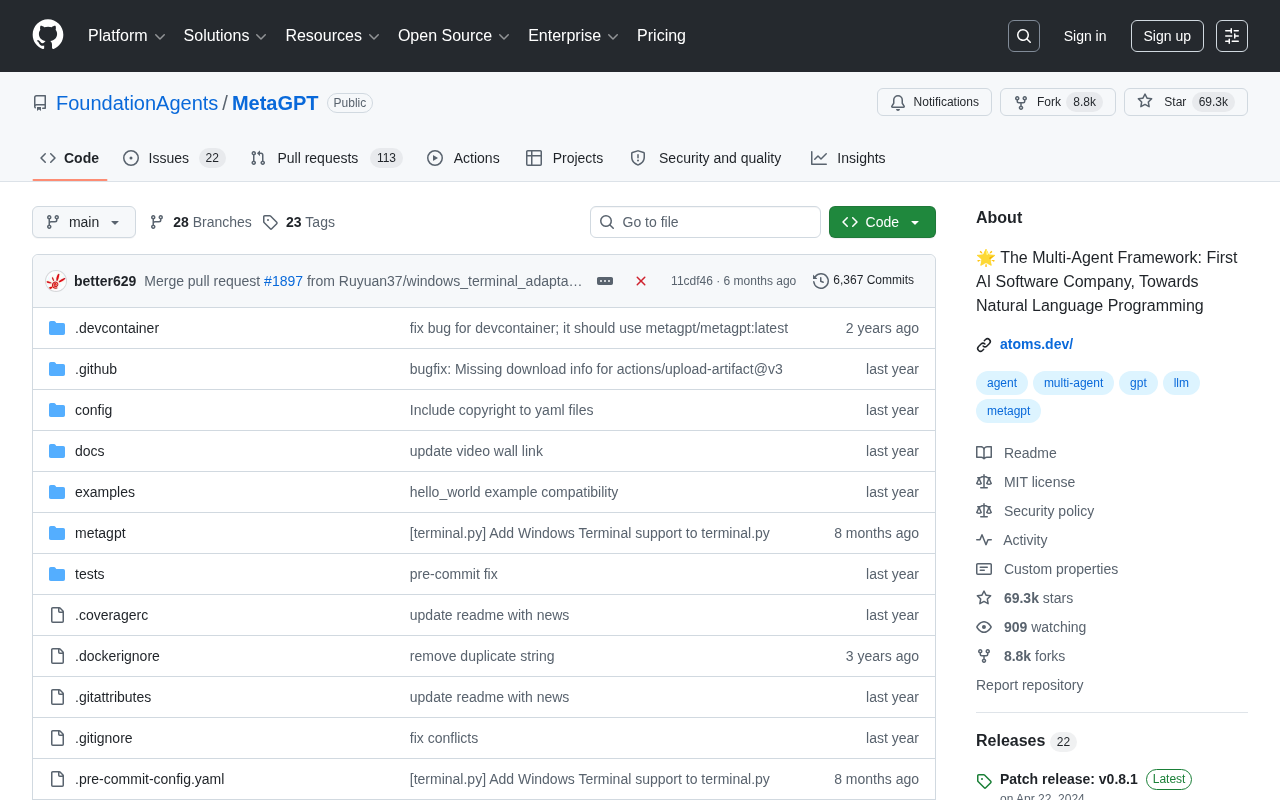
MetaGPT Explained: Building the First AI Software Company with a Multi-Agent Framework
MetaGPT is an open-source multi-agent framework with 67K+ GitHub stars that simulates a full AI software company — with PM, architect, and engineer agents — to enable natural language programming.