OpenClaw Multi-Agent Development in Practice: A Complete Guide to Building Multi-Agent Applications from Scratch

A complete guide to AI Agent development workflow and pitfall avoidance using the OpenClaw framework
Set against the backdrop of the 2026 Agent market explosion, this article systematically breaks down the complete AI Agent development workflow. It first clarifies the fundamental difference between Agents and ChatBots — from passive response to active execution — then introduces the OpenClaw multi-Agent framework's advantages and layered architecture. It covers hands-on topics including environment setup, LLM configuration, and tool invocation design, and concludes with deployment pitfalls and core development methodology to help developers quickly build production-ready multi-agent applications.
Why Agent Development Became a Battleground in 2026
2026 is widely recognized in the industry as the "Year of the Agent," with enterprise demand surging and market size continuing to explode. From tech giants to startups, virtually every player is betting on the AI Agent track. However, there's an awkward reality: Everyone says Agent is the next big thing, yet nobody systematically teaches you how to actually build one.
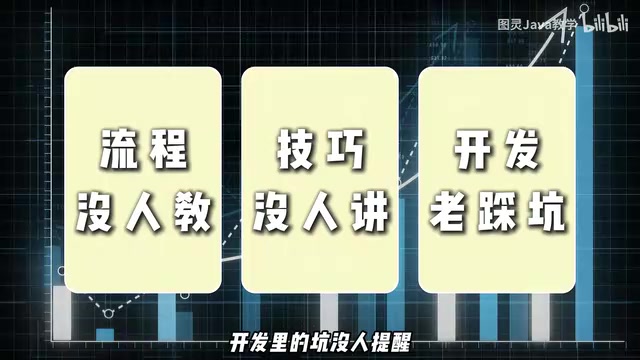
From framework selection to tool invocation, from data preparation to production deployment, the entire development pipeline is full of gray areas. Nobody teaches the process, nobody shares the techniques, and nobody warns you about the pitfalls in development — this is the biggest pain point in the current Agent development landscape.
This article will systematically break down the complete Agent development workflow based on the OpenClaw multi-Agent framework, helping you build your first production-ready multi-agent application from scratch.
The Fundamental Difference Between Agents and ChatBots: From Passive Response to Active Execution
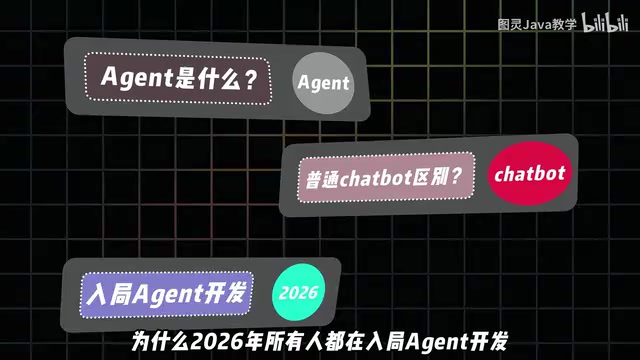
Before diving into development, let's clarify a core concept: What exactly is an Agent? How is it different from a regular ChatBot?
A regular ChatBot is essentially a "Q&A machine" — you input a question, it returns an answer, and the interaction ends there. It has no autonomous decision-making ability, no tool-calling capability, and certainly no multi-step task planning.
An Agent (intelligent agent) is fundamentally different, possessing the following core characteristics:
- Autonomous Planning: Can decompose complex tasks into multiple sub-steps and independently formulate execution plans
- Tool Invocation: Can call external APIs, databases, search engines, and other tools to gather information or perform actions
- Memory & Context Management: Can maintain long-term memory and preserve context consistency across multi-turn interactions
- Multi-Agent Collaboration: Multiple Agents can divide labor and collaborate, each handling their respective responsibilities to complete complex tasks
In one sentence: A ChatBot provides "passive responses," while an Agent performs "active execution." This fundamental difference determines that Agents have far greater application value in enterprise scenarios than ChatBots.
OpenClaw Framework Selection: Why It's Ideal for Multi-Agent Development
Comparison of Mainstream Agent Frameworks
There are quite a few Agent development frameworks on the market today — LangChain, AutoGen, and CrewAI each have their strengths. OpenClaw, as a framework focused on multi-Agent scenarios, demonstrates core advantages in three areas:
- Strong Multi-Agent Orchestration: Natively supports collaboration and communication between multiple Agents, making it naturally suited for building complex enterprise applications
- Excellent LLM Compatibility: Supports configuration and switching between multiple mainstream large language models, avoiding vendor lock-in
- Complete Deployment Pipeline: Provides a comprehensive toolchain from development to deployment, solving the "last mile" problem of production rollout
OpenClaw Architecture Design Analysis
OpenClaw's architecture follows the principle of "layered decoupling," consisting of four main layers:
- Agent Layer: Defines each agent's role, capabilities, and behavioral logic
- Tool Layer: Encapsulates external APIs and functional modules for Agents to call on demand
- Orchestration Layer: Manages collaboration workflows and message passing between multiple Agents
- Model Layer: Interfaces with underlying large language models to handle reasoning and generation tasks
The benefit of this layered design is that each layer can be independently iterated and replaced, providing high development flexibility.
Creating Your First Agent from Scratch: From Environment Setup to Tool Configuration
Environment Preparation and Project Initialization
The first step in developing an Agent is setting up the base environment. You'll need:
- Python 3.10+ runtime environment
- OpenClaw framework and its dependencies
- At least one available LLM API Key (e.g., OpenAI, Claude, or domestic LLMs)
After project initialization is complete, the core work revolves around three dimensions: defining Agent roles, configuring toolsets, and designing collaboration workflows.

Critical Details in LLM Configuration
LLM configuration is the most easily overlooked yet critically important aspect of Agent development. Here are several key points that require special attention:
- Choose models by task: For reasoning-intensive tasks, use more capable models (e.g., GPT-4o, Claude Sonnet); for simple tasks, use lightweight models to control costs
- Parameter tuning affects behavioral stability: Parameters like Temperature and Top-P directly determine the consistency of Agent output. In production environments, it's recommended to set Temperature between 0.1-0.3
- Context window management: Token consumption grows rapidly during multi-turn interactions, so you need to design memory compression and context trimming strategies in advance
Tool Invocation Design Principles
An Agent's capability boundaries are largely determined by which tools it can call. When designing toolsets, follow these principles:
- Principle of Least Privilege: Each tool should only expose necessary functional interfaces to avoid security risks from excessive permissions
- Comprehensive Error Handling: When tool calls fail, there must be clear error feedback so the Agent can autonomously adjust its strategy
- Precise Tool Descriptions: The description text of a tool directly affects the Agent's invocation decisions — vague descriptions will cause error rates to skyrocket
Agent Deployment Pitfalls and Solutions
Three Key Considerations for Production Deployment
Moving an Agent from development to production is often where things go wrong most easily. Here are three high-frequency issues:
- Concurrency Handling: When multiple users are using the system simultaneously, Agent state management and resource isolation must be properly implemented, otherwise context contamination will occur
- Timeout Control: Multi-step Agent execution can take a long time, so you need to set reasonable timeout mechanisms and provide intermediate status feedback
- Cost Control: Multi-Agent collaboration means multiple model calls, causing Token consumption to multiply — be sure to implement usage monitoring and budget alerts
The Three Most Common Pitfalls in Development
Based on real project experience, the following issues occur most frequently:
Pitfall 1: Agent Gets Stuck in Infinite Loops
When task descriptions aren't clear enough, Agents may repeatedly execute the same operations. The solution is to set a maximum iteration count and explicitly state termination conditions in the Prompt.
Pitfall 2: Incorrect Tool Call Parameter Formatting
Parameters generated by LLMs for tool calls frequently don't match expected formats. It's recommended to add parameter validation and type conversion logic in the tool layer — practice defensive programming.
Pitfall 3: Confused Responsibilities in Multi-Agent Collaboration
Unclear responsibility boundaries between Agents lead to task duplication or omission. The solution is to strictly define input/output specifications for each Agent in the orchestration layer, making it explicit who is responsible for what.
Summary: Mastering the Core Methodology of Agent Development
Agent development isn't impossibly difficult. With mature frameworks like OpenClaw, even beginners can quickly get started and build multi-Agent applications with real practical value.
The core methodology can be summarized in four steps:
- Understand the Principles: Clarify the fundamental difference between Agents and ChatBots, and define the Agent's capability boundaries
- Choose the Right Tools: Select appropriate frameworks and LLMs based on project requirements
- Excel at Engineering: Put serious effort into Prompt design, tool descriptions, and error handling
- Control Deployment: Find the balance between performance, cost, and stability
Master this methodology, and you'll be well-positioned in the Agent technology wave. The Agent race of 2026 has just begun — now is the perfect time to get in.
Related articles
 Tutorials
ChatGPT Plus Subscription Guide: Are GPT-5.5, image-2, and Codex Worth the Upgrade?
A detailed look at ChatGPT Plus features — GPT-5.5, image-2, and Codex — with a Plus vs Pro comparison and a complete step-by-step subscription guide for users outside the US.
 Tutorials
Harness AI Engineering in Practice: Using Claude Code to Master Enterprise-Level E-Commerce Development
Deep dive into Harness AI Engineering: master enterprise e-commerce development with Claude Code using the Rules, Skills, Wiki, and Changes framework.
 Tutorials
Cursor + Codex Dual-IDE Collaboration: A Practical Methodology for Open-Source Project Customization
A complete methodology for open-source project customization based on real-world experience, detailing the Cursor+Codex dual-IDE workflow, seven-stage process, MVP validation, and AI source code reading techniques.