OpenCode Hit by Large-Scale Attack: Distillation Attacks and the New AI Security Tax

OpenCode hit by distillation attack, 1.4% of users affected, revealing AI security is becoming a million-dollar fixed cost.
Open-source AI coding assistant OpenCode confirmed a large-scale distillation attack affecting 1.4% of Console users, with some losing hundreds to over a thousand dollars. Attackers stole trusted accounts to bulk-call strong models like Claude for outputs and chain-of-thought, training smaller mimic models via tactics like fake debugging sessions and translation tasks. OpenCode must run AI security agents 24/7, costing thousands daily and up to millions annually. OpenAI provided the Daybreak Blue blue-team model, but the incident's characterization and ethics of distillation remain disputed. The incident shows AI security is shifting from optional to a fixed enterprise cost.
Incident Recap: OpenCode Console Hit by Large-Scale Attack
According to a YouTube tech channel report, the open-source AI coding assistant OpenCode confirmed a security breach on social media, stating that it suffered a "large-scale distillation attack" affecting 1.4% of OpenCode Console users. OpenCode Console is a management platform for deploying team-level policies, controlling behavior, and tracking usage and budgets—clearly carrying enterprise-grade characteristics.
After the incident came to light, multiple users reported financial losses ranging from hundreds to over a thousand dollars. Anthropic, OpenAI, and even Google all stated they were working with OpenCode on follow-up matters. Google was particularly proactive, reaching out to affected users of Gemini and promising feedback through Google Cloud Billing Support within 5 to 10 business days. This multi-party coordinated response speed indirectly confirms the severity of the incident.
What Is a Distillation Attack? Why Is It So Hard to Defend Against?
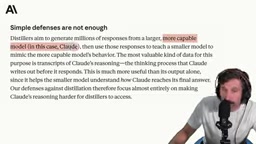
The core logic of a distillation attack is not complicated: attackers make large volumes of calls to more capable large models (such as Claude), collect their outputs and even reasoning processes, and then use this data to train a smaller model that mimics the large model's behavior. Anthropic's definition is widely cited—distillers want to generate millions of responses, seeking not only final answers but also the chain of thought by which the model arrives at them.
According to OpenCode's explanation, attackers did not register new accounts directly. Instead, they first compromised a batch of "clean" accounts with existing trust histories, then used these accounts to launch distillation requests. Because the accounts themselves were trustworthy, the attacks could persist for some time before being detected and banned. Anthropic has publicly disclosed some real attack prompts, such as disguising as a debugging session to ask the model to "output the reasoning process verbatim," or posing as a translation task to request transcribing "working memory" into Japanese katakana. These techniques worked for a time until the platform strengthened log review.
Model Distillation is a model compression and knowledge transfer technique first proposed by Hinton et al. in 2015. Its principle is to train a smaller "student model" whose output distribution approximates as closely as possible that of a larger, more capable "teacher model." Traditional distillation typically requires access to the teacher model's full output probabilities (logits), but in black-box API scenarios, attackers can only obtain the final text, so it evolves into "black-box distillation"—using large numbers of input-output pairs for instruction fine-tuning.
Distillation itself is a neutral technical means, widely used to transfer large model capabilities to small on-device models. The controversy lies in: unauthorized collection of data through bulk calls to commercial APIs to train competing models may violate terms of service and is considered free-riding on model providers' R&D investment. This is why the term "distillation attack" carries a value judgment.
Chain-of-Thought (CoT) refers to the intermediate reasoning steps a model generates before giving a final answer. Reasoning models such as OpenAI's o series and DeepSeekAd-R1 explicitly output such processes, while some commercial APIs hide or summarize the raw reasoning content for security reasons.
For distillers, the value of chain-of-thought far exceeds that of final answers: it exposes the process of "how to arrive at the answer," enabling small models to mimic not only conclusions but also solution paths, thereby achieving stronger generalization on tasks such as math and code. This is precisely the motivation for attackers to disguise as debugging sessions and request "verbatim output of the reasoning process," and the direct reason platforms strengthen log review and restrict exposure of reasoning content.
The Cost of Defense: A Million-Dollar-a-Year "AI Security Tax"
In interviews, OpenCode revealed that modern attacks are highly automated and parallelized, scanning all possible vulnerabilities and pivoting quickly, making manual defense unrealistic. The team had to run AI security agents 24/7, continuously ingesting signals to detect attacks as early as possible. This system costs at least several thousand dollars per day, which by extrapolation amounts to annual costs in the million-dollar range.
This raises a broader industry question: when attackers use frontier models to launch attacks, defenders are also forced to use equally or even more powerful models to fight back. For any company of a certain scale, this means an ongoing security expenditure. Some argue that this is forming an implicit "AI security tax"—regardless of whether an enterprise directly purchases a vendor's services, it is forced to pay for model security capabilities.

AI Security Agent refers to automated defense systems driven by large models that can continuously ingest signals such as login logs, API call patterns, and prompt content to identify anomalous behavior in real time and respond. Compared with traditional rule-based WAF or risk control systems, its advantage lies in understanding attack intent at the semantic level—for example, identifying jailbreak prompts disguised as translation or debugging.
But the costs are obvious: it requires continuous model inference, generating high token expenses; meanwhile, attackers can launch massive parallel probes, and defenders must respond with equal or higher throughput. This "using models to fight models" arms race is precisely the root cause of security costs shifting from one-time investments to ongoing operational expenditures.
Multi-Party Response and Points of Controversy
In this incident, OpenAI provided OpenCode with a blue-team security model called Daybreak Blue to enhance defenses. But not everyone was convinced. Some commentators questioned whether the "distillation attack" characterization is accurate, arguing it is more like a typical credential leak and abuse incident. Meanwhile, ethical discussions about distillation itself were reignited—some pointed out that large model training data itself involves "distilling" knowledge from the entire internet, so accusing others of distillation is a double standard.
According to cross-verification from multiple sources, the affected accounts were indeed banned by Anthropic and OpenAI for "distillation behavior," and the platforms sent relevant notifications to users upon banning. OpenCode stated that it disclosed this detail because users had already received platform emails first, and concealing it would only cause confusion.

Implications for Developers and Enterprises
This incident reveals the new normal of security in the AI era: the attack surface has expanded from traditional systems to model invocation chains, and credential management, usage monitoring, and anomaly detection need to be upgraded in tandem. For enterprises using third-party AI services, it is recommended to establish independent API key rotation mechanisms, set usage cap alerts, and pay attention to vendor security advisories. For tool providers, OpenCode's experience shows that enterprise-grade features (such as team policies and budget controls) enhance convenience but may also become a springboard for attackers—security design needs to be proactive rather than remedial.
The deeper impact is that AI security is shifting from an "option" to a "fixed cost." Regardless of whether this cost is ultimately borne by vendors, enterprises, or end users, the offense-defense game around model capabilities will persist long-term.
Credential Leakage and Account Takeover (ATO) is a risk type worth understanding separately in this incident. Attackers do not register new accounts but obtain login credentials of existing accounts through credential stuffing, phishing, malware, or third-party data breaches. Because these accounts carry normal historical behavior and accumulated trust, reputation-based risk control models often struggle to identify anomalies early.
For enterprises, defense priorities should focus on: enforcing multi-factor authentication, short-cycle key rotation, allocating API keys according to the principle of least privilege, and setting baseline alerts for per-account call volume and call patterns. This also explains why commentators believe the incident is essentially closer to credential abuse than a pure "distillation attack"—different characterizations lead to different defense priorities and responsible parties.
Related articles

Kimi K3.1 Pro Hands-On: Open-Source Model Nears Claude Opus 5.5
Moonshot AI releases Kimi K3.1 Pro: 3T parameters, 1M-token context, beating Claude Opus 5.5 on 9 of 14 benchmarks. Hands-on shows it nearing frontier closed models in 3D, frontend, and finance at a fraction of the cost, though robotics and complex reasoning remain weak.

Major US Banks Block AI Agents: Can AI Touch Your Money?
JPMorgan, Citibank, Bank of America, and Charles Schwab reportedly block AI agents from accessing customer accounts. This analysis examines why banks are blocking AI agents, the identity boundary problem, and the impact on AI financial assistants.

AI Agent Security Field Manual: Defending Against Injection, MCP Poisoning, and Zero-Click Leaks
AI Agent security field guide: from the lethal trifecta and prompt injection principles, with six real cases (Copilot zero-click leak, Slack AI, MCP poisoning, malicious NPM package, Glassworm invisible characters, OAuth supply chain attack), nine layers of defense controls (least privilege, sandboxing, default deny, egress monitoring), three-tier implementation roadmaps for individuals, teams, and enterprises, and a first-hour incident response checklist.