OpenSpec in Practice: Taming AI Code Generation with Spec-Driven Development (SDD)
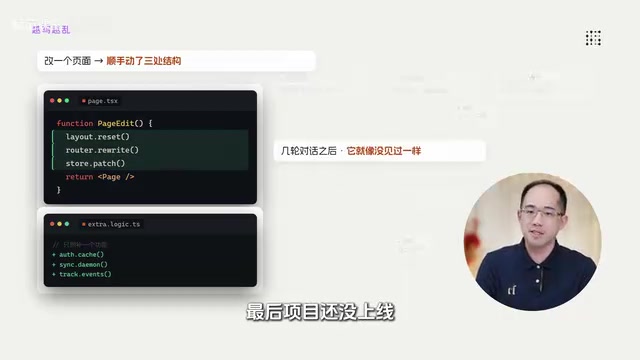
OpenSpec adds a specification layer between you and AI tools so generated code stays trackable and deliverable.
The article tackles a widespread problem in AI-assisted coding: AI writes fast but forgets constraints, breaks existing structures, and sends projects into chaos. The root cause isn't lack of AI capability — it's the absence of a mechanism to contain requirements, changes, and deliverables. Spec-Driven Development (SDD) and its representative tool OpenSpec address this by inserting a specification layer between developers and AI tools, turning "chat-and-patch" workflows into a manageable pipeline of requirements crystallization, change tracking, and delivery archiving. The article also distinguishes lightweight OpenSpec from heavyweight SpecHit by use case, and closes with the core insight: the real goal of AI-assisted development isn't writing more code — it's writing code that can actually be managed, verified, and shipped.
The Real Pain of AI-Assisted Coding: 30 Minutes of Magic, 3 Hours of Firefighting
"The first 30 minutes feel like cheat mode — the next three hours are pure damage control." This line perfectly captures what it's actually like to code with AI today. Ask it to update a page, and it quietly reshuffles three different components. Ask it to add a feature, and it helpfully invents an entire new logic layer on its own. The tech stack, interface contracts, and acceptance criteria you carefully agreed on earlier? After a few rounds of conversation, the model acts like it never heard any of it. Before the project even ships, requirements, specs, and code have already descended into chaos.
The root cause isn't that AI can't write code — if anything, it's the opposite. It writes too fast, too eagerly, without enough restraint. What's really missing is a mechanism to contain every requirement, every change, and every completed deliverable. When all context depends on the model's "memory," chaos becomes inevitable. This is precisely the core problem that Spec-Driven Development (SDD) is designed to solve.
What OpenSpec Actually Solves
OpenSpec has a clear positioning: it's not "yet another AI coding tool." It's a specification layer that sits between you and your AI toolchain. In other words, it doesn't help you write more code — it ensures that whatever the AI writes is trackable, verifiable, and archivable.

In the traditional "chatroom development" model, requirements are scattered across disconnected conversation threads, changes rely entirely on context held in memory, and once conversations grow long or projects grow complex, the model starts forgetting constraints and breaking existing structures. OpenSpec's approach is to shift the development workflow from "chat-and-patch" to spec-first: requirements get crystallized into documents before work begins, changes are executed against those specs, and completed work gets formally archived. Every action the AI takes is grounded in a defined specification — not left to the model's discretion.
For developers who can already build demos with AI but lose control the moment a project gets complex, this layer is exactly the missing piece.
What is Spec-Driven Development (SDD)? Spec-Driven Development is a software engineering methodology that places specification documents at the center of the development process. The core idea: before writing any code, lock down requirements, interface contracts, technical constraints, and acceptance criteria in a structured format. All subsequent code generation and modifications must map back to specific items in those specs. It shares similarities with Test-Driven Development (TDD) — where TDD uses tests to constrain implementation, SDD uses specs to constrain the entire development process, including AI-generated output. SDD isn't a new concept; "specification-first" practices have long existed in software engineering. But the rise of AI coding tools has made it urgently relevant again: when your primary coder is an AI that generates at high speed but lacks persistent memory and self-constraint, an external specification layer becomes critical infrastructure for maintaining project consistency.
From Chatroom Development to Spec-Driven Development
The heart of SDD is giving a project complete lifecycle management. Based on the workflow presented in the course, an AI-assisted project should move through these phases:
Requirements Crystallization
Translate vague, verbal requirements into structured specification documents — with tech stack, interface contracts, and acceptance criteria made explicit. This step becomes the anchor for everything that follows.
Change Tracking
Every modification is no longer a casual "quick fix." Each change maps to a specific spec item. What changed, why it changed, and whether it conforms to the agreed-upon contract — all of it is auditable.

Delivery Archiving
Once a feature is delivered, the outcome is formally archived as part of the project's history. In the next iteration, specs and code stay in sync — no longer dependent on anyone's (or any model's) memory.
The value of this workflow is that it transforms AI code generation — an inherently high-uncertainty activity — into a manageable engineering practice.
OpenSpec vs. SpecHit: Trading Off Lightweight vs. Heavyweight
A recurring practical question in the course is about tool selection: when do you use OpenSpec, and when do you use SpecHit?

Here's a rough way to think about the two:
-
OpenSpec (lightweight): Best for personal projects, rapid iteration, or existing codebases. When you need to add a layer of spec constraints to AI without introducing heavy process overhead, OpenSpec is sufficient.
-
SpecHit (heavyweight): Best for complex projects, team collaboration, and scenarios requiring a complete delivery chain. When multiple people are collaborating and delivery requirements are strict, SpecHit's more comprehensive control capabilities are the right fit.
In short, the key to choosing is project complexity and collaboration scale: go lightweight for solo rapid development, go heavyweight for formal team delivery. This "match spec rigor to actual need" mindset is far more pragmatic than defaulting to the heaviest possible process.
Context: The Rise of the "Spec Layer" in AI Toolchains In the AI coding toolchain, "specification layer" products are filling the gap between prompt engineering and formal software engineering processes. Other tools in this space include Cursor Rules, GitHub Copilot's custom instructions, and various project-level context management solutions. The shared philosophy: instead of re-explaining your project's background and constraints to the AI at the start of every conversation, persist those constraints as reusable structured documents that the AI can "read" before every action. The lightweight/heavyweight distinction between OpenSpec and SpecHit essentially maps to spec document depth and process enforcement level — lightweight solutions introduce spec awareness with minimal friction, while heavyweight solutions provide more complete delivery chains and audit capabilities suited to compliance requirements or multi-person collaboration.
The Core Idea: Not Writing More, But Writing What Can Actually Ship
The most memorable line from the entire course is this: "The goal isn't to make AI write more — it's to make what AI writes manageable, verifiable, and truly deliverable."
This reflects a genuine shift happening in AI-assisted development. Early on, the question was "can AI write code at all?" Today, as model capabilities have matured, the question has become "how do we govern what AI writes?" The rise of SDD tools like OpenSpec is essentially completing the last missing piece of AI programming's engineering story — bringing an uncontrolled generation process into a controlled engineering workflow.
For developers who want to use AI on real production projects — not just toy demos — understanding and practicing spec-driven development may deliver more long-term value than mastering any number of prompting techniques.
Related articles
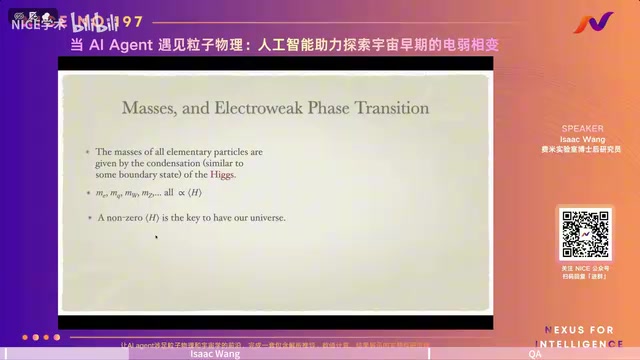
AI Agents Tackle Particle Physics: How the LEBRON Framework Computes Electroweak Phase Transitions
Fermilab postdoc Isaac Wang presents LEBRON, an AI Agent framework for computing electroweak phase transitions. Covers four LLM failure modes in rigorous physics, auditor mechanisms, and why AI hasn't revolutionized theoretical physics the way it has math.
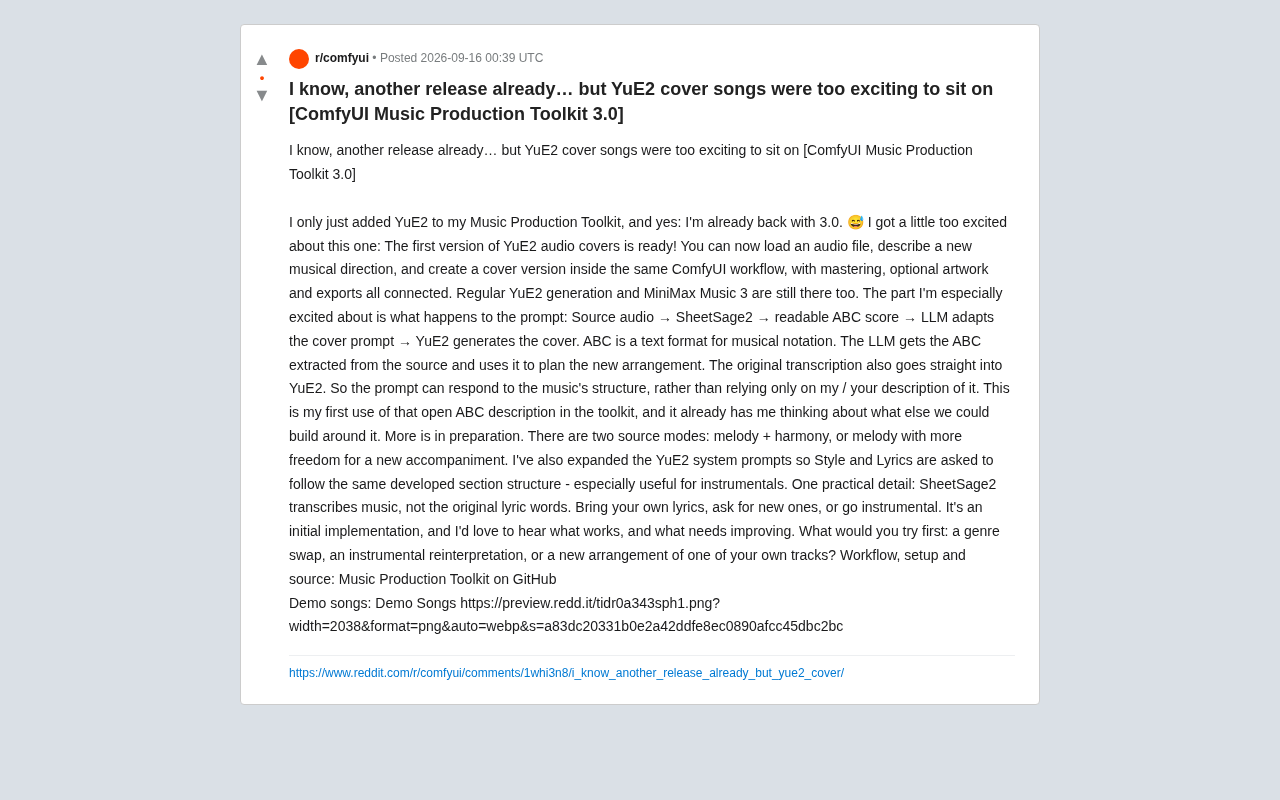
ComfyUI Music Production Toolkit 3.0: AI Arrangement with YuE2 Cover Generation and ABC Notation
ComfyUI Music Production Toolkit 3.0 adds YuE2 cover generation, transcribing source audio to ABC notation via SheetSage2 and using LLMs to rewrite structure-aware prompts for AI arrangement.

Jensen Huang Opposes AI Regulation: Safety Should Be Left to Vendors
Nvidia CEO Jensen Huang publicly opposes dedicated AI regulation, arguing AI is just hardware and software and safety should be handled by vendors. We examine the technical logic, commercial interests, and governance implications.