Opus 5.5 Proves It: We Really Do Need Smarter AI Models

Opus 5.5 lets technical people build complex software too, as AI leverage shifts toward non-professionals.
The author reflects on his prediction two years ago that AI would hit a capability ceiling, and now publicly admits he was wrong. The turning point wasn't faster code generation, but Opus 5.5's qualitative leap in everyday tasks, which suddenly enabled "computer-savvy but non-coding" technical people to build complex software. The article divides AI beneficiaries into three tiers—professional developers, technical people, and non-technical people—noting that the middle tier's ceiling has been significantly raised; the author cites Wan, an open-source project that replicated about 70% of Frame.io's functionality in days, to illustrate the dramatically lowered barrier to commercial software. The latter half criticizes developers' historical inertia, arguing that technical people, by not following "rules," are more daring in innovation, and cites AI rewriting the TypeScript compiler in Rust with a highly accurate version in 20 hours as a landmark. The conclusion: the biggest risk isn't that AI isn't strong enough, but that developers are too accustomed to old ways.
Two years ago, a YouTuber confidently predicted that AI would hit a capability ceiling. Now, he's publicly admitting he was wrong—and what changed his mind wasn't just faster code generation, but a model called Opus 5.5, and a group of people who "can't write code but really understand computers."
From "We Don't Need Smarter" to "Thank Goodness It's Smarter"
This creator once believed that models were already smart enough, and that ordinary people simply didn't need stronger capabilities. Every time a new model was released, he'd feel "this is nice, but I really don't know how to use it." That was true for Fable 5, and true for Opus 4.6 as well.
But Opus 5.5 broke that inertia. Its improvement wasn't just faster speed or lower price—it delivered a qualitative leap in everyday tasks. More critically, it suddenly gave a long-overlooked group—tech enthusiasts—the ability to build complex software.
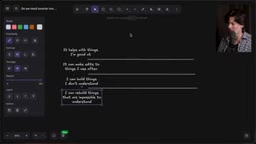
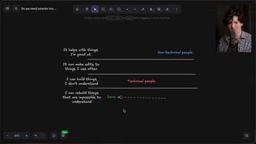
Three Tiers of People, Three Different Fates
The author divides AI beneficiaries into three tiers:
Tier One: Professional developers. They have always been the earliest beneficiaries. From Copilot's autocomplete, to Claude Code editing multi-file codebases, to now taking screenshots to report bugs and having AI autonomously fix and merge PRs, developer productivity has grown exponentially. The author's own code commits in a single week now exceed his total for all of last year.
Tier Two: Technical people. This refers to those who have dabbled in code but never became professional developers. They understand systems and have intuition, but aren't clear on the boundaries of frameworks and ecosystems. In the past, they could only build small personal tools; now, with Opus 5.5, they can fork open-source projects, reverse-engineer everyday applications, and even port maps from old games into new engines.
Tier Three: Non-technical people. They currently benefit the least, but the author believes the first two tiers can serve as a "bridge" for them—helping family and friends solve real problems, and sharing the mods and tools they've built.
Replicating a $130 Million Product in a Few Days
The author uses his own experience to support this change. Frustrated by Frame.io's slowness and expense, he spent a few days building an open-source alternative called Wan. Frame.io was acquired by Adobe in 2021 for $1.3 billion, and Wan now covers about 70% of its capabilities at the time of acquisition.

What's even more astonishing is that all of this was done in the era of Gemini 3 Pro and Opus 4.6. After Opus 5.5, the barrier has dropped even further.
Positioning differences between Frame.io and Wan
Frame.io is a cloud-based video review and collaboration platform for post-production and creative teams, with core features including timecode-accurate comments, version comparison, approval workflows, and integration with editing software. Adobe acquired Frame.io in 2021 for approximately $1.3 billion, valuing its video collaboration workflow. When the author says it covers "about 70% of capabilities at the time of acquisition," he typically means core collaboration features like upload, review, timecode comments, version management, and sharing—not all enterprise-level integrations and ecosystem. Such replication projects are feasible because AI can rapidly generate front-end interfaces, back-end APIs, and cloud storage integrations, compressing engineering work that once took a team months into days. But long-term maintenance, security, and scaling are another matter entirely.
Developers Need to Let Go of "Professional Arrogance"
The latter half of the article pivots to a sharp point: developers aren't good at creativity. The author argues that many technical decisions are just historical inertia rather than optimal solutions. He uses "why can't you commit .env files to Git" as an example, pointing out that developers often fall into "it's always been this way" thinking.

And because technical people don't understand these "rules," they dare to try seemingly absurd combinations. Some use 40,000 OBS scenes as dynamic layers, others mash up game assets from different engines—these "rule-breaking" operations are exactly what spawn unexpected innovation.
Why .env files are usually not committed to Git
.env files are used to store environment variables and often contain sensitive information like database passwords and API keys. If committed to a repository, credentials enter Git history; even if the file is later deleted, the history can still be cloned, forked, or leaked, exposing the keys. Meanwhile, different developers have different local environments, and committing .env easily causes configuration conflicts. Hence the convention is to commit a sample file without sensitive values (such as .env.example) and add the real .env to .gitignore. The author cites this example not to advocate unconditionally committing .env, but to remind us: many development rules originate from security and collaboration constraints of a particular historical period—they're worth questioning at their boundaries rather than mechanically applying.
When AI Can Rewrite the TypeScript Compiler
The author shares a landmark project: using AI to rewrite the TypeScript compiler in Rust. Initially he thought this was an impossible task for AI, but in under 20 hours it produced a working version that was 2 to 3 times faster than ts-go, ran in WASM, and achieved 99.99% accuracy on real projects.
The significance of this isn't the technology itself, but what it proves: crazy ideas once deemed "impossible" now require lower historical experience cost and fewer trial-and-error costs.
The TypeScript compiler and ts-go
The TypeScript compiler (tsc) converts TypeScript code into JavaScript and performs type checking; it was originally written by Microsoft in TypeScript itself. Its performance has long been limited by the single-threaded JavaScript runtime, with large projects often taking tens of seconds to minutes to type-check. Microsoft's official native port (commonly called ts-go in the community) is rewritten in Go, aiming precisely to dramatically improve compilation speed. Rewriting in Rust faces even tougher challenges: it requires fully reproducing TypeScript's complex type system, control flow analysis, declaration merging, and other semantics while keeping output and type diagnostics completely consistent—making it an extremely difficult engineering task. That AI could produce a working version with 99.99% accuracy in 20 hours means it can now handle large-scale, highly constrained system-level rewrites, not just generating code snippets.
The Future Belongs to Those Willing to "Break the Rules"
The author's final conclusion: smarter models don't just benefit programmers. Those willing to think across layers, unbound by existing rules, and bold enough to let AI attempt "absurd" tasks will gain unprecedented leverage.
He admits he was wrong in his judgment, and that the acceleration is only just beginning. For developers, the biggest risk isn't that AI isn't strong enough—it's that they're too accustomed to "the way things have always been done."
One-line Summary
Opus 5.5 lets technical people build complex software too, as AI leverage shifts toward non-professionals.
Paragraph Summary
The author reflects on his prediction two years ago that AI would hit a capability ceiling, and now publicly admits he was wrong. The turning point wasn't faster code generation, but Opus 5.5's qualitative leap in everyday tasks, which suddenly enabled "computer-savvy but non-coding" technical people to build complex software. The article divides AI beneficiaries into three tiers—professional developers, technical people, and non-technical people—noting that the middle tier's ceiling has been significantly raised; the author cites Wan, an open-source project that replicated about 70% of Frame.io's functionality in days, to illustrate the dramatically lowered barrier to commercial software. The latter half criticizes developers' historical inertia, arguing that technical people, by not following "rules," are more daring in innovation, and cites AI rewriting the TypeScript compiler in Rust with a highly accurate version in 20 hours as a landmark. The conclusion: the biggest risk isn't that AI isn't strong enough, but that developers are too accustomed to old ways.
Related articles

macOS Is No Longer UNIX: Apple Didn't Renew Certification, But the Technology Is Unchanged
Apple did not renew macOS's UNIX certification, and the Open Group has removed Apple's entry. This article analyzes the technical reality behind the expiration, Apple's possible intentions, and the practical impact on developers.

Building Stateful Multi-Agent Systems with Azure Cosmos DB
Based on the official Azure Cosmos DB tutorial, this article explains how to use the Agent Memory Toolkit to add shared persistent memory to a multi-agent travel planner, covering short-term, long-term, episodic, and semantic memory plus cross-session state continuity.

Production AI Agent Operations: A Three-Step Framework for Observing, Evaluating, and Optimizing
Azure Cosmos DB team proposes a three-step framework for production AI Agent operations: observe trace tracking, evaluate with LLM as a judge and regression testing, optimize cost across RU, retrieval, memory, and LLM layers.