Orca: A Free Open-Source IDE That Runs Claude, Codex, Gemini, and Grok Simultaneously

Orca uses Git worktree isolation and parallel prompting to orchestrate multiple coding agents within a single IDE.
The article introduces Orca, a free open-source IDE designed to solve the fragmentation pain point of using multiple coding agents like Claude, Codex, Gemini, and Grok simultaneously. Its core design assigns each task an independent Git worktree for natural branch isolation, supports sending the same prompt to multiple agents in parallel and merging the best result, and lets agents drive Orca to auto-open new panels for real-time monitoring. Orca also supports mobile handoff, remote SSH worktrees, GitHub integration, AI diff comments, and infinite terminal splits across Mac, Windows, and Linux, reflecting the rising value of the orchestration layer in the multi-agent era.
The Pain Point of Multi-Agent Programming: A "Juggling Act" in the Terminal
Every coding agent has its own strengths—Claude excels at reasoning, Codex is great at code completion, and Gemini and Grok each have their own merits. But when you use them all at once, your workflow turns into a juggling act: open a terminal for each agent, copy the prompt, paste it, then manually check every result. This fragmented experience is not only inefficient but also error-prone.
A YouTube channel recently introduced a tool called Orca that tries to solve this contradiction. Its core idea is simple: let multiple agents run in parallel within the same workflow instead of operating in isolation.
Orca's Core Mechanism: Git Worktree Isolation
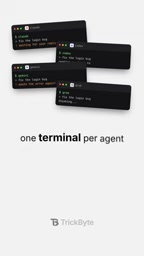
Orca's most critical design is that each task gets its own independent Git worktree. This means that when multiple agents work on different tasks simultaneously, they won't interfere with each other—each agent modifies code in its own worktree, which is effectively natural branch isolation.
According to the video, you can send the same prompt to multiple agents, compare their outputs, and finally merge the best one. This "parallel generation, selective merge" model turns what used to be serial manual switching into parallel automated collaboration.
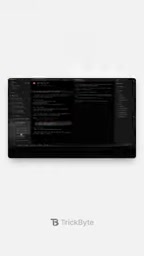
Git worktree is a feature introduced in Git 2.5 that allows multiple working directories to be checked out from the same repository simultaneously. Each directory corresponds to a different branch or commit while sharing the same .git object database. Compared with traditional multiple git clone copies, worktrees save disk space, and references such as branches, commits, and tags are naturally shared.
For multi-agent scenarios, the value of worktrees lies in the fact that each agent reads and writes files in an independent directory, so there is no filesystem-level overwriting; switching tasks also doesn't require stashing or repeated checkouts. Note that the same branch cannot be checked out by two worktrees at the same time, so Orca assigns an independent branch to each task and completes the merge later through the normal Git workflow.
Agents Driving the IDE in Reverse
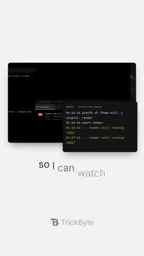
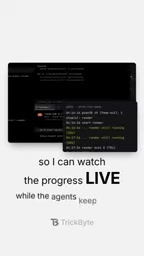
Another interesting feature of Orca is that agents can drive Orca itself. The video's author mentions that his agent automatically opens a new panel for each long-running task, so he can observe progress in real time while the agent keeps working.
This breaks the one-way relationship in traditional IDEs where "humans operate tools and tools assist humans"—agents become one of the IDE's operators. Combined with infinite terminal splits and design mode, developers can build a multi-layered monitoring view without having to switch back and forth between multiple windows.
Mobile Handoff and Remote Collaboration
Orca supports continuing tasks from your phone. This means you can keep monitoring an agent's status after leaving your computer, or give a new instruction to an agent during your commute.
In addition, it has built-in remote SSH worktrees and GitHub integration, connecting local development, remote servers, and code hosting platforms within the same interface. For teams that need to collaborate across environments, this significantly reduces the cost of context switching.
Detailed Features and Platform Coverage
Orca also offers several features that improve the daily experience:
- Design mode: Provides visual design assistance beyond coding
- AI diff comments: Lets you add comments directly on code diffs generated by agents for easier review
- Infinite terminal splits: Supports any number of terminal panels side by side
- Cross-platform: Runs on Mac, Windows, and Linux
Most importantly, Orca is free and open source and can be downloaded from orca.dev. For developers who want to leverage multiple coding agents at the same time without being slowed down by switching terminals, this is an option worth trying.
The Future Shape of Multi-Agent Workflows
Orca's emergence reflects a trend: as the number of coding agents grows, the value of the orchestration layer is rising. The capability of a single agent is certainly important, but how to make multiple agents collaborate, isolate, compare, and merge is what truly determines real productivity.
Git worktree isolation solves the conflict problem, parallel prompting solves the comparison problem, and agents driving the IDE solve the monitoring problem—together, these three designs point toward an "agent operating system"-style development environment. Of course, the actual experience of such tools still needs to be tested in real projects, but the direction itself is worth watching.
One-line Summary
Orca uses Git worktree isolation and parallel prompting to orchestrate multiple coding agents within a single IDE.
Paragraph Summary
The article introduces a free open-source IDE called Orca, designed to solve the fragmentation pain point of using multiple coding agents such as Claude, Codex, Gemini, and Grok at the same time. Its core design assigns each task an independent Git worktree, achieving natural branch isolation, and supports sending the same prompt to multiple agents in parallel, comparing outputs, and merging the best result. Agents can also drive Orca in reverse to automatically open new panels for real-time monitoring. Orca also supports mobile handoff, remote SSH worktrees, GitHub integration, AI diff comments, and infinite terminal splits, across Mac, Windows, and Linux. The article argues that this reflects the rising value of the orchestration layer in the multi-agent era.
Related articles

VERS: Editing Activation Explanations to Halve Reasoning Model Tokens
VERS guides reasoning models by editing activation explanations, cutting 45.8% of tokens on GSM8K with only a 0.82 pp accuracy drop and transferring to larger models, but losing accuracy on competition problems.

Finding Errors Is Not Enough: Selective Model Escalation for Entity-Targeted Sentiment Analysis
This study explores selective model escalation for entity-targeted sentiment analysis, comparing data collection ordering, uncertainty-driven re-examination, and model routing—finding that minority-class priority only helps at very small data volumes, the oracle upper bound far exceeds actual gains, and escalation must be tailored to each dataset.
WAS-PO: Using Whitened Advantages to Solve the Correlation Trap in Multi-Reward Reinforcement Learning
WAS-PO paper proposes whitening advantages to correct correlation bias in multi-reward RL: when rewards are correlated, naive weighted summation effectively applies Σ^{1/2}w instead of w. Experiments show training reward improves steadily, but held-out accuracy does not improve in sync, and under two rewards it actually falls behind.