Osnap Snap Wallet 2 Review: Is This Modular Lever Wallet Actually Impressive?
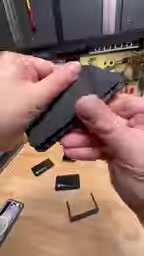
Osnap Snap Wallet 2 impresses with compliant mechanism engineering and MagSafe modularity, but stacks on weight and cost.
The Osnap Snap Wallet 2 is a modular aluminum wallet supporting three, five, or seven-card configurations that snap together. A side lever fans cards out for single-handed access, while internally cut aluminum arms act as springs — a compliant mechanism that locks modules together with a satisfying click. MagSafe support allows further stacking with other accessories. The trade-offs are real though: the seven-card version weighs 127g at ~10mm thick, double the three-card version, and feels slightly cramped when fully loaded. Alignment with Osnap's own dual-sided MagSafe battery is also imperfect. Per-module pricing means a full setup gets expensive fast, though Kickstarter early-bird discounts help. Overall, it's a refined gadget for mechanical design fans rather than a minimalist everyday carry.
A Wallet That Shapeshifts
As mobile payments become increasingly mainstream, wallets are getting thinner — but the need to carry physical cards hasn't gone away. The Verge's "Today I'm Toying With" column took a look at the Osnap Snap Wallet 2, an aluminum wallet built around a lever mechanism, whose biggest selling point is its stackable modular design.
The concept is straightforward: you pick a starting configuration — three, five, or seven cards — then expand capacity by sliding modules together. A slim three-card pocket wallet can theoretically be upgraded all the way to a seven-card MagSafe-compatible version. When the pieces lock together, they emit a satisfying click — which is exactly where the "Snap" name comes from.
The Clever Engineering Behind the Lever and Magnetic Stack
The wallet's interaction mechanics have a distinctly mechanical charm. Pull the lever on the side and your cards fan out like a hand of playing cards, making it easy to grab one single-handed.
The aluminum panel doesn't attach directly to your phone — it uses an included MagSafe adhesive plate. The MagStack module on top also lets you continue stacking other MagSafe accessories, like a kickstand, and with some practice you can pop them off one-handed.
The detail the reviewer appreciated most is that the core structure uses a compliant mechanism design — a few internal arm-like structures act as their own springs, snapping into locking notches when modules slide together.
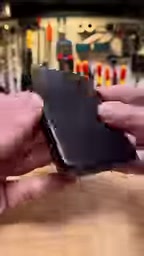
Once assembled, the whole thing feels solid, but pressing one of the arms lets you slide the modules apart again. The three-card version is more compact, though, so you may need a fingernail to pry it open.
A compliant mechanism is a structure that transmits force or motion through the elastic deformation of the material itself, rather than relying on separate components like pins or springs as traditional mechanisms do. The key advantages are fewer parts, no lubrication needed, and no wear-related play — which is why they're common in precision instruments, medical devices, and aerospace equipment. The most familiar everyday example is a disposable plastic clip, where the arms themselves act as springs. Osnap brings this concept to an aluminum wallet, using precisely cut aluminum arms that simultaneously provide structural support and elastic locking — no separate spring components required. It's a fascinating case of miniaturizing an industrial design concept into a consumer product.
Bulk and Price: The Cost of Modularity
Modularity brings flexibility, but it also brings a noticeable downside — the more modules you stack, the thicker and heavier it gets.
The lightest three-card version weighs just 57 grams, while the seven-card MagSafe version tips the scales at 127 grams. Thickness also roughly doubles, from about 5mm to 10mm. In other words, doubling the card capacity means doubling the weight and thickness.

The review also notes that seven cards is a bit of a stretch — fully loaded, it feels slightly cramped, and six cards is noticeably more comfortable in practice. Another minor gripe: this wallet doesn't align perfectly with Osnap's own dual-sided MagSafe battery — the two can technically be used together, but the experience is subpar.
MagSafe is Apple's magnetic accessory standard, introduced in 2020 alongside the iPhone 12 lineup. It uses an array of magnets arranged in a ring on the back of the phone to precisely align wireless chargers and third-party accessories. Because the interface is open, a large ecosystem of compatible accessories has emerged — magnetic wallets, kickstands, car mounts, battery packs, and more — all built around the concept of "snapping onto the back." Osnap's MagStack stacking system is built on this ecosystem: it can attach to the back of your phone while also allowing additional MagSafe accessories to stack on top of the wallet. That said, subtle differences in how different brands implement magnet layouts are the root cause of the poor alignment between Osnap's own dual-sided MagSafe battery and this wallet.
Pricey, But With Crowdfunding Discounts
Pricing is unavoidable in any discussion of this wallet. It's charged per module:
- Base version starting at $60
- MagSafe version at $70
- Each additional core module at $15
- ID cover or money clip at $35 each

- Premium color/finish versions at $40
That means a fully loaded configuration with MagSafe and multiple modules can get expensive fast. The silver lining is that it's currently in a Kickstarter campaign, with early-bird pricing that softens the blow somewhat.
Is It Worth It?
The core appeal of the Osnap Snap Wallet 2 lies in its mechanical ingenuity and expandability — the compliant mechanism, lever fan-out, and magnetic stacking all stand out in a crowded field, giving it a genuine claim to being one of the most refined wallets out there.
But its weaknesses are equally clear: the more modules you add, the bulkier it gets; the fully loaded experience is a bit compromised; compatibility with Osnap's own accessories isn't seamless; and the per-module pricing pushes the total cost up quickly. This makes it feel more like a product aimed at mechanical design enthusiasts and early adopters than at everyday users who just want something slim and minimal. If you already lean toward ultra-minimalist wallets, this might be overkill — but if you enjoy the DIY satisfaction of modularity, the clever engineering here is well worth exploring.
Related articles

A Single Prompt Triggers a Global PHP Security Storm: Is AI a Savior or a Hidden Risk?
A single AI prompt triggered a global PHP security crisis affecting Wikipedia and the Internet Archive. This article reviews the incident, analyzes the OpenAI-Amazon controversy, and explores the security paradox of lowered vulnerability discovery barriers in the AI era and developer response strategies.

When AI Is Taken Away: How Reliance on Shortcuts Undermines Your Problem-Solving Resilience
A study of 1,222 people found that after using AI to answer questions, once AI was removed, people gave up on more problems than a control group that never used AI. The article analyzes the impact of AI reliance on learning resilience and metacognition, and explores design implications for AI learning tools.

Carta and NewView Partner to Let Startup Employees Cash Out Equity Early
Carta and NewView Capital partner to simplify startup tender offers, helping employees sell equity early. Analysis of the mechanism, liquidity pain points, and impact.