Oura Ring Adds Cardiovascular Tracking: Cardio Effort and VO2 Max
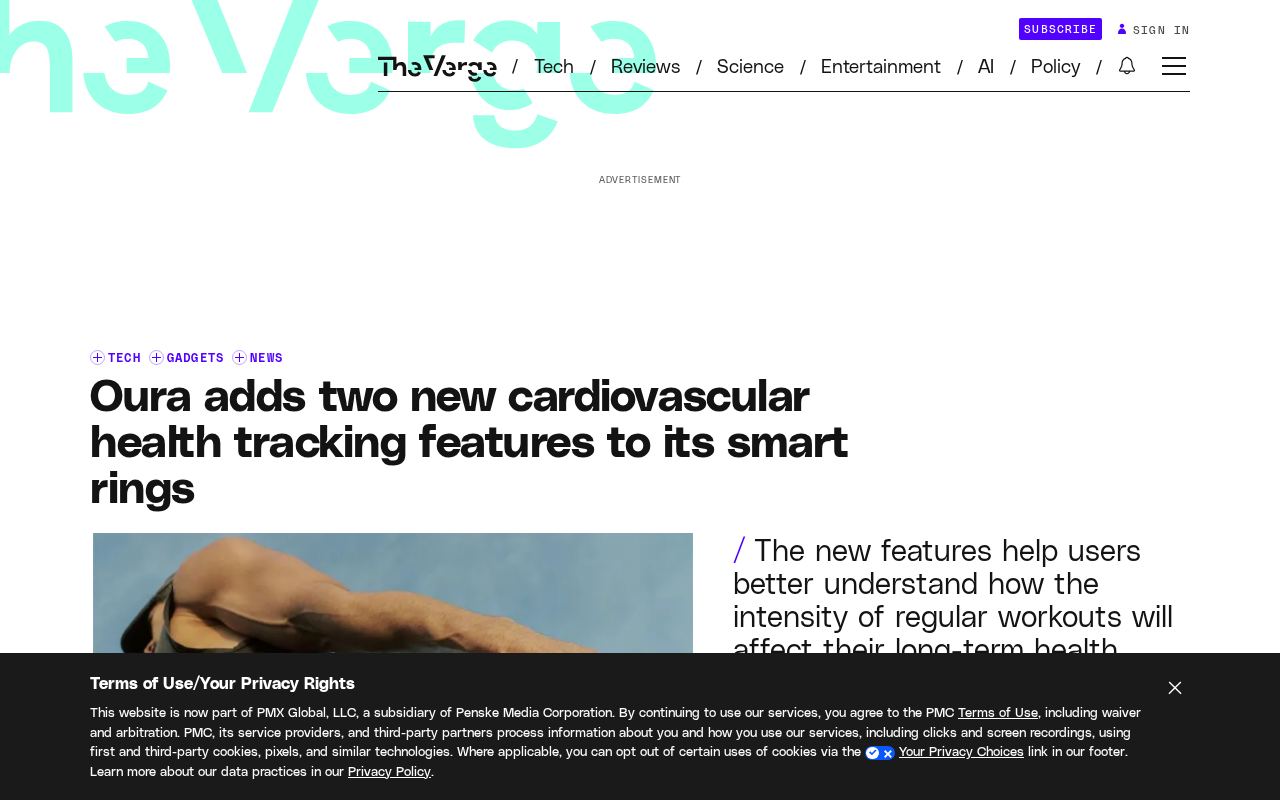
Oura Ring adds Cardio Effort and automatic VO2 Max, shifting from recording data to guiding exercise decisions.
Oura has added Cardio Effort and automatic VO2 Max cardiovascular tracking features to its smart ring. Cardio Effort combines exercise duration and intensity to assess cardiovascular load during a single workout rather than simply recording heart rate; automatic VO2 Max changes the previously manual Cardio Capacity measurement to automatic daily estimation, reflecting long-term aerobic capacity trends. The two features complement each other—one judges whether a single training session's intensity is sufficient, the other tracks endurance trends over months. The article notes that the focus of this update is not on hardware but on data interpretation, aligning with the wearable industry's shift from stacking sensors to providing actionable recommendations, and representing a step in Oura's extension from sleep tracker to all-day health companion. However, optical sensors have limited accuracy during intense exercise, and results should be treated as trend references rather than clinical evidence.
Oura is adding two cardiovascular health tracking features to its smart ring—Cardio Effort and automatic VO2 Max (previously called Cardio Capacity)—designed to help users understand how daily exercise affects long-term health and whether they need to increase or decrease exercise intensity.
What the Two Features Solve
Cardio Effort focuses on "exercise effort." Rather than simply recording heart rate levels, it combines exercise duration and intensity to assess the cardiovascular system's load during each workout. Users can see the actual level of cardiac stimulation from a run or bike ride, rather than just fixating on step count or calories.
Automatic VO2 Max changes the previously manual "Cardio Capacity" measurement to an automatic process. VO2 Max is a core indicator of cardiorespiratory endurance—higher values generally indicate stronger aerobic capacity. By automating it, Oura means users don't need to deliberately follow a testing protocol; the ring estimates this value during daily activities on its own.
The two features complement each other: one assesses whether a single workout's intensity is sufficient, the other tracks long-term aerobic capacity trends.
VO2 Max (maximal oxygen uptake) is the gold-standard metric for aerobic endurance in exercise physiology, referring to the maximum amount of oxygen the body can take up and utilize per minute during intense exercise, typically expressed in mL/(kg·min). It comprehensively reflects cardiac pumping capacity, blood oxygen-carrying capacity, and muscle oxygen utilization efficiency. Most adults have VO2 Max values in the 30–50 range, while endurance athletes can exceed 60. This metric shows a significant negative correlation with all-cause mortality and cardiovascular disease risk, which is why it's widely adopted by wearable devices. Traditional laboratory measurement requires progressively increasing load on a treadmill while wearing a mask for respiratory gas analysis, whereas consumer-grade devices typically estimate it indirectly through the relationship between heart rate and exercise speed, with accuracy significantly affected by individual differences.
From "Recording Data" to "Guiding Decisions"
The focus of Oura's update isn't on hardware but on data interpretation. Smart rings have long been able to track metrics like heart rate and heart rate variability, but ordinary users often don't know how to act on these numbers. Cardio Effort and automatic VO2 Max attempt to answer a more practical question: Is the current exercise volume benefiting cardiovascular health or falling short?
This approach aligns with the wearable industry's overall shift—from stacking sensors to providing actionable recommendations. For Oura, the cardiovascular dimension is also a key step in extending its positioning from "sleep tracker" to "all-day health companion."
Heart rate variability (HRV) refers to the degree of fluctuation in the time intervals between consecutive heartbeats, and is an important indicator for assessing the balance of the autonomic nervous system. Higher HRV typically reflects active parasympathetic nerve activity and good physical recovery; persistently low HRV may indicate accumulated fatigue, excessive stress, or insufficient sleep. The Oura ring estimates HRV by continuously monitoring finger-tip blood volume changes at night, and combines it with body temperature, resting heart rate, and other data to generate a "Readiness" score. Understanding HRV helps users realize that the value of wearable devices lies not just in single-point measurements, but in the cross-referencing of recovery status and training load after multi-metric integration.
Practical Value for Users
For people with regular exercise habits, these two features provide quantitative references: Cardio Effort can help determine whether a workout reached the expected intensity, avoiding "ineffective exercise"; automatic VO2 Max can reflect aerobic capacity trends over several months, serving as a basis for adjusting training plans.
It's worth noting that the optical sensors in smart rings typically have lower data accuracy during intense exercise compared to chest-strap heart rate monitors. Oura's VO2 Max estimates are more suited as trend references rather than clinical-grade measurements. Users should treat them as auxiliary tools for daily health management, not as a basis for medical diagnosis.
Optical heart rate sensor (PPG) estimates heart rate by using LED light sources to illuminate the skin and detecting fluctuations in reflected light intensity caused by blood volume changes. Its advantages are low power consumption and suitability for long-term wear, but during intense exercise it's susceptible to interference from arm movement, skin sweat, and ambient light, and its sampling frequency is lower than that of ECG signals, so lag or deviation may occur in high-intensity ranges. Chest-strap heart rate monitors use electrocardiogram (ECG) principles to directly capture cardiac electrical activity, with accuracy closer to medical grade. This is precisely the technical reason why various devices often recommend pairing with a chest strap during exercise scenarios and position optical estimation results as "trend references."
Summary
Through Cardio Effort and automatic VO2 Max, Oura advances cardiovascular health tracking from "reading numbers" to "making judgments." This update strengthens the ring's connection between exercise and long-term health, and gives Oura an additional differentiating selling point in the smart ring market's health feature competition.
One-line Summary
Oura Ring adds Cardio Effort and automatic VO2 Max, shifting from recording data to guiding exercise decisions.
Paragraph Summary
Oura has added two cardiovascular tracking features to its smart ring: Cardio Effort and automatic VO2 Max. Cardio Effort combines exercise duration and intensity to assess the cardiovascular system's load during a single workout, rather than simply recording heart rate; automatic VO2 Max changes the previously manual Cardio Capacity measurement to automatic daily estimation, reflecting long-term aerobic capacity trends. The two features complement each other—one determines whether a single training session's intensity is sufficient, the other tracks endurance trends over several months. The article notes that the focus of this update is not on hardware but on data interpretation, aligning with the wearable industry's overall shift from stacking sensors to providing actionable recommendations, and representing a step in Oura's extension from sleep tracker to all-day health companion. However, optical sensors have limited accuracy during intense exercise, and results should be treated as trend references rather than clinical evidence.
Related articles

OpenAI Partners with Shield: How the Astra Agent Revolutionizes IT Troubleshooting
OpenAI and Shield launch the Astra agent, which autonomously logs into computers and legacy systems to fix IT issues in real time, 35-40% faster than traditional models, with humans involved only when judgment is needed.

iPhone Duo Battery Life Tested: One Charge a Day Is Unavoidable, and the Large Screen Is the Culprit
iPhone Duo battery test: heavy use needs at least one charge a day, and about 30% remains after 6.5 hours of screen-on time. How often the large screen is unfolded is key; a MagSafe battery pack helps, and long-term degradation is also worth watching.

Kimi K3.1 Pro Open-Sourced: 2.8 Trillion Parameters Close In on Opus
Moonshot releases the open-source MoE model Kimi K3.1 Pro, with 2.8T total parameters and 104B activated, trailing Opus 5.5 by under 1 point on Terminal Bench 4.0.