Overseas Blogger Tests Local Deployment of 100B-Parameter MoE Model: Key Lessons on Quantization and Tool Calling

Blogger tests local deployment of a 100B MoE model on a mini PC, revealing key effects of quantization and engine choice.
Overseas blogger Doug Ware spent two weeks testing Alibaba's open-source Qwen 3.8 Flash Next (125B-parameter MoE, 6B activated per token) on a 128GB Strix Halo mini PC and an NVIDIA CUDA workstation. The model beats GPT-6 Luna and Cloud Haiku 5.5 but needs 111GB to load. Using Strata and GUFO engines, he found 4-bit quantization caused 42% tool-call failures from an extra arguments parameter (7% at 3-bit); Strata dropped space tokens, causing 13% failures, while GUFO cut total failures to 10%. Renaming tool parameters eliminated a whole error class. GUFO reached 1400 TPS prefill and 40 TPS output on Strix Halo, enough for daily use, prompting him to reallocate tasks.
Can a 100B-Parameter Model Run on a Mini PC?
An overseas blogger (Doug Ware) spent two weeks testing Alibaba's open-source model Qwen 3.8 Flash Next (a 125B-parameter MoE model activating 6B parameters per token) on a Strix Halo mini PC with 128GB of RAM and an NVIDIA CUDA workstation. The model surpasses GPT-6 Luna and Cloud Haiku 5.5 on benchmark scores, but local deployment proved far more difficult than expected. Through the Strata and GUFO inference engines, plus repeated tuning, the blogger ultimately turned an unusable experience into a daily-usable tool. The whole process revealed several core tensions in local LLM deployment: quantization precision, tool-calling stability, and inference engine choice.
Why a 100B-Parameter MoE Model Is Worth Trying Locally
Qwen Flash Next uses a Mixture-of-Experts (MoE) architecture that only activates part of its parameters during generation. The blogger's explanation is straightforward: get the intelligence of a 125B-parameter model using the compute of a 6B-parameter one. By contrast, his previous daily driver, Qwen 3.8 27b, is a dense model that runs slowly on Strix Halo because all 27B parameters participate in computation.
Qwen Flash Next scores better on benchmarks, but at a cost in size: the chosen version requires 111GB to load, versus only 23GB for the 27b version. It wasn't until the Strata project appeared that the blogger saw surprising performance data on Reddit and decided to verify it himself.
Mixture-of-Experts (MoE) architecture works by splitting a model into multiple "expert" subnetworks (each typically a feed-forward network) along with a gating network (router). For each input token, the gating network activates only a few experts (e.g., top-2) rather than engaging all parameters. As a result, a model with a huge total parameter count can have far less actual computation than a dense model of equivalent size. This explains how Qwen 3.8 Flash Next can deliver the intelligence of a 125B-parameter model with only 6B activated parameters: most parameters stay "dormant" and are called only when needed. The trade-off is that all parameters must still be loaded into memory, which is where the 111GB footprint comes from. MoE's challenges include load imbalance and communication overhead, but in single-machine inference its main advantage is dramatically lowering the compute cost per token, making it possible to run large models on consumer hardware.
Inference Engines: From Llama.cpp to Strata and GUFO
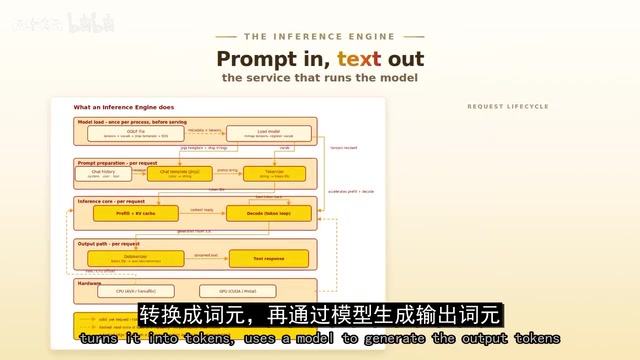
The blogger's daily inference engine is Llama.cpp, which offers good compatibility and broad hardware support. But a 111GB model requires targeted optimization. Strata and the ultimately chosen GUFO are both inference engines designed specifically for such large models, and both provide OpenAI-compatible APIs for easy integration with existing applications.
Testing covered multiple combinations: Strata paired with different quantization versions, and GUFO's performance on Strix Halo. The blogger also ran the same model in the cloud via OpenRouter as a control.
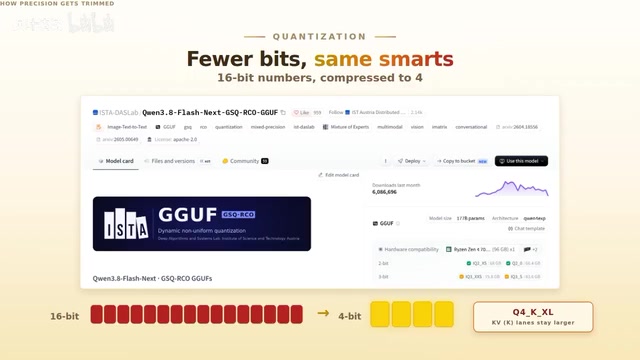
Quantization is the process of converting model weights from high precision (e.g., 16-bit floating point) to lower precision (e.g., 4-bit integers), aiming to reduce model storage footprint and memory bandwidth requirements, thereby improving inference speed. Common quantization methods include GPTQ, AWQ, and Unsloth's dynamic quantization. Lower bit-width means smaller models and faster speed, but also greater risk of precision loss. The article mentions 4-bit quantization (Q4K XL) and 3-bit quantization (IQ3S), where "K" and "S" represent different quantization granularities and calibration strategies. Notably, quantization's effect on model behavior is not linear: some low-bit quantizations may actually reduce specific error patterns through a regularization effect, though this is highly dependent on the model and task. In practical deployment, choosing a quantization version requires evaluation against the specific task (such as tool calling), not just speed or perplexity metrics.
Quantization: 2-bit Actually Makes Fewer Errors Than 4-bit
The blogger was initially skeptical of quantization, worried about quality loss from precision reduction. He started with Unsloth's 4-bit quantization (Q4K XL), the larger and slower option. The manual test prompt was "draw a detailed SVG of a trout playing tennis," deliberately vague to let the model improvise.
Performance on Strix Halo was pleasantly surprising: cold-start prefill reached several hundred tokens per second, with output steady at 40+ TPS. The CUDA workstation was much faster, with prefill at thousands of tokens per second and output sustained between 100 and 2100 TPS. Speed was usable, but detailed inspection exposed problems.
The key finding came from tool-calling errors. With 4-bit quantization, 42% of tool calls failed for a highly consistent reason: the model wrote an extra arguments parameter in the tool definition, causing the call to fail. Switching to the ISTA team's 3-bit quantization (IQ3S) reduced this type of error to 7%. The blogger noted that this tendency to "write extra parameters" seems deeply embedded in the model's training, and it reproduced when running the same model on OpenRouter.
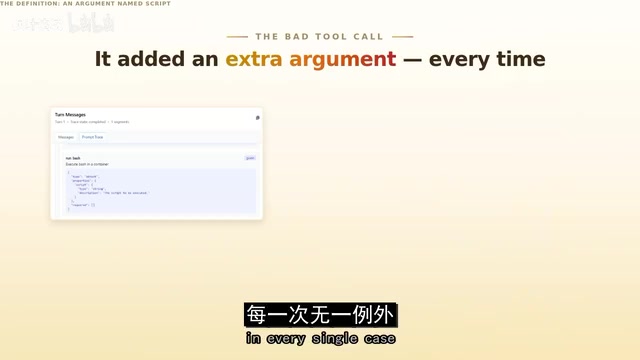
Tool calling is a key capability for LLMs to interact with external systems. Based on the user request and provided tool definitions (usually described in JSON Schema), the model generates a JSON object containing a function name and parameters, which an external framework executes. The tool definitions themselves are fed into the model as part of the prompt, so their wording, parameter names, and structure directly influence the model's generation behavior. The case in the article shows that the model may systematically generate extra parameters (such as arguments), often stemming from patterns in training data or biases introduced by quantization. Renaming parameters or adjusting descriptions can steer the model away from the error path. Evaluating tool-calling reliability requires counting failure rates and categorizing error types, not just looking at end-to-end task success rates. For local deployment, how the inference engine handles JSON parsing and tokenization also affects tool-calling stability.
The Chain Reaction of Tool-Calling Failures and How to Fix It
Since the tool definitions were controlled by the test harness, the blogger simply modified them, renaming the script parameter, and the entire class of errors disappeared. This carries an important lesson: tool descriptions are part of the prompt, and tuning them can improve both quality and cost simultaneously.
But another error followed: the inference engine randomly dropped space tokens in code, causing about 13% of tool calls to fail. This problem couldn't be fixed at the framework level. The blogger switched to GUFO, designed specifically for Strix hardware, and with 4-bit quantization the total failure rate dropped to 10%—all normal code-execution errors rather than systematic defects. On GUFO, prefill was about 1400 TPS and output about 40 TPS, fully usable.
Implications for Local AI Deployment
The blogger's conclusion is pragmatic: continue using the proven 27b model on the CUDA workstation for most tasks, but the Strix Halo results made him reconsider task allocation—certain workloads can go to the mini PC, saving workstation resources.
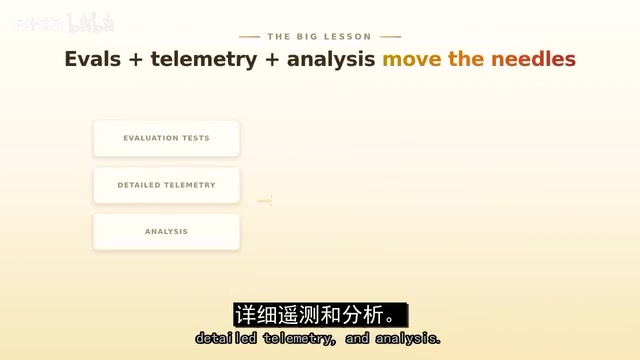
The entire testing process was itself a lesson: model evaluation and end-to-end visibility are indispensable. The blogger entered the test with skepticism and came away with a powerful tool. For developers wanting to run large models locally, several lessons are worth remembering: the choice of quantization version significantly affects tool-calling reliability, so don't look only at speed; the wording of tool definitions can be a lever for fixing model behavior; differences between inference engines may matter more than the model itself, and sometimes switching engines is more effective than tuning the model.
The value of the open-source community came up repeatedly during this test—Strata, GUFO, Unsloth's quantization work, and the users sharing performance data on Reddit together turned local deployment of a 100B-parameter model from impossible into usable.
Strix Halo is an accelerated processing unit (APU) from AMD that integrates CPU and GPU, notable for supporting up to 128GB of unified memory (UMA) that the GPU can access directly. This allows it to load large models far exceeding the VRAM capacity of traditional consumer graphics cards (such as the 111GB MoE model) without relying on multiple GPUs or system memory swapping. However, its memory bandwidth and compute unit scale still lag behind high-end discrete GPUs (such as NVIDIA CUDA workstations), so prefill and output speeds are lower. Strix Halo targets mini PCs and mobile workstations, suited to local inference scenarios that are sensitive to power efficiency and size but need large memory. The tests in the article show that although absolute speed falls short of a CUDA workstation, its 40 TPS output already meets daily interaction needs, offering a new hardware option for local large-model deployment.
One-line Summary
Blogger tests local deployment of a 100B MoE model on a mini PC, revealing the key impact of quantization and engine choice.
Paragraph Summary
Overseas blogger Doug Ware spent two weeks testing Alibaba's open-source Qwen 3.8 Flash Next (a 125B-parameter MoE model activating 6B parameters per token) on a 128GB Strix Halo mini PC and an NVIDIA CUDA workstation. The model beats GPT-6 Luna and Cloud Haiku 5.5 on benchmarks but needs 111GB to load. Tuning with the Strata and GUFO inference engines, he found that under 4-bit quantization 42% of tool calls failed due to an extra arguments parameter, dropping to 7% with 3-bit quantization; Strata randomly dropped space tokens, causing 13% failures, while switching to GUFO cut the total failure rate to 10%. Renaming tool-definition parameters eliminated an entire class of errors, making tool descriptions a tuning lever. Ultimately GUFO on Strix Halo reached 1400 TPS prefill and 40 TPS output, sufficient for daily use, prompting the blogger to reallocate tasks between workstation and mini PC.
Related articles
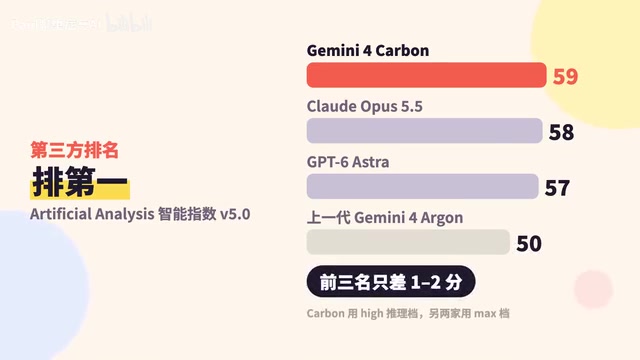
Google Releases Gemini 4 Carbon: Its Strongest Model Yet, Debuting with a Cybersecurity Focus
Google releases Gemini 4 Carbon, calling it its strongest model, with a cybersecurity focus. It tops the third-party composite ranking at 59 points but leads by only one or two. This article analyzes its security test results, staged rollout, token pricing, and the divergence between self-reported and third-party tests on hallucinations.

LangChain Adds SchemagateRetriever: On-Demand Table Retrieval Cuts Text-to-SQL Prompts by 92.9%
LangChain docs add SchemagateRetriever: retrieves only the tables needed for text-to-SQL with permission filtering, cutting median prompt size by 92.9% on Spider 2.0 large schemas via offline BM25 selection with no model calls.

Multi-Step AI Agent Guardrail in Practice: Fact-Change Detection Drives False-Alarm Rate to 0%
Developer shares first version of a multi-step AI Agent guardrail: re-verifying dependency facts before irreversible actions cut false alarms from 50% to 17% across 23 scenarios, then to 0% via conservative normalization without lowering catch rate. Runs on local qwen2.5-7b.