OWL: An Open-Source Multi-Agent Framework for Real-World Task Automation
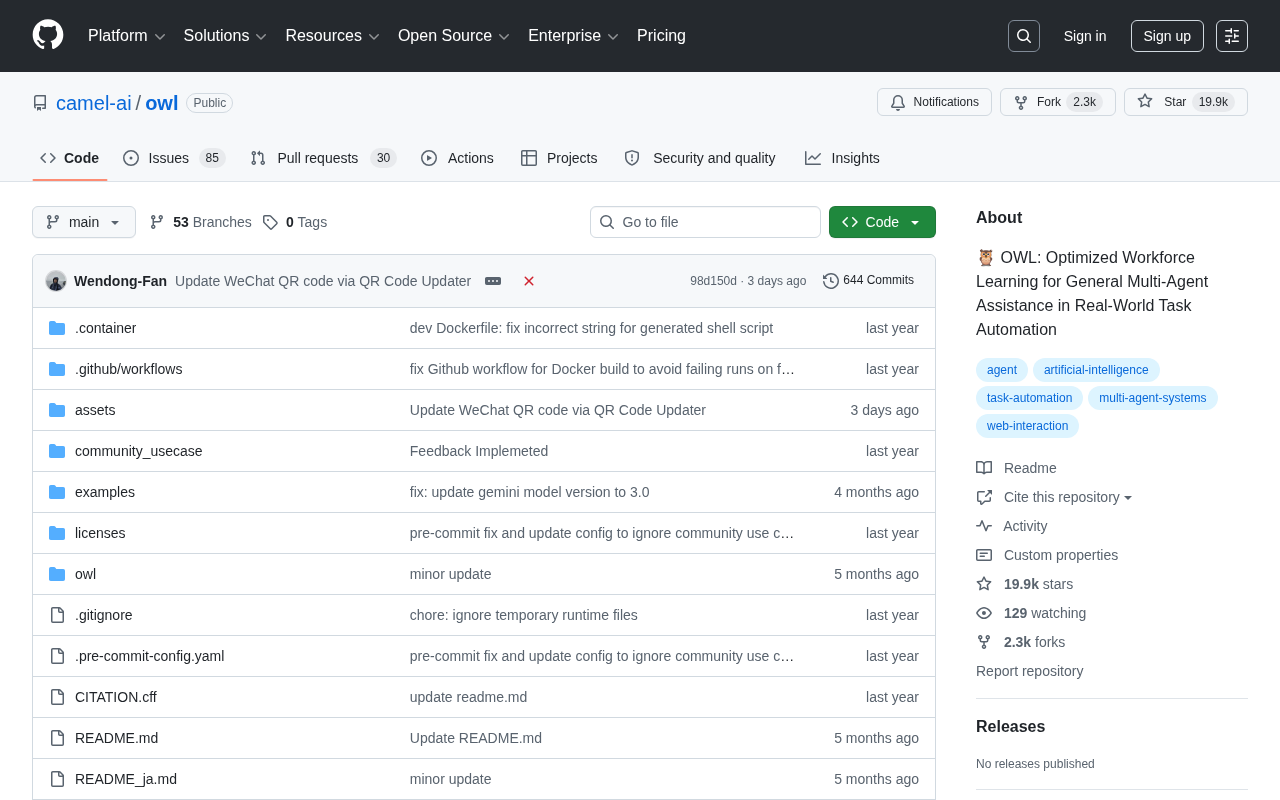
OWL is camel-ai's open-source multi-agent framework that uses team-based role division to automate complex real-world tasks.
OWL (Optimized Workforce Learning) is an open-source multi-agent collaboration project by the camel-ai team, built on the CAMEL research framework, with over 19,000 GitHub Stars. Its core idea is to organize multiple AI agents into specialized teams — with distinct roles for planning, execution, and verification — overcoming the limitations of single LLM agents on long-chain, multi-step tasks. OWL targets real-world task automation such as information retrieval, document processing, and web operations, rather than remaining at the demo stage. Together with CAMEL, it forms a complete path from foundational multi-agent research to practical engineering, serving as a key reference alongside AutoGPT and MetaGPT.
OWL: A Multi-Agent Collaboration Framework for Real-World Task Automation
As multi-agent systems emerge as a hot topic in AI deployment, the open-source project OWL (Optimized Workforce Learning) from the camel-ai team is drawing significant attention from the developer community. This owl-branded project has already earned over 19,000 GitHub Stars and 2,200+ Forks, making it a noteworthy open-source solution in the multi-agent collaboration space.
What Is OWL
OWL stands for Optimized Workforce Learning. The name reflects its core philosophy: organizing multiple AI agents into a collaborating "team" that works together to automate complex, real-world tasks.
Built in Python, OWL is part of the camel-ai ecosystem. camel-ai is the maintainer of CAMEL, a well-known multi-agent research framework. OWL can be understood as an engineering implementation built on top of that foundational research, targeting General Multi-Agent Assistance. Rather than solving a single task, OWL aims to provide an agent collaboration mechanism that generalizes across a wide variety of real-world scenarios.
CAMEL (Communicative Agents for Mind Exploration of Large Language Model Society) was a groundbreaking multi-agent framework introduced in 2023 by researchers from Stanford and other institutions. It pioneered the "Role-Playing" paradigm: two large language models each take on the roles of "user" and "assistant," autonomously completing tasks through continuous dialogue without requiring human intervention at every step. This design demonstrated that LLMs can form effective autonomous collaboration loops, laying an important foundation for subsequent multi-agent research. OWL can be seen as an engineering extension of this paradigm — evolving from two-role dialogue to multi-role task division, and shifting the focus from academic validation toward real-world task execution.
Why Multi-Agent Collaboration Matters
A single large language model agent often struggles with long-chain, cross-tool, multi-step tasks: it can lose context midway, lacks the ability to autonomously invoke external tools, and has limited capacity for task decomposition and self-verification. Multi-agent architectures address these limitations through role specialization — different agents handle planning, execution, and verification respectively — improving the overall reliability of task completion.
OWL's emphasis on "Optimized Workforce Learning" is built around this idea: by optimizing how agent teams divide and coordinate their work, the system can perform closer to the efficiency and robustness of a human collaborative team in real-world tasks. This is also the shared direction being explored by projects like AutoGPT, MetaGPT, and CAMEL.
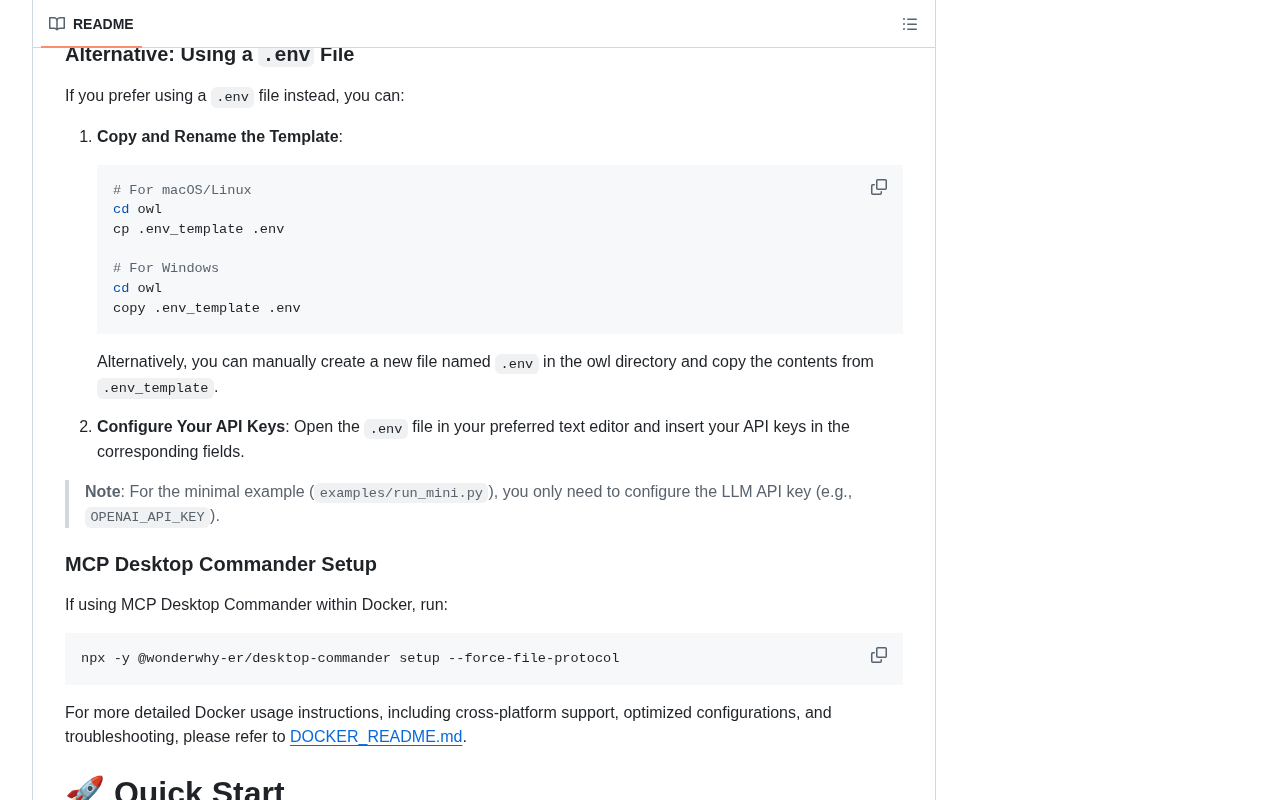
AutoGPT, MetaGPT, and CAMEL represent three distinct approaches in the multi-agent space. AutoGPT centers on a single autonomous agent that loops through tool calls and self-reflection to achieve goals — it was the earliest "autonomous agent" experiment to capture widespread attention. MetaGPT introduces role-division metaphors from software engineering, assigning agents to roles like product manager, engineer, and tester, with a focus on validating multi-role pipelines for code generation tasks. CAMEL takes a more research-oriented approach, emphasizing controllability and analyzability of inter-agent dialogue mechanisms. Within this landscape, OWL leans toward the engineering-practical side, aiming to balance collaboration flexibility with execution reliability across general-purpose task scenarios.
Real-World Task Automation
OWL's defining keyword is Real-World Task Automation. Unlike many agent projects that remain at the demonstration stage, OWL emphasizes applying its collaboration mechanisms to practically usable task scenarios — such as information retrieval, document processing, web browsing, and data organization — workflows that require multi-step coordination.
This type of "general assistant" agent system is fundamentally exploring a larger proposition: can AI autonomously break down goals, schedule tools, coordinate progress, and self-correct when problems arise — much like a well-trained team? OWL places "Workforce" front and center in its name, a direct expression of this product philosophy.
Open-Source Ecosystem and Community Traction
Nearly 20,000 Stars signals that OWL has accumulated considerable developer mindshare. As an open-source Python project, its value lies not only in direct usability, but also in providing researchers and engineers with a reproducible, extensible, and hackable multi-agent experimentation platform.
For developers looking to enter the multi-agent space, OWL and its underlying CAMEL framework together form a complete learning path from research to engineering. For a deeper understanding of specific capabilities, supported tool integrations, and benchmark performance, the project's official repository and latest documentation remain the authoritative source.
Summary
OWL represents a meaningful step forward in taking multi-agent collaboration from "concept demonstration" to "real-world task deployment." With team-based collaborative learning at its core, it aims to overcome the limitations of single-agent systems on complex tasks. For developers tracking the frontier of AI agents, this is an open-source project well worth following and experimenting with.
Note: This article is based on publicly available information from the GitHub repository. For specific features and performance data, please refer to the official repository.
Related articles
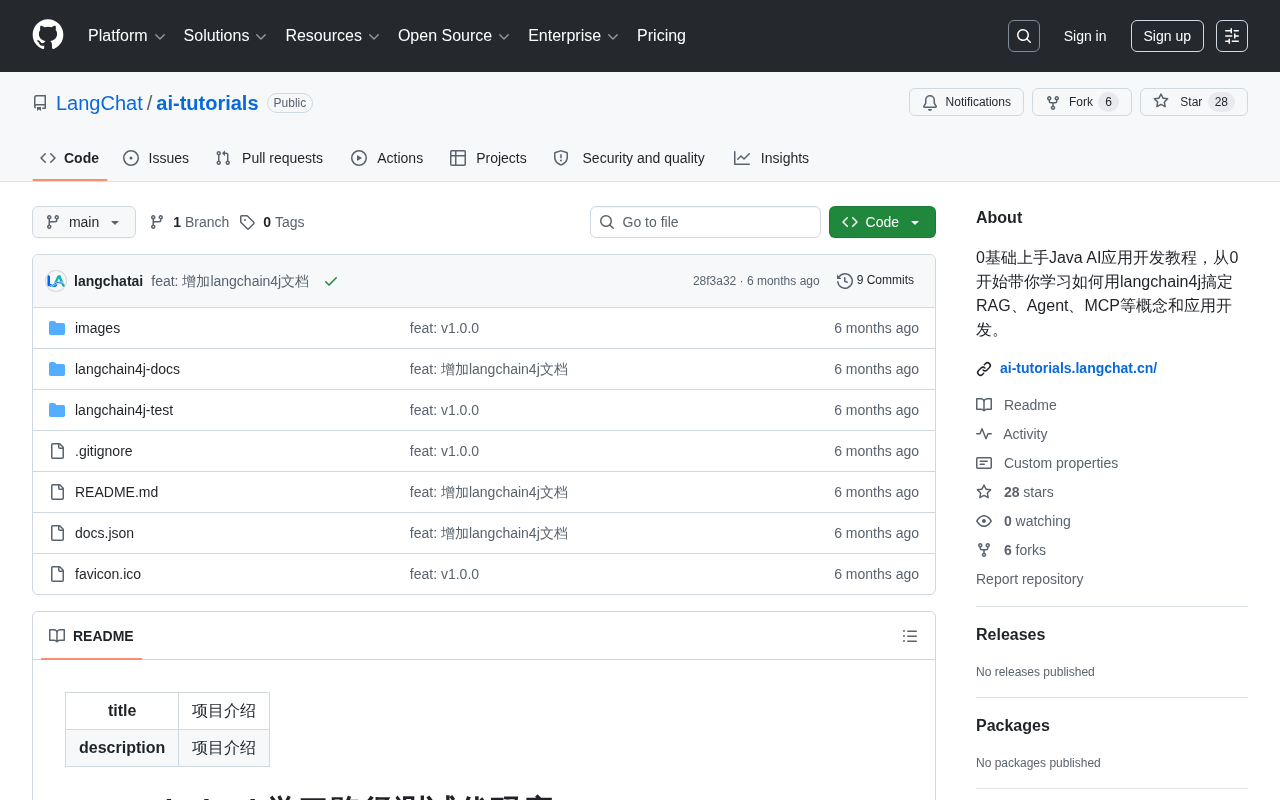
LangChat ai-tutorials: A Beginner's Guide to AI App Development for Java Developers
LangChat ai-tutorials is a beginner-friendly Java AI tutorial series built on langchain4j, covering RAG, Agent, and MCP for Java developers entering AI development.
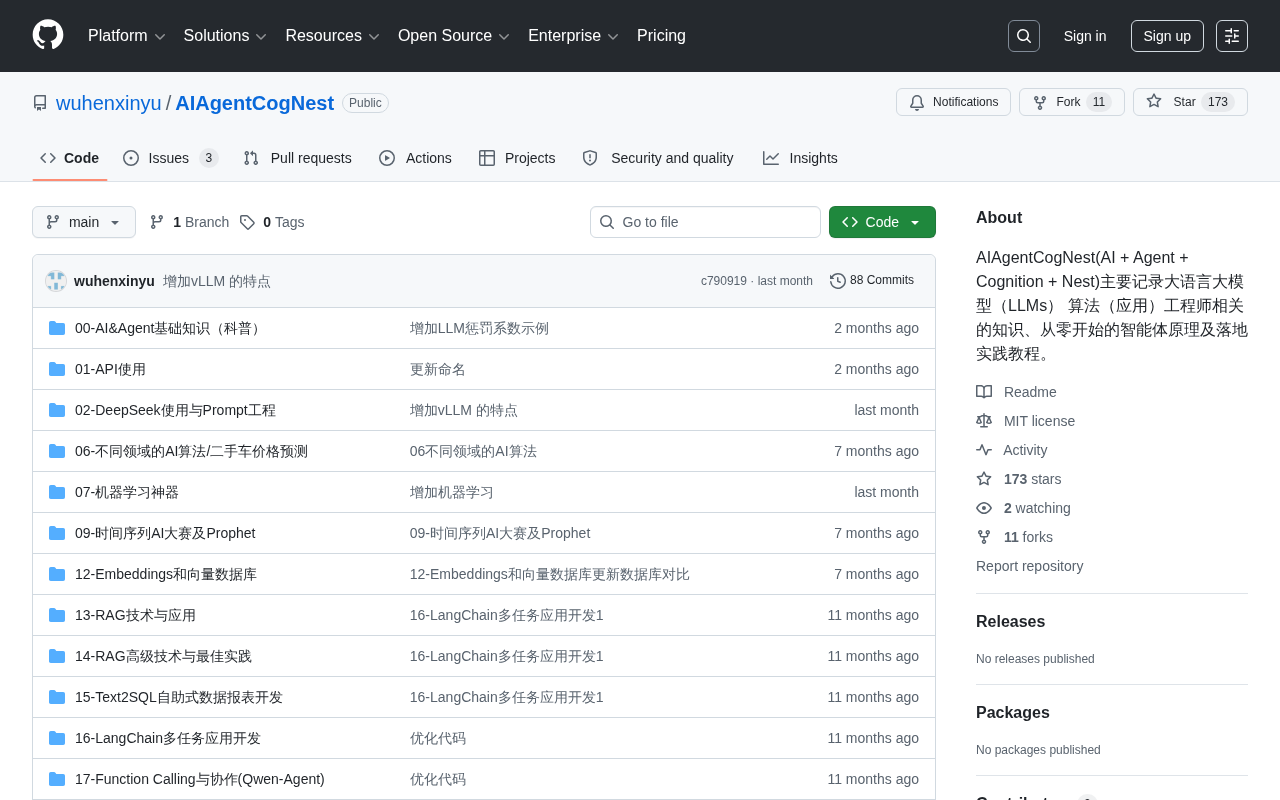
AIAgentCogNest: An Open-Source AI Agent Knowledge Incubation & Development Tutorial Project
AIAgentCogNest is an open-source AI Agent knowledge incubation project offering structured LLM application development tutorials for developers, engineers, and teams transitioning to AI.
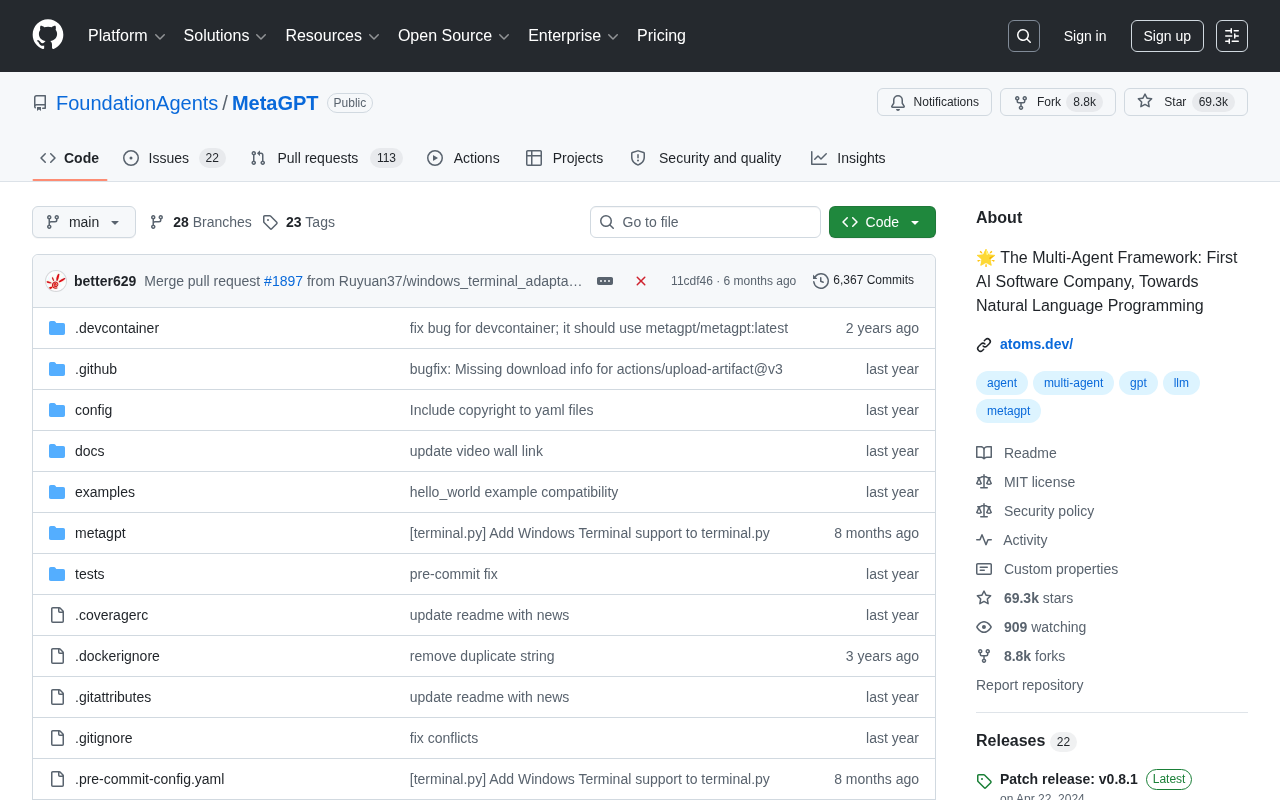
MetaGPT Explained: Building the First AI Software Company with a Multi-Agent Framework
MetaGPT is an open-source multi-agent framework with 67K+ GitHub stars that simulates a full AI software company — with PM, architect, and engineer agents — to enable natural language programming.