Palmer Luckey Interview Goes Viral: From Ukraine to a Floating City, the Complete Worldview of a Tech Hawk
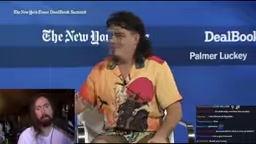
Palmer Luckey's interview covers Ukraine, public executions, and the floating city Slab, arguing power should be visible and accountable.
This Palmer Luckey interview went viral for its candid, provocative views. He refuses to cast Trump as anti-democracy, argues Europe failed to prepare before the war, and opposes executives deciding foreign policy. On the death penalty, he says it should be rare but public and non-medicalized to restrain government abuse—extending this to war reporting. He reveals the floating city Slab hit a billion-dollar valuation in 2017, designed to bypass industry-strangling regulations in international waters three miles out, not as a utopian escape.
Why This Interview Went Viral
A video of Palmer Luckey being interviewed has been circulating on YouTube, with a streamer playing it segment by segment and commenting live. On the Ukraine war, Trump, public executions, media transparency during the Vietnam War, and the floating city Slab, Luckey gave remarkably candid and even provocative answers. Throughout the interview he clashed head-on with mainstream narratives multiple times: he called "we are a republic, not a democracy," said flatly "I hate the term 'arsenal of democracy,'" and compared corporate executives to "dogs on a leash." When the topic turned to the floating city, he revealed that he and a few friends had already taken the project to a billion-dollar valuation back in 2017.
The Ukraine Question: His Real Read on Trump
"Trump Was Put in an Impossible Position"
When the host pressed him on which side Trump really stands on regarding Ukraine, Luckey refused to accept the framing. He argued that in his first term Trump publicly called out European countries for over-relying on Russian oil and opposed the relevant pipeline project, only to be laughed at by the entire U.N. General Assembly. Luckey used this to remind viewers that Europe had not genuinely prepared before the war broke out. He noted that after the war began, money flowing from Germany to Russia at one point exceeded the amount flowing to Ukraine, and that according to smart thermostat data, European households generally raised their winter indoor temperatures by only about one degree. "They won't even put on a sweater to save Europe."
"Arsenal of Democracy" was a phrase coined by Franklin D. Roosevelt in his December 1940 fireside chat, when the U.S. had not yet formally entered the war; Roosevelt used it to call on American industry to produce weapons for Britain and other anti-fascist nations, positioning the U.S. as the logistical base of the democratic camp. Luckey explicitly says he hates the term, and behind that is his deliberate distinction between a "republic" and a "democracy"—in his view, the core of American constitutional design is representative government, separation of powers, and protection of individual rights, not the export of weapons driven by direct popular will. This is not a purely academic debate; it ties directly into the policy argument over whether the U.S. should serve indefinitely as Europe's security guarantor.
Corporate Executives Shouldn't Set Foreign Policy
Luckey stressed that which side to sell weapons to and which war to support should not be decided by executives of large corporations. "I'm a dog on a leash, and I have to be treated that way." He supports Ukraine and claims that in public settings and on social media he has stood with Ukraine more clearly than most Republicans, but he also opposes simply painting Trump as "on the opposite side of democracy." In his view, if critics think that excoriating Trump will influence him, they haven't understood how politics has fundamentally worked over the past decade.
The Death Penalty and Public Executions: A Libertarian's Governing Logic
"Executions Should Be Violent, Not Medicalized"
In the interview, Luckey advanced a position quite representative among libertarians: the state should rarely use the death penalty, but when it does, it should not be medicalized and hidden away. He opposes having doctors who have sworn to protect life carry out lethal injections, arguing that executions should be carried out by law enforcement and military institutions that hold the monopoly on violence—and should be broadcast publicly.
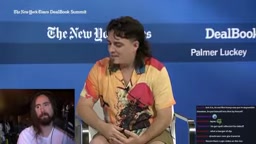
His core argument is not "the harsher the punishment, the better," but that transparency itself serves as a check on government abuse of power. If the government is going to kill someone, it must publicly state who this person is and why they deserve to die. He noted that some U.S. states abolished the death penalty precisely because public executions of people the public deemed undeserving of death triggered a backlash. Publicity, therefore, is the mechanism that constrains the overuse of the death penalty.
Lethal injection was widely adopted by U.S. states in the late 20th century, originally intended to make executions appear "humane and painless," and often involved medical personnel. But medical ethics organizations have long opposed physician participation in executions as violating the principle of "do no harm"; meanwhile, multiple lethal injections have suffered drug shortages and failed venous access, spawning lawsuits over whether they cause pain. What Luckey calls "medicalization" refers precisely to this process of packaging state violence as a clinical procedure. His position overlaps with the "transparency as restraint" logic of some abolitionists, but reaches the opposite conclusion: not abolition, but a return of executions to a public, visible form of state violence.
War Transparency: Vietnam and the Gulf War
The host then extended the "publicity" logic to war reporting. Luckey admitted he hasn't thought about this very deeply, but leans toward supporting greater transparency. He mentioned how live television coverage during the Vietnam War strengthened the anti-war movement, while citing his father's view: what actually ended the anti-war movement was the abolition of the draft, not the brutality of the war itself.

He posed a counterfactual: if the public had only had access to government propaganda during the Vietnam War, how would the war have ended? The Gulf War, in his view, was an example where information disclosure actually helped the public confirm "this is a war worth fighting." His conclusion: the more you rely on government propaganda as the sole source of truth, the bigger the problem.
Slab: A Floating City at Sea and "New Manifest Destiny"
An Old Project with a Billion-Dollar Valuation in 2017
In the latter half of the interview, Luckey discussed a project called Slab—a floating city at sea designed to last a thousand years, engineered to be cheaper than land and to escape the state and local regulations that "strangle key American industries," spanning metalworking, medical research, desalination, oil refining, and chemical engineering.
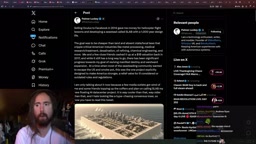
He revealed that he and a few close friends had taken the project to a billion-dollar valuation back in 2017, when it was still far from its goal. He stressed that Slab is older and far more interesting than the "floating AI data center" the media now speculates about, and he bristles at being seen as a bandwagon-jumping conformist chasing trends. In his narrative, this is a project explicitly designed to make America stronger—a pressure-release valve for outdated or ill-considered regulations, not a utopian escape from America.
International Waters Just Three Miles Out
When the host asked how close to San Francisco the city would need to be to escape jurisdiction, the answer was direct: just three miles out is international waters. Luckey joked that building a sufficiently long runway and putting an airport on it is a "perfectly rational and reasonable extension," and linked it to high-speed rail and liveaboard ships.
Under the United Nations Convention on the Law of the Sea, the territorial sea of a coastal state extends up to 12 nautical miles (about 22 km) from the baseline, which is usually the low-water line along the coast or a straight baseline. Although the U.S. has not ratified the convention, it has long claimed a 3-nautical-mile territorial sea under customary international law—the legal basis for Luckey's "three miles out is international waters." On the high seas, vessels are generally subject to the jurisdiction of their flag state, so a floating structure registered as a vessel or with its own self-defined jurisdiction can largely circumvent state and local building, environmental, medical, and industrial regulations. This is precisely the technical and legal premise behind Slab's positioning as a "regulatory pressure-release valve."
Why This Interview Is Worth Watching
Luckey's views are not mild, but the value of the interview lies in his willingness to articulate the same set of principles behind different issues: power should be visible and accountable, corporations should not make strategic decisions on behalf of the state, and individuals should bear the consequences of their own choices. Whether or not readers agree with his views on the death penalty or his floating-city vision, this conversation offers a perspective different from mainstream media narratives—and explains why clips from this interview have sparked extensive discussion in both tech and political commentary circles.
One-line Summary
In this interview, Palmer Luckey discusses Ukraine, public executions, and the floating city Slab, articulating a consistent principle that power should be visible and accountable.
Paragraph Summary
This Palmer Luckey interview went viral for its candid, provocative views. He refuses to simply cast Trump as "on the opposite side of democracy," argues Europe failed to prepare before the war, and opposes corporate executives deciding foreign policy and arms sales. On the death penalty, he argues it should be used rarely but, when used, carried out publicly and without medicalization—using transparency to restrain government abuse—and extends this logic to war reporting transparency. In the latter half, he reveals that the floating city Slab reached a billion-dollar valuation as early as 2017, aiming to bypass industry-strangling regulations by locating in international waters three miles out, rather than being a utopian escape from America. The overall value lies in his articulation of the same set of principles behind different issues.
Related articles

Controversial US Surveillance Law Section 702 Nears Expiration: Congress Races to Renew
FISA Section 702 surveillance authority is nearing expiration. Congress is urgently pushing reauthorization, possibly attaching it to the NDAA. This article analyzes the controversies, legislative strategy, and future outlook.

iFood Manages 15,000 Repositories with Coding Agents: An Architectural Lesson at 4 Cents per Run
How iFood scaled coding agents to 15,000 repositories with its Remote Agents Platform: REST API-driven, GPT-5.6 Luna selection, structured output acceptance, $0.04 per run, security fixes doubled.

The No-Space Vacuum: The Mystery of Geometric Origins in Quantum Gravity
The "no-space vacuum" in group field theory refers to a state with no geometric quantum excitations—not empty space, but no space. This article explains how this quantum gravity concept yields macroscopic cosmic geometry through condensed matter mechanisms, along with the theory's current status and controversies.