Paprika 4 Upgrade Review: Fully Evolved Features, But Shifting to a Subscription Model
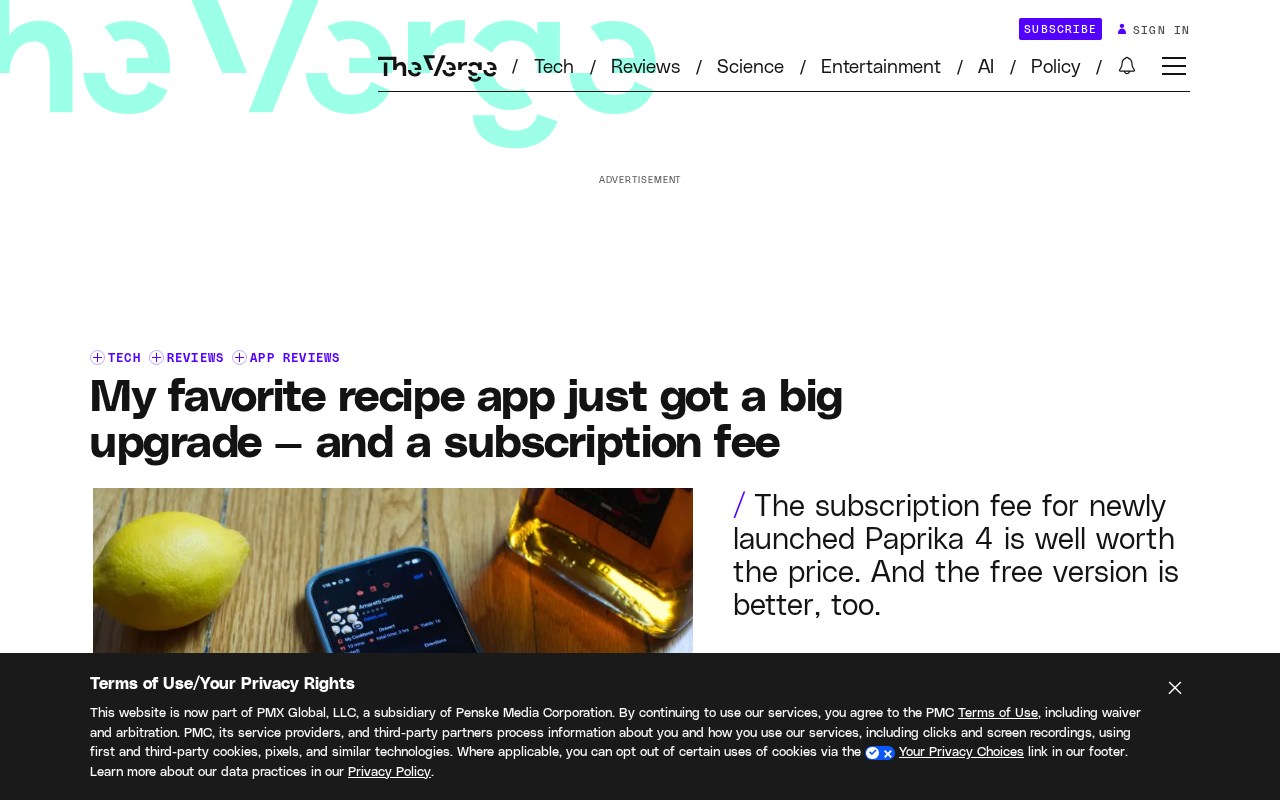
Paprika 4 arrives after nearly a decade with full feature upgrades but introduces a subscription model, requiring users to weigh the value.
Paprika 4 is the first major update in nearly a decade for the recipe management app, now on Android. It enhances almost every feature, including recipe management, pantry organization, and shopping lists, for a smoother experience. However, it shifts to a subscription model from a one-time purchase. The author tested it for weeks; heavy users may find new features worthwhile, while light users must consider long-term costs. This reflects the industry trend of utility apps moving to subscriptions.
Starting with a Major Version Update
After nearly a decade, the well-known recipe management app Paprika 3 has finally received a major version update—Paprika 4. This tool, which combines recipe management, pantry organization, and shopping list generation, has been upgraded in almost every functional corner. The author spent several weeks testing Paprika 4 during its public beta, and the update has recently rolled out on the Android platform (the version the author tested). However, this upgrade also brings a notable change: the app has introduced a subscription fee.
Feature Upgrades: A More Comprehensive Kitchen Assistant
The core improvement of Paprika 4 lies in its comprehensive feature enhancements. Although the original text doesn't elaborate on specific details, the description that "more features have been added to almost every corner" suggests this update is not a minor patch but a deep optimization of core workflows like recipe management, pantry organization, and shopping list generation. For users who have long relied on Paprika to manage kitchen affairs, this means a smoother and more powerful experience.
Recipe Management App is a category of software that helps users collect, organize, search, and cook recipes. Typical features include: one-click recipe import from web pages (automatically parsing ingredients and steps), categorization by tags or ingredients, shopping list generation, meal planning, and more. Paprika is a classic representative in this field, known for its powerful web parsing capabilities and cross-platform synchronization. The core value of such apps lies in centrally managing scattered recipe resources and seamlessly integrating them with daily cooking workflows. Paprika 4's upgrade direction (such as enhanced pantry management and shopping list generation) reflects how these apps are evolving from simple "recipe collections" to "comprehensive kitchen assistants," integrating inventory management, smart shopping lists, and meal planning to reduce food waste and simplify cooking preparation.
Subscription Model Arrives: The Cost of Upgrading
Accompanying the feature upgrades is a change in business model—Paprika 4 has started charging a subscription fee. The original title directly highlights this contradiction: "a major upgrade, and a subscription fee." For old users accustomed to a one-time purchase model, this is undoubtedly a transition that requires weighing. Although the original text doesn't disclose specific pricing and subscription benefits, this move reflects the industry trend of utility apps migrating to subscription models.
The subscription model refers to a business model where users pay periodically (e.g., monthly, annually) to continuously use software or services. Unlike the one-time lifetime license, the subscription model transforms software from a "product" into a "service"; users do not own perpetual usage rights but pay regularly to maintain access. The benefit for developers is predictable recurring revenue that supports continuous development and maintenance; for users, it means potentially higher long-term costs and loss of access once payment stops. In recent years, many utility apps (such as note-taking, to-do, and recipe management) have shifted from one-time purchases to subscriptions, often causing dissatisfaction among existing users because features that were once paid for once and used permanently are repackaged as subscription services.
Paprika 4's subscription model details are not fully described in the original text, but typically subscriptions offer a tiered freemium model with free basic features and paid premium features, or require all users to subscribe to access full functionality. For users who have long relied on Paprika to manage kitchen affairs, this means a shift from a one-time purchase (Paprika 3 was a one-time purchase priced at about $4.99) to ongoing expenses, requiring a trade-off between the value of new features and long-term costs.
Experience and Trade-offs
During several weeks of testing, the author experienced Paprika 4's improvements, but the introduction of the subscription model complicates this upgrade. For heavy users, the new features may be worth paying for; for light users, whether to upgrade requires careful consideration. The original text doesn't make a clear judgment on the subscription model, but the title's "favorite recipe app" suggests the author's affection for the app itself, while the subscription fee becomes a new decision variable.
Summary
Paprika 4 is a belated but comprehensive upgrade that strengthens core features like recipe management, pantry, and shopping list generation. However, the introduction of the subscription model changes users' payment habits and sparks discussion about the business models of utility apps. For long-time users of this classic app, whether to upgrade will depend on their need for new features and their acceptance of the subscription fee.
One-line Summary
Paprika 4 arrives after nearly a decade with comprehensive feature upgrades but introduces a subscription model, requiring users to weigh the value of upgrading.
Paragraph Summary
Paprika 4 is the first major version update in nearly a decade for the well-known recipe management app Paprika, now available on Android. This update enhances almost every functional corner, including core workflows like recipe management, pantry organization, and shopping list generation, aiming to provide a smoother and more powerful kitchen management experience. However, accompanying the feature upgrades is a shift in business model: the app has introduced a subscription fee, changing the previous one-time purchase model. The author felt the improvements during weeks of public beta testing, but the addition of the subscription model complicates the upgrade decision. For heavy users, the new features may be worth the cost; for light users, long-term costs require careful consideration. This move also reflects the industry trend of utility apps migrating to subscription models.
Related articles

Van Hollen on Holding Trump Accountable: Hearings and Building the Evidentiary Record
Senator Chris Van Hollen on holding the Trump administration accountable: focused hearings to expose corruption and wrongdoing, plus building an evidentiary record now to preserve space for future criminal charges.

Generating SVG and 3D Models with the Codex Plugin: A Hands-On Guide for Developers with Zero Art Background
Codex's SVG & 3D Design plugin lets developers with zero art background generate vector graphics and 3D models via code—editable, Blender-ready, with best practices built in.

Why Recursive Self-Improvement Holds Up: Responding to Six Major Objections One by One
Dwarkesh Patel responds point by point to six major objections about recursive self-improvement and superintelligence by 2030: whether verifiable proxy metrics exist, the human-link threshold for RSI, whether the math explosion can be analogized to AI research, the experimental compute bottleneck, reward hacking and the motivation for power-seeking, and whether METR acceleration rates can be extrapolated.