Paradigm Memory: A Local-First Memory System for AI Coding Assistants
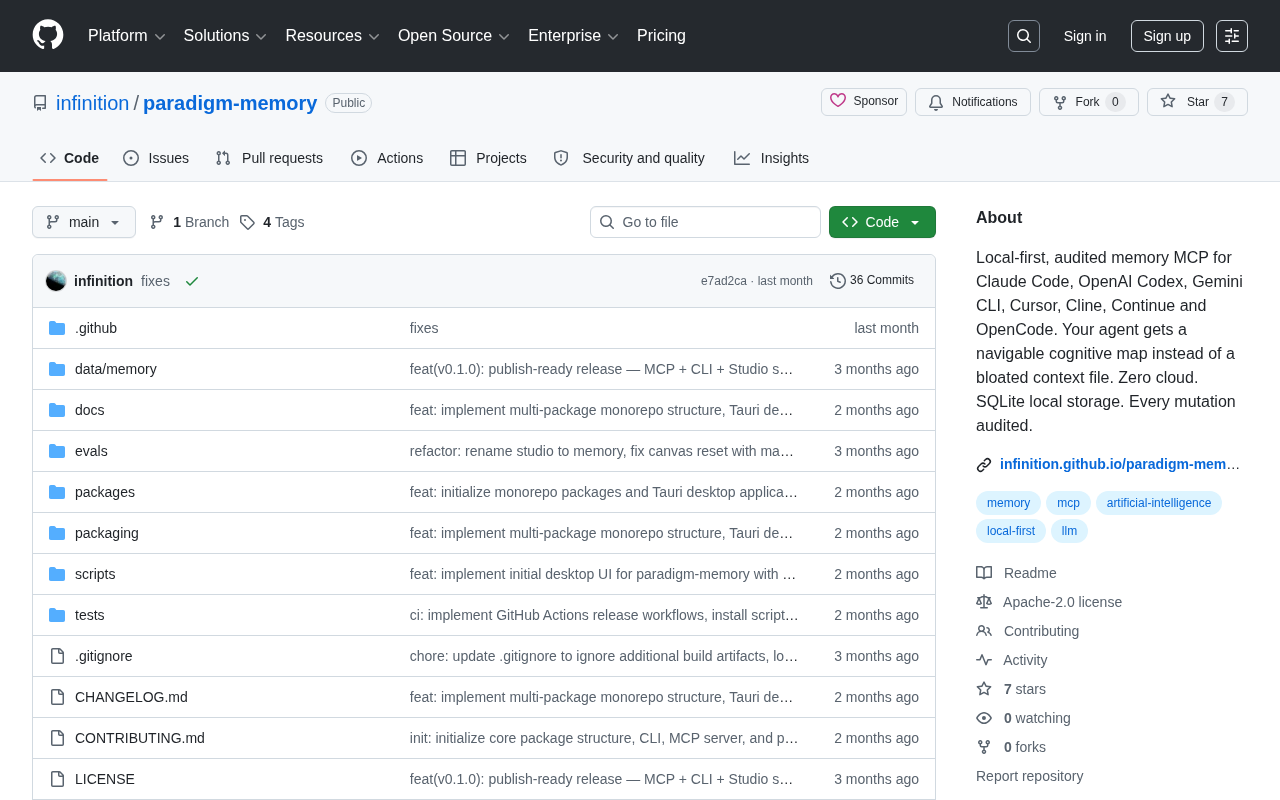
paradigm-memory replaces bloated context files with a local SQLite cognitive map for AI coding assistants.
paradigm-memory is an open-source MCP-based project that tackles the bloated context file problem in AI coding assistants like Claude Code and Cursor. Its core idea is replacing linearly stacked text with a navigable cognitive map, letting agents retrieve relevant memory nodes on demand to reduce token usage and improve precision. It uses a local SQLite database with zero cloud dependency to eliminate data leakage risks, and audits every memory change for full traceability. Written in JavaScript, it supports major AI coding tools with minimal workflow disruption. The project is still in very early stages (only 5 Stars), making it better suited as an experimental tool — but its local-first memory layer approach represents a promising direction for AI agent infrastructure.
Say Goodbye to Bloated Context Files
Developers who use AI coding assistants like Claude Code, Cursor, and Cline have likely run into the same frustration: as conversations and projects grow, context files keep ballooning. Models end up burning through precious tokens while struggling to extract what actually matters from the noise. The open-source project paradigm-memory (published by GitHub user infinition) takes a different approach — instead of cramming all memory into an ever-expanding text file, it gives AI agents a navigable cognitive map.
Built on the MCP (Model Context Protocol), the project has a clear focus: a local-first, audited memory layer. It targets today's leading AI coding tools, including Claude Code, OpenAI Codex, Gemini CLI, Cursor, Cline, Continue, and OpenCode.
Three Core Design Principles
Three key design philosophies set paradigm-memory apart from typical memory plugins.
Zero Cloud, Pure Local Storage
The project explicitly advertises Zero cloud, SQLite local storage — all memory data is stored in a local SQLite database, with no cloud services involved. For developers working on sensitive codebases or internal enterprise projects, this matters enormously: memory content never reaches third-party servers, fundamentally eliminating concerns around code leakage and privacy compliance. SQLite, as a lightweight, zero-configuration embedded database, also makes deployment and migration straightforward.
Every Change Is Audited
Another standout feature is Every mutation audited — every write or modification the AI agent makes to memory is logged and traceable. As AI agents take on increasingly deep roles in development workflows, auditability isn't just a debugging tool; it's the foundation of trust. Developers can trace back what the agent "remembered" or "rewrote," preventing opaque memory corruption.
Cognitive Maps Instead of Linear Text
The most fundamental idea is organizing memory into a navigable cognitive map rather than a single large text file. In the traditional approach, all context is stacked linearly and handed to the model — retrieval is inefficient and noisy. A structured cognitive map lets the agent navigate to relevant nodes on demand, theoretically reducing token consumption while improving retrieval precision.
Why This Direction Is Worth Watching
The MCP protocol is becoming a standard interface for connecting AI models with external tools and data sources, and "memory" remains one of the weakest links in long-running AI agent workflows. Most current solutions either rely on cloud-hosted vector databases or crudely concatenate history into the prompt. paradigm-memory combines local-first, auditable, and structured memory into one approach — directly addressing professional developers' dual demands for data sovereignty and memory quality.
Written in JavaScript and integrated as an MCP service, it theoretically has a low footprint on existing workflows. For developers who switch between multiple AI coding tools, a unified local memory layer could solve the disorienting experience of having to re-explain project context every time you change tools.
An Honest Assessment of Its Current State
It's worth staying grounded: this is still a very early-stage project. As of now, it has only 5 Stars on GitHub and 0 Forks — no meaningful community has formed, and there's little real-world validation data. The project description conveys more of a design vision and philosophy than proven results. Key metrics like performance, actual token savings, and compatibility stability across different clients are not covered in the available information.
For interested developers, paradigm-memory is best approached as a proof-of-concept and experimental tool for now, rather than something to deploy in critical production environments. The "local-first memory layer" concept it represents, however, is worth keeping an eye on — it may well prove to be an important direction in the evolution of AI agent infrastructure.
Related articles
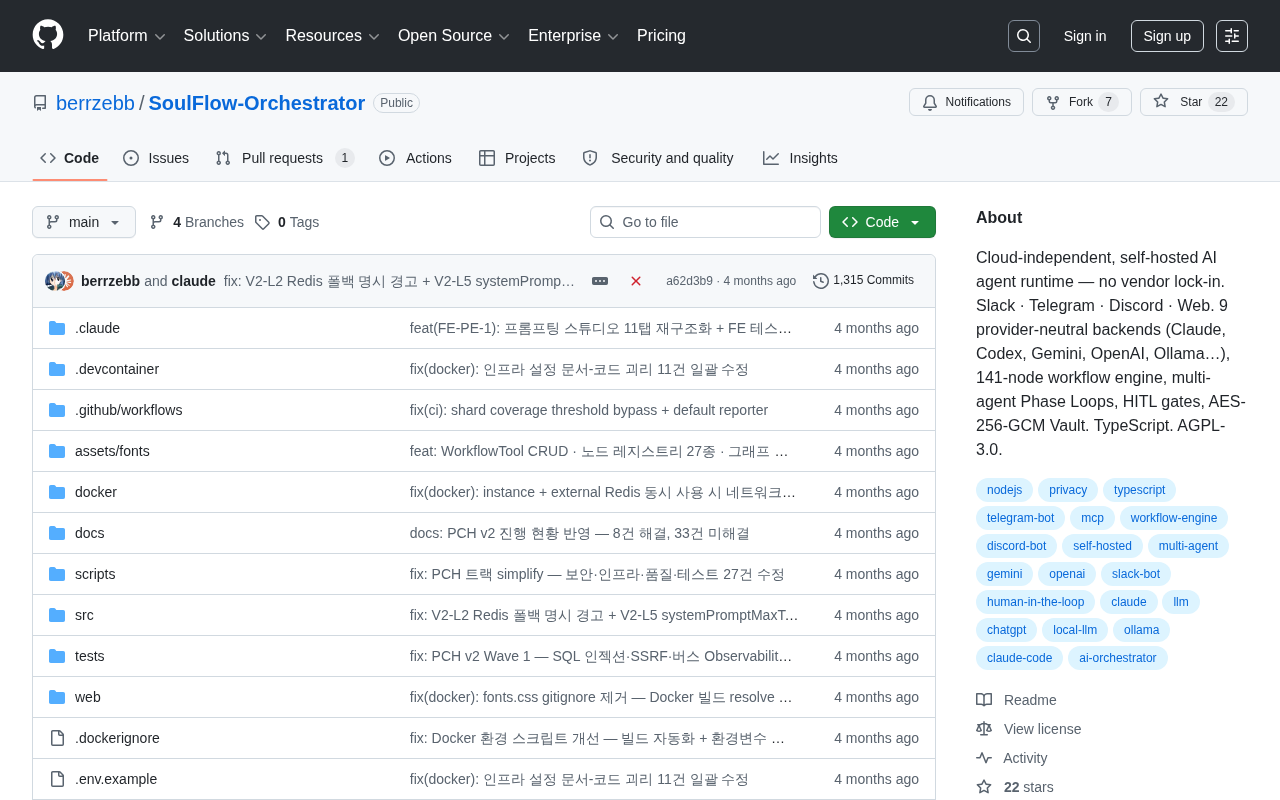
SoulFlow-Orchestrator: A Self-Hosted, Vendor-Lock-In-Free AI Agent Runtime
SoulFlow-Orchestrator is an open-source, self-hosted AI agent runtime with no vendor lock-in. Supports 9 neutral backends (Claude, OpenAI, Ollama), 141-node workflow engine, multi-agent loops, and HITL gates.
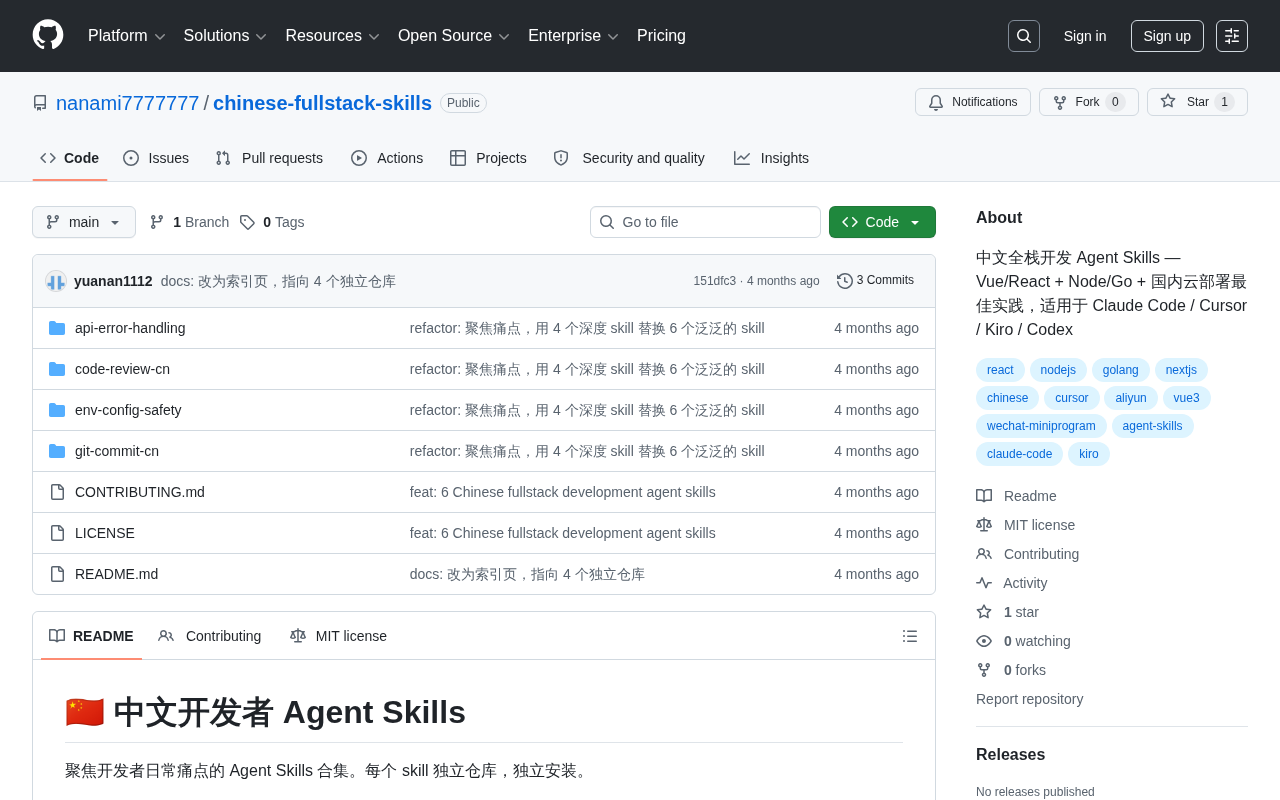
Chinese Full-Stack Agent Skills: A Skill Library Tailored for Domestic AI-Assisted Development
chinese-fullstack-skills is an Agent Skills library for Chinese full-stack development, covering Vue/React, Node/Go, and domestic cloud deployment best practices. Compatible with Claude Code, Cursor, Kiro, and Codex.
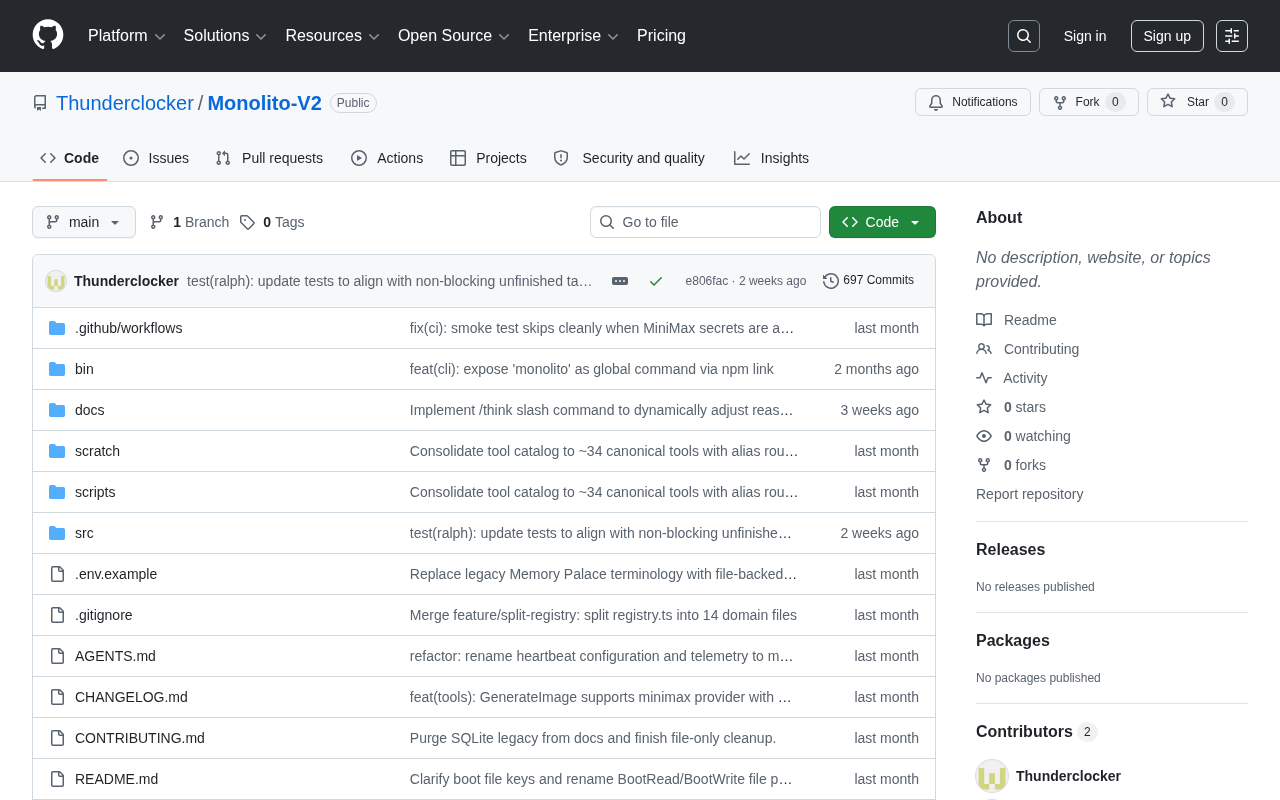
Monolito-V2: An AI Agent Project Aiming to Become a "Digital Symbiote in the Cloud"
Monolito-V2 is an open-source TypeScript AI Agent project aiming to become a 'digital symbiote' and 'cloud cerebral cortex.' We examine its concept, tech stack, and the real challenges ahead.