Perplexity AI Deep Dive: The Perfect Fusion of Search Engine and AI Q&A
Perplexity AI fuses real-time search with AI synthesis, offering cited answers, Focus Modes, and PDF chat.
Perplexity AI is an AI-powered answer engine that combines real-time web search with multi-model LLM orchestration. Its standout features include transparent source citations, Focus Modes for academic and social search, PDF document chat via RAG, and collaborative Collections — making it a strong research workflow tool that sits between Google and ChatGPT.
Perplexity AI: Bridging the Gap Between Search Engines and AI Chat
With ChatGPT taking the world by storm and Google still firmly on its search throne, a tool called Perplexity AI is rapidly rising with its positioning as an "AI-powered answer engine." Founded by former AI researchers from Meta and OpenAI — specifically, co-founders include former OpenAI researcher Aravind Srinivas and former Meta AI researcher Denis Yarats — and backed by Y Combinator, Figma, NVIDIA, and Bezos himself, the product has serious ambitions: to simultaneously replace traditional search engines and AI chatbots.
The funding lineup is worth unpacking. Y Combinator is Silicon Valley's most influential early-stage accelerator, having incubated unicorns like Airbnb, Stripe, and Reddit. NVIDIA's participation signals a deep infrastructure-level relationship — Perplexity's inference compute relies on GPU clusters, so having a capital relationship with the chip maker provides supply chain assurance. Bezos's personal investment is widely interpreted as a bet on the "next-generation information retrieval" space. By late 2024, Perplexity's valuation had reached $9 billion, with over 15 million monthly active users, putting it at the forefront of the AI-native search segment.
Unlike pure conversational models, Perplexity AI's core logic is "real-time web access + multi-model orchestration." Architecturally, this involves two independent modules. The first is Retrieval-Augmented Generation (RAG) — rather than relying on static training data, the system crawls web pages in real time when a user asks a question, extracts relevant passages, and injects them as context into the large language model's prompt, fundamentally addressing the "knowledge cutoff" problem inherent to LLMs. The second is a model routing layer: Perplexity dynamically dispatches GPT-4o, Claude 3.5 Sonnet, Mistral Large, and its own pplx-series models based on task type, user permissions, and cost targets. This "model middleware" architecture allows it to deliver diverse reasoning capabilities at lower marginal cost while reducing dependency risk on any single model provider. The hybrid architecture gives it the timeliness of a search engine combined with the natural language understanding of AI.
The Standout Feature: Transparent Citation Mechanism
Perplexity AI's most celebrated feature is that every answer is annotated with source links. While reading a response, users can click inline citations to jump directly to the original webpage for verification. This precisely fills the long-standing gap of ChatGPT, which functions more like an "opaque black box" where content reliability is difficult to verify.
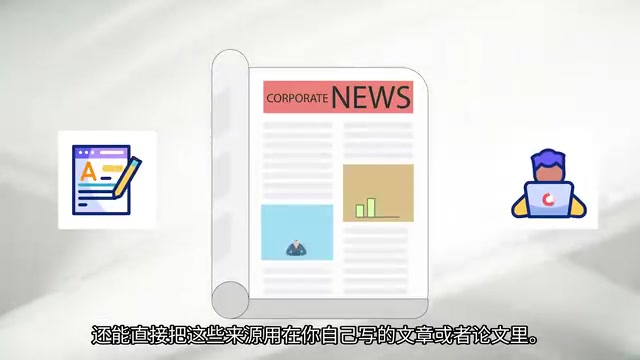
For content creators, students, and researchers, this traceability is significant. You can directly cite these sources in your papers or articles, and quickly assess the credibility of an answer by clicking through the links.

However, there is an important caveat to the citation mechanism: the presence of cited sources improves verifiability, but does not automatically guarantee content accuracy or lawful acquisition. Perplexity's crawler scrapes any publicly accessible page, and source quality varies widely — authoritative academic journals and content farms can appear side by side in the citation list. In 2024, The New York Times and several other media outlets accused Perplexity of unauthorized large-scale scraping of paywalled content to generate summaries, sparking copyright disputes. Critically clicking through to verify original sources remains a responsible information consumption habit.
This "answer + attribution" model essentially combines the verification responsibility of search with the synthesis capability of AI, boosting efficiency while preserving space for user judgment.
Focus Modes: More Targeted Searches
Perplexity AI supports multiple Focus Modes, allowing users to restrict searches to specific types of content — a key design differentiator from general-purpose search engines.
Academic Mode
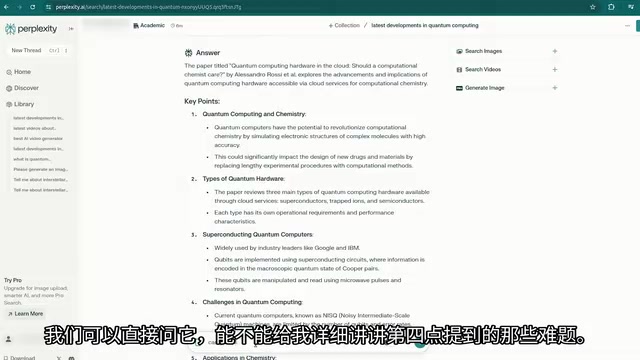
When limiting the search scope to academic literature, Perplexity draws on resources from Semantic Scholar, arXiv, and other specialized academic platforms. These two platforms represent different academic information ecosystems: Semantic Scholar, developed by the Allen Institute for AI (AI2), uses machine learning to semantically index over 200 million papers, identifying citation relationships and research influence — its value lies in "semantic similarity" rather than keyword matching. arXiv, operated by Cornell University, is a preprint server that requires no peer review before publication and serves as the fastest channel for researchers in physics, mathematics, and AI to access cutting-edge results — landmark papers like GPT, BERT, and the Transformer architecture all debuted there. Together, they allow Academic Mode to cover both "formally published, peer-reviewed work" and "the latest unpublished research," producing answers that are immediately more rigorous and professional, complete with technical details and verifiable paper links. For researchers who need to write literature reviews or conference abstracts, this is a highly efficient starting point.
Social Mode
Switching to Social Media Mode pulls results primarily from community platforms like Reddit, yielding content that is more grounded and closer to real user experiences. Searching for "useful AI video generation tools" surfaces real-time Reddit discussions compiling practical tools like CapCut, Runway, Pictory, and Lumen5 — the kind of insight that academic papers simply cannot provide.
Video Mode
Video Focus Mode pulls relevant explainer videos directly from YouTube and other platforms, summarizing key takeaways. This ability to "read video content" allows researchers to quickly capture multimedia-dimension information when investigating a specific topic.
Document Chat: Talk Directly to a PDF
Perplexity Pro supports file uploads. Users can upload a PDF paper and have the AI summarize it and answer questions about it. Technically, this is a localized RAG pipeline: after upload, the system first performs OCR and text parsing on the PDF, splits the content into semantic chunks, then converts each chunk into high-dimensional vectors via an embedding model and stores them in a temporary vector database. When the user asks a question, the system retrieves the most relevant text chunks via cosine similarity and injects them into the LLM context to generate an answer. In testing, processing a paper on quantum computing hardware took just 5 to 10 seconds — the combined time for OCR parsing, vectorization, and retrieval — producing a summary far richer than the paper's abstract.
More practically, you can continue asking follow-up questions based on the document's content — for example, "Tell me more about the challenges mentioned in point four" — and the AI will re-examine the full document to provide a targeted response. This is the equivalent of "having a conversation with a research paper," which is extremely convenient for readers under time pressure who just need specific answers. Note that the free tier limits file functionality to three uses per day, reflecting the combined cost pressure of vector database storage and LLM API calls.
Developer Use Case: A Powerful Tool for Debugging Errors
For technical users, Perplexity AI excels at resolving code issues. When encountering a bug or error, there's no need to bounce between Google and Stack Overflow — just paste the error message directly.
Take the common Windows error "'pip' is not recognized as an internal or external command" as an example. Perplexity not only lists multiple solutions but also supports follow-up questions on extended topics — what Anaconda is, what to do if the install command fails — explaining each layer in turn. This continuous contextual conversation essentially amounts to having an on-call technical support assistant.
Discover and Collections: From Tool to Workflow
Perplexity also offers two features that enhance long-term value.
Discover is a personalized information feed. After users set custom interest tags, the system automatically pulls relevant material from across the web and generates articles with cited sources, enabling proactive information browsing.
Collections functions more like a research notebook. Planning a complete trip to Indonesia — from the best surf seasons and advanced breaks to digital-nomad-friendly accommodation and hiking routes — every search thread can be archived in the same Collection. More importantly, Collections support multi-user collaboration, allowing you to invite friends to organize information together.

This design upgrades Perplexity AI from a "one-off Q&A tool" into an "accumulative, collaborative research workflow platform."
Perplexity Labs: A Model Testing Ground for Developers
For developers, Perplexity Labs provides a model comparison testing environment. You can have different large language models answer the same question and monitor real-time Tokens Per Second throughput and total response time.
Understanding these metrics helps make better technical decisions. Tokens Per Second (TPS) is the core metric for measuring LLM inference performance. A token is the basic unit of text processing for a model (roughly 1.5 Chinese characters or 0.75 English words per token). GPT-4-class models typically deliver 30–80 TPS via consumer-grade APIs, while optimized smaller models or dedicated inference hardware can reach 200+ TPS. In testing, switching to MaxTurbo mode noticeably increased response speed — likely due to the use of knowledge-distilled smaller models or inference acceleration techniques like Speculative Decoding — but at correspondingly higher token consumption. In production environments, TPS and latency must be evaluated alongside API cost (billed per token) as part of technical decision-making, rather than simply pursuing the largest model parameter count.
Conclusion: Can Perplexity AI Replace Google and ChatGPT?
Based on hands-on testing, Perplexity AI's positioning is very clear: it is not just another chatbot, but an answer engine that fuses the timeliness and verifiability of search with AI's synthesis capabilities. The transparent citation mechanism, flexible Focus Modes, document chat, and collaborative Collections together form its differentiated advantages over both pure AI chat and traditional search engines.
Of course, "never needing Google or ChatGPT again" is largely marketing hyperbole. For deep creative work and complex reasoning, dedicated large models still hold an edge; for purely navigational searches, Google remains highly efficient. But for the specific scenario of "doing research" — rapidly acquiring, integrating, and verifying the latest information — Perplexity AI genuinely offers a more efficient and transparent option. It deserves a place as a key component of your information workflow.
Key Takeaways
Related articles

OpenAI Partners with Shield: How the Astra Agent Revolutionizes IT Troubleshooting
OpenAI and Shield launch the Astra agent, which autonomously logs into computers and legacy systems to fix IT issues in real time, 35-40% faster than traditional models, with humans involved only when judgment is needed.

iPhone Duo Battery Life Tested: One Charge a Day Is Unavoidable, and the Large Screen Is the Culprit
iPhone Duo battery test: heavy use needs at least one charge a day, and about 30% remains after 6.5 hours of screen-on time. How often the large screen is unfolded is key; a MagSafe battery pack helps, and long-term degradation is also worth watching.

Kimi K3.1 Pro Open-Sourced: 2.8 Trillion Parameters Close In on Opus
Moonshot releases the open-source MoE model Kimi K3.1 Pro, with 2.8T total parameters and 104B activated, trailing Opus 5.5 by under 1 point on Terminal Bench 4.0.