Perplexity Hybrid Compute: Cloud Research, Local Mac Privacy Protection
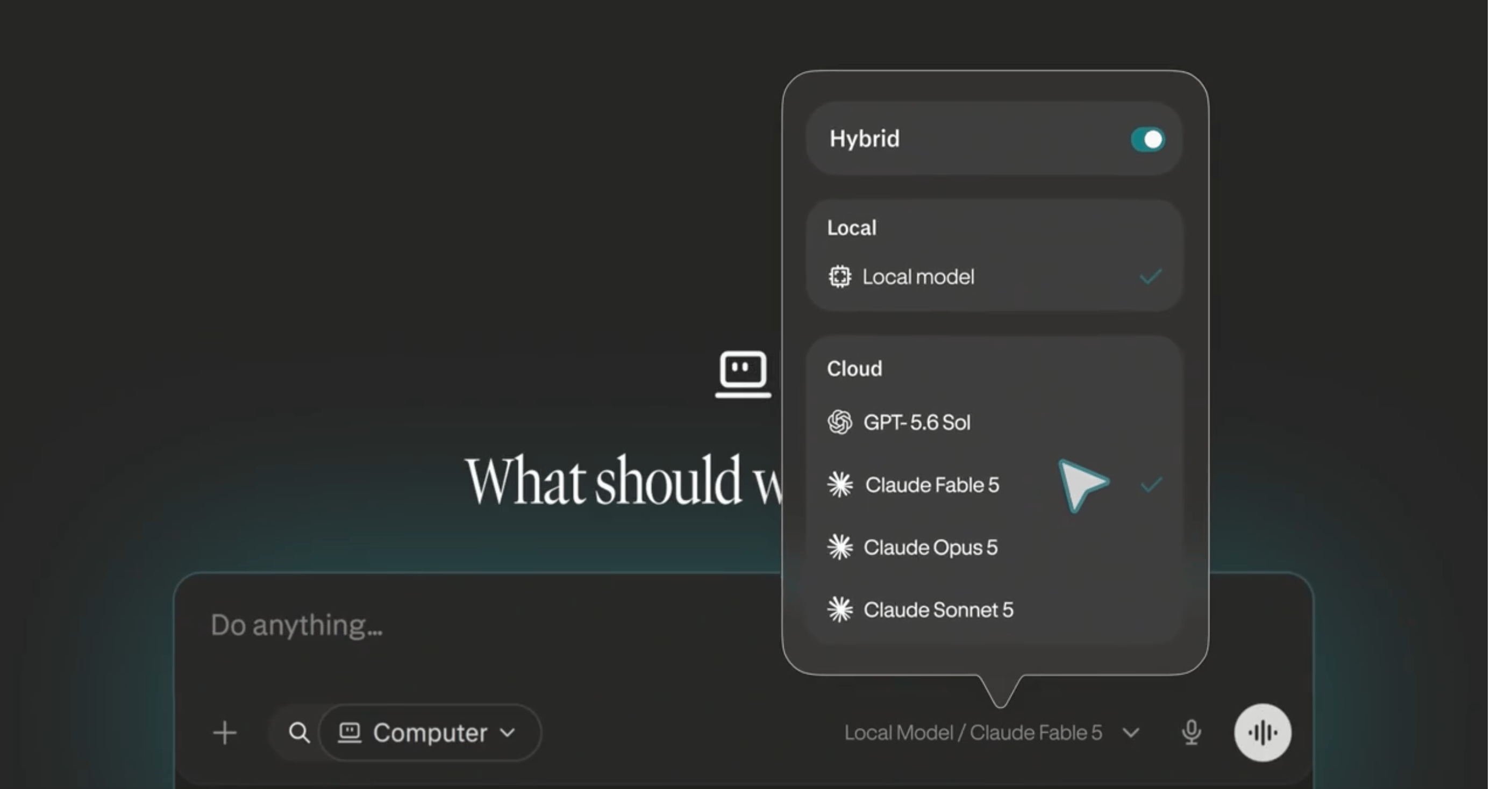
Perplexity Hybrid Compute routes AI tasks by data sensitivity — cloud for research, local Mac for private files.
Perplexity has launched a "Hybrid Compute" feature in its Mac app that automatically splits AI tasks based on data sensitivity: web search and reasoning go to powerful cloud models, while private local files are processed entirely on-device. The feature requires an Apple Silicon Mac with at least 24GB RAM and is available to Pro, Max, and Enterprise subscribers. It topped Product Hunt on launch day. The approach mirrors Apple Intelligence's local-first philosophy but routes by privacy rather than compute capacity — though real-world latency, routing accuracy, and local model performance still await broader validation.
A New Division of Labor Between Cloud and Local
Perplexity has introduced a new feature called "Hybrid Compute" in its Mac application, Perplexity Computer. The core idea is straightforward: split a task into two parts. Anything requiring web search and reasoning goes to the most powerful cloud-based AI, while any operations involving local private files stay on your Mac, handled by a local AI model — no files ever get uploaded to any server.
This design addresses one of the sharpest tensions in today's AI assistants — users want the raw power of cloud-based large models, but they don't want their private files sent off for remote processing. Until now, that's been a binary choice: sacrifice capability with a local model, or sacrifice privacy with a cloud service. Hybrid Compute attempts to resolve this through a "division of labor" that delivers both.
After launching on Product Hunt, it quickly topped the day's rankings with 130 upvotes — a clear signal of market appetite for privacy-friendly AI solutions.
How It Actually Works
According to the official description, Hybrid Compute automatically routes tasks based on their nature:
- Research and reasoning: Handled in the cloud, leveraging Perplexity's most powerful AI models for web retrieval, information synthesis, and complex logical reasoning.
- Private file processing: Stays on your local Mac, handled by an on-device AI model, ensuring that sensitive data never leaves your machine.
This means that when you ask it to analyze a sensitive local document while also pulling in the latest information from the web, the system dispatches each type of work to the appropriate endpoint and then integrates the results. For users dealing with legal documents, financial statements, or personal notes, the promise that "sensitive data never leaves your device" carries real practical value.
Hardware Requirements and Availability
Hybrid Compute currently has clear prerequisites:
- Only supported on Apple Silicon Macs (i.e., M-series chips)
- Requires at least 24GB RAM
- Available to Pro / Max / Enterprise subscribers only
The 24GB RAM threshold is no small ask — it reflects the real hardware demands of running AI models locally. Local inference requires substantial memory resources, and this requirement effectively limits the feature to higher-end Mac configurations. In the near term, it looks more like a capability aimed at power users and enterprise customers than a broadly accessible feature.
Behind the 24GB threshold lies the practical constraint of running large language models locally. To illustrate: a 7B-parameter model running at 4-bit quantization requires roughly 4–6GB of memory, a 13B model needs around 10GB, and larger models capable of handling complex document analysis can easily consume 20GB or more. Apple Silicon's unified memory architecture — where CPU and GPU share the same memory pool — gives Macs a natural edge in local AI inference, but it can't sidestep the hard limits of physical memory capacity. This explains why most consumer-grade local AI solutions still rely on smaller models with limited capabilities. By setting 24GB as the bar, Perplexity is ensuring the local side has enough headroom to run a model that's actually useful.
Why This Direction Is Worth Watching
Hybrid compute isn't a concept unique to Perplexity, but building it into a consumer-facing, out-of-the-box product feature is still meaningful. In recent years, the collaboration between on-device AI and cloud AI has been emerging as an industry trend — Apple Intelligence, for instance, follows a similar "local-first, complex tasks go to the cloud" philosophy.
Perplexity's differentiation lies in making the privacy boundary the explicit basis for task routing — not simply allocating work by compute requirements, but deciding where data gets processed based on how sensitive it is. This is a product design that speaks directly to what users actually care about. As more users grow wary of uploading their data, "your private files never leave your machine" is a genuinely powerful selling point.
Of course, the real-world effectiveness of this system still needs to be validated through wider use — latency when cloud and local models collaborate, the accuracy of task routing, and the performance of local models on constrained hardware are all experience-defining factors. But from a product philosophy standpoint, Hybrid Compute offers a concrete, practical answer to the question of how to achieve both capability and privacy.
Apple Intelligence is the most prominent reference point here: it prioritizes local models on iPhone and Mac for everyday tasks, and only routes requests to Apple's own servers via "Private Cloud Compute" when the task exceeds on-device capabilities — with a commitment that the servers don't retain user data. This architecture closely mirrors Perplexity's approach, with one key difference: Apple routes by "is there enough compute?" while Perplexity routes by "is this data sensitive?" The two aren't mutually exclusive — future hybrid compute solutions will likely consider both dimensions simultaneously. Microsoft Copilot+ is also pushing a "local small model + cloud large model" collaboration approach, and on-device AI is moving from concept to mainstream product form.
Takeaway
Perplexity Hybrid Compute represents a pragmatic step forward in privacy-conscious AI assistants: rather than forcing an either/or trade-off, it intelligently divides work based on data type. While the current Apple Silicon and 24GB RAM requirements limit its reach — and access is restricted to paid users — the direction it points toward is worth attention across the entire industry. For Mac users who care about data privacy but aren't willing to give up cloud AI capabilities, this is a new option worth exploring.
Related articles
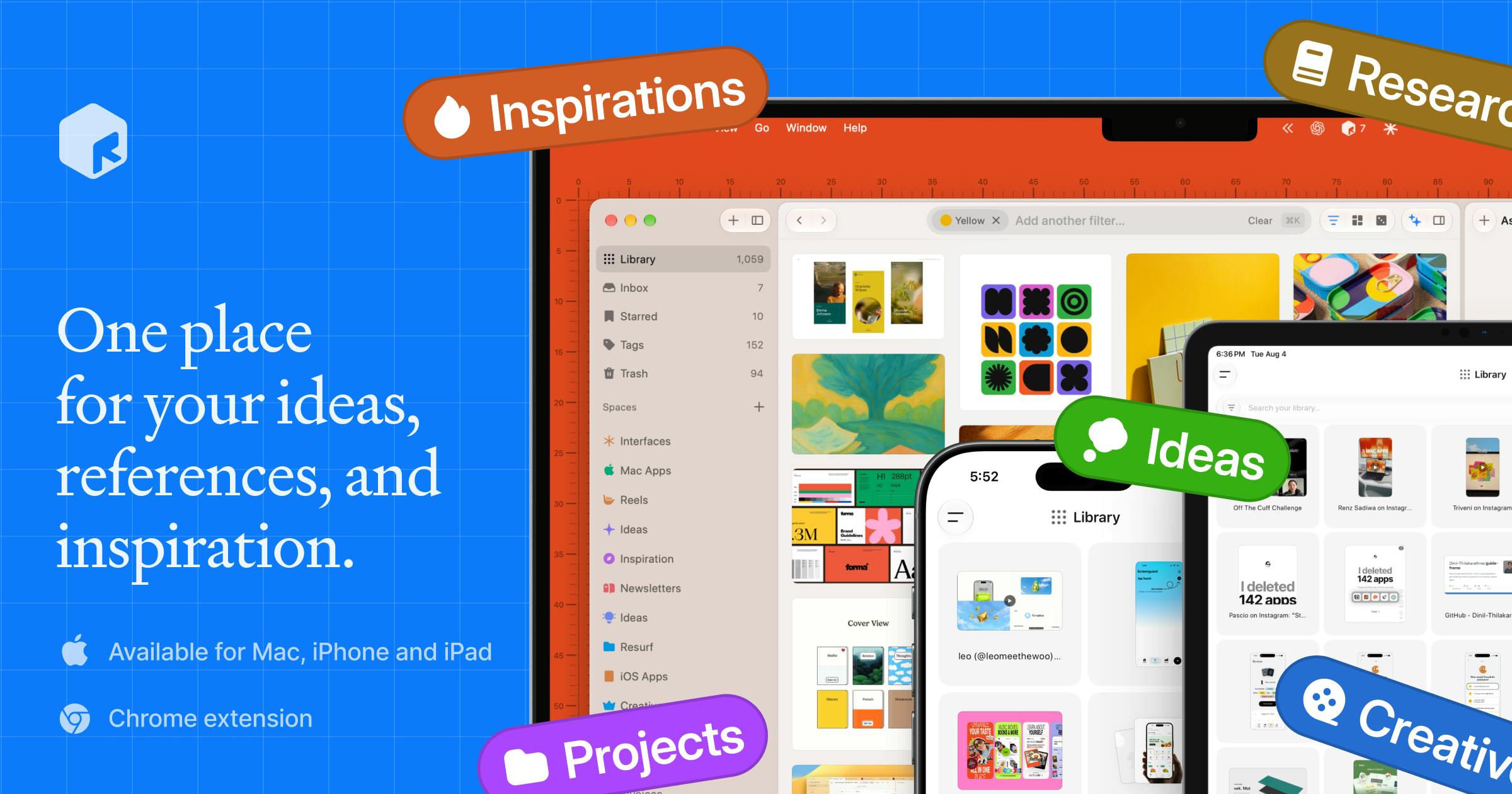
Resurf: The Personal Context Manager That Feeds Your Data to AI
Resurf is a personal context app for Apple devices that saves notes, links, images, and PDFs, then feeds them to AI via MCP and CLI. Local storage with iCloud sync keeps your data private.
Cognition Launches SWE-2 Coding Model: Near Top-Tier Performance at 64% Lower Cost
Cognition releases SWE-2, a coding model post-trained on Kimi K3 with RL. Scores 50% on FrontierCode, nearly matching Fable 5.1 at 64% lower cost and 1/4 the price of GPT-6 Astra.
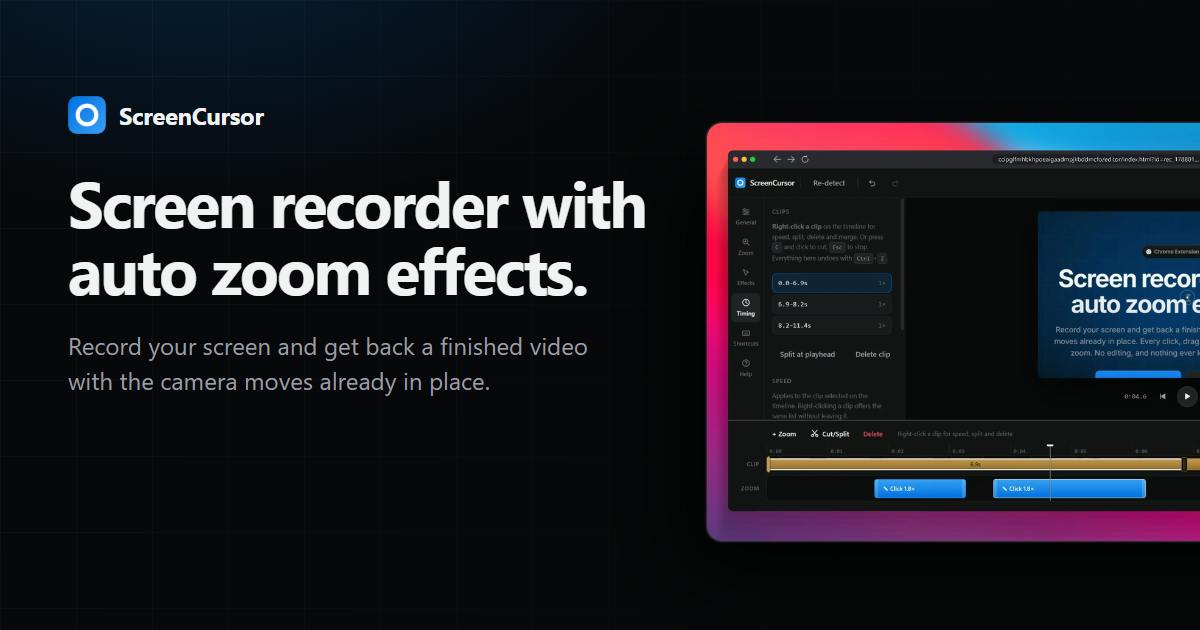
ScreenCursor: A Screen Recorder That Automatically Generates Zoom Effects
ScreenCursor is a Chrome extension that auto-generates zoom effects during screen recording, turning every click and drag into camera motion — no editing, fully local.