Persistent Memory for AI Coding Agents: Reverse-Engineering the Understand Anything Plugin
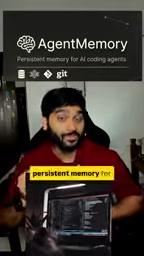
Breaking down how a plugin uses a local persistent knowledge base to give AI coding agents project-level memory
The article reverse-engineers a plugin called Understand Anything to explore how AI coding agents achieve cross-session memory. The core point: persistent memory isn't about expanding the context window, but about understanding the codebase in advance and solidifying the results locally. The workflow: build a codebase map covering files, functions, dependencies, and architecture; use AI to connect units with business logic; store locally for reuse in new sessions; and re-analyze only affected parts when code changes. The author sees this as instructive for developers using Claude Code and Cursor but notes the information comes from a single video source.
AI coding agents start from scratch every time a new session begins—a pain point many developers face. A YouTube creator reverse-engineered a plugin called "Understand Anything," revealing an approach that achieves "project-level memory" not by expanding the context window, but through a local persistent knowledge base.
Core Insight: Memory Doesn't Come from a Bigger Context Window
The video states upfront that the "trick to giving AI agents persistent memory isn't handing them a bigger context window." This judgment targets a common misconception in today's AI coding tools—many teams try to stuff an entire codebase into an ultra-long context all at once, which is both expensive and inefficient, and the model still loses track of what matters in long text.
Instead, the plugin's approach is to front-load and solidify "understanding": first thoroughly understand the codebase, then store the results of that understanding for reuse in later sessions. This effectively builds a project knowledge base that can evolve over the long term for the agent.
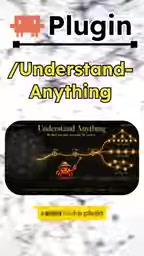
Context Window refers to the upper limit on the total number of tokens a large language model can receive in a single inference pass, including system prompts, conversation history, code snippets, and tool return results. Expanding the window does let the model "see" more content, but it comes with three costs: first, inference cost grows approximately linearly with token count; second, mid-document information in long text is easily ignored by the model—the so-called "lost in the middle" phenomenon; third, the window is session-level and volatile, cleared when the session ends, and cannot accumulate across sessions. A local persistent knowledge base, by contrast, compresses "understanding results" into structured summaries stored on disk, retrieving only relevant fragments on demand to inject into context each time—thus outperforming simply stacking windows in cost, stability, and accumulability.
How the Plugin Works: From Code Map to Business Logic
According to the video, Understand Anything's workflow has several steps. First is building a "map" of the entire codebase, covering files, functions, dependencies, and overall architecture. This step solves the structural problem—letting the agent know what's in the project and how the parts are organized.
Next, the plugin uses AI to understand these constituent units and connect them to business logic. This means the knowledge base isn't just a syntax-level symbol index; it also contains semantic information about "why this code exists." The third step is local storage: knowledge is kept locally, so the agent doesn't have to start from zero each time it launches a new session—it enters the working state directly with the existing map.
Incremental Updates Rather Than Full Rebuilds
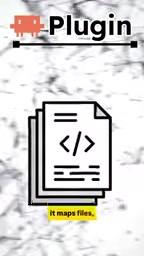
The video also mentions a key mechanism: when code changes, the plugin can identify which parts need re-analysis rather than rebuilding the entire knowledge base. This is especially important for large projects—full rebuilds grow linearly in cost over time, while incremental updates make knowledge base maintenance sustainable.
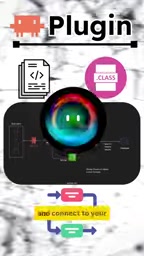
Code Map / Repository Map is a formalized index of project structure, typically including the file tree, symbol table (functions, classes, exports), call relationships, and module dependency graphs. It differs from simple full-text search: search can only match literally, whereas a map can express topological relationships like "who calls whom" and "which modules are affected by changing a certain file." For AI agents, the value of a map lies in providing a global view of the project with very few tokens, so that before touching code the agent knows the target location and its upstream/downstream dependencies, avoiding blind searches across the entire repository. Common construction methods combine static parsing (AST, import graphs) with AI-assisted summarization.
Incremental Analysis relies on change detection to determine which knowledge has become invalid. Common approaches include file content hash comparison, diffs based on version control systems, and reverse propagation of impact scope along the dependency graph—for example, if a low-level utility function is modified, the summaries of all modules that reference it must be regenerated. This aligns with the idea of incremental compilation in build systems: recompute only the "dirty" nodes and reuse the cache for the rest. The engineering challenge lies in precisely defining the impact scope—too conservative leads to massive wasted recomputation, too aggressive may leave stale, incorrect knowledge that misleads the agent.
Implications for Developers
This approach has direct reference value for developers using tools like Claude Code, Codex, and Cursor. The video's author says they have reverse-engineered the overall architecture and claim they can build a similar solution based on it; commenters can reply "map" to get the blueprint.
It should be noted that the above information mainly comes from a single source—the video author's description. The plugin's specific implementation details, performance, and applicable scope are not elaborated in the material, and actual results still need to be verified by developers themselves. Nevertheless, the process of "build the map first, then understand, then store, and update incrementally" offers an engineering direction worth borrowing for persistent memory in AI coding agents.
One-line Summary
Breaking down how a plugin uses a local persistent knowledge base to give AI coding agents project-level memory
Paragraph Summary
The article reverse-engineers a plugin called Understand Anything to explore how AI coding agents can achieve cross-session memory. The core point: the key to persistent memory isn't expanding the context window, but understanding the codebase in advance and solidifying the results locally. The plugin's workflow: first build a codebase map covering files, functions, dependencies, and architecture; then use AI to connect constituent units with business logic; finally store locally for reuse in new sessions. When code changes, only affected parts are re-analyzed, enabling incremental updates. The author believes this "build map, understand, store, update incrementally" process is instructive for developers using tools like Claude Code and Cursor, but notes the information comes from a single video and actual results need verification.
Related articles

5 Free GitHub Repositories Every AI Agent Developer Should Know
Explore 5 free GitHub repositories every AI agent developer should know, covering agent project templates, code generation, and integration with large models like Claude to help you build AI agents faster.

Fable 5.2 vs. Opus 5.5: One-Prompt MOBA Prototype Showdown — Who Wins?
Same-prompt MOBA prototype test: Opus 5.5, Deep Seek, and Fable 5.2 compared on features, animation, and smoothness — Fable 5.2 rated the best result yet.

Buttered Corn Flan: A New Thanksgiving Dessert Idea
Discover the New York Times Cooking buttered corn flan recipe, inspired by flan di elote, balancing caramel and sweet corn for a Thanksgiving dessert.