Personal AI Goes Mainstream: How Wearables Are Reshaping Human-Computer Interaction
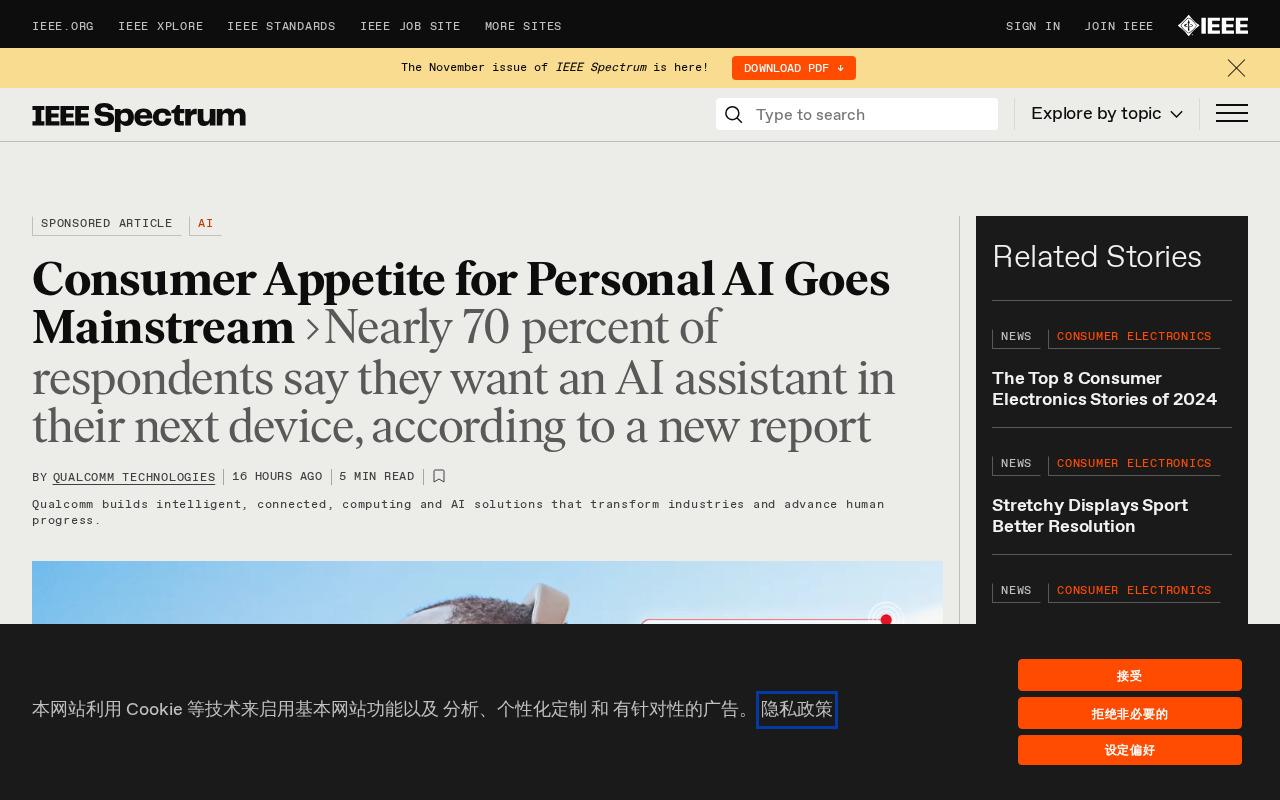
Qualcomm report shows consumers expect cross-device personal AI agents, with trust and voice interaction as key factors.
The "Personal AI" report commissioned by Qualcomm, based on a survey of over 12,000 people across six countries, reveals that consumers are shifting from general-purpose AI tools to expecting AI agents that understand personal context. Key findings: a single device is no longer the center; users expect decentralized collaboration among phones, watches, glasses, and earbuds, coordinated by a unified agent; 60% of wearable users use AI at least weekly, with smartwatches worn for an average of 9 hours; privacy, security, and user control are major barriers, with nearly 60% requiring data privacy or approval before sharing; 70% are strongly interested in voice-interactive AI assistants; purchase drivers vary by category—earbuds prioritize sound quality, watches display, rings materials, glasses control method. The report concludes the industry is unsettled, and vendors excelling at trust, context understanding, and cross-device collaboration will lead.
Personal AI Goes Mainstream: How Wearables Are Reshaping Human-Computer Interaction
Consumer expectations for AI are undergoing a quiet but profound shift. A "Personal AI" report commissioned by Qualcomm, based on a survey of over 12,000 people across the US, UK, Germany, India, Brazil, and China, reveals the core of this trend: people are no longer satisfied with general-purpose AI tools—they want AI that understands their daily lives: where they are, what they see, what they hear, as well as their habits, preferences, and schedules.
The picture painted by this report is not far off. It points to an emerging new paradigm: AI is no longer just an app on a phone, but an intelligent agent spanning multiple devices, becoming the primary interface between people and the digital world.
From a Single Device to "Your Ecosystem"
One of the clearest signals in the survey is that consumer interest in a single device is waning, replaced by expectations for interconnected ecosystems. Beyond phones and laptops, respondents also own in-vehicle connectivity technology and wearables such as smartwatches, smart glasses, earbuds, rings, pins, and pendants. They want these devices to work together—and the way to achieve that is precisely decentralization: no single device should bear all functions.
The report illustrates this collaboration logic with a typical workday scenario: the user's watch detects it's time to leave for a meeting; after obtaining permission, the AI agent synthesizes calendar details, real-time traffic, and each device's battery level to suggest the best route in the car and brief the meeting agenda; upon arrival, smart glasses discreetly prompt the meeting location or a new contact's name, while the phone stays in the pocket the entire time. No device needs to do everything; each plays to its strengths, coordinated by a personal AI agent that understands the user's context.
This leads to an important inference: simply increasing the number of hardware devices is not enough. The report notes that while respondents are willing to accept new form factors, they have higher demands for the ecosystem—each new device must bring "incremental intelligence, convenience, or context-awareness that existing devices cannot provide on their own." Consumers are increasingly sensitive to friction points and unnecessary complexity.
Context Awareness is the core capability that distinguishes personal AI agents from general-purpose AI tools. It refers to the system's ability to understand in real time the user's environment and state through sensors and user data—location, time, activity type (walking, driving, in a meeting), physiological indicators (heart rate, body temperature), and historical preferences. For example, if a watch detects an elevated heart rate and the calendar shows an upcoming meeting, the AI can infer that the user is on the way and proactively suggest a route. Achieving context awareness requires multimodal sensor fusion and edge computing: some inference is done locally on the device to reduce latency and protect privacy, while some complex computation is coordinated with the cloud. This is why the report emphasizes "decentralization"—each device contributes the sensing dimension it excels at, and the agent integrates them into a complete understanding of the user's situation.
Usage Habits Are Already at Scale, but Trust Is the Barrier
The data shows that wearable users are already using AI frequently: 60% use it at least once a week. This means AI is transitioning from a "fun experiment" for early adopters to a key user habit.
The "always-on" nature is also winning over users. The report tallied average continuous wear time: 3 hours each for true wireless earbuds and wireless headphones, 5 hours for smart glasses, 6 hours for audio glasses, 9 hours for smartwatches, and 8 hours for smart rings, necklaces, and pendants.
However, all this enthusiasm is contingent on one prerequisite: trust. As wearable use cases expand toward more personal and continuous scenarios, privacy, security, and user control become the adoption barriers respondents care most about. Nearly 60% of respondents want wearable device data to remain private, or at least to obtain their approval before sharing. In other words, selling points like high-quality audio, sensing capabilities, battery life, and comfort can spark interest, and agentic AI capabilities can drive upgrade intent, but real adoption only happens once trust is established—users want security, privacy, transparency, and control.
The report also found a telling detail: when Snapdragon was introduced as an enabling platform in the survey, respondents showed higher interest in adopting smart wearables. This confirms the weight of a mature, trusted technology foundation in consumer decision-making.
Snapdragon is Qualcomm's mobile processor and platform brand, widely used in smartphones, smartwatches, earbuds, and PCs. In the context of wearables and personal AI, the Snapdragon platform provides not just computing power but also connectivity (Wi-Fi, Bluetooth, 5G), low-power AI inference engines (NPU), and security subsystems. By introducing Snapdragon as an "enabling platform" in the survey, the report effectively tested the impact of brand trust and technology foundation on consumer decisions: when consumers know a device is backed by a mature chip platform, concerns about performance, battery life, and security decrease, and adoption intent rises accordingly. This reflects an industry reality—competition in personal AI experiences is not only among device manufacturers but also among underlying platform ecosystems.
Purchase Decisions Vary by Device Category
Consumer enthusiasm for AI is universal and stable: 60% to 70% of respondents expressed interest in advanced AI capabilities when considering new devices. But when it comes to specific purchase drivers, different device categories show clear differences.
The primary driver for true wireless earbuds and headphones is audio playback quality; smartwatch users value display quality and responsiveness most; for devices like smart rings and pendants, respondents care more about aesthetic factors such as materials and craftsmanship than technical specifications; and for smart glasses, the core lies in the control method—voice, gesture, or touch.
These differences suggest to manufacturers that competition in the personal AI era is not a contest of a single parameter, but about excelling in the most critical experience dimensions of each category, and then delivering a coherent cross-device experience through AI agents.
Demand for Voice Agents Has Crossed the Mainstream Threshold
One of the most significant conclusions in the report is that consumer demand for personal AI agents has already gone mainstream. 70% of respondents said they are "strongly interested in an AI assistant that can interact naturally via voice and seamlessly manage devices, apps, and daily tasks." With each individual as the center of their own ecosystem, voice becomes the most critical and natural way to interact with the agent.
This also explains why "AI as the interface" has become the core expression of this paradigm. When interaction shifts from tapping screens to natural language, the focus of user experience moves from app design to the ability to understand user context.
Agentic AI is fundamentally different from traditional conversational AI. Traditional voice assistants like Siri or Alexa mainly respond to single-turn commands—the user asks about the weather, and it answers. Agentic AI, however, possesses goal decomposition, multi-step planning, and cross-app execution capabilities: it can understand compound intents like "help me plan tomorrow's trip to the client's office," autonomously invoke multiple services such as calendars, maps, and contacts, and complete a series of operations after obtaining user permission. This capability relies on the reasoning ability of large language models and function calling mechanisms, enabling AI to evolve from "answering questions" to "completing tasks." The "AI as the interface" mentioned in the report is built precisely on agentic AI—when AI can autonomously coordinate devices and tasks, the interaction mode naturally shifts from tapping screens to natural language.
The Industry Is Still in Flux, and the Window of Opportunity Remains Open
The Personal AI report ultimately points to one judgment: consumer demand is clear and strong—they want personalized, context-aware, proactive rather than passive experiences, with privacy, security, and user control as prerequisites. Wearables form the hardware body of "your ecosystem," while agentic AI capabilities are the software soul that makes this ecosystem run.
But the industry landscape is far from settled. The report explicitly states that OEMs and technology companies currently have huge room for innovation and iteration, and can differentiate based on the technology foundation being built by platform vendors. The roadmap of what consumers want is already clear; the remaining question is who can be the first to simultaneously excel at trust, context understanding, and cross-device collaboration.
It should be noted that all percentages, consumer behaviors, and attitudes in the report are based solely on the responses of the individuals who participated in the survey.
One-line Summary
Qualcomm report shows consumers expect cross-device personal AI agents, with trust and voice interaction as key factors.
Paragraph Summary
The "Personal AI" report commissioned by Qualcomm, based on a survey of over 12,000 people across six countries, reveals that consumers are shifting from general-purpose AI tools to expecting AI agents that understand personal context. Key findings include: a single device is no longer the center; users expect decentralized collaboration among phones, watches, glasses, earbuds, and other devices, coordinated by a unified agent; 60% of wearable users use AI at least weekly, and smartwatches are worn continuously for an average of 9 hours; but privacy, security, and user control are major adoption barriers, with nearly 60% of respondents requiring data to remain private or shared only with approval; 70% of respondents are strongly interested in AI assistants with natural voice interaction; purchase drivers vary by category—earbuds prioritize sound quality, watches prioritize display, rings prioritize materials, and glasses prioritize control method. The report concludes that the industry landscape is unsettled, and manufacturers that can simultaneously excel at trust, context understanding, and cross-device collaboration will gain an early advantage.
Related articles
Google's Satellite AI Server Reaches Orbit: Gemma Model Generates First Reply in Space
Google's TPU-equipped satellite powers up in orbit, with the onboard Gemma 4 model generating the first reply from space. This article analyzes the technical path, real-world constraints, and implications for edge computing and satellite remote sensing.
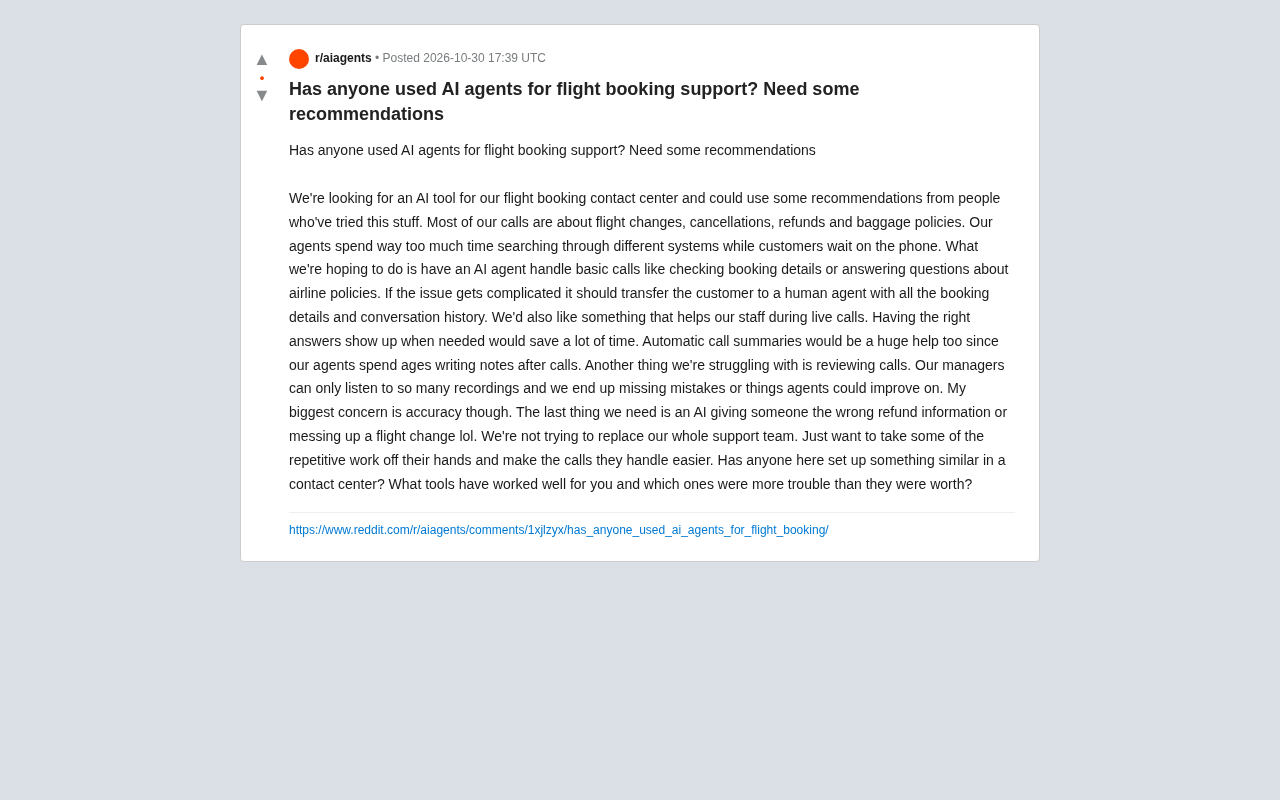
AI Agents for Flight Booking Customer Support: Real Needs and Implementation Challenges
Starting from a real Reddit question, this article breaks down four needs for introducing AI Agents into flight booking call centers: basic Q&A, agent assist, call summarization, and quality inspection, and analyzes accuracy concerns and handoff boundary design.

Vercel Unifies Runtime Cache: Data Cache Merges into Runtime Cache
Vercel merges Data Cache into Runtime Cache, unifying storage quotas and billing for Next.js fetch cache, unstable_cache, getCache, and use cache: remote. Pro and Enterprise projects get more storage, and cache reads/writes are now billed at Runtime Cache pricing.