Peter Thiel's AI Doomsday Gospel: How Effective Altruism Infiltrated Silicon Valley

Effective Altruism adherents embedded in core AI institutions drive doomsday narratives and reshape industry power structures.
The article explores the rising AI doomsday narrative in Silicon Valley and the Effective Altruism (EA) driving force behind it. EA adherents have penetrated core AI safety institutions like Anthropic and METR, combining quantitative "maximizing good" logic with existential risk issues to form institutional dissemination channels. Critics note EA's inherent tensions: simplifying good deeds ignores structural inequality, focusing on doomsday risk may obscure immediate harms like algorithmic bias, and overlapping development and regulatory roles create oversight challenges. Using Peter Thiel's religious metaphor, the article analyzes EA's quasi-religious mobilizing power and warns that single-philosophy dominance of risk assessment frameworks weakens diverse checks and balances. It calls for a diverse, falsifiable risk assessment ecosystem to prevent doomsday narratives from monopolizing risk definition.
Silicon Valley's New Doomsday Narrative
Silicon Valley is experiencing a doomsday narrative about artificial intelligence. According to the original report, this wave of AI doomsday discourse is driven by Effective Altruism (EA) — a philosophy that has long lingered on the margins of thought but has now burst into the mainstream as its adherents fill core institutions across the AI industry. From Anthropic to the newly appointed AI safety oversight body METR, EA's influence is reshaping the industry's cognitive framework for risk.
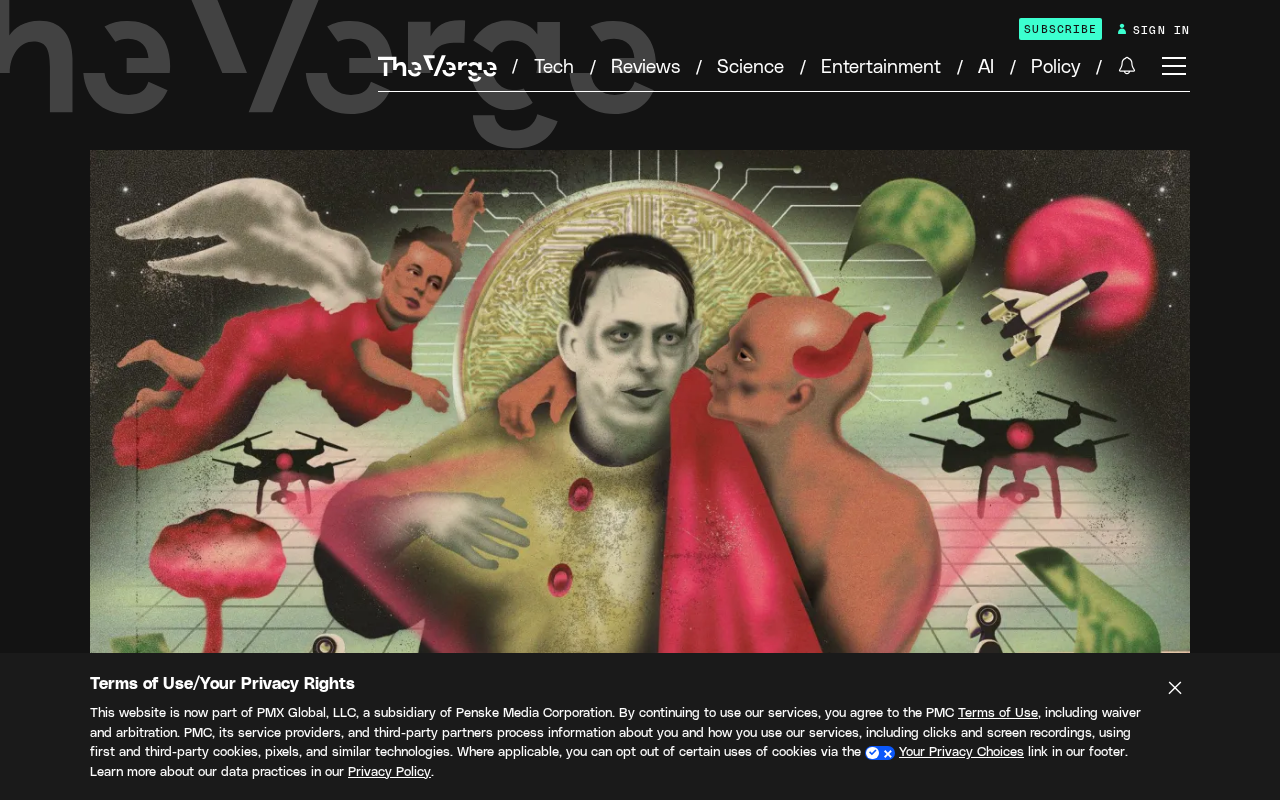
This penetration is no accident. EA's core proposition — using rational calculation to maximize the output of good — naturally aligns with the AI safety field's quantitative assessment of "existential risk." When a group of believers simultaneously holds sway over model development and safety evaluation, the doomsday narrative gains an institutional channel for dissemination.
The Dual Nature of Effective Altruism
EA's journey from fringe philosophy to mainstream relies on two pillars: first, the "quantified good deeds" movement in charitable giving; second, the "risk reduction" agenda in AI safety. The former provides moral legitimacy and funding networks for the latter, while the latter provides the former with a sense of urgency in the technological age.
But critics point out that this logic has inherent tensions. Reducing good deeds to calculable outputs easily overlooks structural inequality; reducing AI risk to existential threats may obscure more immediate harms such as algorithmic bias and labor displacement. More subtly, when EA adherents occupy both development and regulatory positions, who watches the watchers?
Effective Altruism (EA) is a philosophical and social movement that emerged around 2010, with the core proposition that one should use evidence and rational reasoning to identify ways to maximize the impact of good deeds, rather than doing charity based on intuition or emotion. Its representative methodologies include "cost-effectiveness analysis" (such as evaluating how many lives can be saved per dollar) and "Longtermism" — the latter holds that future generations vastly outnumber current ones, so reducing existential risk has extremely high moral priority. It is Longtermism that directed EA's attention to AI safety: if AI loss of control could lead to the end of human civilization, then the "expected good value" of investing in alignment research would be enormous. This logic also explains why EA adherents are simultaneously active in charitable giving networks and AI safety institutions, and has invited criticism of "replacing concrete care with abstract calculation."
Religious Metaphor from Thiel's Perspective
The title juxtaposes Peter Thiel with "gospel," suggesting that EA has acquired a quasi-religious quality in Silicon Valley. Thiel himself is known for contrarian thinking, and his vigilance toward doomsday narratives is consistent with his critique of technological stagnation — in his eyes, excessive focus on AI destruction risk may precisely divert investment from genuine innovation.
This religious metaphor is not rhetorical exaggeration. Doomsday discourse provides a complete cosmology: fall (technology out of control), redemption (alignment research), the elect (safety researchers). When a secular philosophy acquires religious-style mobilizing power, its ability to shape industry agendas far exceeds its academic weight.
Peter Thiel is co-founder of PayPal, chairman of Palantir, and one of Silicon Valley's most influential contrarian investors. In Zero to One, he argued that "competition is for losers" and emphasized monopolistic innovation; in recent years he has become known for his "technological stagnation" thesis, criticizing America's lack of innovation in nuclear energy, aerospace, biotechnology, and other fields, arguing that overregulation and risk aversion have stifled progress. Thiel's vigilance toward AI doomsday narratives stems precisely from this: if society directs all attention toward "preventing AI from destroying humanity," it may neglect the technological breakthroughs that are truly needed. He himself was also an early funder of EA but later publicly distanced himself from it — this complex relationship gives "Thiel's perspective" greater tension when critiquing EA.
Deep Changes in the Industry Landscape
EA's expansion is changing the power structure of the AI industry. Anthropic stands on a "safety-first" foundation, METR performs third-party evaluation functions, and the two share similar ideological underpinnings and talent networks. This concentration brings efficiency but also risk — once the risk assessment framework is dominated by a single philosophy, the checks and balances of diverse perspectives may weaken.
For ordinary practitioners, what deserves attention is: is the prioritization of the AI safety agenda driven by technical evidence or by a particular worldview? When "doomsday" becomes the default narrative, are more everyday ethical issues pushed off the discussion table? These questions matter more than taking sides.
METR (Model Evaluation & Threat Research) is a nonprofit research organization, formerly the evaluation team of the Alignment Research Center, focused on systematic risk assessment of frontier AI models, with particular attention to whether models possess dangerous capabilities (such as autonomous replication, cyberattacks, deceptive alignment). It has been authorized by several frontier AI labs to conduct independent testing before models are publicly released, thereby playing a role akin to "third-party auditing" in industry safety governance. METR's rise reflects the institutional shift in AI safety evaluation from internal lab self-checks to external independent assessment, but its funding sources and personnel backgrounds also make it highly overlapping with the EA thought circle — precisely an epitome of the power concentration issue that the original article focuses on.
Conclusion: Beware of Monopoly by a Single Narrative
EA's contribution to AI safety issues is undeniable — it forces the industry to confront long-term risks. But any single philosophy monopolizing the right to define risk deserves caution. What Silicon Valley needs is not a new gospel, but a diverse, falsifiable, and debatable risk assessment ecosystem.
One-line Summary
Effective Altruism adherents are embedded in core AI institutions, driving the doomsday narrative and reshaping the industry's power structure.
Paragraph Summary
The article explores the rising AI doomsday narrative in Silicon Valley and the Effective Altruism (EA) driving force behind it. EA adherents have penetrated core AI safety institutions such as Anthropic and METR, combining the quantitative logic of "maximizing good deeds" with existential risk issues to form institutional dissemination channels. Critics point out inherent tensions in EA: simplifying good deeds ignores structural inequality, focusing on doomsday risk may obscure immediate harms such as algorithmic bias, and overlapping development and regulatory roles create oversight problems. The article uses Peter Thiel's religious metaphor to analyze EA's quasi-religious mobilizing power and warns that a single philosophy dominating the risk assessment framework will weaken diverse checks and balances. The conclusion calls for building a diverse, falsifiable risk assessment ecosystem to prevent the doomsday narrative from monopolizing the right to define risk.
Related articles

A Single Prompt Triggers a Global PHP Security Storm: Is AI a Savior or a Hidden Risk?
A single AI prompt triggered a global PHP security crisis affecting Wikipedia and the Internet Archive. This article reviews the incident, analyzes the OpenAI-Amazon controversy, and explores the security paradox of lowered vulnerability discovery barriers in the AI era and developer response strategies.

When AI Is Taken Away: How Reliance on Shortcuts Undermines Your Problem-Solving Resilience
A study of 1,222 people found that after using AI to answer questions, once AI was removed, people gave up on more problems than a control group that never used AI. The article analyzes the impact of AI reliance on learning resilience and metacognition, and explores design implications for AI learning tools.

Carta and NewView Partner to Let Startup Employees Cash Out Equity Early
Carta and NewView Capital partner to simplify startup tender offers, helping employees sell equity early. Analysis of the mechanism, liquidity pain points, and impact.