PILOT Framework: Reshaping Multimodal Embedding Training with Privileged Reasoning Exploration
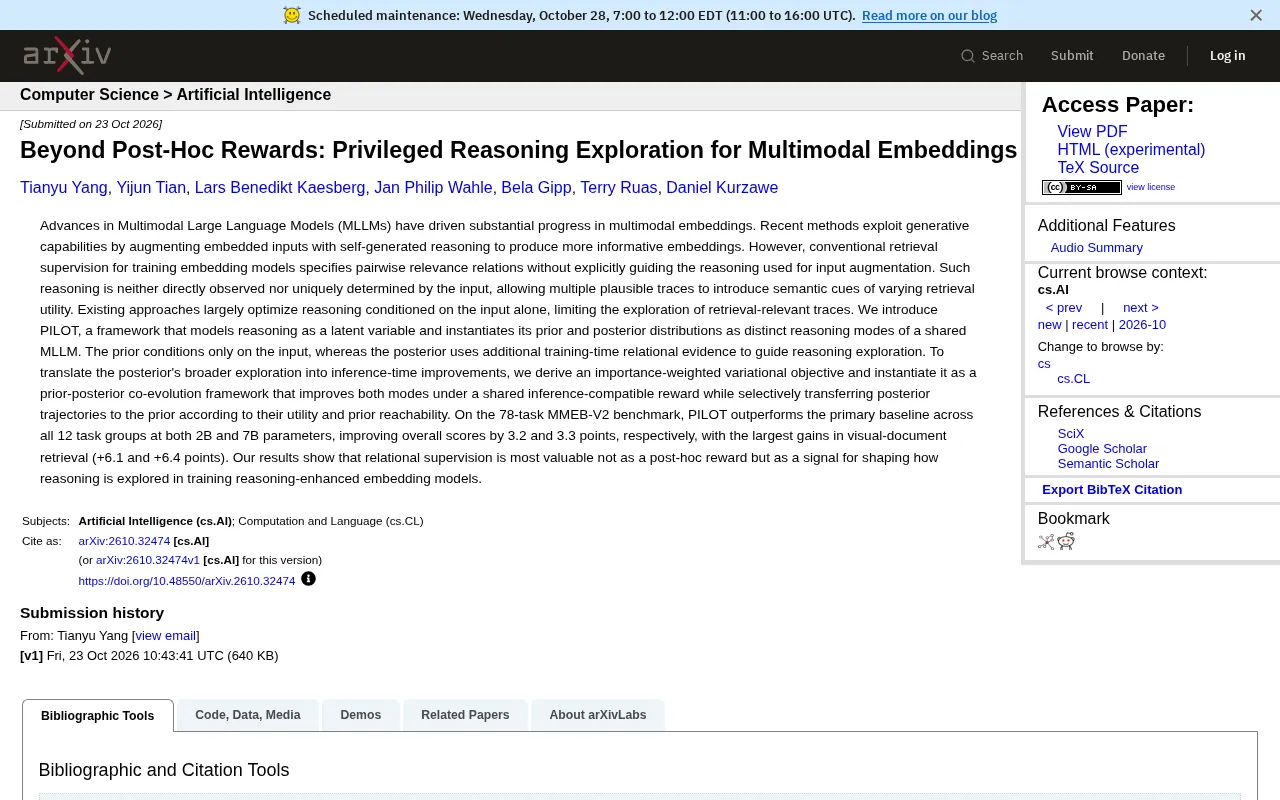
PILOT moves relational supervision from post-hoc reward to training signal, guiding reasoning exploration in multimodal embeddings.
Existing reasoning-enhanced embedding methods condition reasoning solely on input and cannot tell which reasoning trajectories help retrieval. PILOT models reasoning trajectories as latent variables with prior and posterior distributions: the prior relies only on input, the posterior additionally uses training-time relational evidence, both instantiated by different reasoning modes of the same multimodal LLM. An importance-weighted variational objective selectively transfers useful, prior-reachable posterior trajectories to the prior. On 78 MMEB-V2 tasks, PILOT improves all 12 task groups at 2B and 7B scales, raising overall scores by 3.2 and 3.3 points, with the largest gain in visual document retrieval (+6.1/+6.4). The core insight: relational supervision should be a training signal shaping reasoning exploration, not a post-hoc reward.
Multimodal embedding models are undergoing an upgrade driven by generative reasoning. Traditional methods attach self-generated reasoning text to inputs, allowing embedding vectors to carry richer information and thereby improving retrieval performance. But there is a long-overlooked crack in this path: the pairwise relevance supervision used during training only tells the model "these two samples are related," yet never guides "what kind of reasoning should explain this relevance." Reasoning trajectories are neither directly observable nor uniquely determined by the input—the same query can spawn multiple seemingly plausible reasoning paths, and their actual value for retrieval may differ vastly.
A recent research work from rss (the PILOT framework) targets exactly this crack. Its core claim is rather sharp: the most valuable role of relational supervision is not as a post-hoc reward signal, but as a training signal that shapes the reasoning exploration process.

The Crux of Existing Methods: Reasoning Is Only Conditioned on Input
The shared assumption of existing reasoning-enhanced embedding methods is that reasoning trajectories should be determined solely by the input. The model sees a query, generates an explanation, and then encodes it together with the original input into an embedding. This "prior-style" reasoning mode has a natural limitation—it cannot know which reasoning paths actually help retrieval.
The problem is that retrieval supervision itself is pairwise relational labels, carrying no direct information about reasoning quality. The model can only "guess" what kind of reasoning is useful based on input-side patterns, so the exploration space is compressed. The original paper points out that this conditioning approach "limits the exploration of retrieval-relevant reasoning trajectories." In other words, the model walks a narrow path in reasoning space, while better paths may lie right beside it but are never sampled.
PILOT's Solution: Treating Reasoning as a Latent Variable
PILOT's entry point is to model reasoning trajectories as latent variables and design two distributions for them: the prior distribution depends only on the input, while the posterior distribution additionally leverages relational evidence available during training. The two distributions are instantiated by different reasoning modes of the same multimodal large model, sharing model parameters but differing in conditioning information.
Because the posterior distribution sees relational evidence, it can explore broader reasoning trajectories with greater retrieval value; the prior distribution must work at inference time based solely on the input. The key challenge here is: how to convert the posterior's "privileged exploration" into the prior's "actual gains" at inference time.
The research team's approach is to derive an importance-weighted variational objective and instantiate it as a prior-posterior co-evolution framework. The two reasoning modes improve jointly under a shared reward compatible with the inference stage, and posterior trajectories are selectively transferred to the prior according to their utility and prior reachability. This means not all posterior explorations are accepted wholesale—only those trajectories that are both useful for retrieval and reproducible by the prior at inference time are absorbed.
Variational Objective and Importance Weighting
In variational inference, when the true posterior is difficult to compute directly, a tractable distribution is often used to approximate it, optimized by maximizing the evidence lower bound (ELBO). PILOT treats reasoning trajectories as latent variables: the prior distribution corresponds to the inference-time case relying only on input, while the posterior distribution additionally leverages relational evidence. To transfer the posterior's exploration gains to the prior, one needs to estimate the difference between the two, and importance weighting is precisely the classic tool for handling such distribution shift: it uses the density ratio of posterior to prior as weights to reweight samples, so that training-time exploration dominated by the posterior can be converted into learnable signals usable by the prior. In this way, only trajectories that the posterior deems high-value and that the prior also has some probability of generating receive larger weights in the objective function, naturally achieving a dual screening of "utility and reachability."
Experimental Results: Gains Across All Task Groups, Largest Benefit in Visual Document Retrieval
On the 78-task MMEB-V2 benchmark, PILOT outperforms major baselines at both 2B and 7B parameter scales. According to the original data, all 12 task groups improved, with overall scores increasing by 3.2 and 3.3 points respectively. The most significant improvement is in visual document retrieval, rising by 6.1 and 6.4 points respectively.
This result distribution is intriguing. Visual document retrieval typically involves layout structure and the interwoven relationship between text and images, demanding fine-grained reasoning. Posterior-style exploration is more likely to discover association cues ignored by the prior in such scenarios, thereby bringing greater marginal gains.
Insight: The Position of the Reward Signal Matters More Than Its Strength
PILOT's contribution goes beyond a performance number. It proposes a methodological shift: in reasoning-enhanced embedding models, the use of relational supervision can move from "post-hoc scoring" forward to "guiding exploration during training." This idea resonates with the notion of privileged information in reinforcement learning—information visible during training but invisible at inference is precisely a valuable resource for shaping policies.
Of course, this framework also brings new engineering considerations. The co-evolution of prior and posterior increases training complexity, and transferring posterior trajectories requires designing utility evaluation and reachability judgment. The original paper does not elaborate on the generality of these mechanisms across different modality combinations, and follow-up work is worth watching.
For teams building multimodal retrieval systems, PILOT sends a clear signal: rather than adding a reward head after reasoning generation to correct deviations, it is better to let the reward signal participate in sampling and shaping reasoning paths. This may be a key step toward a higher ceiling for reasoning-enhanced embeddings.
Privileged Information
Learning Using Privileged Information (LUPI), proposed by Vapnik et al., refers to additional information available during training but unavailable at inference time. Classic examples include using human-annotated semantic descriptions during image classification training, while only the original image is available at inference. The relational evidence in PILOT is exactly such privileged information: pairwise relevance labels during training tell the model which samples are related, but at inference time there are no such labels for a single query. Unlike directly treating privileged information as an auxiliary loss, PILOT uses it to construct a posterior distribution that guides the direction of reasoning trajectory exploration, and then distills the exploration results via a variational objective to a prior that relies only on input. This provides an operable paradigm for how "visible during training, invisible at inference" information can participate in representation learning.
One-line Summary
PILOT moves relational supervision from a post-hoc reward to a training signal, guiding reasoning exploration in multimodal embeddings.
Paragraph Summary
Existing reasoning-enhanced embedding methods condition reasoning solely on input and cannot determine which reasoning trajectories actually help retrieval. PILOT models reasoning trajectories as latent variables and designs two distributions: a prior relying only on input and a posterior additionally leveraging training-time relational evidence, instantiated by different reasoning modes of the same multimodal large model. Through an importance-weighted variational objective, useful and prior-reachable trajectories from posterior exploration are selectively transferred to the prior. On 78 tasks of MMEB-V2, PILOT improves all 12 task groups at 2B and 7B scales, raising overall scores by 3.2 and 3.3 points respectively, with the largest gain in visual document retrieval (+6.1/+6.4). Its core insight: relational supervision should serve as a training signal that shapes reasoning exploration, not a post-hoc reward.
Related articles
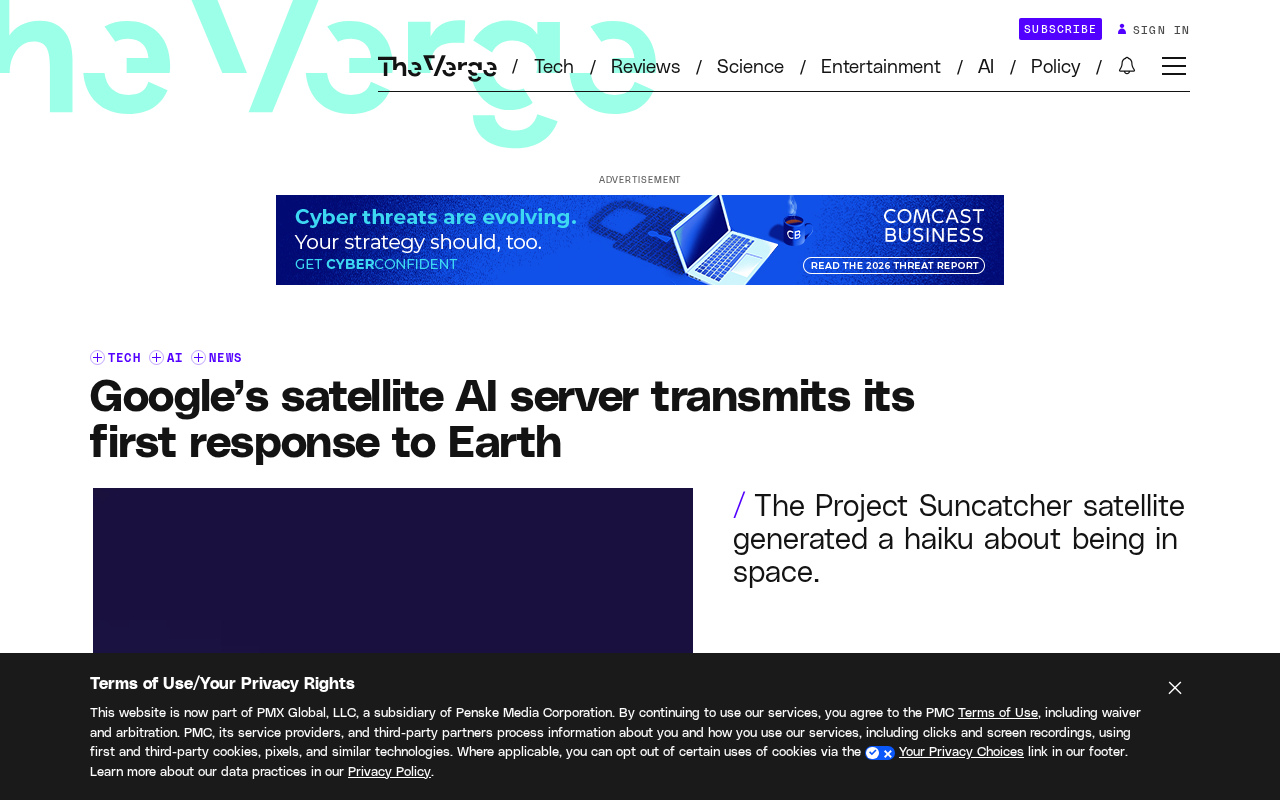
Google's Satellite AI Server Reaches Orbit: Gemma Model Generates First Reply in Space
Google's TPU-equipped satellite powers up in orbit, with the onboard Gemma 4 model generating the first reply from space. This article analyzes the technical path, real-world constraints, and implications for edge computing and satellite remote sensing.
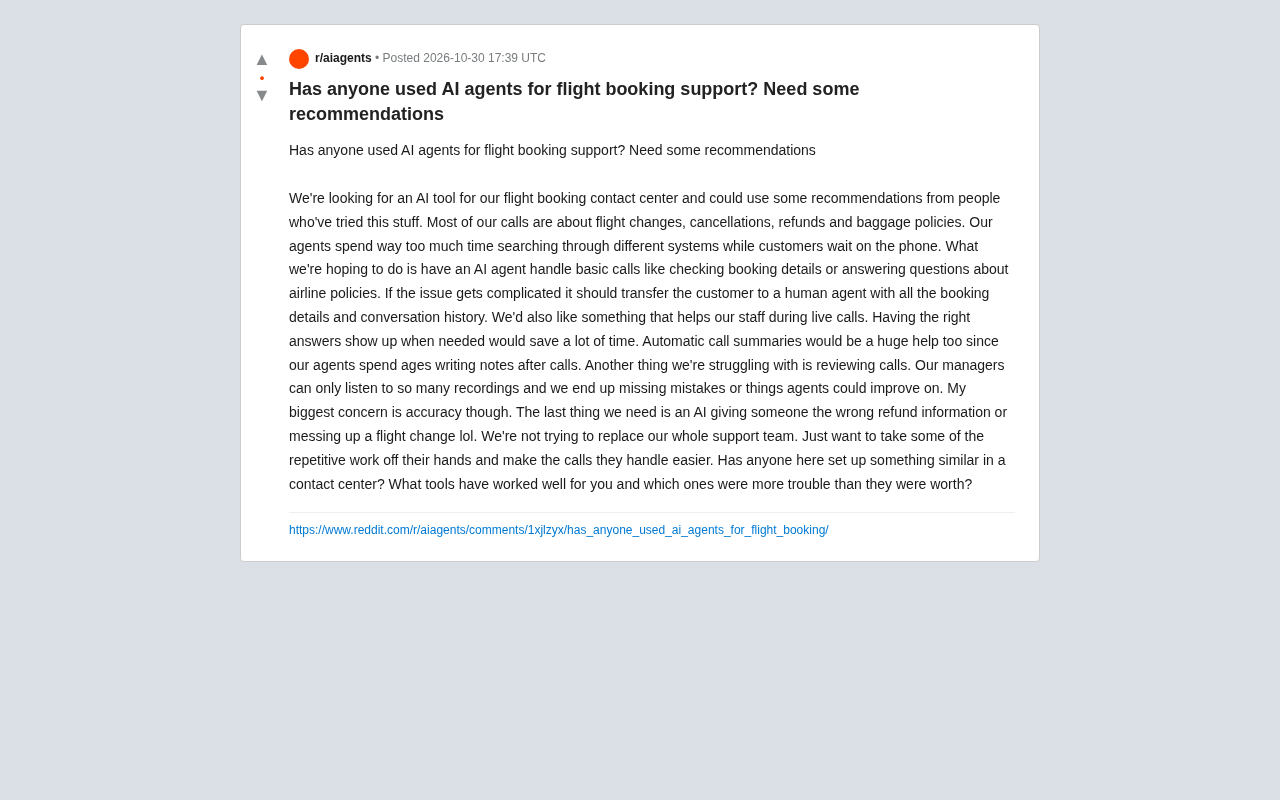
AI Agents for Flight Booking Customer Support: Real Needs and Implementation Challenges
Starting from a real Reddit question, this article breaks down four needs for introducing AI Agents into flight booking call centers: basic Q&A, agent assist, call summarization, and quality inspection, and analyzes accuracy concerns and handoff boundary design.
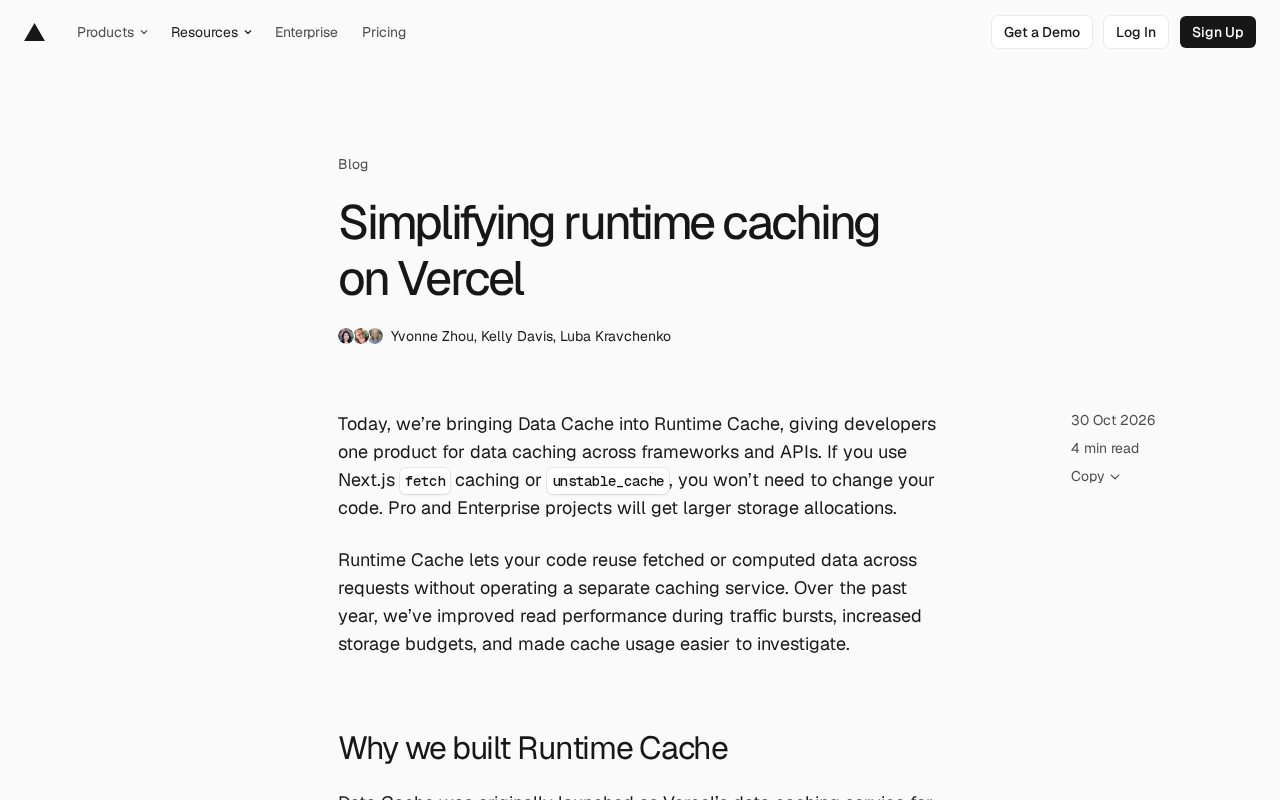
Vercel Unifies Runtime Cache: Data Cache Merges into Runtime Cache
Vercel merges Data Cache into Runtime Cache, unifying storage quotas and billing for Next.js fetch cache, unstable_cache, getCache, and use cache: remote. Pro and Enterprise projects get more storage, and cache reads/writes are now billed at Runtime Cache pricing.